
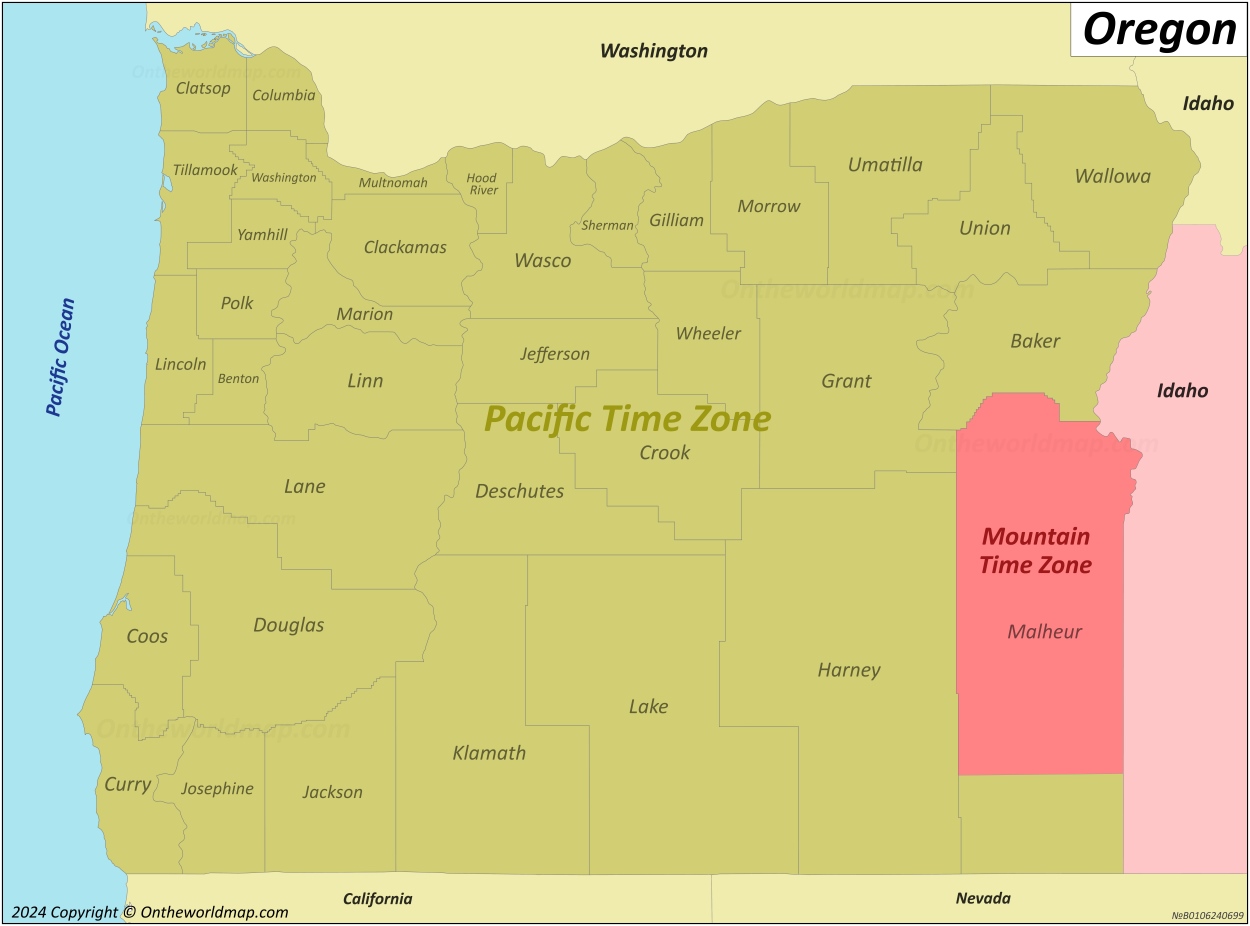
The vast majority of [Oregon] observes the Pacific Time Zone, aligning it with its coastal neighbors to the north and south. This means that for most of your journey, whether you’re savoring the culinary delights of [Portland], hiking the trails near [Bend], or exploring the iconic [Oregon Coast], you’ll be operating on Pacific Standard Time during the winter months and Pacific Daylight Time in the summer. However, there’s a fascinating and practical exception that astute travelers should be aware of: a small southeastern corner of the state, rooted in historical and economic ties, actually observes the [Mountain Time Zone].

This comprehensive guide will delve into the intricacies of [Oregon]’s time zones, providing essential insights for planning your trip, booking accommodations, and ensuring your travel lifestyle is as smooth and stress-free as possible. From understanding Daylight Saving Time shifts to identifying key destinations within each zone, we’ll equip you with the knowledge to navigate the Beaver State’s temporal landscape with confidence.
Understanding Oregon’s Primary Time Zone: Pacific Standard Time (PST) / Pacific Daylight Time (PDT)
For the overwhelming majority of its geographical expanse and population centers, [Oregon] operates within the [Pacific Time Zone]. This places it eight hours behind Coordinated Universal Time during Standard Time and seven hours behind [UTC] during Daylight Saving Time. The transition between [PST] and [PDT] occurs annually, typically in March when clocks “spring forward” an hour, and in November when they “fall back.” This shift is a critical consideration for any traveler, as it can affect flight schedules, hotel check-in times, and the operating hours of attractions.
Major [Oregon] cities and popular tourist destinations that adhere to [PST]/[PDT] include:
- [Portland]: The state’s largest city, a hub for culture, food, and innovation, known for its vibrant arts scene, numerous breweries, and attractions like [Powell’s City of Books] and [Forest Park].
- [Salem]: The state capital, nestled in the heart of the [Willamette Valley] wine country.
- [Eugene]: Home to the [University of Oregon], a center for sports, arts, and a gateway to outdoor adventures.
- [Bend]: A mecca for outdoor enthusiasts, offering access to skiing at [Mount Bachelor], hiking, and water sports on the [Deschutes River].
- [Ashland]: Famous for the [Oregon Shakespeare Festival] and its charming downtown.
- The entire [Oregon Coast], including popular spots like [Cannon Beach] (with its iconic [Haystack Rock]), [Astoria], and [Newport].
- National parks and natural wonders such as [Crater Lake National Park] and the [Columbia River Gorge].
This widespread adoption of [Pacific Time Zone] simplifies travel within the vast majority of the state. Whether you’re driving from [Portland] south to [Ashland] or east to [Bend], you won’t encounter any time zone changes. This consistency allows for easier planning of road trips, multi-city itineraries, and coordinated activities across different regions of [Oregon]. However, it’s always prudent to double-check specific event times or booking confirmations, especially around the Daylight Saving transitions, to avoid any temporal missteps.
The Eastern Oregon Exception: A Glimpse into Mountain Time Zone
While the vast majority of [Oregon] enjoys the consistency of [Pacific Time Zone], there’s a unique geographical exception that savvy travelers, particularly those exploring the state’s eastern frontiers, need to be aware of. A small but significant portion of southeastern [Oregon] operates on the Mountain Time Zone. This exception applies specifically to most of [Malheur County], the second-largest county by land area in [Oregon].
The primary reason for this temporal divergence stems from historical and economic ties. [Malheur County] shares a border with [Idaho] and its largest city, [Boise], which is firmly within the [Mountain Time Zone]. For decades, the communities in [Malheur County] have conducted the majority of their business, social interactions, and even schooling with [Boise] and other [Idaho] towns. To avoid constant time zone switching for residents and businesses, a local decision was made to align with [Mountain Time].
Key towns within [Malheur County] that observe [Mountain Time Zone] ([MST] in winter, [MDT] in summer) include:
- [Ontario]: The largest city in [Malheur County], often referred to as the “Gateway to [Oregon]” for those traveling from [Idaho]. It’s a key agricultural and commercial center.
- [Vale]: The county seat, known for its murals depicting local history.
- [Nyssa]: Another agricultural community close to the [Idaho] border.
For travelers, this means that if you’re venturing into these specific parts of [Eastern Oregon], especially if you’re crossing the border from [Idaho] or heading deeper into the [High Desert] regions, you’ll need to adjust your clock forward by an hour relative to the rest of [Oregon] (during [Standard Time]) or be aware of the difference during [Daylight Saving Time]. This difference can impact scheduled tours, farm visits, or even simply coordinating with family or friends who might be elsewhere in the state. While it’s a small area, overlooking this detail could lead to missed appointments or confusion. Therefore, it’s always advisable to verify the local time, especially when your itinerary involves the far eastern reaches of [Malheur County].
Navigating Time Zones for an Optimal Oregon Travel Experience
Understanding [Oregon]’s time zones is more than a technicality; it’s a practical aspect of travel planning that directly impacts your overall experience. From booking flights and accommodations to scheduling activities and connecting with loved ones, temporal awareness ensures a smooth and enjoyable trip across the Beaver State.
Planning Your Itinerary and Booking Accommodation
The first point of contact for most travelers is the booking process. When reserving flights, ensure you’re aware of the arrival and departure times in [Pacific Time Zone] or, if applicable, [Mountain Time Zone] for destinations in [Malheur County]. Flight delays or missed connections can often stem from a simple misunderstanding of time zone shifts, particularly during the biannual Daylight Saving Time changes.
For accommodations, whether you’re looking for a luxurious stay at [The Nines, a Luxury Collection Hotel, Portland] or a cozy cabin along the [Oregon Coast], check-in and check-out times are always dictated by the local time zone. Confirm these details to avoid arriving too early for a ready room or incurring late check-out fees. Similarly, when booking experiences like wine tastings in the [Willamette Valley], whitewater rafting on the [Rogue River], or a theater performance at the [Oregon Shakespeare Festival] in [Ashland], always verify the local start times. Dining reservations in popular culinary cities like [Portland] are also time-sensitive, and showing up an hour late due to a time zone miscalculation could mean forfeiting your table. Reputable booking platforms and direct hotel websites typically display times in the local zone, but a quick double-check can prevent headaches.

Practical Tips for Travelers
To minimize any potential disruptions due to time zone differences, consider these practical tips:
- Adjust Your Devices: Modern smartphones and smartwatches automatically adjust to local time zones. Ensure this feature is enabled on all your devices. However, it’s wise to have a traditional watch as a backup or to manually verify times.
- Confirm Key Schedules: Before embarking on an activity or appointment, make a quick call or check online to confirm the precise local time, especially for anything critical like tours, ferry schedules, or meetings.
- Inform Contacts: If you’re communicating with family, friends, or business contacts who are in a different time zone, clearly state the time zone you are referring to when making plans (e.g., “Let’s meet at 2 PM PST”).
- Allow for Adjustment: If you’re traveling from a significantly different time zone, factor in a day or two for your body to adjust. This is particularly relevant if you’re arriving from the East Coast or internationally. Jet lag can impact your energy levels and enjoyment of your initial days in [Oregon].
- Cross-State Planning: If your trip involves crossing from [Oregon] into [Idaho] or vice-versa, or specifically traveling into [Malheur County], be extra vigilant. Many GPS systems will update automatically, but it’s good practice to verbally confirm with locals if you have any doubts about the time.
The Lifestyle Impact: From Urban Exploration to Outdoor Adventures
The time zone fundamentally shapes the rhythm of daily life and, by extension, your travel experience. In the bustling metropolis of [Portland], observing [PST]/[PDT] means enjoying late sunsets in summer, perfect for evening strolls along the [Willamette River] or catching an outdoor concert. Early risers can beat the crowds at popular breakfast spots or hit the trails of [Forest Park] before the city fully awakens.
For outdoor adventurers, the time zone dictates sunrise and sunset, impacting the best times for photography at iconic locations like [Crater Lake National Park] or the [Painted Hills] within [John Day Fossil Beds National Monument]. If you’re planning an ambitious hike on [Mount Hood], knowing the local time ensures you start early enough to complete your trek safely before darkness falls. Along the [Oregon Coast], sunsets over the [Pacific Ocean] are a spectacle not to be missed, and understanding when they occur in local time helps you plan your evening activities, perhaps reserving a table at a beachfront restaurant in [Cannon Beach] or [Newport].
Even seemingly minor details, like the closing times of gift shops at the [Oregon Coast Aquarium] or the final boarding call for a scenic train ride, are all governed by the local time. For those seeking unique [Oregon] experiences, from exploring the vibrant food truck scene in [Portland] to stargazing in the remote [Alvord Desert] (also in [PST]/[PDT]), synchronizing with the local clock is key to maximizing every moment of your journey. Embracing the local time zone fully allows you to immerse yourself in the natural beauty and urban excitement that [Oregon] so generously offers.
Popular Oregon Destinations and Their Time Zones
[Oregon]’s appeal lies in its incredible diversity, offering everything from sophisticated urban centers to rugged wilderness. Understanding the time zone for each region you plan to visit ensures your trip flows seamlessly, allowing you to focus on the experiences rather than logistical hiccups.Western Oregon Highlights (All Pacific Time Zone)
The vast majority of [Oregon]’s most celebrated destinations, particularly those west of the [Cascade Mountains], firmly observe the [Pacific Time Zone].
- [Portland]: The state’s largest city, a dynamic hub of culture, cuisine, and quirky charm. Explore the [International Rose Test Garden], wander through [Powell’s City of Books], or sample craft beers in one of its many breweries. Every activity, from attending a concert at the [Arlene Schnitzer Concert Hall] to enjoying a food cart meal, adheres to [PST]/[PDT].
- [Oregon Coast]: A spectacular stretch of coastline featuring dramatic cliffs, expansive beaches, and charming seaside towns. Visit [Cannon Beach] to see [Haystack Rock], explore the historic seaport of [Astoria], or discover marine life at the [Oregon Coast Aquarium] in [Newport]. All coastal activities, from whale watching tours to lighthouse visits (like at [Cape Meares Lighthouse]), are timed to [Pacific Time Zone].
- [Willamette Valley]: Renowned as one of the world’s premier Pinot Noir regions, this lush valley is dotted with vineyards and wineries. Enjoy tastings, gourmet meals, and scenic drives around [Salem] and [McMinnville], all operating on [Pacific Time Zone].
- [Southern Oregon]: Home to the cultural gem of [Ashland], where the [Oregon Shakespeare Festival] draws visitors from around the globe. Further east, the breathtaking [Crater Lake National Park] offers stunning vistas and hiking trails. White-water rafting on the [Rogue River] is another popular adventure. All these attractions and activities are within the [Pacific Time Zone].
Central and Eastern Oregon Adventures
While the majority of [Central Oregon] also follows [Pacific Time Zone], the specific exception in the far southeast demands attention.
- [Bend]: A vibrant city nestled in the high desert, known for its endless outdoor recreation opportunities, including skiing at [Mount Bachelor], mountain biking, and kayaking on the [Deschutes River]. [Bend]’s lively craft brewery scene and access to the [Newberry National Volcanic Monument] are all governed by [PST]/[PDT].
- Central and Eastern Oregon: Areas like the [Columbia River Gorge] (with iconic waterfalls like [Multnomah Falls]), the [Wallowa Mountains] (often called “Oregon’s Little Switzerland”), and the geological wonders of the [Painted Hills] (part of the [John Day Fossil Beds National Monument]) all fall within the [Pacific Time Zone].
- [Malheur County] (The Exception): As previously highlighted, the easternmost communities of [Malheur County], including [Ontario], [Vale], and [Nyssa], operate on the [Mountain Time Zone]. If your travels take you to these specific towns, perhaps as part of a longer road trip linking [Oregon] with [Idaho], remember to adjust your clock by an hour to avoid any mix-ups with local businesses, attractions, or scheduled events. This awareness is particularly important for those exploring the remote beauty of the [Alvord Desert] or the [Steens Mountain Wilderness Area], as even though these are geographically within [Malheur County], the core population centers follow [Mountain Time].
In conclusion, while the answer to “What Time Zone Is [Oregon]?” is predominantly the [Pacific Time Zone], the small but significant exception in [Malheur County] serves as a reminder for travelers to remain vigilant and informed. By understanding these temporal nuances, you can ensure a seamless and enriching journey, allowing you to fully immerse yourself in the diverse attractions, rich culture, and breathtaking natural beauty that define the state of [Oregon]. Planning ahead and being mindful of local time will undoubtedly enhance your overall travel experience, making your trip to [Oregon] truly unforgettable.
LifeOutOfTheBox is a participant in the Amazon Services LLC Associates Program, an affiliate advertising program designed to provide a means for sites to earn advertising fees by advertising and linking to Amazon.com. Amazon, the Amazon logo, AmazonSupply, and the AmazonSupply logo are trademarks of Amazon.com, Inc. or its affiliates. As an Amazon Associate we earn affiliate commissions from qualifying purchases.