
For many, a phone code is simply a sequence of numbers used to make a call. Yet, in a state as vast and diverse as Texas, these digits tell a much richer story. They act as invisible borders, delineating regions, cultures, and entirely distinct travel experiences. Understanding Texas phone codes, more commonly known as area codes, offers a fascinating lens through which to explore the Lone Star State. From the bustling metropolises to the serene deserts, each code subtly hints at the unique character of the area it serves, guiding travelers, tourism enthusiasts, and those seeking accommodation to their desired slice of Texas life.
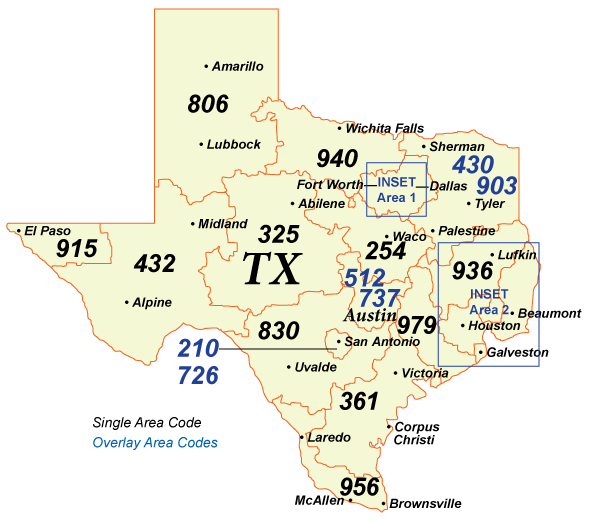
Historically, area codes were created in the mid-20th century to simplify long-distance dialing. As populations grew and telephone demand soared, these initial codes, once representing entire states or large regions, began to split and multiply. In Texas, a state synonymous with vastness and rapid growth, this evolution has been particularly dynamic. What started with just a handful of codes like 214 for North Texas and 713 for the Houston area, has expanded into a complex web reflecting its demographic boom and diverse geographical landscapes. For the modern traveler, these numerical identifiers are more than just a means to connect; they are an essential tool for navigating the state’s expansive geography, identifying specific destinations, and even anticipating the kind of lifestyle and attractions awaiting them.
Navigating the Lone Star State: Texas Area Codes as Your Travel Compass
Texas is not just a state; it’s a collection of diverse regions, each with its own identity, attractions, and even climate. Its area codes act as a digital map, helping visitors pinpoint their location and understand the local context. Whether you’re planning a luxury getaway, a budget-friendly family trip, or an immersive cultural experience, knowing the area code of your target destination is the first step in unlocking its secrets.
A Brief History of Texas Area Codes
The initial three area codes assigned to Texas in 1947 were 214 for the northern region including Dallas, 713 for the southeastern part including Houston, and 512 for the central and southern areas, encompassing Austin and San Antonio. As the state’s population exploded in the latter half of the 20th century, these large territories necessitated splits and overlays. For example, the 214 code eventually spawned 972 and 469, creating an overlay complex for the sprawling Dallas-Fort Worth Metroplex. Similarly, 713 was joined by 281 and 346 in Houston, while 512 saw the emergence of 210 for San Antonio and 830 for the surrounding Hill Country.
These splits weren’t arbitrary; they reflected the growth of new urban centers and the need to accommodate millions of new residents and businesses. Each new code marked a new chapter in Texas’s story, illustrating its continuous development and expansion. For travelers, understanding this history provides context, enabling them to appreciate the scale and dynamism of the state.
Decoding Texas’s Regions Through Phone Codes
Different area codes in Texas often correspond to distinct geographic and cultural regions, offering a straightforward way to categorize your travel plans.
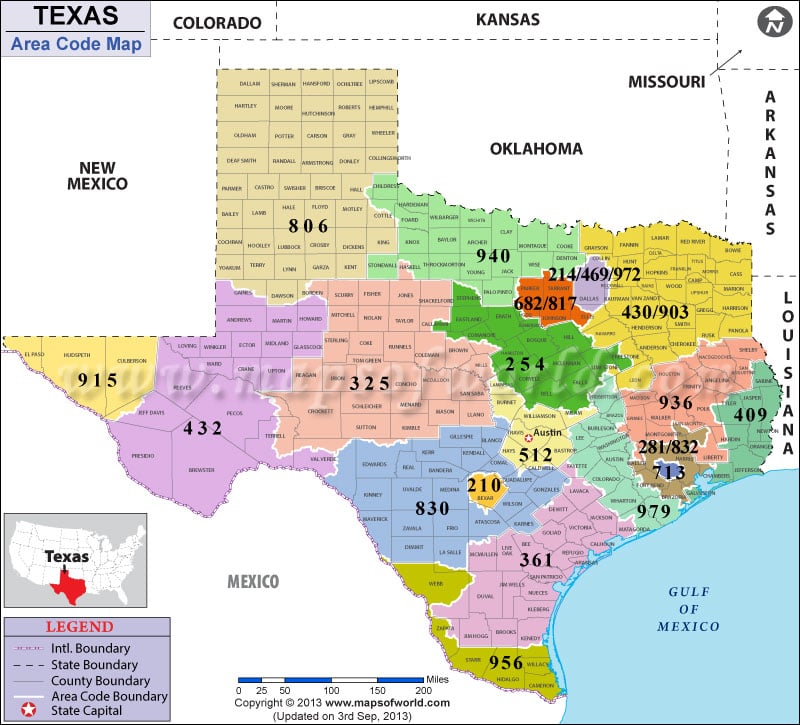
- North Texas (214, 972, 469, 682, 817): This cluster primarily covers the Dallas-Fort Worth Metroplex and surrounding suburbs. It’s an area known for its cosmopolitan cities, burgeoning arts scenes, and significant economic activity.
- Central Texas (512, 210, 830, 956): Encompassing the state capital Austin, the historic city of San Antonio, and the picturesque Texas Hill Country, this region is a vibrant blend of live music, historical landmarks, and natural beauty. The 956 code further extends into the Rio Grande Valley, offering a glimpse into South Texas’s unique culture.
- Gulf Coast (713, 281, 346, 409, 361): Dominated by Houston, the fourth-largest city in the U.S., these codes signify an area rich in space exploration history, diverse culinary scenes, and access to the Gulf of Mexico. The 409 code covers Galveston and other coastal communities, while 361 stretches down to Corpus Christi and the barrier islands.
- West Texas (432, 915): These codes transport you to the rugged, vast landscapes of West Texas, including El Paso on the border with Mexico and the remote beauty of Big Bend National Park. It’s a region defined by its stunning natural landmarks and unique desert lifestyle.
- Panhandle & North Central Texas (806, 940, 325): The 806 code covers the expansive Texas Panhandle, home to Amarillo and its iconic Route 66 attractions. Codes like 940 (north-central Texas, including Denton) and 325 (west-central Texas, including Abilene and San Angelo) serve other significant, yet often overlooked, areas.
Major Texas Destinations and Their Iconic Area Codes
Understanding these area code distributions provides a framework for exploring Texas’s most compelling destinations, each offering distinct experiences for travelers.
North Texas: Dallas-Fort Worth Metroplex (214, 972, 469, 682, 817)
The Dallas-Fort Worth Metroplex is a powerhouse of urban activity and a prime example of modern Texas. In Dallas, the 214, 972, and 469 codes signify a world of luxury travel, high-end shopping, and a thriving cultural scene. Visitors can explore the sophisticated Dallas Arts District, home to world-class museums and performance venues. Iconic landmarks like Reunion Tower offer panoramic views, while an array of five-star hotels, such as The Ritz-Carlton Dallas or Four Seasons Resort and Club Dallas at Las Colinas, provide opulent accommodation. For business travelers, Dallas is a hub of corporate activity, with hotels catering specifically to executive stays.
Just west, under the 682 and 817 codes, lies Fort Worth, a city that proudly embraces its Western heritage. The Stockyards National Historic District is a must-visit landmark, offering daily cattle drives, rodeo shows, and authentic Texas cuisine. This area is perfect for family trips and those seeking a taste of the authentic cowboy lifestyle, with numerous charming boutique hotels and family-friendly resorts offering comfortable accommodation. Together, Dallas and Fort Worth provide a diverse lifestyle spectrum, from urban chic to rustic charm.
Central Texas: Austin and San Antonio (512, 210, 830)
Central Texas is a magnet for tourism, characterized by its unique blend of music, history, and natural beauty. Austin, covered primarily by the 512 area code, is celebrated as the “Live Music Capital of the World.” This vibrant city offers a dynamic lifestyle, from its eclectic food truck scene to its numerous music venues along Sixth Street and South Congress Avenue. Budget travel options abound alongside chic boutique hotels like Hotel San Jose and luxury resorts on the outskirts. Austin is also a tech hub, attracting business stays alongside leisure travelers.
South, under the 210 area code, lies San Antonio, a city steeped in history and Spanish colonial charm. Its most famous landmark, The Alamo, is a testament to Texas’s fight for independence. The picturesque River Walk, lined with restaurants, shops, and hotels, is a central attraction for family tourism and romantic getaways. Historic hotels such as The Menger Hotel and Hotel Contessa offer accommodation with character, deeply integrated into the city’s rich narrative. The 830 area code extends into the scenic Texas Hill Country, offering charming bed and breakfasts, wineries, and outdoor adventures, perfect for a peaceful retreat.
Gulf Coast: Houston and Galveston (713, 281, 346, 409)

The Texas Gulf Coast region, dominated by Houston (713, 281, 346) and Galveston (409), presents a unique blend of urban sophistication and coastal relaxation. Houston is a global city, renowned for its Space Center Houston, a primary landmark for visitors interested in space exploration. The city’s diverse population has also fostered an incredible culinary scene and a vibrant arts and culture landscape. Luxury hotels like The Post Oak Hotel at Uptown Houston and Hotel Alessandra cater to affluent travelers and business stays, while numerous options exist for various budgets. Tourism in Houston extends beyond its space legacy, offering world-class museums and parks.
A short drive away, Galveston Island (409) offers a historic beach experience. This charming island city boasts Victorian architecture, beautiful beaches, and family-friendly attractions like Moody Gardens and Pleasure Pier. It’s a popular destination for family trips and cruise departures, with resorts and vacation rentals providing ample accommodation options. The blend of history and coastal leisure creates a distinct lifestyle here, appealing to those seeking both relaxation and exploration.
Beyond the Metros: West Texas, Panhandle, and South Texas (e.g., 806, 432, 915, 956, 361)
Beyond the major urban centers, other Texas area codes reveal more remote yet equally captivating travel destinations.
The 915 area code brings you to El Paso, a city nestled against the Franklin Mountains and bordering Mexico. Here, you can experience a rich bi-cultural lifestyle, explore historical missions, and hike in Franklin Mountains State Park. Accommodation ranges from modern hotels to charming local inns.
Further east, the 432 code covers vast stretches of West Texas, including the artistic town of Marfa and the gateway to Big Bend National Park. Big Bend National Park is a premier landmark for nature and adventure travel, offering unparalleled hiking, stargazing, and remote, eco-friendly accommodation options. This region epitomizes the rugged, adventurous lifestyle, perfect for those seeking an escape into unspoiled wilderness.
Up in the Texas Panhandle, the 806 area code includes Amarillo, famous for its Route 66 attractions like the quirky Cadillac Ranch. Amarillo offers a glimpse into classic Americana, with family-friendly hotels and local diners.
The 956 area code primarily covers the Rio Grande Valley, a tropical haven known for its birdwatching, citrus groves, and welcoming atmosphere for “Winter Texans.” Cities like McAllen and Brownsville offer a blend of cultural tourism and natural attractions, with diverse accommodation options from extended-stay resorts to cozy guesthouses.
And the 361 code stretches along the middle Texas Gulf Coast to Corpus Christi and Port Aransas, offering fantastic beach tourism, fishing, and wildlife viewing opportunities, with numerous coastal resorts and vacation rentals.
Practical Tips for Travelers: Communicating Across Texas
Beyond their geographical indicators, Texas area codes have practical implications for visitors. Staying connected is crucial for booking accommodation, making reservations for attractions, or simply navigating a new city.
The Importance of 10-Digit Dialing
Due to the proliferation of area codes, especially in urban overlays like Dallas-Fort Worth and Houston, 10-digit dialing (area code + 7-digit number) is mandatory for all local calls within many Texas regions. This means even if you’re calling a number within the same area code, you must dial all ten digits. For visitors, it’s a simple but crucial detail to remember to ensure calls connect smoothly, whether you’re trying to reach your hotel front desk or confirm a tour time.
International Calls to Texas
For those traveling to Texas from abroad, remember that the United States country code is +1. Therefore, when dialing a Texas number from outside the U.S., you’ll need to dial your international exit code (e.g., 00 from many European countries), followed by 1, the three-digit Texas area code, and then the seven-digit local number. This ensures seamless communication for international booking and coordination related to travel and accommodation.
Staying Connected: Wi-Fi, eSIMs, and Local SIMs
While understanding phone codes is essential, modern travel often relies on data connectivity. Most hotels, resorts, and tourist attractions across Texas offer complimentary Wi-Fi, allowing you to stay connected without incurring roaming charges. For more consistent access, especially when navigating or using translation apps, consider purchasing a local SIM card upon arrival or activating an eSIM if your phone supports it. This enables you to make local calls and use data for navigation, restaurant bookings, and sharing your Texas experiences, enhancing your overall tourism experience and ensuring you can easily manage your accommodation and activities on the go.
Planning Your Texas Adventure: Weaving Area Codes into Your Itinerary
Far from being mere technicalities, Texas phone codes are integral to planning a well-informed and enriching travel experience. They offer a simple yet effective way to segment your trip, guiding you through the state’s incredible diversity.
Tailoring Your Trip: From Luxury Resorts to Budget Stays
The area codes can help you discern the type of lifestyle and accommodation options available in a specific region. For instance, an itinerary focusing on luxury travel might concentrate on the 214/972 area for Dallas’s upscale hotels and shopping, or the 713/281 area for Houston’s high-end resorts and fine dining. Conversely, those on a budget might seek out areas known for their vibrant youth culture and more affordable boutique hotels, such as parts of 512 Austin, or explore the charming, cost-effective guesthouses found in the 830 Hill Country towns. For family trips, the coastal resorts in 409 Galveston or 361 Corpus Christi often provide excellent value and amenities. Understanding the geographical distribution of these codes empowers you to refine your search for hotels and accommodations that perfectly match your travel style and budget.
Exploring Beyond the Call: Local Culture and Hidden Gems
Each area code zone in Texas holds a treasure trove of local culture, unique cuisine, and hidden gems waiting to be discovered. By identifying areas via their codes, travelers can delve deeper into specific regional tourism. For instance, exploring the 915 area code around El Paso offers a chance to experience vibrant border culture and authentic Tex-Mex food. The 806 in the Panhandle might lead you to small-town festivals and the vast, open spaces of West Texas prairies. Engaging with the distinct local atmosphere within each code’s domain allows for a more authentic and memorable Texas experience, moving beyond well-trodden tourist paths to uncover the true heart of the state.
In conclusion, Texas phone codes are far more than just dialing prefixes; they are geographic markers, cultural identifiers, and invaluable tools for anyone planning to explore the immense diversity of the Lone Star State. From identifying the perfect hotel in Dallas to discovering a hidden gem in the Hill Country, understanding these codes enhances your travel planning, enriches your tourism experiences, and helps you unlock the varied lifestyles Texas has to offer. So, as you prepare for your next adventure to Texas, remember that these humble three-digit numbers are your first step toward an unforgettable journey.
LifeOutOfTheBox is a participant in the Amazon Services LLC Associates Program, an affiliate advertising program designed to provide a means for sites to earn advertising fees by advertising and linking to Amazon.com. Amazon, the Amazon logo, AmazonSupply, and the AmazonSupply logo are trademarks of Amazon.com, Inc. or its affiliates. As an Amazon Associate we earn affiliate commissions from qualifying purchases.