
The Lone Star State, Texas, conjures images of vast landscapes, rich history, and a culture as distinct as its iconic shape. From the bustling metropolises of Houston and Dallas to the historic charm of San Antonio and the vibrant energy of Austin, Texas offers an unparalleled travel experience. Its allure is not just in its famous barbecue or live music scene; it’s also deeply rooted in its captivating past, including a political history that has seen dramatic shifts over the decades. Today, Texas is widely regarded as a Republican stronghold in presidential elections, earning it the label of a “red state.” However, this hasn’t always been the case. For those fascinated by the interplay of history, culture, and travel, understanding Texas’s political evolution offers a unique lens through which to explore its identity.
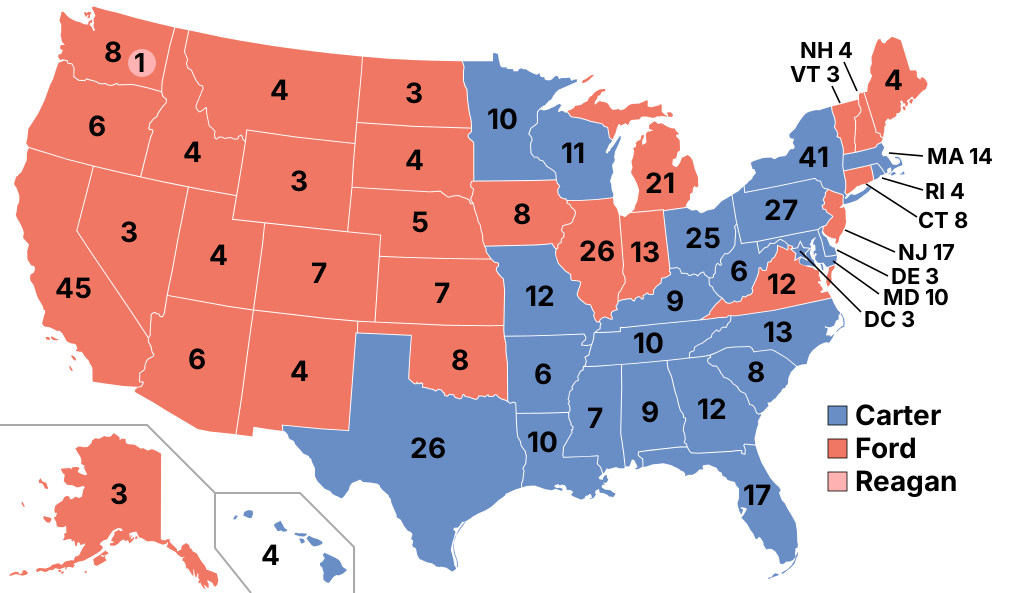
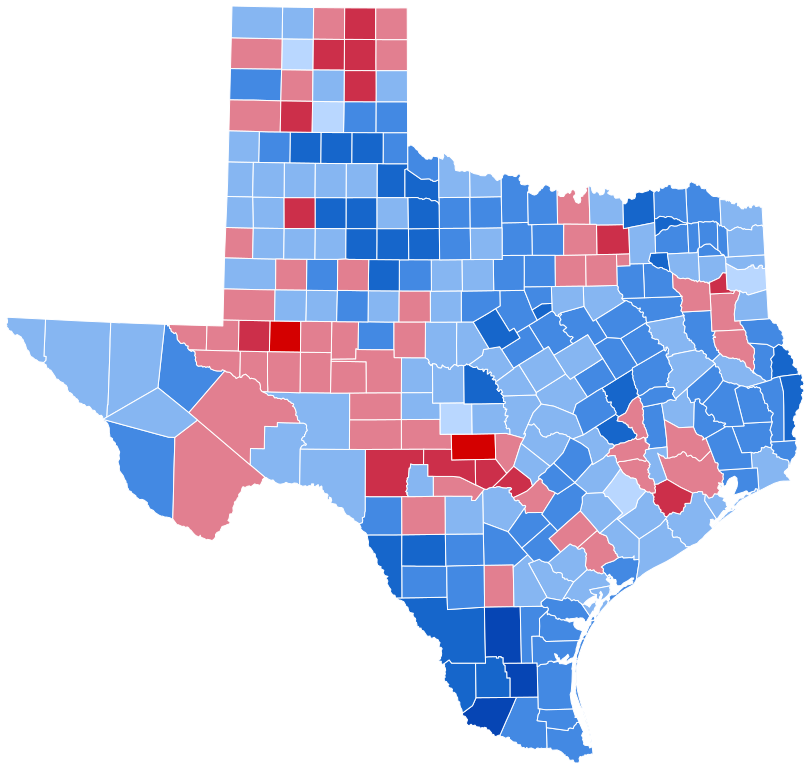
The question of when Texas last voted “blue” for a president delves into a period that might surprise many contemporary observers. The answer is 1976, when Democrat Jimmy Carter of Georgia won the state’s electoral votes. This victory marked a significant moment, bridging the gap between Texas’s long-standing Democratic tradition and its eventual realignment with the Republican Party. To truly appreciate this turning point, we must journey back through the state’s political landscape, exploring the factors that once made Texas a reliably Democratic state and the forces that propelled its dramatic shift. This exploration not only illuminates the complexities of American politics but also enriches our understanding of Texas as a destination, revealing how its demographic, economic, and cultural transformations have shaped both its electoral map and its identity as a global hub for travel, business, and lifestyle.
The Lone Star State’s Shifting Tides: A Historical Overview
For much of its post-Civil War history, Texas was an integral part of the “Solid South,” a bloc of states that consistently voted for the Democratic Party at the presidential level. This loyalty was a legacy of the Civil War and the Reconstruction Era, when the Republican Party was associated with Abraham Lincoln and the Union, while the Democratic Party became the champion of white Southern interests and states’ rights. For generations, to be a Texan was almost synonymous with being a Democrat, even if those Democrats were often more conservative than their counterparts in other parts of the United States.
The last time a Democratic presidential candidate secured Texas’s electoral votes was indeed in 1976. Jimmy Carter, a relatively unknown peanut farmer and former governor of Georgia, captured the presidency by appealing to a national desire for honesty and integrity in government following the Watergate scandal. His Southern roots helped him reconnect with voters in states like Texas, which had begun to show signs of shifting away from the Democratic Party in earlier elections. Carter’s victory in Texas was narrow, but it represented a final, albeit fleeting, moment of the state aligning with a national Democratic candidate for the highest office.
Prior to Carter, the most recent Democratic win in Texas was in 1964, when native son Lyndon B. Johnson (often referred to as LBJ) swept the state following the assassination of President John F. Kennedy in Dallas. LBJ’s deep ties to Texas and his compelling vision for the Great Society made him a formidable candidate. His victory was not just a testament to his personal appeal but also a reflection of the lingering strength of the Democratic Party in his home state at that time. Today, visitors can explore his legacy at the LBJ Presidential Library in Austin, a testament to a pivotal figure in Texas and American history, offering insights into his political career and the era he defined. Similarly, the Sixth Floor Museum at Dealey Plaza in Dallas commemorates the assassination that propelled LBJ into the presidency, a poignant landmark for understanding a significant turning point in the nation’s and state’s political narrative.
These historical victories highlight a dramatically different political landscape from what we observe today. Texas’s deep Democratic roots were evident in its numerous powerful figures who shaped national policy, from Sam Houston and Stephen F. Austin in its founding days as a Republic of Texas to Speaker of the House Sam Rayburn and, of course, LBJ. The state’s economic backbone, initially rooted in cotton and cattle, fostered a populist streak within the Democratic Party that appealed to many working-class Texans.
The Democratic Heyday and its Local Flavor
Before the mid-20th century, Texas was a reliable wellspring of Democratic votes, not just for president but for virtually all elected offices. This dominance was so profound that primary elections were often the de facto general elections. The conservative nature of Texas Democrats, however, created internal tensions within the national party, particularly as it embraced more liberal stances on social and economic issues. These ideological fault lines would eventually contribute to the state’s political transformation.
The rich history of Texas is evident in its landmarks, many of which subtly reflect these early political allegiances. The majestic Texas State Capitol in Austin, a beacon of legislative power and architectural grandeur, stands as a testament to centuries of governance, often under Democratic leadership. The historic Alamo in San Antonio, while not directly political, symbolizes the fight for liberty and independence that has always resonated deeply with the Texan spirit, regardless of party affiliation. Exploring these sites offers more than just a historical lesson; it provides a tangible connection to the individuals and ideologies that shaped this unique state, bridging the past with the present for any curious traveler.
The Great Realignment: Why Texas Turned Red
The mid to late 20th century witnessed a profound political realignment across the American South, and Texas was no exception. Several converging factors contributed to the state’s gradual, but ultimately decisive, shift from blue to red. This transition was not instantaneous but rather a multi-decade process driven by evolving national politics, demographic changes, and economic transformations.
One of the most significant catalysts for this realignment was the Civil Rights Movement of the 1960s. As the national Democratic Party, under leaders like LBJ, championed landmark civil rights legislation (such as the Civil Rights Act of 1964 and the Voting Rights Act of 1965), many white conservative Southerners felt alienated. The Republican Party seized this opportunity, adopting a “Southern Strategy” that appealed to these disaffected voters, emphasizing themes of traditional values, law and order, and limited government. In Texas, this resonated with a significant portion of the electorate who felt the national Democratic Party no longer represented their conservative principles.
Economic Shifts and the Rise of New Industries
Beyond social issues, economic changes played a crucial role. Texas’s economy began to diversify away from its traditional agrarian roots (cotton and cattle) and the dominance of oil and gas. While oil remained vital, the state saw growth in new sectors, including technology, finance, and healthcare, particularly in its booming urban centers like Dallas, Houston, and later Austin. This attracted a new wave of residents, often from other parts of the United States, who brought different political perspectives. Many of these newcomers were drawn by economic opportunity and tended to align with the Republican Party’s pro-business, lower-tax platform.
The rise of prominent Republican figures within Texas also accelerated this shift. Individuals like John Tower, who became the first Republican Senator from Texas since Reconstruction in 1961, and later George H.W. Bush, established strong Republican footholds. The state increasingly voted for Republican presidential candidates after Carter’s 1976 victory, becoming a cornerstone of the Republican Party’s electoral strategy, particularly after the Reagan Revolution in the 1980s.
Urbanization and Suburban Sprawl
The rapid urbanization of Texas also contributed to the shift, albeit in complex ways. As cities like Houston, with its NASA Johnson Space Center and diverse cultural offerings, and Dallas, a hub for finance and fashion, grew exponentially, their surrounding suburbs often became bastions of conservative, middle-class voters who increasingly leaned Republican. While the urban core of these cities often retained a more liberal or moderate Democratic bent, the sheer population growth in the more conservative suburban rings solidified the state’s red identity in statewide and national elections.
This dynamic is part of the allure for travelers today, as it has created distinct urban landscapes. Dallas offers a metropolitan experience with world-class museums and a thriving arts district, while Houston boasts an international flair, incredible cuisine, and scientific marvels like Space Center Houston. These vibrant cities, products of Texas’s economic boom and demographic diversification, are prime destinations for those seeking cultural immersion, luxury accommodations, and unique urban adventures. The contrast between these bustling centers and the more rural, traditionally conservative areas offers a full spectrum of Texan experiences.
A Mosaic of Cultures and Commerce: Modern Texas Beyond Politics
While political colors define electoral maps, they barely scratch the surface of Texas’s vibrant, multifaceted identity. For travelers, the state offers an incredible diversity of experiences, each shaped by its unique history, geography, and evolving demographics, all of which continue to influence its political leanings as well. From majestic national parks to historic missions, and from bustling culinary scenes to serene wine regions, Texas truly has something for everyone.
Iconic Destinations and Unique Experiences
- Austin: The Live Music Capital and Tech Hub. Often seen as an anomaly in “red” Texas, Austin is a liberal oasis renowned for its “Keep Austin Weird” ethos. Beyond its famous music venues and festivals like South by Southwest, Austin has emerged as a major tech hub (Silicon Hills), drawing a young, educated, and often progressive population. Visitors flock to its vibrant food scene, outdoor activities on Lady Bird Lake, and eclectic boutiques. Accommodation options range from luxury hotels to charming boutique stays, reflecting the city’s modern, yet laid-back, lifestyle.
- San Antonio: History and Hispanic Heritage. This historic city offers a deep dive into Texas’s Mexican and Spanish colonial past. The iconic Alamo is a must-see, but the city’s true gem is the River Walk (Paseo del Río), a picturesque network of walkways along the San Antonio River lined with shops, restaurants, and hotels. The San Antonio Missions National Historical Park, a UNESCO World Heritage Site including Mission San Jose, provides a fascinating glimpse into early settlement and religious history. This strong Hispanic heritage contributes significantly to the state’s evolving demographic and political landscape.
- Houston: A Global Metropolis. As the most diverse city in Texas and one of the largest in the United States, Houston is a melting pot of cultures. It’s home to the NASA Johnson Space Center, a world-renowned medical center, and a thriving energy industry. Its culinary scene is incredibly diverse, offering everything from authentic ethnic cuisine to upscale dining. Houston’s extensive museum district and green spaces provide ample opportunities for exploration, and its vast array of accommodations caters to business and leisure travelers alike.
- Dallas & Fort Worth: Urban Sophistication Meets Western Charm. The Dallas-Fort Worth Metroplex offers two distinct yet complementary experiences. Dallas is a sleek, cosmopolitan city known for its fashion, arts, and business. It boasts impressive skyscrapers, luxury shopping, and a burgeoning arts district. Fort Worth, just a short drive away, embodies the “Western heritage” of Texas with its historic Stockyards National Historic District, rodeos, and a more laid-back atmosphere. This duality reflects the state’s blend of tradition and modernity, a common theme in its political discourse as well.
Natural Wonders and Outdoor Adventures
Beyond its cities, Texas boasts stunning natural beauty. The rugged peaks and desert landscapes of Big Bend National Park and Big Bend Ranch State Park offer unparalleled opportunities for hiking, stargazing, and exploring the remote wilderness along the Rio Grande border with Mexico. The lush rolling hills of the Texas Hill Country are home to picturesque small towns like Fredericksburg, known for its blossoming Texas Wine Country and scenic drives. Along the Gulf Coast, destinations like Galveston and Padre Island National Seashore provide sandy beaches, wildlife viewing, and water sports opportunities. These natural attractions not only contribute to Texas’s tourism economy but also offer a retreat for residents, irrespective of their political persuasions, fostering a shared appreciation for the state’s grandeur.
The Future of the Lone Star State: A Purple Glimmer?
While Texas has been reliably red in presidential elections for decades, its political landscape is not static. Demographic shifts, particularly the rapid growth of the Hispanic population and an influx of new residents from other states, are steadily transforming the electorate. The state is becoming younger and more diverse, especially in its urban and suburban areas, leading to increased competitiveness in local and statewide elections. This evolving demographic mosaic, combined with the state’s economic diversification, has led many political analysts to speculate about Texas’s potential to become a “purple state” – a swing state that could genuinely go either way in future presidential contests.
This potential shift has significant implications, not just for national politics but also for the state’s identity and future development. A more competitive political environment could lead to different policy priorities, potentially influencing everything from infrastructure development and education funding to environmental regulations and social programs, all of which impact the quality of life for residents and the experience for visitors.
Demographic Dynamism and Cultural Evolution
The increasing diversity of Texas is one of its greatest strengths and a key driver of its future. The vibrant Hispanic culture, deeply embedded in cities like San Antonio and along the Rio Grande border, continues to expand its influence across the state. This cultural richness contributes to Texas’s renowned culinary scene, its music, and its unique blend of traditions. The influx of tech workers and entrepreneurs, particularly in Austin, but also in Dallas and Houston, brings with it new ideas, lifestyles, and demands for amenities, from sustainable hotels to innovative culinary experiences.
As the state continues to grow, its major cities are investing in world-class attractions, luxury accommodations, and sustainable tourism initiatives, positioning Texas as a premier global destination. Whether it’s experiencing the cutting-edge art scene in Marfa, exploring the historic cattle drives in Fort Worth, or enjoying the vibrant nightlife in Austin, visitors can witness firsthand the dynamic evolution of this fascinating state. This dynamism is directly linked to the changing population, which in turn fuels the political debates about the state’s future direction.
The question of when Texas will next vote blue for president remains a subject of intense debate and speculation. While the national Democratic Party continues to invest heavily in organizing and campaigning within the state, Republicans remain deeply entrenched, particularly in rural areas and among certain demographic groups. The blend of traditional Texan values with the demands of a modern, diverse, and rapidly growing population ensures that Texas will remain a compelling state to watch, both for political enthusiasts and for travelers seeking a destination rich in history, culture, and forward-looking vision. Its future electoral map, much like its diverse landscapes and thriving cities, will be a testament to its enduring capacity for change and its unique place in the American narrative.

Conclusion: Texas, A State of Enduring Contradictions and Charms
The journey through Texas’s political history, from its Solid Democratic past to its contemporary Republican dominance, reveals a state in constant evolution. The last time Texas was “blue” for president in 1976 with Jimmy Carter was a significant marker, but it was just one point in a much larger, more intricate narrative of demographic shifts, economic transformations, and cultural realignments. These underlying forces have not only reshaped the state’s electoral map but have also profoundly influenced its identity as a premier destination for travel, leisure, and lifestyle.
Today, Texas remains a land of captivating contradictions and enduring charms. Its vastness encompasses everything from arid deserts and lush pine forests to sophisticated urban centers and quaint historic towns. Whether you’re drawn by the promise of adventure in its national parks, the allure of its vibrant cities, the taste of its legendary cuisine, or the echoes of its profound history, Texas offers an experience as rich and diverse as its political heritage.
As the state continues to grow and diversify, the conversation about its political future — whether it remains staunchly red or eventually turns purple — will undoubtedly continue to evolve. Yet, regardless of its electoral hue, Texas will always be a cornerstone of American culture, a dynamic economic powerhouse, and a destination that promises unforgettable experiences for every traveler. From the historic battlefields of the Alamo to the cutting-edge innovations of Austin’s tech scene, from the bustling port of Houston to the majestic Big Bend National Park, Texas invites you to explore its layers, understand its past, and witness its exciting future. It’s a place where history is alive, culture thrives, and every journey is an opportunity to discover something new about this magnificent Lone Star State.
LifeOutOfTheBox is a participant in the Amazon Services LLC Associates Program, an affiliate advertising program designed to provide a means for sites to earn advertising fees by advertising and linking to Amazon.com. Amazon, the Amazon logo, AmazonSupply, and the AmazonSupply logo are trademarks of Amazon.com, Inc. or its affiliates. As an Amazon Associate we earn affiliate commissions from qualifying purchases.