
The spirit of entrepreneurship often takes flight in the most picturesque and welcoming corners of the world, and for many, that corner is the charming state of Alabama. Whether you’re dreaming of launching a boutique hotel in Fairhope, orchestrating unforgettable tours along the Gulf Shores coastline, curating unique vacation rentals near Lake Martin, or simply establishing a resilient business foundation while enjoying a vibrant Southern lifestyle, forming a Limited Liability Company (LLC) in Alabama offers a powerful blend of flexibility, protection, and credibility.
Alabama, with its diverse landscapes ranging from the pristine beaches of Orange Beach and Dauphin Island to the historic streets of Montgomery and the bustling innovation hubs of Huntsville and Birmingham, presents a fertile ground for new ventures. For globetrotters seeking a permanent base, digital nomads planning their next big project, or seasoned hoteliers expanding their portfolio, understanding the straightforward process of LLC formation is the first step toward turning an ambitious vision into a tangible success story. This comprehensive guide will walk you through every critical stage, emphasizing how an LLC can empower your travel, tourism, and lifestyle-focused business endeavors in the Heart of Dixie.
Why Choose an LLC for Your Alabama Venture?
Before delving into the nuts and bolts of registration, it’s essential to grasp why an LLC is often the preferred business structure for many entrepreneurs, especially those venturing into the dynamic travel and hospitality sectors. The benefits extend beyond simple legalities, touching upon aspects of personal protection, operational flexibility, and even tax advantages that can significantly impact your business journey.
The Allure of Alabama for Entrepreneurs
Alabama isn’t just a destination; it’s a lifestyle. Its growing economy, strategic location in the Southeast, and a strong sense of community make it an attractive place to live, work, and build. For those passionate about travel and tourism, the state offers unparalleled opportunities. Imagine starting a culinary tour company exploring the gastronomic delights of Mobile, establishing an adventure tourism outfit guiding explorers through Cheaha State Park, or developing a luxury glamping experience near Smith Lake. Each of these ventures benefits immensely from a solid legal structure.
The state’s commitment to fostering small businesses, combined with its relatively low cost of living and doing business compared to other coastal states, creates an environment ripe for growth. From the historic landmarks like the U.S. Space & Rocket Center in Huntsville to the cultural richness of the Birmingham Civil Rights Institute, there’s a constant flow of tourists and residents eager for unique experiences. By forming an LLC, you position your business to capitalize on this vibrant market while safeguarding your personal assets.
Key Benefits of an LLC Structure
An LLC stands out as a flexible business entity that combines the limited liability of a corporation with the pass-through taxation of a partnership or sole proprietorship. This hybrid nature makes it particularly appealing.
- Personal Liability Protection: This is arguably the most significant advantage. An LLC creates a legal separation between you, the owner, and your business. This means that in the event your business incurs debts, faces lawsuits, or experiences financial distress, your personal assets—such as your home, car, and personal savings—are generally protected. For businesses in the travel and hospitality industry, where customer interactions are frequent and unexpected situations can arise, this protection is invaluable.
- Flexibility in Management: LLCs offer various management structures. You can choose to be member-managed (where all owners are involved in daily operations) or manager-managed (where designated managers, who may or may not be owners, run the business). This adaptability allows you to tailor the structure to suit your operational needs, whether you’re a solo travel blogger or a team managing a chain of vacation properties.
- Pass-Through Taxation: Unless you elect for your LLC to be taxed as a corporation, profits and losses “pass through” directly to your personal income without being taxed at the business level. This avoids “double taxation,” a common concern for corporations. While Alabama does impose a Business Privilege Tax on LLCs, the overall tax burden is often favorable.
- Credibility: Establishing an LLC lends immediate credibility to your business. It signals professionalism and seriousness to clients, partners, lenders, and investors. This can be particularly beneficial when seeking funding for a new resort development or securing contracts with major travel agencies.
- Simplicity and Less Red Tape: Compared to corporations, LLCs typically have fewer ongoing compliance requirements and less complex administrative burdens, making them an excellent choice for small to medium-sized businesses.
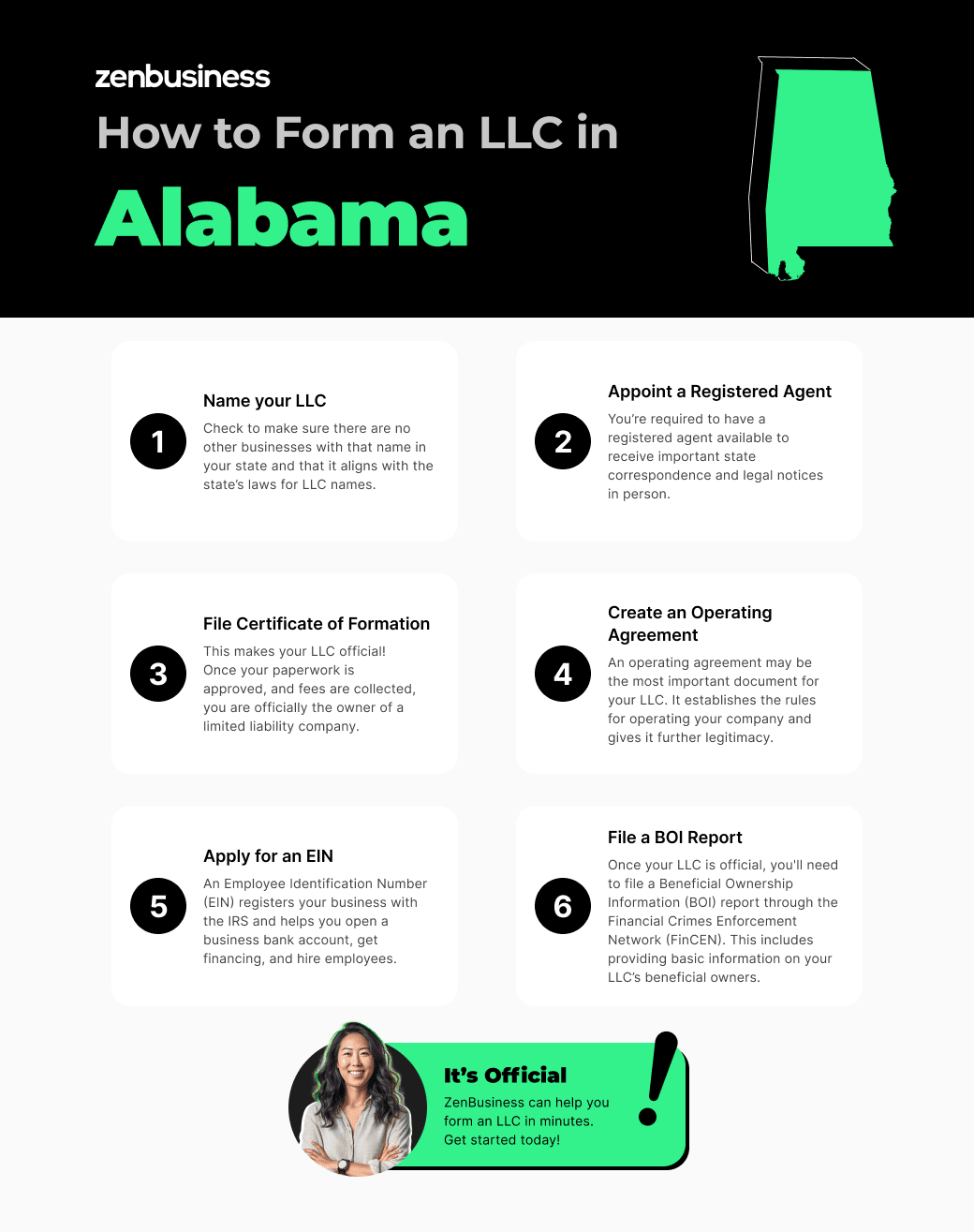
Essential Steps to Registering Your LLC in Alabama
Forming an LLC in Alabama is a structured process involving several key steps. While it requires attention to detail, each stage is manageable, especially with the right guidance. Here’s a breakdown of what you’ll need to do to officially establish your travel or lifestyle venture.
Naming Your Business and Securing Your Identity
The first creative and crucial step is choosing a compelling name for your LLC. This name will be your brand identity, so make it memorable, relevant, and reflective of your business ethos – whether it’s “Coastal Retreats Alabama” or “Southern Charm Tours.”
- Alabama Naming Requirements: Your chosen name must include “Limited Liability Company,” “LLC,” or “L.L.C.” It cannot contain words that imply it’s a different type of entity (e.g., “Corporation,” “Inc.”) or specific professional services (e.g., “Bank,” “Insurance”) unless you meet those regulatory requirements.
- Availability Search: Before you get too attached to a name, you must ensure it’s available. The Alabama Secretary of State website offers a business entity search tool where you can check if your desired name is already in use by another registered entity. A unique name is paramount for legal registration and brand differentiation.
- Reserving Your Name (Optional): If you’ve found a perfect name but aren’t quite ready to file your Certificate of Formation, you can file an Application to Reserve a Name with the Secretary of State. This reserves your name for 120 days, giving you time to prepare other documents.
Designating Your Alabama Registered Agent
Every LLC in Alabama must have a Registered Agent. This is a critical requirement that ensures your business always has a point of contact for legal and official correspondence.
- Role of a Registered Agent: Your Registered Agent is an individual or a company officially designated to receive important legal documents, such as service of process (summons if your LLC is sued), tax notices, and governmental correspondence on behalf of your LLC.
- Requirements: The Registered Agent must have a physical street address in Alabama (not a P.O. Box) and be available during normal business hours. You can serve as your own Registered Agent if you meet these criteria, or you can appoint another individual (e.g., a business partner, friend, or attorney) or a professional Registered Agent service.
- Why a Professional Service? Many entrepreneurs, especially those frequently traveling or managing properties across various locations like those along the Robert Trent Jones Golf Trail, opt for professional Registered Agent services. These services ensure privacy (your personal address isn’t public), reliability, and the peace of mind that important documents are always received and promptly forwarded, regardless of your physical location.
Filing Your Certificate of Formation
This is the official step that legally creates your LLC. You’ll file this document with the Alabama Secretary of State.
- Content of the Certificate: The Certificate of Formation (sometimes called Articles of Organization in other states) typically requires:
- The name of your LLC.
- The name and street address of your Registered Agent.
- The mailing address of your LLC’s principal office.
- The names and addresses of the organizers (the person(s) filing the document, who may or may not be owners).
- A statement that the LLC will be managed by members or managers.
- The effective date of the LLC, if different from the filing date.
- Submission: You can typically file the Certificate of Formation online through the Secretary of State’s website or by mail. There is a filing fee associated with this process. Once approved, your LLC is officially recognized by the state of Alabama.
Crafting a Robust Operating Agreement
While Alabama law does not mandate a written Operating Agreement for LLCs, it is unequivocally one of the most critical documents for any LLC, regardless of size or industry. For a travel-related business, where partnerships and property management might involve multiple stakeholders (e.g., co-owners of a boutique hotel or partners in a tour operator), it’s indispensable.
- Purpose: An Operating Agreement is a foundational internal document that outlines the ownership structure, management responsibilities, rights and duties of members, profit and loss distribution, voting rights, procedures for admitting new members, handling member departures, and dissolution of the LLC.
- Why It’s Essential:
- Prevents Disputes: It clearly defines how the business will be run, minimizing potential disagreements among members down the line.
- Protects Limited Liability: A well-drafted Operating Agreement helps reinforce the separation between personal and business assets, strengthening your limited liability protection.
- Governs Internal Affairs: It dictates how decisions are made, capital contributions, and how the business will operate, offering customizability beyond default state rules.
- Aids in Business Growth: Lenders and investors often request to review an Operating Agreement to understand the business’s structure and stability.

Obtaining Your Employer Identification Number (EIN)
If your LLC has employees or is taxed as a corporation, you will need an Employer Identification Number (EIN) from the Internal Revenue Service (IRS). Even if you’re a single-member LLC without employees, an EIN is often required to open a business bank account and can be useful for other business activities.
- What is an EIN? An EIN is like a Social Security Number for your business. It’s a unique nine-digit number used by the IRS to identify your business for tax purposes.
- How to Obtain It: You can apply for an EIN for free directly through the IRS website. The online application is typically quick and you’ll receive your EIN immediately upon completion.
Navigating Licenses, Permits, and Bank Accounts
With your LLC legally established and your EIN in hand, you’re ready to tackle the final administrative steps that bring your business fully operational.
- Business Licenses and Permits: Depending on the nature and location of your travel or hospitality business, you’ll likely need various federal, state, and local licenses and permits.
- State Level: Alabama requires a general business license, often referred to as a “privilege license” or “business license,” depending on the county. Specific industries like hotels, restaurants, tour operators, or liquor sales will have additional state-specific licensing requirements. For instance, operating a vacation rental might require specific tourism or lodging permits.
- Local Level: Cities and counties in Alabama will have their own local business licenses, zoning permits, and specific regulations. For example, a travel agency in Tuscaloosa will have different local requirements than a bed and breakfast in Florence. It’s crucial to check with the city clerk’s office and county probate office where your business will operate.
- Opening a Business Bank Account: This is a crucial step for maintaining your limited liability protection. Your business finances must be kept separate from your personal finances.
- Requirements: To open a business bank account, you’ll typically need your LLC’s Certificate of Formation, your EIN, and your Operating Agreement. Many banks also require you to present a valid form of personal identification.
- Benefits: A separate bank account simplifies accounting, streamlines tax preparation, and reinforces the legal distinction between you and your LLC, thereby protecting your personal assets.
Special Considerations for Travel & Hospitality Businesses
For entrepreneurs focused on travel, hotels, tourism, and accommodation in Alabama, there are specific nuances to consider when forming and operating an LLC. These factors can significantly impact your operational success and regulatory compliance.
Local Regulations and Industry-Specific Permits
Beyond general business licenses, your specific niche within the travel industry will dictate additional requirements.
- Hotels & Accommodation: If you’re establishing a resort, hotel, apartment, or even multiple short-term vacation rentals, you’ll need to research local zoning laws, health and safety regulations, occupancy taxes (like lodging taxes in popular tourist areas such as Gulf Shores), and potentially fire safety certifications. Many municipalities in Alabama have specific ordinances for short-term rentals, especially in popular tourist destinations.
- Tour Operators & Guides: Businesses offering guided tours (e.g., historical tours in Mobile, fishing charters on Mobile Bay, or adventure tours in Guntersville State Park) might require specialized permits, commercial driver’s licenses (if transporting guests), and specific insurance coverage.
- Food & Beverage: If your travel business includes food or beverage service (e.g., a hotel restaurant, a food tour, or catering for events), you’ll need health department permits, food handler certifications, and potentially liquor licenses.
- Event Planning: For businesses organizing events for tourists or corporate retreats in Auburn or Decatur, permits for large gatherings, public assembly, and specific venue requirements will be essential.
Due diligence at the local city and county level is paramount. Consulting with a local attorney or business consultant experienced in the Alabama hospitality sector can save considerable time and prevent costly oversights.
Protecting Your Investment: Insurance and Compliance
Beyond forming the LLC, robust insurance coverage is non-negotiable for businesses in the travel and tourism industry. The LLC protects your personal assets, but proper business insurance protects the LLC itself from operational risks.
- General Liability Insurance: Essential for any business, covering claims of bodily injury or property damage that occur on your business premises or due to your operations.
- Property Insurance: If you own or lease physical property (a hotel, office, tour equipment), this protects against damage or loss from events like fire, theft, or natural disasters.
- Commercial Auto Insurance: If your business uses vehicles for transportation, such as shuttle services for a resort or vans for a tour company, this is critical.
- Workers’ Compensation Insurance: Required in Alabama if you have five or more employees (though highly recommended even with fewer, to protect your business and employees).
- Professional Liability (E&O) Insurance: If your business provides advice or services (e.g., travel planning or consulting), this protects against claims of negligence or errors in your professional services.
- Cyber Liability Insurance: Increasingly important for businesses handling customer data (bookings, payment information) to protect against data breaches.
Maintaining ongoing compliance with state and local regulations is also vital. This includes renewing licenses and permits, accurately reporting and paying taxes (including sales tax and lodging tax), and adhering to any industry-specific operational standards. Regular review of your business practices and legal standing ensures your Alabama LLC remains robust and successful.
Ongoing Maintenance and Growth for Your Alabama LLC
Forming your LLC is a significant milestone, but it’s just the beginning of your entrepreneurial journey. To ensure your travel or lifestyle business thrives in Alabama, ongoing maintenance and strategic planning are essential.
Annual Reporting and Record Keeping
Alabama LLCs generally have minimal annual reporting requirements compared to corporations. However, it’s crucial to stay informed of any changes and ensure compliance.
- Annual Business Privilege Tax: Alabama LLCs are subject to an annual Business Privilege Tax, which is filed with the Alabama Department of Revenue. This tax is based on your net worth in Alabama, with a minimum and maximum amount.
- Record Keeping: Maintaining meticulous records is vital. This includes your Certificate of Formation, Operating Agreement, EIN confirmation, meeting minutes (if applicable), financial statements, contracts, employee records, and all licenses and permits. Good record keeping simplifies tax preparation, facilitates audits, and provides a clear history of your business operations.

Scaling Your Business in the Heart of the South
As your Alabama-based travel or lifestyle business grows, your LLC structure offers the flexibility to adapt. Whether you’re considering expanding your boutique hotel chain to Montgomery or Huntsville, acquiring more vacation rentals in Gulf Shores, or diversifying into new tourism segments like adventure travel in Oak Mountain State Park or heritage tours in Historic Blakeley State Park, your LLC provides a solid foundation for growth.
Regularly review your Operating Agreement to ensure it still serves your business needs, especially as you add members, change management structures, or bring in outside investment. Seek legal and financial advice as your business scales to navigate complex issues like multi-state registration, new tax implications, or significant asset acquisitions. By staying proactive and well-informed, your Alabama LLC can become a lasting testament to your entrepreneurial vision in this beautiful Southern state.
Forming an LLC in Alabama is an accessible and highly advantageous path for anyone looking to establish a credible, protected, and flexible business in the travel, tourism, hotel, or lifestyle sector. By meticulously following these steps and understanding the unique landscape of Alabama, you’re not just forming a company; you’re building a foundation for a successful and fulfilling venture that contributes to and thrives within the vibrant spirit of the Heart of Dixie.
LifeOutOfTheBox is a participant in the Amazon Services LLC Associates Program, an affiliate advertising program designed to provide a means for sites to earn advertising fees by advertising and linking to Amazon.com. Amazon, the Amazon logo, AmazonSupply, and the AmazonSupply logo are trademarks of Amazon.com, Inc. or its affiliates. As an Amazon Associate we earn affiliate commissions from qualifying purchases.