
Arizona, the Grand Canyon State, is renowned for its breathtaking landscapes, vibrant desert cities, and unique cultural heritage. From the majestic Grand Canyon National Park to the bustling streets of Phoenix and the artistic allure of Sedona, it offers an unforgettable experience for every traveler. However, one common point of confusion for visitors planning a trip to this Southwestern gem often revolves around its time zone. Unlike most other states in the United States, Arizona largely does not observe Daylight Saving Time (DST). This seemingly minor detail can have significant implications for travel planning, flight schedules, hotel check-ins, and even simply understanding local operating hours.

This article delves into the fascinating reasons behind Arizona’s unique timekeeping, its historical context, and most importantly, how this impacts your travel experience. Whether you’re flying in from New York, driving from California, or simply trying to coordinate a phone call with friends outside the state, understanding Arizona’s time habits is crucial for a smooth and stress-free journey. We’ll explore the practicalities for tourists, discuss the one notable exception to the rule, and provide tips to ensure your visit aligns perfectly with local schedules, allowing you to fully immerse yourself in the wonders of the desert.
The Curious Case of Arizona’s Time Zone
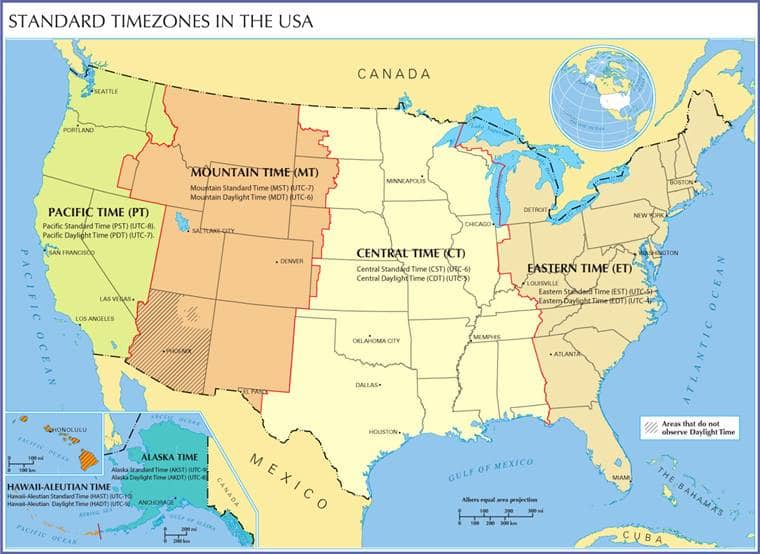
The question of “Does Arizona have time change?” is a resounding “No” for most of the state. While the majority of the United States springs forward in March and falls back in November, Arizona remains steadfastly on Mountain Standard Time (MST) all year round. This means that during the warmer months, when DST is in effect elsewhere, Arizona’s time aligns with Pacific Daylight Time (PDT). When DST ends, it reverts to being one hour ahead of Pacific Standard Time (PST). This consistency, while convenient for residents, often catches unsuspecting travelers off guard.
A History of Non-Observance
The decision for Arizona to opt out of Daylight Saving Time dates back to the 1960s. The primary reason is rooted in the state’s extreme summer heat. Arizona experiences scorching temperatures that can often exceed 100 degrees Fahrenheit (38 degrees Celsius) for extended periods. The purpose of DST in other regions is typically to extend daylight into the evening, saving energy and providing more time for outdoor activities. However, in Arizona, an extra hour of daylight in the evening during summer would mean an extra hour of intense sun and heat, driving up air conditioning costs and making outdoor activities less pleasant.
By not observing DST, Arizona effectively shifts an hour of daylight from the evening to the morning during the summer. This allows residents and visitors to start their days earlier, when temperatures are more manageable, and to enjoy cooler evenings. The Arizona State Legislature formally rejected DST in 1968, recognizing that an earlier sunrise and sunset better suited the desert climate and lifestyle. This legislative decision has remained largely unchallenged, making Arizona one of only two states (the other being Hawaii) that do not observe Daylight Saving Time across most of its territory.
Understanding Mountain Standard Time (MST)
Mountain Standard Time (MST) is generally seven hours behind Coordinated Universal Time (UTC-7). This time zone is shared by several other states, including Colorado, New Mexico, Utah, and parts of Idaho, Montana, and Wyoming. However, these neighboring states do observe Daylight Saving Time, shifting to Mountain Daylight Time (MDT) during the summer.
This creates an interesting dynamic for Arizona. From early November to mid-March, when DST is not in effect anywhere, Arizona is on Mountain Standard Time, which is one hour ahead of Pacific Standard Time (PST) and two hours behind Central Standard Time (CST), and three hours behind Eastern Standard Time (EST).
However, from mid-March to early November, when DST is active, Arizona remains on Mountain Standard Time. During this period, it essentially aligns with Pacific Daylight Time (PDT), which is also UTC-7. This means that Arizona is the same time as California and Nevada during their DST period. It is also two hours behind Central Daylight Time (CDT) and three hours behind Eastern Daylight Time (EDT). This unique alignment is what often leads to confusion, particularly for those crossing state lines or flying into Arizona during the summer months.
The Unique Exception: Navajo Nation
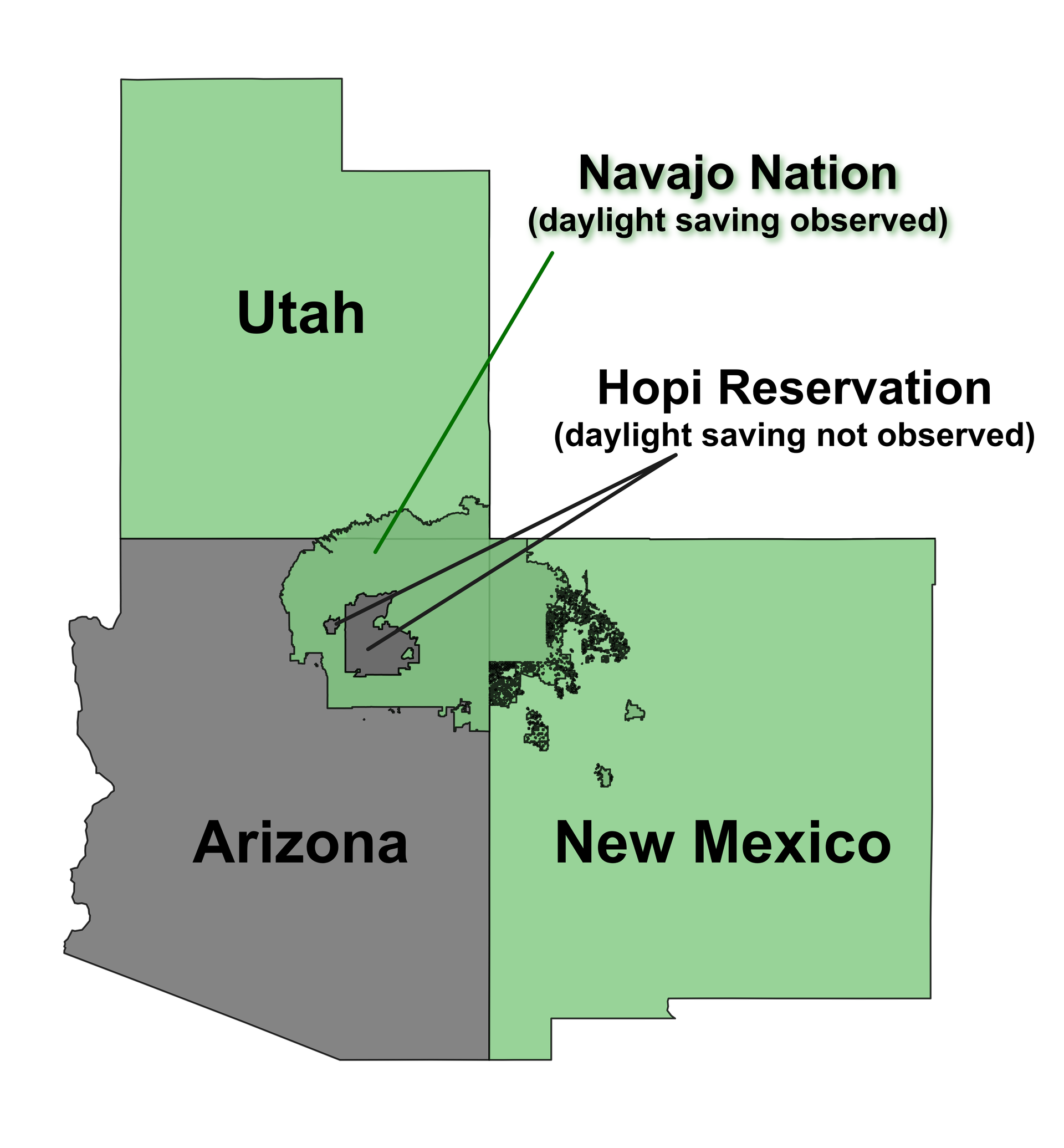
While the vast majority of Arizona adheres to the “no Daylight Saving Time” rule, there is one significant and geographically extensive exception: the Navajo Nation. This autonomous tribal land, the largest Native American reservation in the United States, covers a considerable portion of northeastern Arizona, extending into New Mexico and Utah.
Why the Navajo Nation Observes DST
The Navajo Nation observes Daylight Saving Time for practical and administrative reasons. Because the Navajo Nation spans three states (Arizona, New Mexico, and Utah), all of which do observe DST (except the portion of Arizona it resides in), its leadership decided to adopt DST to maintain consistent timekeeping across the reservation. This simplifies coordination for tribal government, schools, businesses, and essential services that interact with different parts of the reservation and neighboring communities.
This decision means that from March to November, when the rest of Arizona remains on Mountain Standard Time, the Navajo Nation springs forward to Mountain Daylight Time. So, if you’re traveling through areas like Page, Window Rock, or the Monument Valley Navajo Tribal Park, you will need to adjust your clocks by an hour relative to the non-DST parts of Arizona.
Practical Implications for Travelers in the Four Corners Region
For travelers venturing into the Four Corners region, where Arizona, Colorado, New Mexico, and Utah meet, the Navajo Nation’s adherence to DST adds another layer of complexity. If you’re visiting landmarks like Antelope Canyon, Monument Valley, or Canyon de Chelly National Monument, which are all within the Navajo Nation, you must be mindful of the time change.
Tour operators, often based in nearby towns like Page (which is not on Navajo Nation land and thus doesn’t observe DST), typically specify the time zone for their tours. For instance, a tour scheduled for 9:00 AM Navajo Time would be 8:00 AM Arizona Time. It’s always best to confirm the local time zone with your tour provider, hotel, or attraction when making plans in this region. This diligent check ensures you don’t miss a once-in-a-lifetime photo opportunity or a crucial booking.
Navigating Arizona’s Time for Travelers
Understanding Arizona’s unique time zone situation is paramount for a seamless travel experience. It affects everything from transportation logistics to dining reservations and daily activity planning.
Planning Your Itinerary: Flights, Check-ins, and Tours
When booking flights to major Arizona airports like Phoenix Sky Harbor International Airport (PHX) or Tucson International Airport (TUS) during the DST period (March to November), remember that Arizona will be on the same time as California and Nevada. So, if your flight departs Los Angeles at 10:00 AM PDT, it will arrive in Phoenix at 10:00 AM MST. However, if you’re flying from Denver at 10:00 AM MDT, it will arrive in Phoenix at 9:00 AM MST. Always double-check your airline’s listed arrival and departure times, as they generally account for local time zones.
For hotel check-ins, especially if you’re driving across state lines, be mindful of the potential hour difference. For example, if you’re driving from Las Vegas (Nevada observes DST) to Kingman, Arizona, during summer, you won’t change your clock. The time will be the same. But if you’re coming from Gallup, New Mexico (which observes DST), into Holbrook, Arizona, during summer, you’ll gain an hour.
When booking tours or activities, particularly those with strict schedules like Antelope Canyon tours or helicopter rides over the Grand Canyon, clarify the exact time zone. Most reputable tour operators are well aware of the confusion and will clearly state “Arizona Time” or “Navajo Nation Time” in their communications. Modern smartphones usually update automatically, but it’s wise to carry a traditional watch or simply confirm with a local to avoid missing an excursion.
Enjoying Arizona’s Attractions Without Time Confusion
Arizona’s consistent timekeeping, once understood, can simplify your visit. Major attractions like the Grand Canyon South Rim, the Desert Botanical Garden in Phoenix, or the historic streets of Old Town Scottsdale operate on the standard Arizona (MST) time. This means that opening and closing times will remain constant throughout the year, removing the need to adjust your schedule for a seasonal time shift.
For outdoor activities, which are a cornerstone of the Arizona experience, the absence of DST means earlier sunrises during the summer. This is actually a blessing, as it encourages visitors to hit the hiking trails or explore national parks during the cooler morning hours. Imagine experiencing the sunrise over the Grand Canyon or the red rocks of Sedona without having to wake up an “extra” hour earlier. The longer, cooler evenings are also perfect for stargazing or enjoying an alfresco dinner.
Culinary Delights and Evening Entertainment
Dining and entertainment schedules in Arizona also remain consistent year-round. Restaurants, bars, and theaters in cities like Phoenix, Tucson, and Flagstaff will open and close at the same local time, regardless of the season. This predictability is a subtle but significant convenience for travelers. You won’t have to re-evaluate your dinner reservations or showtimes based on a time shift.
For those staying at luxury resorts in Scottsdale or charming boutique hotels in Sedona, spa appointments, golf tee times, and special events will also adhere to the consistent Arizona time. This seamless integration of local time into daily life contributes to a more relaxed and enjoyable vacation, allowing visitors to focus on experiencing the local culture, cuisine, and attractions rather than grappling with time zone changes.
Beyond Time: Maximizing Your Arizona Experience
While understanding Arizona’s time zone is key, a truly memorable trip involves much more. The state offers a diverse range of accommodations, iconic landmarks, and lifestyle choices to suit every traveler’s preference.
Accommodation Choices Across the State
From opulent suites to charming villas, Arizona boasts an impressive array of hotels and accommodation options. In Phoenix and Scottsdale, you’ll find world-class resorts like the Hyatt Regency Scottsdale Resort & Spa at Gainey Ranch or the Biltmore, A Waldorf Astoria Resort, offering luxurious amenities, championship golf courses, and stunning desert views. These establishments often feature exquisite dining, rejuvenating spas, and elaborate pool complexes, perfect for a high-end lifestyle trip.
For those seeking a more rustic or nature-immersed experience, cabins near the Grand Canyon or boutique hotels in Sedona provide a different charm. Flagstaff offers a cooler mountain climate with cozy lodges, while Tucson combines historic inns with modern hotels. Many accommodations also provide excellent resources for local tourism, helping guests plan activities that perfectly align with local schedules. Booking in advance, especially during peak season, is always recommended to secure the best rates and availability, and remember to confirm check-in times in local Arizona time.
Iconic Landmarks and Natural Wonders
Arizona is synonymous with its breathtaking natural landmarks. The awe-inspiring Grand Canyon National Park is a must-see, offering unparalleled vistas and hiking opportunities. Remember that the South Rim is typically on Arizona time, while the North Rim is also on Arizona time. However, if you’re approaching from Utah, you will cross a time zone.
Beyond the Grand Canyon, explore the mystical red rock formations of Sedona, known for its spiritual vortexes and vibrant arts scene. The saguaro cacti forests of Saguaro National Park near Tucson offer unique desert hiking, while the Petrified Forest National Park unveils a landscape of ancient, fossilized wood. For those seeking cultural landmarks, the ancient cliff dwellings of Montezuma Castle National Monument provide a glimpse into past civilizations. Each of these destinations offers incredible photographic opportunities and a chance to connect with the state’s rich history and natural beauty, all while operating on predictable local time.
Lifestyle Travel: From Luxury Resorts to Budget-Friendly Adventures
Arizona caters to every travel lifestyle. For a luxurious escape, consider a stay at one of Scottsdale’s five-star resorts, indulging in gourmet dining, spa treatments, and championship golf. These destinations often host exclusive events and offer personalized experiences that define luxury travel.
Families looking for adventure will find ample opportunities, from water parks in Phoenix to educational attractions and kid-friendly hikes throughout the state. Budget travelers can take advantage of numerous campgrounds in national forests, affordable motels, or vacation rentals, allowing for incredible adventures without breaking the bank. From thrilling whitewater rafting trips on the Colorado River to peaceful stargazing in the dark skies of Northern Arizona, the state offers experiences that are accessible and enjoyable for everyone. Understanding the local time ensures that whether you’re embarking on a guided tour, enjoying a family meal, or simply relaxing by the pool, your activities run precisely as planned, maximizing every moment of your Arizona adventure.
In conclusion, while the question “Does Arizona have time change?” can initially seem perplexing, the answer is straightforward for most of the state: no Daylight Saving Time. This unique characteristic, born from a desire to adapt to the desert climate, ultimately simplifies travel by providing consistent timekeeping throughout the year. With the exception of the Navajo Nation, you can generally set your watch to Mountain Standard Time and enjoy your visit without the annual spring forward or fall back. By being aware of this single quirk, travelers can effortlessly navigate the state’s diverse attractions, ensuring their focus remains on creating unforgettable memories amidst Arizona’s spectacular landscapes and vibrant culture.
LifeOutOfTheBox is a participant in the Amazon Services LLC Associates Program, an affiliate advertising program designed to provide a means for sites to earn advertising fees by advertising and linking to Amazon.com. Amazon, the Amazon logo, AmazonSupply, and the AmazonSupply logo are trademarks of Amazon.com, Inc. or its affiliates. As an Amazon Associate we earn affiliate commissions from qualifying purchases.