
California, a state renowned globally for its stunning Pacific Coast highways, vibrant cities like Los Angeles and San Francisco, iconic landmarks, and a lifestyle that draws millions, also stands out for its distinctive and comprehensive legal framework. For both residents and visitors, understanding the nuances of local laws is paramount to ensuring a smooth and enjoyable experience, whether you’re embarking on a luxurious Malibu getaway, exploring the bustling streets of San Diego, or considering a long-term stay. Among the various legal considerations, firearm ownership and licensing represent one of the most rigorously regulated aspects of life and travel within the Golden State.
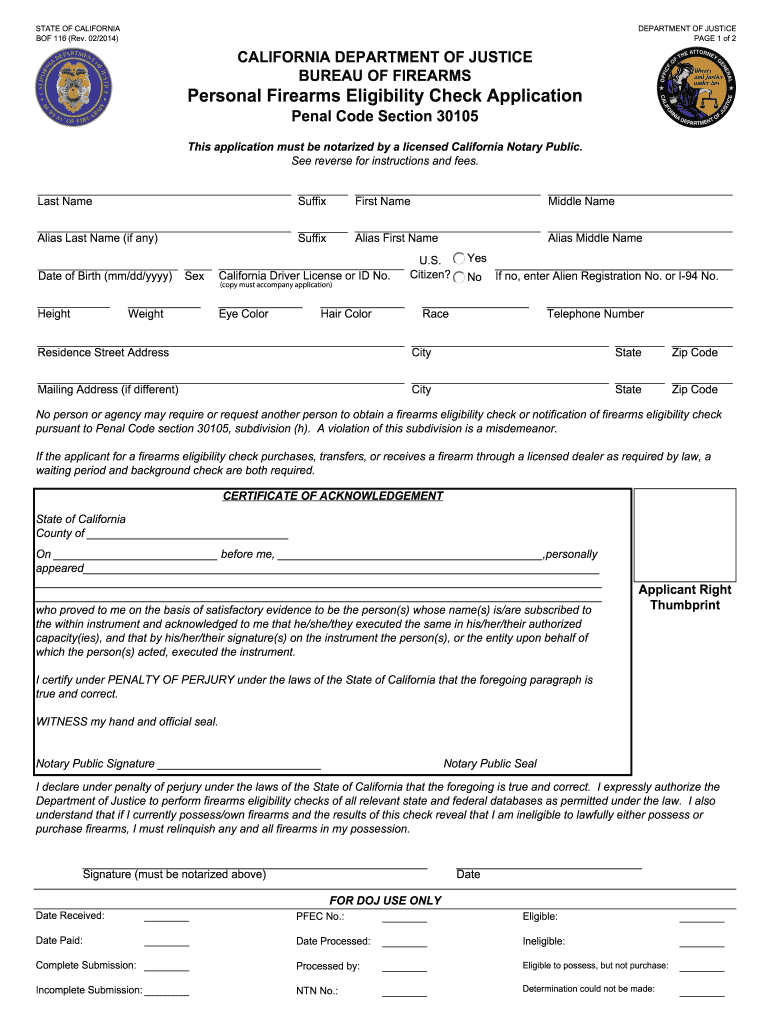
Unlike many other states in the United States, California maintains some of the nation’s strictest gun laws. This comprehensive regulatory environment significantly impacts individuals considering firearm ownership for sport, self-defense, or as part of a lifestyle change when relocating to the state. It also has critical implications for travelers who might be accustomed to different firearm regulations in their home states or countries and are planning to transport firearms through or within California. This article aims to demystify the process of understanding firearm licensing in California, providing essential insights for anyone looking to navigate its complex legal landscape responsibly. From the initial requirements for basic ownership to the rigorous standards for concealed carry permits, we’ll explore the key steps, challenges, and considerations that shape firearm acquisition and possession in this popular travel destination. For those planning a move or an extended visit, comprehending these laws is as crucial as researching accommodation options or mapping out tourist attractions to ensure a compliant and stress-free experience in the Golden State.
Navigating California’s Unique Legal Landscape for Firearms
California’s approach to firearm regulation is characterized by its stringency, often setting it apart from the rest of the nation. This robust framework is designed to prioritize public safety, influencing everything from the types of firearms available for purchase to how they can be stored and carried. For anyone accustomed to more permissive gun laws, whether from another state or an international location, the differences can be substantial and, if overlooked, lead to significant legal complications. Understanding this foundational legal landscape is the first step in comprehending what it means to acquire or possess a firearm in California.
At the heart of California’s gun laws is a “may-issue” policy for concealed carry weapon (CCW) permits, meaning that local law enforcement agencies (usually county sheriffs or city police chiefs) have significant discretion in approving or denying applications, even if all statutory requirements are met. This contrasts sharply with “shall-issue” states, where permits are granted if an applicant meets predefined criteria. Furthermore, California has implemented a series of specific prohibitions and restrictions that impact firearm ownership. These include a ban on what the state defines as “assault weapons,” limitations on magazine capacities, mandatory waiting periods for firearm purchases, and strict requirements for safe storage.
The state also maintains a “Roster of Certified Handguns,” which specifies the models of handguns that can be sold by licensed dealers. This roster is continuously updated and requires handguns to meet specific safety criteria, including microstamping technology for new models, which has significantly limited the availability of new handgun models in the state. For those exploring California with recreational activities in mind, such as sport shooting or hunting, these regulations are crucial. While certain activities are permissible, the type of firearm one can use, its capacity, and how it is transported are all subject to stringent rules. This intricate web of laws underscores the importance of thorough research and diligent compliance for both long-term residents and those on an extended California stay, ensuring that their lifestyle choices remain within the bounds of the law.
The Foundational Steps for Firearm Ownership
For anyone considering firearm ownership in California, it’s essential to understand that the process is not merely about purchasing a weapon. It involves a series of mandatory steps and stringent requirements designed to ensure that firearms are only acquired and possessed by eligible individuals. These foundational steps are crucial for both first-time owners and those relocating to California from areas with less restrictive gun laws.
Establishing Residency and Eligibility
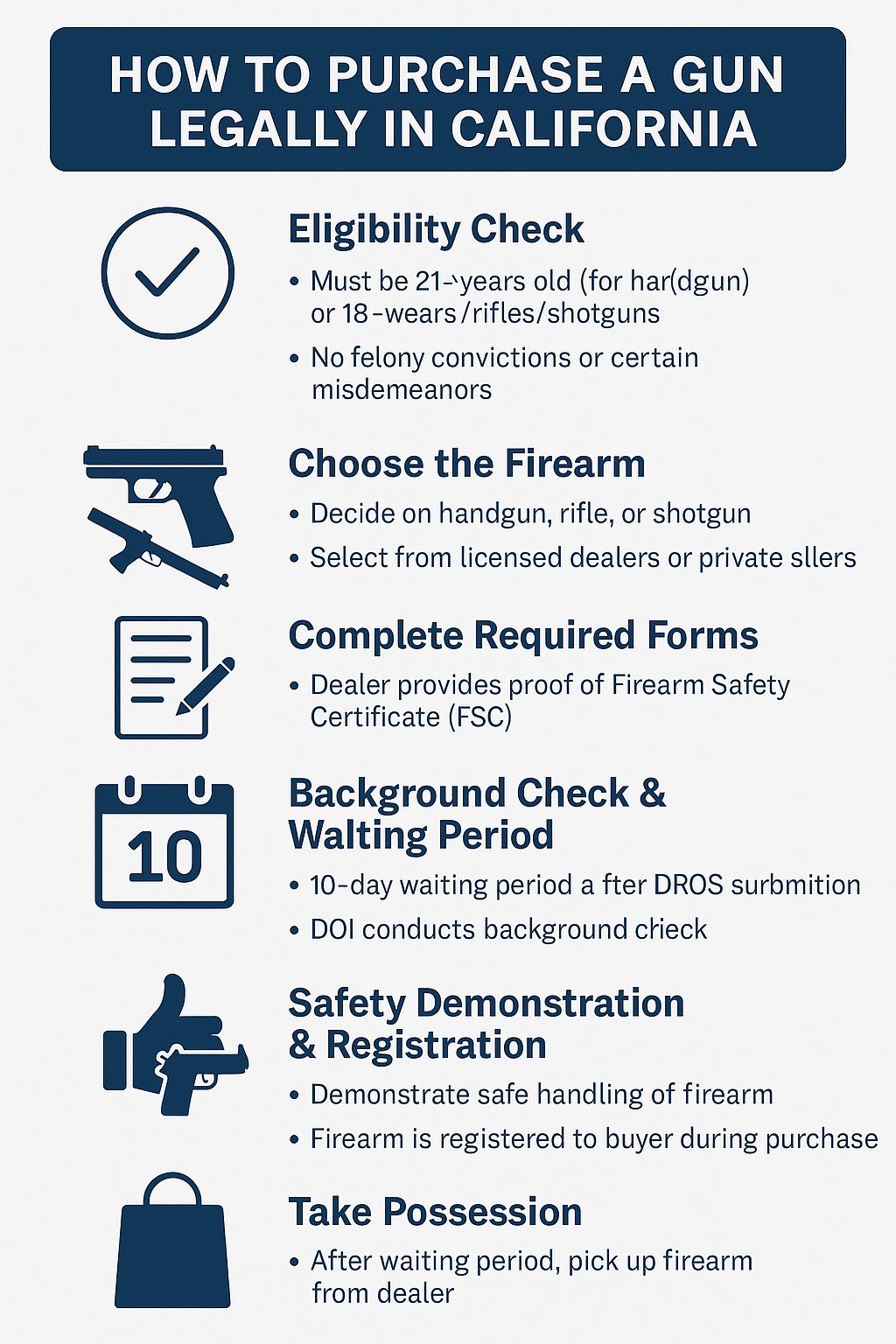
The most fundamental requirement for acquiring a gun license or purchasing a firearm in California is establishing residency. Generally, firearm sales and licensing are restricted to bona fide California residents who possess a valid California Driver’s License or ID card. This ensures that applicants are subject to the state’s jurisdiction and can be thoroughly vetted through local and national databases. Beyond residency, eligibility hinges on a clean record and sound mental health. Applicants must be at least 21 years old (with exceptions for certain long guns, requiring 18 years of age), pass a comprehensive background check that scrutinizes their criminal history for felony convictions, certain misdemeanor convictions (e.g., domestic violence), and any history of mental health disqualifiers. Federal and state laws prohibit individuals with specific criminal records or those deemed a danger to themselves or others from possessing firearms. These checks are conducted through the California Department of Justice (DOJ) and the Federal Bureau of Investigation (FBI), underscoring the state’s commitment to rigorous vetting. Understanding these eligibility criteria is vital for anyone planning to integrate firearm ownership into their California lifestyle.
The Mandate of the Firearm Safety Certificate (FSC)
Before an individual can purchase or receive a handgun, rifle, or shotgun in California, they must first obtain a Firearm Safety Certificate (FSC). This certificate is a testament to the state’s emphasis on responsible gun ownership and firearm education. To acquire an FSC, applicants must pass a written test, which covers basic firearm safety, handling, storage, and relevant California gun laws. The test typically consists of 30 questions, and a passing score of at least 75% is required.
The FSC test can be administered by certified instructors, often found at licensed firearm dealers. Preparation materials, including the Firearm Safety Certificate Study Guide, are readily available online through the California DOJ website. This ensures that all potential firearm owners are familiar with the fundamental principles of safe gun handling and legal obligations. The FSC is valid for five years and is a mandatory precursor to any firearm purchase, highlighting California’s proactive approach to ensuring that individuals are knowledgeable and responsible before acquiring a weapon. For those considering a move to California or a long-term stay, integrating this educational component into their planning is essential.
Understanding Approved Handguns and Ammunition Regulations
California’s “Roster of Certified Handguns” is a unique and significant aspect of its firearm laws. This roster, maintained by the California Department of Justice, lists specific handgun models that have been tested and certified as meeting the state’s safety and functionality standards, including drop safety, firing pin block, and increasingly, microstamping capabilities. Only handguns on this roster can be legally sold, offered for sale, or manufactured in California by licensed firearm dealers. This effectively limits the types of handguns available to consumers, as new models often struggle to meet the evolving technological requirements.
Beyond handguns, California also imposes strict regulations on other types of firearms and ammunition. The state has a comprehensive ban on what it classifies as “assault weapons,” based on specific features like pistol grips, collapsible stocks, and flash suppressors. Furthermore, high-capacity magazines (those capable of holding more than 10 rounds) are generally prohibited. Ammunition sales are also regulated, requiring purchasers to undergo a background check at the point of sale. This means that even if you legally own a firearm, acquiring ammunition involves an additional verification step. These regulations collectively shape the landscape of firearm ownership, influencing everything from recreational shooting to personal defense strategies for [California](https://lifeoutofthebox.com/california] residents. Visitors contemplating participating in shooting sports or hunting activities within the state must be acutely aware of these restrictions to avoid legal pitfalls.
Exploring Concealed Carry Weapons (CCW) Permits
While basic firearm ownership in California involves a clear, albeit rigorous, process, obtaining a Concealed Carry Weapon (CCW) permit is considerably more challenging and discretionary. A CCW permit allows an individual to carry a loaded, concealed firearm in public, a privilege that is strictly regulated and not universally granted across the state. Understanding the nuances of the CCW application process is critical for anyone whose lifestyle or personal safety concerns extend to carrying a firearm for self-defense outside the home.
Historically, California operated under a “good cause” requirement for CCW permits, which demanded applicants demonstrate a compelling reason beyond general self-defense to carry a concealed weapon. This often led to significant variations in permit issuance rates between counties, with some urban areas like San Francisco County or Santa Clara County having very low rates, while more rural areas might have higher rates. However, a significant legal development in 2022, the Supreme Court’s ruling in New York State Rifle & Pistol Association v. Bruen, altered the landscape by striking down “good cause” requirements, mandating that states issue permits if applicants meet objective criteria. California has since revised its laws (via Senate Bill 2), replacing “good cause” with “good moral character” and expanding “sensitive places” where firearms are prohibited, maintaining a high bar for CCW issuance.
The application process for a CCW permit is extensive and typically involves several stages:
- Application Submission: Applicants must submit a detailed application to their local licensing authority (usually the county sheriff in unincorporated areas or the police chief in cities). This application requires extensive personal information, criminal history, and often, character references.
- Interviews and Background Checks: Following the initial application, applicants undergo one or more interviews with law enforcement personnel. A thorough background investigation is conducted, delving into criminal records, mental health history, and often personal conduct, to assess the applicant’s “good moral character.”
- Firearm Training: Successful applicants are required to complete a comprehensive firearm training course, typically ranging from 8 to 16 hours. This training covers firearm safety, proficiency, and the legal aspects of carrying a concealed weapon in California.
- Fees: Substantial application and permit fees are associated with the process, covering the costs of background checks, training, and administrative processing.
Even with the legal changes, the issuance of CCW permits in California remains a discretionary decision by local authorities, based on their assessment of the applicant’s suitability and adherence to the state’s updated requirements. This makes it a complex and often lengthy process, requiring significant commitment and adherence to all legal protocols. For residents of Orange County, Riverside County, or Sacramento County — or any other jurisdiction — understanding their specific local law enforcement’s interpretation and application of these updated laws is paramount. This deep dive into CCW permits highlights the significant legal hurdles involved in extending firearm use beyond the home, making it a critical consideration for anyone integrating firearm ownership into their California lifestyle.
Essential Considerations for Visitors and New California Residents
For individuals traveling to California or considering a move to the Golden State, understanding firearm laws extends beyond mere ownership—it encompasses responsible transportation, secure storage, and the critical importance of seeking expert legal guidance. These considerations are vital to ensure compliance with California’s strict regulations and to prevent inadvertent legal issues during your stay or transition.
Responsible Firearm Transportation for Travelers
Travelers entering or passing through California with firearms must be acutely aware of the state’s stringent transportation laws. Unlike some states where firearms can be easily transported, California generally requires all firearms to be transported unloaded and locked in a secure container. Handguns must be in a locked container, separate from ammunition, and not readily accessible from the passenger compartment of the vehicle. For long guns (rifles and shotguns), they must also be unloaded and either in a locked container or securely encased.
It’s crucial to understand that even if you possess a valid CCW permit from another state, it is generally not recognized in California. This means that carrying a concealed firearm, even with an out-of-state permit, is almost always illegal within California without a California-issued permit. This applies to both driving through the state and arriving at California’s airports. Federal law, specifically the Firearm Owners’ Protection Act (FOPA), does provide some protection for interstate transport of firearms through states where they might otherwise be illegal, provided the firearm is unloaded, locked in a container, and not readily accessible, and the traveler is merely passing through. However, even under FOPA, state laws regarding storage and transport within the vehicle must be followed. For travelers planning a road trip along the scenic Highway 1 or a visit to Yosemite National Park, ignoring these rules can lead to serious legal consequences, including arrest and felony charges.
Navigating Storage in Temporary Accommodations
When staying in hotels, resorts, or other temporary accommodations in California, firearm storage presents another layer of complexity. California has “safe storage” laws that require firearms to be stored in a locked container or disabled with a trigger lock when not in the immediate control of the owner, especially in residences where a minor or prohibited person might gain access. While these laws are primarily aimed at residents, the principle of responsible storage extends to temporary living situations.
Hotels and other lodging establishments typically have their own policies regarding firearms on their premises. It is imperative to inquire about these policies before booking or arriving at your chosen accommodation. Some establishments may prohibit firearms entirely, while others may require them to be secured in a hotel safe or stored with hotel management. Relying on an unlocked suitcase or placing a firearm in a nightstand drawer, even in a private room, could violate both state law and hotel policy, potentially leading to eviction or legal trouble. For tourists exploring Disneyland in Anaheim or enjoying a stay at a beachfront resort near Santa Monica, prioritizing legal and safe storage is not just about compliance, but also about ensuring a peaceful and uninterrupted travel experience.
Seeking Expert Legal Counsel
Given the complexity and ever-evolving nature of California’s firearm laws, the single most important piece of advice for both residents and visitors is to seek expert legal counsel. Attempting to interpret these laws on your own can lead to misunderstandings and serious legal repercussions. A qualified attorney specializing in California firearm law can provide personalized advice based on your specific circumstances, whether you are planning to purchase a firearm, apply for a CCW permit, relocate to the state, or simply travel through it with a firearm.
Legal professionals can clarify the latest legislative changes, guide you through the intricate application processes, and advise on proper transportation and storage methods. Relying on information from online forums or well-meaning but unqualified acquaintances can be risky. For anyone whose lifestyle or travel plans involve firearms in California, investing in sound legal advice is not merely a recommendation; it is an essential step towards responsible and lawful engagement with the state’s unique legal environment.
Navigating the landscape of firearm ownership and licensing in California is undoubtedly a complex endeavor, requiring meticulous attention to detail and a profound respect for the law. For those drawn to the Golden State’s vibrant lifestyle, diverse destinations, and rich cultural tapestry, understanding these specific regulations is as crucial as planning your itinerary or choosing the perfect hotel. From the foundational requirements for eligibility and safety certificates to the rigorous standards for concealed carry permits, California’s laws reflect a deep commitment to public safety. Whether you are a long-term resident, a new arrival, or a traveler merely passing through, responsible engagement with these laws ensures not only personal compliance but also contributes to the safety and security of all who call California home or visit its myriad attractions. Always prioritize thorough research, diligent adherence to legal protocols, and when in doubt, consult with experienced legal professionals to ensure a lawful and worry-free experience in this magnificent state.
LifeOutOfTheBox is a participant in the Amazon Services LLC Associates Program, an affiliate advertising program designed to provide a means for sites to earn advertising fees by advertising and linking to Amazon.com. Amazon, the Amazon logo, AmazonSupply, and the AmazonSupply logo are trademarks of Amazon.com, Inc. or its affiliates. As an Amazon Associate we earn affiliate commissions from qualifying purchases.