
In the sun-baked expanse of Southern California‘s Sonoran Desert lies a place unlike any other on earth: Slab City. Often dubbed “The Last Free Place,” this off-grid community offers a profound counterpoint to the manicured resorts and bustling metropolises that typically define California. For the intrepid traveler, Slab City isn’t just a destination; it’s an experience, a dive into an alternative lifestyle, and a testament to the enduring human spirit of creativity and self-reliance. This comprehensive guide will not only pinpoint Slab City’s exact location but also delve into its unique culture, must-see attractions, and practical considerations for those planning a visit.
Unearthing the Location: Slab City’s Desert Enclave
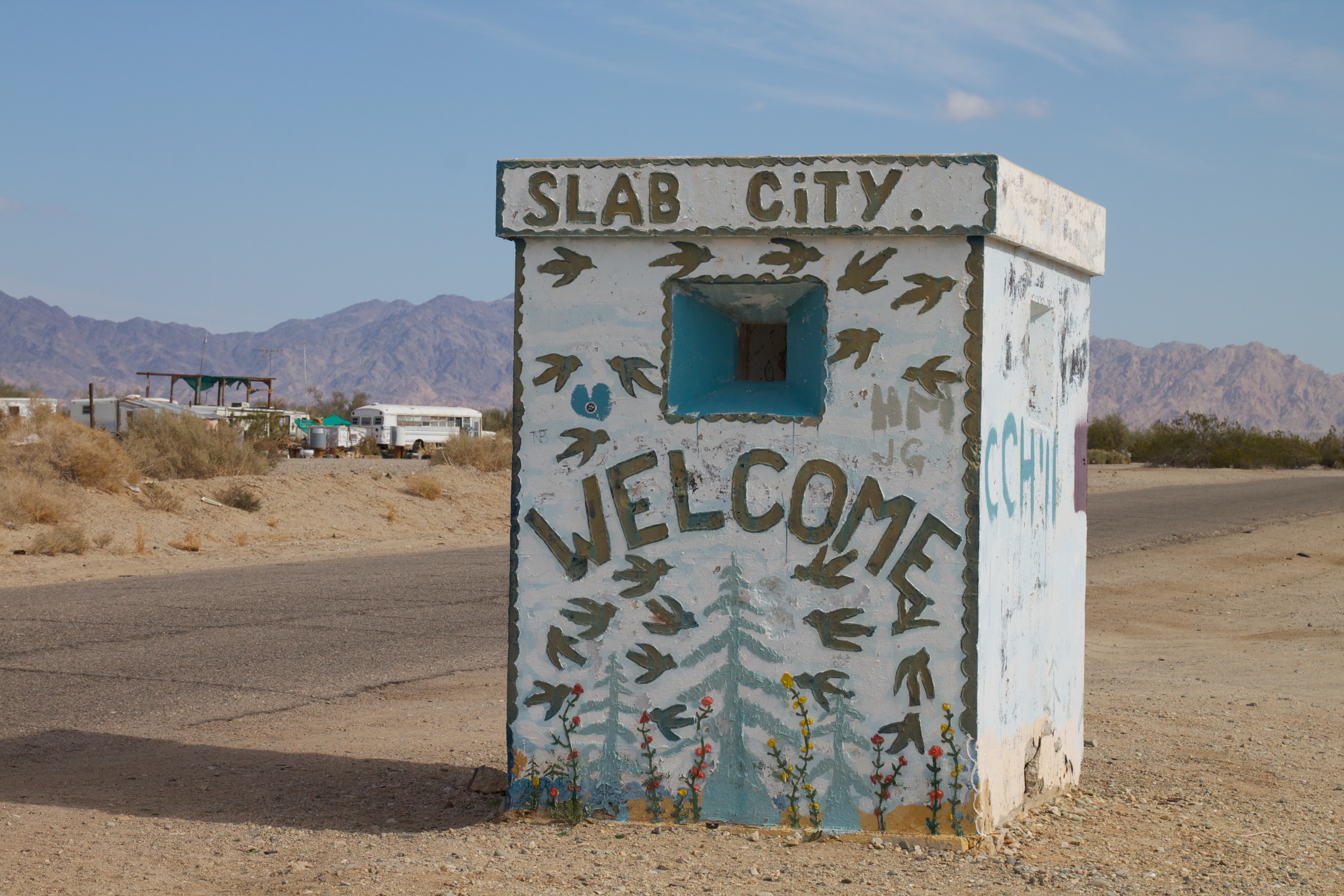
For many, the first question is always, “Where exactly is Slab City?” It’s a reasonable query, given its remote and unincorporated status. Unlike traditional cities, you won’t find it clearly marked on most conventional maps or signposted along major highways. This very elusiveness contributes to its mystique and charm.
A Geographical Anomaly in Southern California
Slab City is located in Imperial County, a vast, largely rural area in the southeastern corner of California. More specifically, it sits approximately 150 miles east of San Diego, about 50 miles south of Palm Springs, and just a few miles northeast of the small town of Niland. Its position is particularly significant because it’s nestled near the eastern shore of the Salton Sea, California’s largest lake, known for its ecological complexities and striking, often haunting, beauty.
Reaching Slab City typically involves a drive. From Niland, you’ll take Highway 111 north for a short distance before turning right onto Browning Road, which leads directly into the heart of the community. The drive itself is an integral part of the experience, gradually transitioning from agricultural fields to stark desert landscapes, signaling your arrival in an unconventional realm. The journey emphasizes Slab City’s isolation and its deliberate removal from mainstream society. For those considering this unique travel destination, understanding its remote location is the first step in appreciating its distinct character. This is not a place for spontaneous, unprepared visits; it demands a degree of intentionality and readiness for an off-the-beaten-path adventure.
From Military Base to Counter-Culture Haven
The origins of Slab City’s name and existence are rooted in its fascinating history. It wasn’t always a haven for artists and free spirits; it began as a military installation. During World War II, the site was home to Camp Dunlap, a Marine Corps training base. After the war, the base was decommissioned, and most of its structures were dismantled. What remained, however, were the concrete slabs that once formed the foundations of the barracks and other buildings.
These concrete slabs, enduring reminders of a bygone era, became the literal and metaphorical foundation for the community that emerged decades later. In the 1960s, a trickle of people, drawn by the promise of free living and an escape from societal norms, began to settle on these abandoned slabs. Initially, it was a winter haven for “snowbirds” – retirees seeking warm weather and inexpensive living – but it gradually evolved into a permanent settlement for a diverse mix of individuals. Artists, musicians, vagabonds, and those simply seeking an alternative lifestyle found solace and freedom in this unlikely desert landscape. The lack of land ownership, utilities, and formal governance attracted those yearning for autonomy and a lifestyle unburdened by conventional rules and regulations. This transformation from a structured military environment to an anarchic artistic commune is a core part of Slab City’s enduring allure and its identity as “The Last Free Place.” It highlights a unique facet of American culture and the diverse expressions of lifestyle within its borders.
The Slab City Lifestyle: Off-Grid Living and Artistic Expression
Life in Slab City is a testament to resilience, creativity, and a fierce commitment to individuality. It’s a world away from the planned communities and amenity-rich resorts often sought after in travel, offering instead an raw, unfiltered experience of self-sufficiency.
The Community and Its Inhabitants
The demographic of Slab City is incredibly varied. During the cooler winter months (October to April), its population swells with “snowbirds” in their RVs and trailers, seeking refuge from harsh winters and embracing the camaraderie of fellow travelers. These temporary residents often bring a sense of order and shared resources, organizing informal events and maintaining designated areas.
However, the heart of Slab City lies with its year-round residents, often referred to as “Slabbers.” These individuals, who number in the hundreds, embody the true spirit of off-grid living. They live in a fascinating assortment of makeshift homes – repurposed buses, elaborately decorated shacks, tents, and even underground dwellings – each a unique expression of its owner’s personality and resourcefulness. There are no municipal services here: no running water, no electricity grid, no trash collection, and certainly no luxury hotels. Residents generate their own power through solar panels, haul in water, and manage their waste. The challenges are immense, especially during the scorching summer months when temperatures regularly soar above 110°F (43°C), making it a truly extreme environment.
Despite the hardships, a strong sense of community often prevails. Residents look out for one another, sharing resources, skills, and companionship. It’s a place where social currency is built on contribution and respect, rather than wealth or status. For many, the choice to live in Slab City is a conscious rejection of consumerism and a pursuit of absolute freedom, albeit one that comes with significant personal responsibility. Understanding this unique social fabric is crucial for any visitor, as it shapes the entire experience of exploring this remarkable destination. It’s a living example of how a community can thrive outside traditional societal structures, offering invaluable insights for those interested in alternative lifestyles and self-sustaining practices.
Landmarks and Attractions of the Slabs
Far from being a barren wasteland, Slab City is a vibrant canvas of artistic expression, a living outdoor gallery that continuously evolves. Its most iconic landmarks are testaments to the power of individual vision and collective creativity, transforming the harsh desert landscape into a wonderland of folk art.
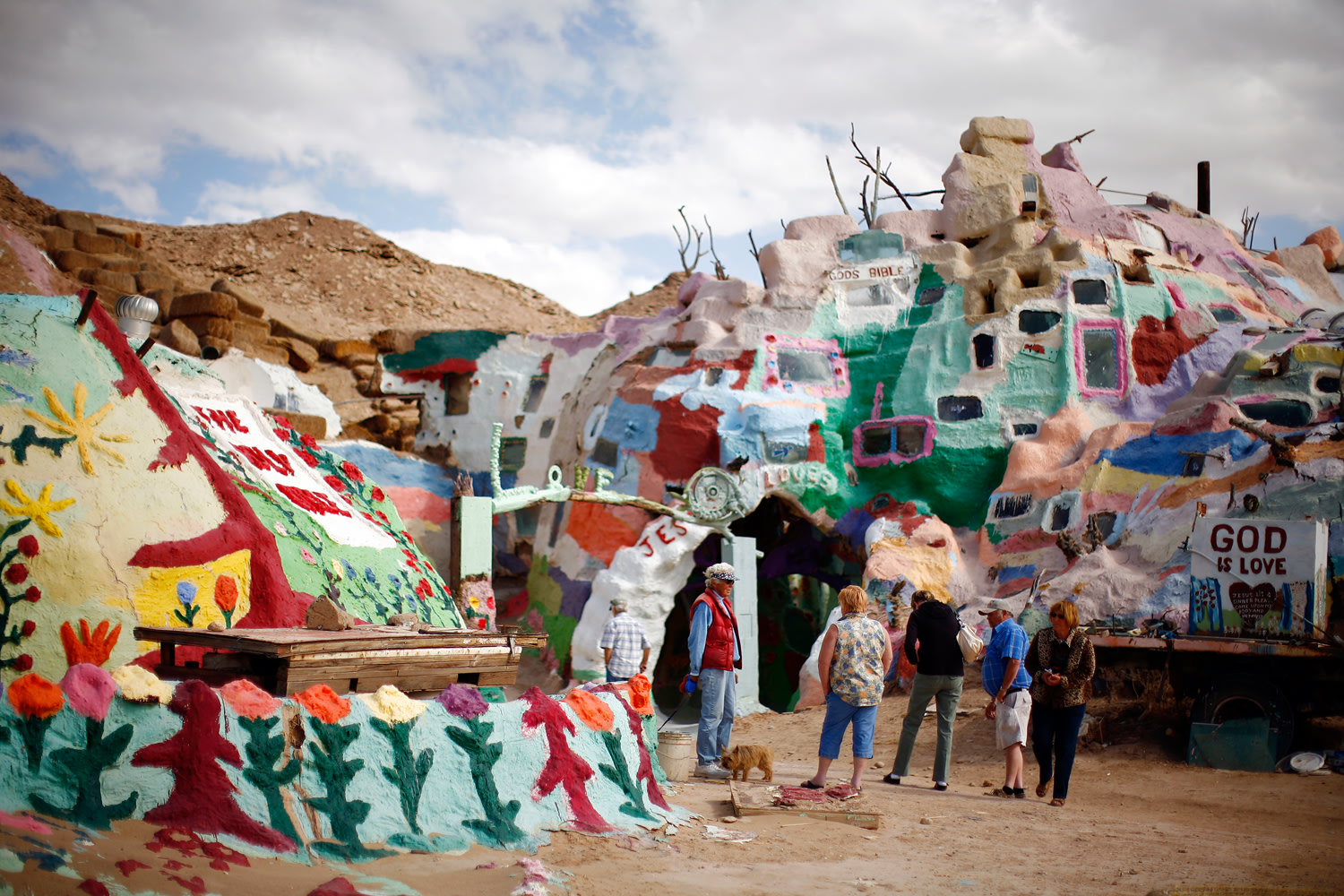
Undoubtedly, the most famous and universally recognized attraction is Salvation Mountain. Created by the late Leonard Knight over nearly three decades, this monumental, vividly painted hillside is a heartfelt tribute to God and love. Fashioned from adobe, straw, and thousands of gallons of lead-free paint, Salvation Mountain is a breathtaking spectacle of color and devout messaging. Its vibrant hues and earnest inscriptions (“God Is Love,” “Jesus I Love You”) draw visitors from around the globe, making it a powerful symbol of faith, perseverance, and outsider art. Knight‘s singular dedication has cemented Salvation Mountain as a legitimate landmark, a must-see for anyone venturing into Slab City.
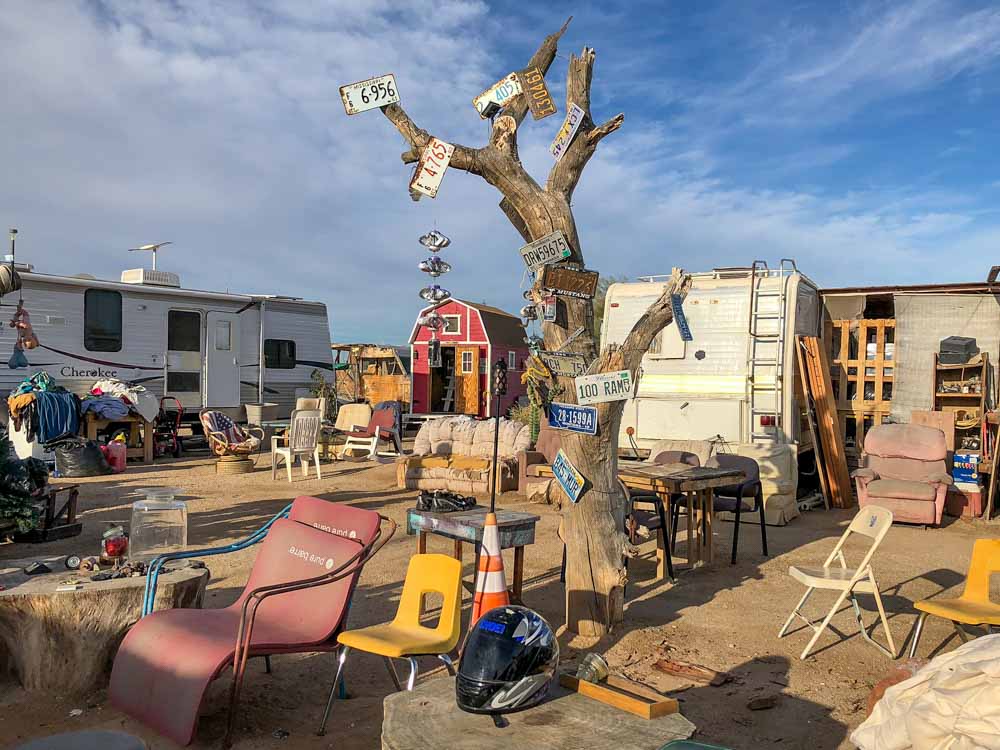
Adjacent to Salvation Mountain, another prominent art installation captures the imagination: East Jesus. This sprawling, ever-expanding art garden is an eclectic collection of sculptures, installations, and structures crafted from discarded materials. From old tires and broken electronics to car parts and appliances, the artists of East Jesus transform trash into thought-provoking and often whimsical treasures. It’s a testament to radical self-expression and environmental repurposing, constantly changing as new artists contribute and old pieces evolve or decay. Visitors can wander through a labyrinth of these creations, encountering everything from a library of broken televisions to a post-apocalyptic sculpture park.
Beyond these major sites, Slab City is dotted with numerous other art camps, unique living spaces, and communal areas. The Range, for example, is an open-air music venue where impromptu concerts, talent shows, and jam sessions are held, often powered by solar generators. Its stage, seating, and decor are all made from found objects, reflecting the quintessential Slab City ethos. There’s also the modest but charming Slab City Library, a small, well-stocked collection of donated books run by volunteers, offering a quiet respite and a sense of intellectual nourishment in the heart of the desert. These various attractions, from the spiritual grandeur of Salvation Mountain to the experimental freedom of East Jesus and the communal spirit of The Range, showcase the vibrant, rebellious, and deeply artistic soul of Slab City. They make it a compelling destination for anyone interested in unique attractions, folk art, and alternative cultural experiences.
Visiting Slab City: A Tourist Perspective
For those intrigued by Slab City’s unique appeal, planning a visit requires a different mindset than preparing for a typical vacation. It’s an exploration, not merely a sightseeing trip, and careful consideration of logistics and local etiquette is paramount.
Planning Your Trip and What to Expect
The optimal time to visit Slab City is during the cooler months, generally from October to April. During this period, daytime temperatures are mild and pleasant, making outdoor exploration enjoyable. Summer visits are strongly discouraged due to extreme heat that can be dangerous, even for experienced desert travelers.
Preparation is key. As there are no services, you must bring everything you need: plenty of water, food, gasoline (fill up in Niland), sunscreen, a hat, and sturdy shoes. A full tank of gas is non-negotiable, and it’s wise to carry extra water even for short day trips. While the community is generally welcoming, it’s essential to approach your visit with respect and an open mind. Remember that Slab City is not a theme park; it is home to real people living their lives.
When exploring, respect privacy and ask permission before photographing residents or their unique homes. Engage with the locals; many are happy to share their stories and insights into life in “The Slabs.” Be mindful of your surroundings, as some areas may be rugged or contain discarded materials. The atmosphere is generally peaceful, but like any transient community, exercising caution and awareness is always advisable. For adventurous travelers seeking experiences beyond the typical tourist guide, Slab City offers profound insights into alternative living and artistic freedom, making it an unforgettable journey. It’s a raw and unfiltered destination, truly a unique chapter in the vast book of travel experiences.
Accommodation and Nearby Amenities
One of the defining characteristics of Slab City is its complete lack of conventional infrastructure, and this extends to accommodation. There are no hotels, motels, or formal lodging options within Slab City itself. For those who choose to immerse themselves fully, the primary form of “accommodation” is camping or RV living on the slabs, mirroring the lifestyle of many residents. This means bringing your own shelter, whether a tent, an RV, or a camper, and being entirely self-sufficient in terms of power, water, and sanitation. It’s an authentic way to experience the unique lifestyle, but it demands careful planning and preparedness for off-grid conditions.
For travelers who prefer more traditional lodging, or simply need a base for day trips into Slab City, nearby towns offer limited options. The closest town with any amenities is Niland, which is very small and has minimal services, primarily a gas station and a few small stores. A wider, though still modest, selection of hotels and amenities can be found in the slightly larger cities of Brawley (about 25 miles south) and El Centro (about 45 miles south). In these towns, you might find standard hotel chains such as a Holiday Inn Express, Comfort Inn, or local motels, offering a comfortable bed, air conditioning (a luxury after a desert day!), and access to basic services like restaurants and groceries.
It is crucial to book any such accommodations in advance, especially during the peak winter season when snowbirds flock to the Imperial Valley. For any visitor, the contrast between the organized amenities of a traditional hotel and the rugged, DIY ethos of Slab City highlights the profound difference in lifestyles. Whether you opt for a minimalist camping experience directly on the slabs or the relative comfort of a nearby hotel, understanding the accommodation landscape is vital for a smooth and enjoyable visit to this extraordinary corner of California.
The Philosophy of “The Last Free Place”
“The Last Free Place” isn’t just a nickname for Slab City; it’s a deeply held philosophy that underpins its very existence and attracts its diverse population. This ethos of absolute freedom and self-determination is what truly sets Slab City apart as a unique landmark and a fascinating subject for anyone interested in alternative lifestyles.
Many are drawn to Slab City as an escape from the perceived pressures and constraints of modern society. Here, there are no property taxes, no utility bills, no zoning laws, and minimal external regulations. For those weary of consumerism, corporate structures, and the high cost of living, Slab City offers a blank slate to redefine their existence. It’s a place where survival hinges on resourcefulness, community, and the ability to adapt to a challenging environment. This radical autonomy fosters a powerful sense of independence and self-reliance, virtues that many feel are lost in the industrialized world.
Beyond the practical aspects of free living, Slab City acts as a haven for unbridled creative expression. Artists, musicians, and eccentrics find an environment where their work is not judged by commercial viability but by its intrinsic merit and contribution to the collective landscape. From the spiritual fervor of Salvation Mountain to the recycled art of East Jesus, the entire community functions as a living, breathing art installation. This cultural freedom allows for experimentation and the development of unique personal styles that might struggle to find an audience elsewhere.
However, the philosophy of freedom also comes with its challenges. The absence of formal governance means residents must rely on informal social contracts and self-policing, which can sometimes lead to issues of sanitation, safety, and order. The harsh desert environment constantly tests the resilience of its inhabitants, demanding a high degree of adaptability and perseverance. Despite these difficulties, the draw of “The Last Free Place” remains potent, embodying an enduring American ideal of forging one’s own path, even if it’s off the beaten track and away from the comforts of conventional society. It’s a powerful reminder that freedom, in its purest form, often demands significant personal sacrifice and an unwavering spirit of adventure. For anyone seeking a deeper understanding of counter-culture movements and the pursuit of ultimate liberty, Slab City is an invaluable and unforgettable living lesson.
In conclusion, Slab City, California, is more than just a dot on a map; it’s a vibrant, living experiment in alternative living, artistic freedom, and self-reliance. Located in the remote Sonoran Desert of Imperial County, it stands as a stark contrast to typical travel destinations. From its origins as Camp Dunlap to its current incarnation as “The Last Free Place,” it offers intrepid travelers a glimpse into a world where rules are few, creativity is boundless, and the human spirit endures against all odds. While devoid of traditional hotels and luxurious amenities, its unique landmarks like Salvation Mountain and East Jesus, and its resilient community, offer an unparalleled travel experience for those seeking adventure, cultural immersion, and a profound understanding of unconventional lifestyles. A visit to Slab City isn’t just a trip; it’s an encounter with the untamed heart of California’s desert frontier, a true testament to the endless possibilities of human ingenuity and freedom.
LifeOutOfTheBox is a participant in the Amazon Services LLC Associates Program, an affiliate advertising program designed to provide a means for sites to earn advertising fees by advertising and linking to Amazon.com. Amazon, the Amazon logo, AmazonSupply, and the AmazonSupply logo are trademarks of Amazon.com, Inc. or its affiliates. As an Amazon Associate we earn affiliate commissions from qualifying purchases.