
Embarking on a road trip from Indiana to Chicago promises an exciting journey, perhaps filled with anticipation of exploring world-class museums, iconic landmarks, and vibrant culinary scenes. For many, planning the perfect travel itinerary involves meticulous consideration of accommodation options, local tourism attractions, and the overall lifestyle experience of the destination. However, a question that sometimes arises for firearm owners is whether it’s permissible to transport a gun across state lines, specifically from Indiana to Chicago. This isn’t just a matter of convenience; it delves deep into the complex tapestry of federal, state, and local laws that govern firearm possession and transportation.
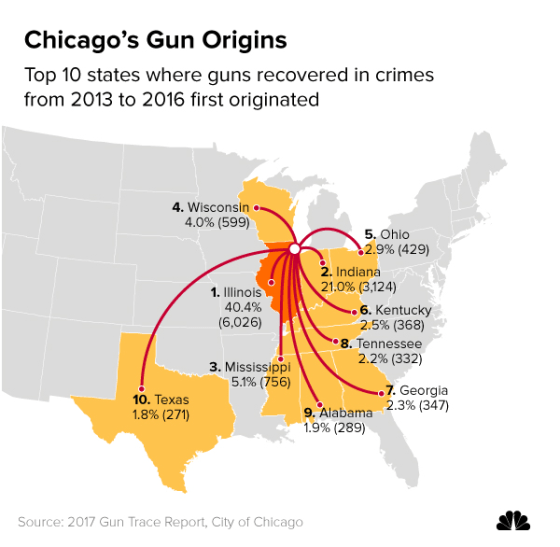
The simple answer is that it’s complicated, and navigating these legal waters requires a thorough understanding to avoid serious legal repercussions. What might be perfectly legal in Indiana, known for its generally more permissive gun laws, can lead to severe penalties in Illinois and especially in Chicago, which has some of the strictest gun control ordinances in the United States. This article aims to shed light on the legal framework, provide essential travel tips for firearm owners, and ultimately help you make informed decisions to ensure a smooth and lawful trip to the Windy City. Our focus is on ensuring your travel experience remains stress-free and legally compliant, allowing you to fully enjoy all that Chicago has to offer.
Navigating Interstate Firearm Laws: A Traveler’s Guide
Understanding the legal landscape surrounding firearm transportation between states is paramount for any responsible gun owner considering a trip. The journey from Indiana to Illinois is relatively short geographically, but the legal distance in terms of firearm regulations is vast. It’s not just about crossing a state line; it’s about entering a jurisdiction with a fundamentally different approach to firearm ownership and possession.
The Basics of Federal vs. State Regulations
At a federal level, the Firearm Owners’ Protection Act (FOPA) of 1986 provides some protection for individuals transporting firearms through states where they would otherwise be illegal. This act, specifically 18 U.S.C. § 926A, generally states that notwithstanding any other provision of any law or any rule or regulation of any State or any political subdivision thereof, a person who is not otherwise prohibited from possessing, transporting, shipping, or receiving a firearm under federal law may transport a firearm for any lawful purpose from any place where he may lawfully possess and carry such firearm to any other place where he may lawfully possess and carry such firearm.
However, this federal protection comes with very strict conditions, often referred to as the “safe passage” provision. For FOPA to apply, the firearm must be:
- Unloaded.
- Not readily accessible from the passenger compartment. In vehicles without a separate trunk, the firearm must be in a locked container other than the glove compartment or console.
- Stored in a locked container.
- The ammunition must also be stored in a separate, locked container, or otherwise not readily accessible.
Crucially, FOPA only protects transportation from a place where possession is legal to another place where it is legal. It does not allow for stopping, overnight stays where the firearm is removed from the vehicle for purposes other than immediate transit, or possession for any other reason in an otherwise prohibitive jurisdiction. Moreover, FOPA offers a defense in court, not immunity from arrest. Being arrested and having to prove FOPA compliance can be a costly and time-consuming ordeal, regardless of the eventual outcome. This is a critical point for anyone planning to visit Chicago or other parts of Illinois.
The Critical Differences: Indiana vs. Illinois
The contrast between Indiana and Illinois firearm laws is stark and forms the core of the challenge when considering this interstate drive.
Indiana’s Position: Indiana is generally considered a “gun-friendly” state. Residents (and sometimes non-residents) can carry firearms openly or concealed without a permit, subject to certain exceptions and restrictions. The state recognizes permits from all other states, making it relatively straightforward for out-of-state visitors to carry firearms legally if they hold a valid permit from their home state. This permissive environment often leads firearm owners to assume similar leniency might extend to neighboring states, a dangerous assumption when heading towards Illinois.
Illinois’s Position: Illinois stands in sharp contrast. It is a “may issue” state for concealed carry permits, meaning permits are not guaranteed even if all requirements are met. More importantly for travelers, Illinois requires all firearm owners and purchasers to possess a Firearm Owner’s Identification (FOID) card. This card is generally required for residents to even possess a firearm or ammunition within the state. For non-residents, the situation is even more complex. While non-residents participating in recognized shooting competitions or hunting may be exempt from the FOID requirement under specific conditions, general possession or transport for other purposes, even unloaded and cased, is highly restricted.
Simply put, driving from Indiana to Illinois with a firearm, even if it’s legally owned in Indiana, immediately puts you under the purview of Illinois law. Without an Illinois FOID card or an Illinois Concealed Carry License (CCL), possessing a firearm in Illinois can lead to serious felony charges, unless you are strictly compliant with the limited FOPA safe passage provision, which is rarely applicable for a destination trip rather than mere transit.
Specific Considerations for Traveling to Chicago
Chicago, as a major metropolitan hub and a prime destination for tourism, has taken its stringent firearm laws a step further than the rest of Illinois. Its municipal ordinances impose additional layers of regulation and prohibition that travelers must absolutely be aware of. What is considered legal for mere transport through Illinois might not protect you once you enter Chicago proper, especially if your intent is to stay and explore the city’s landmarks and attractions.
Understanding Illinois FOID Card Requirements

The Firearm Owner’s Identification (FOID) card is the cornerstone of Illinois’s gun laws. For an Illinois resident, a FOID card is essential for purchasing a firearm or ammunition, as well as for possessing either within the state. For non-residents, the general rule is that you cannot possess a firearm or ammunition in Illinois without a valid FOID card, or an Illinois CCL, unless specific exceptions apply.
These exceptions are very narrow:
- Interstate Transportation (FOPA): As discussed, this strictly applies to traveling through Illinois to another state where the firearm is legal, with the firearm unloaded, in a locked container, and inaccessible. This is not intended for individuals whose final destination is Chicago.
- Sporting Activities: Non-residents may possess firearms without a FOID card while participating in an organized firearm competition, exhibition, or hunting, provided they have all necessary non-resident hunting licenses and comply with event rules. This is not for general self-defense or everyday carry.
- Transit to/from a Gunsmith: A non-resident might transport a firearm to or from a licensed gunsmith for repair or modification.
For the typical tourist visiting Chicago for leisure, none of these exceptions are likely to apply. Therefore, without an Illinois FOID card or CCL, possession of a firearm in Illinois, even if unloaded and cased, can be a serious felony offense. This is especially relevant if your accommodation is in Chicago, as merely having the firearm stored in your hotel room, for instance, could be construed as illegal possession.
Chicago’s Strict Local Ordinances
Even if you were somehow able to legally possess a firearm under Illinois state law as a non-resident (which is highly unlikely for general travel to Chicago), the city of Chicago itself imposes further restrictions. Chicago has municipal ordinances that ban certain types of firearms and accessories outright, regardless of state law. These include:
- Assault Weapons Ban: Chicago prohibits the possession of various firearms defined as “assault weapons” based on their features (e.g., semi-automatic rifles with certain cosmetic features, specific models).
- High-Capacity Magazines: The city bans magazines capable of holding more than 10 rounds of ammunition. Possessing such magazines, even if not attached to a firearm, can be illegal.
- Registration Requirements: While a state-level CCL exists, Chicago has historically had strict registration requirements for handguns, although some of these have been challenged and modified over time. It’s best to assume that no registration exemption exists for out-of-state visitors.
These local prohibitions mean that even if you believe your firearm is legally transported under FOPA or otherwise, it might still violate a specific Chicago ordinance. For example, if you transport an “assault weapon” (as defined by Chicago) from Indiana, even unloaded and locked, you could be in violation of a city ordinance upon entry, as FOPA does not provide a blanket override for local bans on specific types of firearms. The penalties for violating Chicago’s gun laws are severe and can include significant fines, confiscation of the firearm, and lengthy jail sentences.
Best Practices for Responsible Firearm Travel (Or Why You Might Not Want To)
Given the complexities and severe penalties associated with violating firearm laws in Illinois and Chicago, the safest and most advisable course of action for most tourists is to avoid bringing firearms into the city altogether. For those for whom it’s a serious consideration, responsible travel planning demands meticulous preparation and an unwavering commitment to legal compliance.
Prioritize Research and Legal Counsel
Laws are not static; they can and do change. Before any interstate travel with a firearm, it is your responsibility to research the most current laws of your departure state, all states you will be traveling through, and your destination state and local jurisdictions. Relying on outdated information or assumptions is a recipe for legal trouble.
Even with diligent research, the nuances of firearm law can be intricate and subject to interpretation. It is highly recommended to consult with a legal professional specializing in firearm law, particularly one licensed in Illinois, for personalized advice based on your specific circumstances, the type of firearm you possess, and your intended purpose for bringing it. This proactive step can save you immense stress and potential legal battles. For general tourism or leisure travel, the advice will almost invariably be: do not bring a firearm.
Secure Storage and Transport Protocols
If, after thorough legal consultation, you determine that you absolutely must transport a firearm to or through Illinois, strict adherence to federal FOPA guidelines is essential. The firearm must be unloaded, stored in a locked, hard-sided container, and kept in a part of the vehicle that is not readily accessible to the driver or passengers (e.g., the trunk). Ammunition must also be stored separately in a locked container. These are the bare minimum requirements for federal protection, and any deviation could invalidate that protection.
When you reach your destination, such as a hotel in Chicago, the issue of legal possession becomes even more critical. Most hotels do not have secure firearm storage facilities, and simply leaving a firearm in your room, even unloaded and locked, could be considered illegal possession under Illinois and Chicago law for non-FOID holders. Additionally, some hotels may have their own internal policies prohibiting firearms on their premises, which, while not a state law, could result in you being asked to leave or face other consequences from the establishment. This further complicates the concept of “accommodation” when traveling with a firearm.

Weighing the Risks vs. Rewards for Your Trip
Ultimately, the decision to drive a gun from Indiana to Chicago involves a careful assessment of risks versus potential rewards. For the vast majority of tourists, the risks far outweigh any perceived benefits. The stringent laws in Illinois and Chicago, combined with the severe penalties for non-compliance, create a high-stakes environment where a single misstep can transform a pleasant tourism trip into a legal nightmare.
Instead of focusing on firearm transportation, consider alternative approaches to personal safety, if that is your primary concern. Many travelers find that awareness, avoiding risky situations, and utilizing the security provided by reputable hotels and well-trafficked areas are sufficient. Leaving firearms at home ensures compliance with all local laws and allows you to fully immerse yourself in the rich cultural experiences, diverse food scene, and impressive landmarks of Chicago without the looming worry of legal trouble. A peaceful and worry-free vacation is a core tenet of good lifestyle and travel planning.
In conclusion, while federal law offers a narrow window for firearm transportation through states, applying that protection to a destination like Chicago is fraught with legal peril. The safest and most recommended approach for travelers from Indiana to Chicago is to simply not bring firearms. Prioritize understanding local laws, or better yet, leave the firearms at home to ensure your trip is memorable for all the right reasons.
LifeOutOfTheBox is a participant in the Amazon Services LLC Associates Program, an affiliate advertising program designed to provide a means for sites to earn advertising fees by advertising and linking to Amazon.com. Amazon, the Amazon logo, AmazonSupply, and the AmazonSupply logo are trademarks of Amazon.com, Inc. or its affiliates. As an Amazon Associate we earn affiliate commissions from qualifying purchases.