
The question of when Chicago, Illinois, was “founded” is more complex than a single date, as its genesis involved centuries of indigenous habitation, European exploration, and finally, permanent settlement and official incorporation. While the city was officially incorporated as a town in 1833 and then as a city in 1837, its roots stretch back much further to the late 18th century with the arrival of its first non-indigenous permanent resident, Jean Baptiste Point du Sable, around 1780. To truly understand the founding of Chicago, one must delve into its rich pre-colonial history, the critical role of its strategic location, and the subsequent events that transformed a humble trading post into one of the United States‘ most iconic metropolises.

Chicago today is a global hub for travel, tourism, and lifestyle, renowned for its groundbreaking architecture, vibrant cultural scene, and dynamic economy. Yet, beneath the gleaming skyscrapers and bustling streets lies a captivating narrative of perseverance, innovation, and strategic foresight that began long before it earned its place on the world stage. Understanding its origins is not just a historical exercise; it’s an exploration of the fundamental elements that shaped its unique character as a premier destination for visitors and residents alike, offering everything from luxurious hotels and accommodation to unparalleled landmarks and experiences.
The Ancient Roots: Indigenous Heritage and Early European Encounters
Before any European set foot near the shores of Lake Michigan, the land that would become Chicago was home to various Native American tribes for thousands of years. The name “Chicago” itself is believed to derive from a French transliteration of the Miami-Illinois word “shikaakwa,” meaning “wild onion” or “wild garlic,” referring to the plants that grew abundantly along the Chicago River. This fertile land, strategically located at a natural portage between the Great Lakes and the Mississippi River basin, served as a vital transportation and trading route for indigenous peoples. Tribes such as the Potawatomi, Miami, and various members of the Illinois Confederacy thrived here, establishing intricate networks of trade and cultural exchange long before any non-indigenous settlement.
The first recorded European encounter with the Chicago area occurred in 1673 when French explorers Louis Jolliet, a fur trader, and Jacques Marquette, a Jesuit missionary, journeyed from Canada down the St. Lawrence River and across the Great Lakes. Their expedition sought a water route connecting the Great Lakes to the Mississippi River and eventually to the Pacific Ocean (or so they hoped). Upon reaching the western shore of Lake Michigan, local Potawatomi guides directed them to the Chicago River and the portage that led to the Des Plaines River, a tributary of the Illinois River, which in turn flowed into the Mississippi. Marquette later returned to establish a mission, recognizing the strategic importance of the location for trade and spiritual outreach. However, no permanent European settlement was established at this time, and the region remained primarily under Native American control, frequented by French fur traders.
A Natural Crossroads
The unique geography of the Chicago portage was paramount to its future development. It offered a relatively easy connection between two vast water systems: the eastern Great Lakes via Lake Michigan, and the central United States via the Mississippi River and its tributaries, including the Missouri River. This natural advantage meant that even without a formal “founding” date, the area was destined to become a significant hub, a testament to its inherent value as a travel and trade artery across the continent. This foresight, albeit unrecognized at the time by its earliest European visitors, would become the bedrock upon which Chicago would eventually rise as a vital global destination and economic engine.
The Dawn of Permanent Settlement: Du Sable and Fort Dearborn
The true beginning of Chicago’s journey from a wilderness portage to a burgeoning settlement is credited to Jean Baptiste Point du Sable, a man of Haitian descent believed to be of African and French ancestry. Around 1780, Du Sable established a successful trading post near the mouth of the Chicago River, making him the first non-indigenous permanent resident and, by extension, the “Founder of Chicago.” His homestead was sophisticated for its time, featuring a house, two barns, a horse mill, a bakehouse, a smokehouse, and a poultry house. He engaged in extensive trade with Native American tribes and French-Canadian trappers, dealing in furs, grains, and other provisions. His entrepreneurial spirit and ability to foster good relations with various communities laid the groundwork for future settlement and demonstrated the viability of the location as a center of commerce.
Du Sable eventually sold his property in 1800 and moved away, but his legacy as the initial permanent settler endures. His pioneering effort proved the area’s potential for sustained habitation and economic activity, attracting subsequent settlers and eventually military presence.
From Trading Post to Military Outpost: The Rise of Fort Dearborn
Following the Treaty of Greenville in 1795, which ceded large tracts of Native American land to the United States, the strategic significance of the Chicago portage became undeniable to the American government. To assert control over the region and protect burgeoning American trade interests, Fort Dearborn was constructed in 1803-1804 on the south bank of the Chicago River, near the site of Du Sable’s former trading post. The fort was a pivotal military outpost, solidifying American presence in a territory still largely populated by Native Americans and contested by lingering British influence.
The early years of Fort Dearborn were tumultuous. During the War of 1812, escalating tensions with Native American tribes, incited by British allies, led to a tragic event. On August 15, 1812, after being ordered to evacuate the fort, a contingent of soldiers, along with their families and a small group of civilians, were ambushed by Potawatomi warriors. This event, known as the Battle of Fort Dearborn, resulted in heavy casualties and the destruction of the fort.
Despite this devastating setback, the strategic value of Chicago remained undisputed. Fort Dearborn was rebuilt in 1816 and continued to serve as a military presence until 1837. Its re-establishment played a crucial role in attracting new settlers, including figures like John Kinzie, who is often inaccurately cited as Chicago’s first settler, and Billy Caldwell (Sauganash), a prominent Potawatomi chief of mixed heritage who helped bridge cultural divides. The permanent presence of the fort, coupled with the ongoing fur trade, cemented Chicago’s status as a nascent frontier settlement.
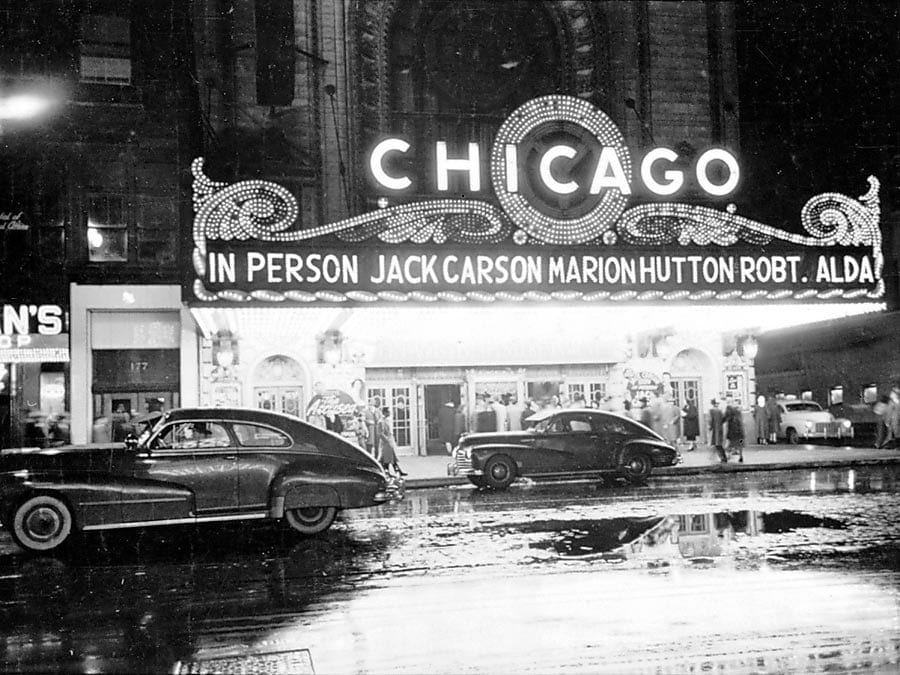
Official Birth and Explosive Growth: 1833 and Beyond
The true administrative “founding” of Chicago as a recognized entity occurred in the 1830s. By this time, the surrounding area was rapidly opening up to American settlement, particularly after the Treaty of Chicago in 1833, which saw the Potawatomi, Ottawa, and Chippewa tribes cede their last remaining lands in the area. This paved the way for unrestricted non-indigenous expansion.
On August 5, 1833, a momentous event took place: the town of Chicago was officially incorporated. At this time, it was a modest settlement with a population of approximately 350 residents. Its boundaries were set, and a local government was established, marking a definitive shift from a loosely organized frontier outpost to a formally recognized municipality. This date is often cited as the official founding of the modern city, signifying its legal and administrative establishment.
Just four years later, the population had exploded to around 4,000, driven by the promise of fertile lands, burgeoning trade, and ambitious infrastructure projects. Recognizing this rapid growth and its increasing importance, the town was re-incorporated as the City of Chicago on March 4, 1837. This upgrade reflected its transformation into a significant urban center, poised for unprecedented expansion.
The Catalyst for Prosperity: The Illinois and Michigan Canal
The most significant catalyst for Chicago’s early explosive growth was the vision and eventual completion of the Illinois and Michigan Canal. Envisioned as early as the Jolliet and Marquette expeditions, this man-made waterway aimed to physically connect the Great Lakes (via Lake Michigan and the Chicago River) with the Mississippi River system (via the Des Plaines and Illinois Rivers). Construction began in 1836, and despite financial challenges and engineering feats, the canal was completed in 1848.
The Illinois and Michigan Canal transformed Chicago into a critical inland port, bridging the agricultural bounty of the American heartland with the industrial centers of the East and the vast markets beyond. Farmers could now easily ship their produce, particularly grain, to eastern markets like New York, Buffalo, and Cleveland, while manufactured goods could flow west. This created an unprecedented economic boom, attracting a continuous stream of immigrants, investors, and entrepreneurs. The canal laid the foundation for Chicago’s future as a global leader in commodity trading and a major transportation hub.
A City Forged in Fire and Innovation: Chicago’s Enduring Legacy
The rapid growth sparked by the canal was further intensified by the advent of railroads. By the mid-19th century, Chicago became the undisputed rail hub of the United States, with numerous lines converging on the city. This convergence allowed Chicago to dominate industries like meatpacking (epitomized by the Union Stock Yards) and grain trading (Chicago Board of Trade). Its population swelled, attracting diverse communities from across Europe and the United States, all seeking opportunity in the rapidly expanding city.
However, Chicago’s journey was not without its trials. On October 8, 1871, the Great Chicago Fire erupted, famously (and perhaps apocryphally) starting in Catherine O’Leary’s barn. The inferno raged for three days, destroying a vast swathe of the city, including its commercial core, and leaving over 100,000 people homeless. The fire was a devastating blow, but it also presented a unique opportunity for reinvention.
From the ashes of the Great Chicago Fire, a new, more modern Chicago emerged. Architects and planners, including visionaries like Daniel Burnham and Louis Sullivan, flocked to the city, transforming it into a living laboratory for innovative urban design and skyscraper construction. This period gave birth to the “Chicago School” of architecture, characterized by its focus on functional design and steel-frame construction, a legacy that continues to define the city’s iconic skyline today. Even architects like Frank Lloyd Wright found their early influences here, pushing the boundaries of residential architecture. The rebuilding demonstrated Chicago’s resilience and its forward-thinking approach to urban development, qualities that are still celebrated by visitors exploring its architectural tours and landmarks.

Chicago Today: A Global Destination
Today, Chicago stands as a testament to its profound history, strategic location, and the enduring spirit of its people. As a leading global city, it attracts millions of visitors annually, drawn by its vibrant culture, world-class attractions, and bustling urban lifestyle. The city’s founding principles of commerce and connection remain deeply ingrained in its modern identity.
- Landmarks and Attractions: From the soaring heights of the Willis Tower (formerly Sears Tower) and the modern artistry of Millennium Park’s “Cloud Gate” sculpture, to the cultural treasures of the Art Institute of Chicago, the Field Museum, the Shedd Aquarium, and the Museum of Science and Industry, Chicago offers an unparalleled array of experiences. Navy Pier continues its tradition as a recreational hub, offering entertainment and stunning views of Lake Michigan.
- Tourism and Culture: Tourism is a cornerstone of Chicago’s economy, with visitors flocking to explore its diverse neighborhoods, from the bustling Loop and the trendy West Loop and Fulton Market to the historic elegance of the Gold Coast and the family-friendly charm of Lincoln Park and Wrigleyville. The city’s culinary scene is world-renowned, and its live music venues, particularly for jazz and blues, offer rich insights into local culture.
- Accommodation and Travel: Chicago boasts an impressive range of accommodation options, from luxury resorts and boutique hotels along the Magnificent Mile to budget-friendly apartments and vacation villas, catering to every type of traveler. Its robust transportation infrastructure, including two major international airports, O’Hare International Airport and Midway International Airport, makes it easily accessible from anywhere in the world.
The narrative of Chicago’s founding is not merely a dry recounting of dates but a vibrant tapestry woven from indigenous heritage, pioneering spirit, strategic ambition, and an unwavering capacity for renewal. From a wild garlic patch along a crucial portage, through the entrepreneurial vision of Jean Baptiste Point du Sable and the resilience demonstrated after the Great Chicago Fire, Chicago has continually redefined itself. It is a city that never truly stopped being founded, constantly evolving and innovating, making it a compelling destination for anyone seeking a dynamic blend of history, culture, and modern marvel.
LifeOutOfTheBox is a participant in the Amazon Services LLC Associates Program, an affiliate advertising program designed to provide a means for sites to earn advertising fees by advertising and linking to Amazon.com. Amazon, the Amazon logo, AmazonSupply, and the AmazonSupply logo are trademarks of Amazon.com, Inc. or its affiliates. As an Amazon Associate we earn affiliate commissions from qualifying purchases.