
Planning a trip often involves meticulous research into destinations, attractions, and, crucially, the local climate. For those considering a visit to Detroit, understanding the city’s weather patterns is paramount to maximizing your experience. Detroit, a vibrant metropolis in Michigan, is known for its distinct four-season climate, offering a kaleidoscope of experiences throughout the year. From the blooming landscapes of spring to the snowy charm of winter, each season presents unique opportunities for travel and exploration. This guide delves into the nuances of Detroit’s weather, providing insights into what to expect and how to best prepare, ensuring your accommodation and activity choices align perfectly with the prevailing conditions.
Understanding Detroit’s Climate: A Four-Season City
Detroit’s geographical location in the Midwest contributes to its diverse weather profile. Situated near the Great Lakes, particularly Lake Erie and Lake Huron, the city experiences a humid continental climate characterized by warm, humid summers and cold, snowy winters. These large bodies of water play a significant role in moderating temperatures, preventing the extreme heat or cold that might otherwise affect inland areas.
The Great Lakes Influence
The proximity to Lake Erie and Lake Huron is a defining feature of Detroit’s weather. In winter, moisture picked up by cold winds blowing across the warmer lake waters can lead to what’s known as “lake effect snow,” contributing to the city’s significant snowfall totals. Conversely, in summer, the lakes can help temper heatwaves, offering a slight cooling effect compared to areas further inland. This unique climatic interaction means that visitors should always be prepared for dynamic weather, where conditions can change relatively quickly. For those interested in tourism and outdoor activities, understanding this influence is key to packing appropriately and planning a flexible itinerary.
Average Temperature Ranges and Precipitation
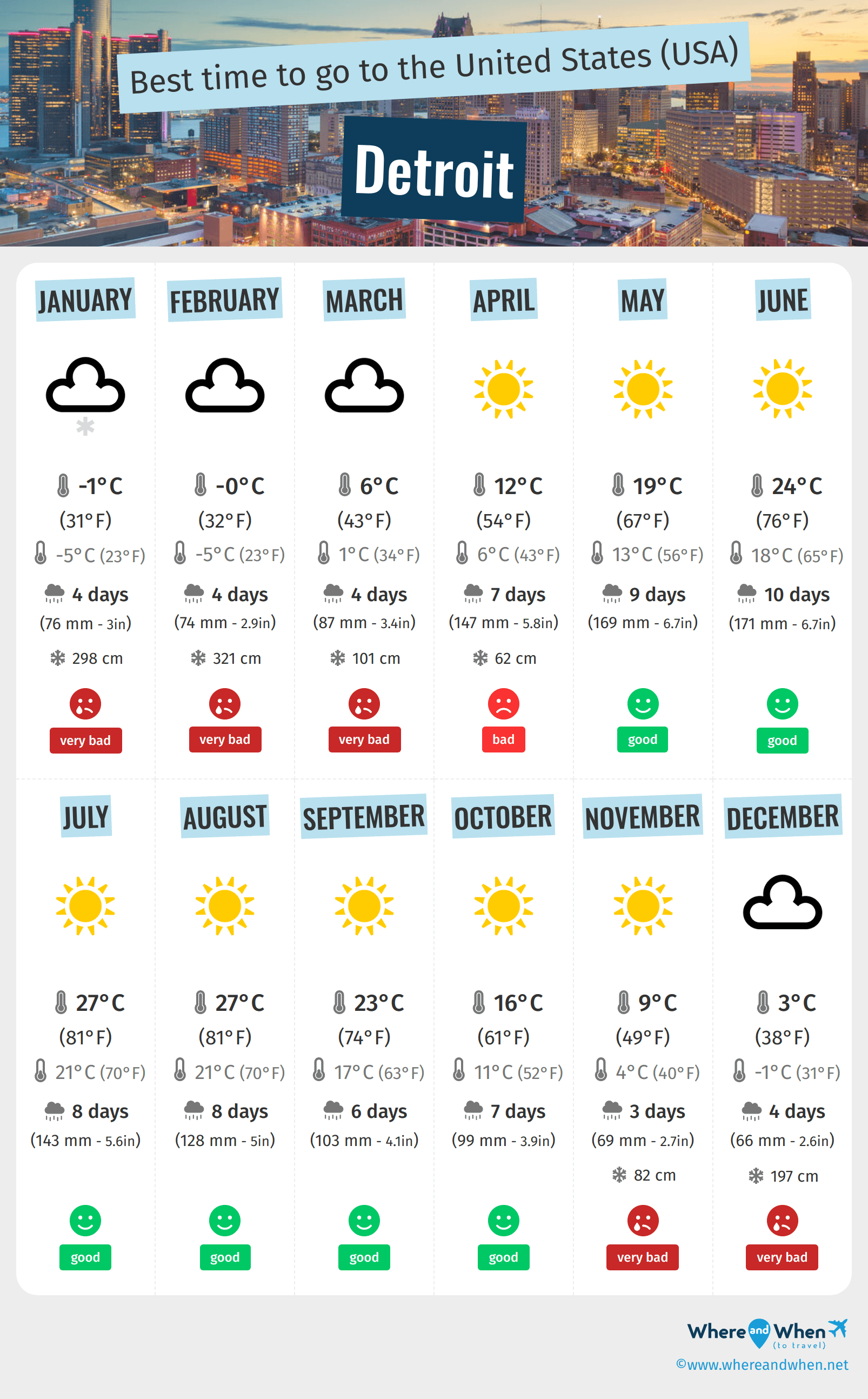
Detroit sees average high temperatures ranging from the low 30s°F (-1°C) in January to the mid-80s°F (29°C) in July. Lows can drop into the teens°F (-8°C) in winter and remain in the mid-60s°F (18°C) during summer nights. Precipitation is distributed fairly evenly throughout the year, with spring and summer generally seeing more rainfall, often in the form of thunderstorms. Winter, naturally, brings snow, with an average annual snowfall of around 40-50 inches (100-127 cm). This variability means that while certain seasons are popular for specific types of travel, there’s always something to do in Detroit regardless of the forecast.
Spring and Summer in Detroit: Vibrant and Inviting
The warmer months transform Detroit into a bustling hub of outdoor activities, festivals, and vibrant street life. This period is often considered prime time for visitors looking to explore the city’s parks, waterfronts, and cultural offerings under pleasant skies.
Spring’s Awakening (March – May)
As winter’s chill recedes, Detroit gradually thaws, with average temperatures rising from the 40s°F (4-9°C) in March to the 60s°F (15-20°C) by May. Spring in Detroit is a time of renewal, characterized by blooming trees and increasing sunshine, though occasional rain showers are common. It’s an excellent time for strolls through Belle Isle Park, where the conservatory bursts with color, or exploring the burgeoning outdoor markets. For those seeking early cultural experiences, many indoor landmarks and museums begin extending their hours. Accommodation can be slightly more affordable than peak summer, but booking ahead is still wise, especially around spring break periods or early city events. Layered clothing is essential for comfortable travel during this transitional season.
Summer’s Peak (June – August)
Summers in Detroit are gloriously warm and often humid, with average temperatures in the 70s°F (21-26°C), frequently climbing into the 80s°F (27-32°C). This is when the city truly comes alive, making it the most popular time for tourism. The Detroit International Jazz Festival and the Movement Electronic Music Festival draw international crowds, while the Detroit Riverwalk becomes a lively promenade for walking, biking, and dining with views of the Detroit River. Sports enthusiasts can catch a Detroit Tigers game at Comerica Park.
The summer lifestyle revolves around outdoor patios, rooftop bars, and exploring diverse neighborhoods like Greektown and Eastern Market. Hotels like the iconic Detroit Marriott at the Renaissance Center or the trendy Shinola Hotel are popular choices, offering amenities like pools or easy access to summer festivities. Given the humidity, lightweight and breathable clothing is advisable, along with rain gear for sporadic thunderstorms, which can be intense but typically short-lived.
Autumn in Detroit: A Palette of Colors and Cultural Richness
As summer fades, Detroit transitions into a breathtaking autumn, characterized by vibrant fall foliage and a crisp, inviting atmosphere. This season offers a different kind of charm, perfect for scenic drives, cultural explorations, and enjoying the city’s culinary scene.

Early Fall’s Golden Glow (September – October)
September and October are arguably two of the most beautiful months in Detroit, with average temperatures ranging from the 50s to 70s°F (10-21°C). The humidity drops, skies are often clear, and the changing leaves paint the landscape in hues of red, orange, and gold. This is an ideal time for travel focused on nature and scenic beauty. While Belle Isle Park offers an urban oasis of fall colors, venturing slightly outside the city can lead to picturesque cider mills like Yates Cider Mill, perfect for a family outing. Historic districts such as Corktown and Indian Village become even more charming, with their historic architecture framed by colorful trees. It’s also a fantastic season for urban exploration, visiting landmarks like the Guardian Building or catching a show at the historic Fox Theatre. Packing layers, including sweaters and a light jacket, will ensure comfort throughout the day as temperatures can fluctuate between sunny afternoons and cool evenings.
Late Fall’s Chill (November)
November marks the transition towards winter, with average temperatures dipping into the 30s and 40s°F (0-9°C). The colorful leaves mostly fall, and the weather becomes colder and often grayer, signaling the shift to more indoor-centric activities. This period is excellent for diving deep into Detroit’s rich cultural scene. World-class institutions like the Detroit Institute of Arts and the Henry Ford Museum of American Innovation offer hours of fascinating exploration, providing a warm retreat from the chill. The North American International Auto Show often takes place around this time, drawing considerable interest. For accommodation, consider hotels that offer cozy amenities such as fireplaces in common areas or luxurious spas to help you relax and recharge after a day of sightseeing. The city’s famed Thanksgiving Day Parade is also a major highlight, attracting thousands.
Winter in Detroit: A Snowy Wonderland or a Chilly Retreat?
Winter in Detroit can be a magical experience for those who appreciate snow and cold-weather activities, or a cozy escape into the city’s vibrant indoor scene. Understanding the potential for snow and ice is key to planning a successful winter trip.
The Heart of Winter (December – February)
The coldest months bring average temperatures in the 20s and low 30s°F (-6 to 0°C), often dropping below freezing. Snowfall is common, sometimes heavy due to the “lake effect,” transforming the city into a picturesque snowy landscape. While the cold can be intense, Detroit embraces winter with a variety of festive activities. Ice skating at Campus Martius Park becomes a popular pastime, surrounded by twinkling holiday lights. Seasonal events like Winter Blast Royal Oak in nearby Royal Oak offer outdoor fun, ice sculptures, and live entertainment.
For those looking to escape the cold, Detroit boasts an array of indoor attractions. The Motown Museum provides a captivating journey through music history, while the city’s casinos — including MGM Grand Detroit, MotorCity Casino Hotel, and Hollywood Casino at Greektown — offer entertainment and dining. This season also brings opportunities for a cozy lifestyle, enjoying warm drinks in charming cafes and indulging in hearty comfort food at Detroit’s acclaimed restaurants.
Embracing the Cold
Beyond city limits, winter offers opportunities for snow sports. Ski resorts like Mt. Brighton and Pine Knob Ski Resort are within a reasonable drive, offering skiing and snowboarding. When planning your accommodation for winter, prioritize hotels with excellent indoor amenities such as heated pools, spas, and fitness centers to provide a comfortable retreat after a day in the cold. Luxury hotels often offer enhanced services to make winter stays particularly enjoyable. Essential packing for winter includes heavy winter coats, hats, gloves, scarves, and waterproof boots with good grip to navigate snowy and icy conditions safely.
Planning Your Detroit Trip: Weather-Wise Travel Tips and Accommodation
Regardless of when you choose to visit, a little forethought about Detroit’s weather will significantly enhance your travel experience.
Packing Essentials for Every Season
- Spring: Layers are key. Think long-sleeved shirts, sweaters, a light jacket, and an umbrella or rain jacket.
- Summer: Lightweight, breathable clothing is a must. Include shorts, t-shirts, sundresses, and a light jacket or cardigan for cooler evenings. Don’t forget sunscreen, sunglasses, and a hat. A compact umbrella or light rain jacket is advisable for thunderstorms.
- Autumn: Continue with layers. Sweaters, jeans, long-sleeved shirts, a medium-weight jacket, and closed-toe shoes are appropriate. For late fall, add warmer outerwear.
- Winter: Heavy winter coats, waterproof and insulated boots, hats, gloves, and scarves are indispensable. Thermal underwear can provide an extra layer of warmth.
Best Time to Visit Detroit
The “best” time to visit Detroit truly depends on your interests:
- Summer (June-August): Ideal for outdoor festivals, baseball games, Riverwalk activities, and a bustling urban lifestyle.
- Early Fall (September-October): Perfect for enjoying beautiful fall foliage, pleasant temperatures, and cultural explorations without the peak summer crowds.
- Late Spring (May): Offers blooming parks and comfortable weather for sightseeing before the summer heat.
- Winter (December-February): For those who love snow, ice skating, holiday cheer, and exploring Detroit’s impressive indoor attractions.
Choosing Your Accommodation Wisely
Your choice of accommodation can greatly impact your comfort, especially in varying weather. Central hotels in downtown Detroit or Midtown, like The Siren Hotel or The Foundation Hotel, offer easy access to many attractions via public transport or short rides, which is particularly beneficial during colder or rainy days. Consider hotels with on-site restaurants, pools, or gyms to provide options for entertainment and relaxation regardless of the weather outside. From boutique hotels like Trumbull & Porter Detroit Tapestry Collection by Hilton to grand luxury hotels and budget-friendly options, Detroit offers a wide array of choices to suit every preference and ensure a comfortable stay.

Staying Informed
Always check the local weather forecast for Detroit a few days before your trip and periodically during your stay. Weather patterns can shift, and being prepared for unexpected changes will ensure a smoother and more enjoyable journey. Whether you’re drawn by the summer warmth to visit the Detroit Zoo, the autumn colors of the historic neighborhoods, or the festive indoor activities of winter, Detroit’s diverse climate promises a memorable experience for every visitor.
LifeOutOfTheBox is a participant in the Amazon Services LLC Associates Program, an affiliate advertising program designed to provide a means for sites to earn advertising fees by advertising and linking to Amazon.com. Amazon, the Amazon logo, AmazonSupply, and the AmazonSupply logo are trademarks of Amazon.com, Inc. or its affiliates. As an Amazon Associate we earn affiliate commissions from qualifying purchases.