
Florida, renowned as the Sunshine State for its captivating beaches, vibrant cities, and world-class attractions, draws millions of visitors annually. From the magical realms of Walt Disney World Resort in Orlando to the Art Deco splendor of Miami Beach and the historic charm of St. Augustine, the state offers an unparalleled array of travel experiences. For both residents and those considering extended stays or frequent visits, understanding local laws is paramount to a safe and enjoyable lifestyle. Among these, the regulations surrounding the carrying of firearms are particularly significant for many.
Whether you’re exploring the bustling streets of Tampa, enjoying the serene beauty of the Florida Keys, or settling down in communities like Jacksonville, personal safety is a universal concern. For some, this extends to considering the acquisition of a Concealed Weapon or Firearm License (CWFL), commonly referred to as a concealed carry permit. This article delves into the process of obtaining a CWFL in Florida, offering a comprehensive guide for those seeking to navigate these regulations responsibly. We’ll explore the eligibility criteria, the application journey, and crucial considerations for where one can legally carry, ensuring your journey through the Sunshine State’s legal landscape is as clear and straightforward as its beautiful skies. Understanding these permits is not just about legal compliance; it’s about making informed choices for your lifestyle, whether you’re a long-term resident or a frequent traveler seeking peace of mind during your Florida adventures.
Understanding Florida’s Concealed Weapon or Firearm License (CWFL)
The concept of a concealed carry permit in Florida is officially known as a Concealed Weapon or Firearm License (CWFL). This license permits eligible individuals to carry certain weapons, most commonly handguns, in a concealed manner on their person or in their vehicle. The core principle behind concealed carry is to allow individuals to exercise their right to self-defense while minimizing the public display of firearms, contributing to a sense of order and discretion. For many residents and visitors, obtaining a CWFL is a matter of personal security, offering an added layer of protection as they navigate various destinations within the state, from urban centers like Miami to more remote natural areas.
What is the CWFL and Why Consider It?
A Florida CWFL is a state-issued license that authorizes the holder to carry a handgun or other specified weapons (such as knives, electronic weapons, or billy clubs) hidden from ordinary observation. It’s important to note that without this license, carrying a firearm concealed is generally illegal, with very specific and limited exceptions. The license does not grant permission to carry openly, which is typically prohibited in Florida with very narrow exceptions (e.g., while hunting, fishing, or at a shooting range).
Individuals consider a CWFL for a variety of reasons, primarily centered around personal safety and the ability to defend themselves or their loved ones. For those who frequently travel across the state, perhaps visiting family in Key West or attending business conferences in Orlando, having a CWFL can provide peace of mind. It integrates into a lifestyle of preparedness, allowing individuals to navigate different environments, from bustling theme parks (though carrying inside many attractions is prohibited, as we’ll discuss later) to quiet residential areas, with the confidence that they are equipped for unforeseen circumstances. It’s a proactive step in responsible self-governance, aligning with the ethos of informed decision-making that underpins safe travel and daily living.
Eligibility Essentials: Who Qualifies?
Before embarking on the application journey, it’s crucial to understand the fundamental eligibility requirements set forth by Florida law. These criteria are designed to ensure that licenses are issued to responsible and law-abiding citizens. The primary authority overseeing CWFL applications in Florida is the Florida Department of Agriculture and Consumer Services (FDACS).
Generally, an applicant must:
- Be 21 years of age or older (with exceptions for active duty military personnel and veterans).
- Be a permanent resident of the United States or a U.S. citizen. While non-residents can apply, special conditions apply, making it primarily a license for Florida residents.
- Not have a disqualifying criminal record, which includes certain felony convictions, misdemeanor convictions related to domestic violence, and other specific offenses. A comprehensive background check is a mandatory part of the process.
- Not have a history of mental illness that would disqualify them from possessing a firearm.
- Not be a habitual drunkard.
- Demonstrate competence with a firearm. This is typically satisfied by completing a certified firearm training course.
- Not have been dishonorably discharged from the armed forces.
- Not be subject to an injunction for protection against domestic violence.
These requirements serve as the initial screening process. Meeting these basic criteria is the first step toward responsibly obtaining a CWFL, a commitment that aligns with the broader principles of safety and legal compliance championed by informed travelers and citizens alike.
Navigating the Application Process: A Step-by-Step Guide
Obtaining a Florida Concealed Weapon or Firearm License (CWFL) involves a clear, multi-step application process managed by the Florida Department of Agriculture and Consumer Services (FDACS). This journey, while straightforward, requires attention to detail and adherence to specific legal guidelines. For anyone contemplating this step, whether a long-time resident of Tallahassee or someone establishing a new life near the pristine beaches of Sarasota, understanding each phase is essential for a smooth experience.
Meeting the Core Requirements: Training and Documentation
The most crucial prerequisite beyond the basic eligibility criteria is demonstrating competence with a firearm. Florida law mandates that applicants provide proof of competency. This is typically achieved through one of the following methods:
- Completion of a Firearm Safety Course: This is the most common route. The course must be conducted by an instructor certified by the National Rifle Association (NRA) or by a state-certified instructor. It must involve actual live-fire training, not just classroom instruction. Many shooting ranges and private instructors across Florida offer approved courses. These courses not only fulfill the legal requirement but also impart essential knowledge on safe firearm handling, storage, and the legal aspects of self-defense, which are invaluable for responsible gun ownership and crucial for anyone visiting areas like the Everglades National Park or urban environments.
- Previous Military Service: Active duty military personnel and honorably discharged veterans can use their military training and discharge papers (DD-214) as proof of competency.
- Prior Law Enforcement Experience: Former law enforcement officers can also use their training as proof.
- Proof of Pistol Competition or Marksmanship: Participation in organized shooting competitions or possession of a certificate from an approved firearms instructor attesting to proficiency can also be accepted.
Beyond the training certificate, applicants will need to gather several other documents, including a valid Florida driver’s license or state identification, and potentially documents related to residency if there are questions. For non-U.S. citizens who are permanent residents, additional immigration documents will be required. Ensuring all documentation is accurate and complete prior to application submission can significantly expedite the process, helping you transition smoothly from planning your trip to Naples to obtaining your permit.

Submitting Your Application: The Paperwork and Procedures
Once you’ve met the training requirement and gathered all necessary documents, the next step is to submit your application to the FDACS. There are a few convenient ways to do this:
- Online Application: The FDACS offers an online portal where applicants can fill out the application form, upload supporting documents, and pay the application fee. This is often the quickest and most preferred method. You will still need to arrange for fingerprinting separately.
- Mail-in Application: You can download the application form from the FDACS website, fill it out, and mail it along with copies of your supporting documents and a check or money order for the fee. This method typically takes longer.
- In-Person at an FDACS Regional Office or Tax Collector’s Office: Certain FDACS regional offices and some county tax collector’s offices offer walk-in services where you can apply, pay the fee, and even get your fingerprints taken electronically. This “one-stop shop” approach can be highly efficient for residents in areas like Fort Lauderdale or Gainesville.
Fingerprinting: Regardless of the submission method, fingerprinting is a mandatory component of the background check. Electronic fingerprinting, often done at local law enforcement agencies, approved vendors, or directly at FDACS offices, is highly recommended as it speeds up the process significantly compared to traditional ink fingerprints. The fingerprints are submitted to the Florida Department of Law Enforcement (FDLE) and the Federal Bureau of Investigation (FBI) for a comprehensive background check.
Waiting Period: After submitting a complete application, including fingerprints and all required documents, the FDACS has 90 days to either issue or deny the license. During this period, they conduct the thorough background investigation. While the waiting period can feel lengthy, it ensures due diligence and contributes to responsible licensure, reflecting a commitment to safety for all who visit or reside in the diverse landscapes of Florida.
Responsible Carry and Legal Considerations in the Sunshine State
Acquiring a Florida Concealed Weapon or Firearm License (CWFL) is a significant step toward personal preparedness, but it comes with a profound responsibility. Understanding where you can and cannot lawfully carry a concealed weapon is just as important as knowing how to obtain the license. For travelers exploring the varied attractions of Florida and for residents moving between different environments, navigating these legal nuances ensures compliance and avoids potential legal complications, preserving the enjoyment of your lifestyle in the Sunshine State.
Where You Can and Cannot Carry: Understanding Restrictions
While a CWFL permits concealed carry in many public places, Florida law explicitly prohibits carrying firearms in certain sensitive locations. These restrictions are in place to enhance safety in specific environments, and license holders must be intimately familiar with them. Carrying a firearm in a prohibited location, even with a valid CWFL, can result in severe legal penalties, including felony charges.
Key Prohibited Locations Include:
- Any place of nuisance as defined in s. 823.05, F.S.: This broad category refers to locations determined to be a public nuisance.
- Any police, sheriff, or highway patrol station: Law enforcement facilities are off-limits.
- Any detention facility, prison, or jail: Correctional facilities are obviously restricted.
- Any courthouse: Judicial buildings are strictly prohibited areas.
- Any polling place: During an election, carrying a firearm at a polling station is illegal.
- Any meeting of the governing body of a county, public school district, municipality, or special district: This includes city council meetings, school board meetings, etc.
- Any meeting of the Legislature or a committee thereof: State legislative sessions are prohibited.
- Any school, college, or professional athletic event not related to firearms: Sporting events where firearms are not directly involved are off-limits.
- Any elementary or secondary school facility or administration building: Schools, from kindergartens to high schools, are prohibited zones.
- Any career center: Vocational schools are included in the educational facility restrictions.
- Any portion of an establishment licensed to dispense alcoholic beverages for consumption on the premises (bars and taverns): While you can carry in a restaurant that serves alcohol if your primary purpose is dining, you cannot carry in a bar where the primary purpose is alcohol consumption.
- Any college or university facility, unless the licensee is a registered student, employee, or faculty member of the college or university and the weapon is a stun gun or nonlethal electric weapon or device designed solely for defensive purposes and the weapon does not fire a dart or projectile: General concealed carry of firearms is prohibited on college campuses.
- Inside the passenger terminal of any airport (e.g., Orlando International Airport, Miami International Airport, Tampa International Airport): This includes the pre-security areas of major travel hubs.
- Any place where the carrying of firearms is prohibited by federal law: This includes federal buildings, post offices, and national parks unless otherwise specified by park regulations.
Furthermore, private property owners, including businesses, hotels, and tourist attractions like Busch Gardens Tampa Bay or resorts in Fort Myers, retain the right to prohibit firearms on their premises, often indicated by “No Firearms” signage. It is the responsibility of the CWFL holder to observe and respect these private property restrictions. When planning your travels or daily activities in Florida, particularly to popular destinations, always be aware of these local rules.
Reciprocity and Interstate Travel
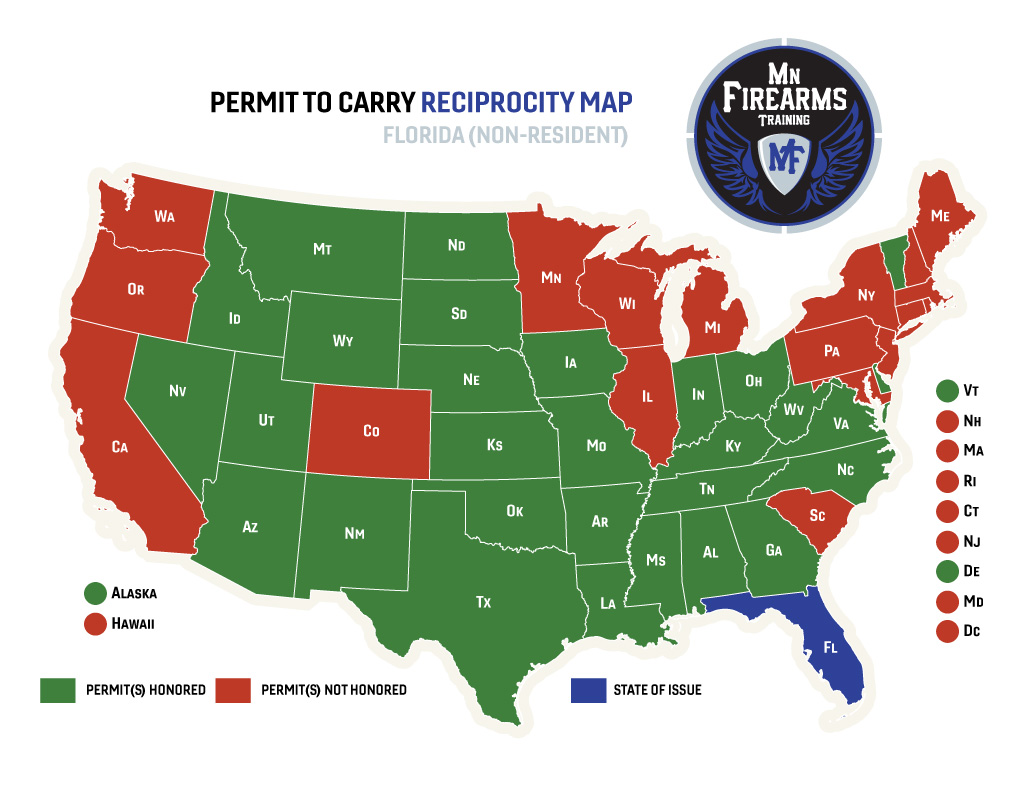
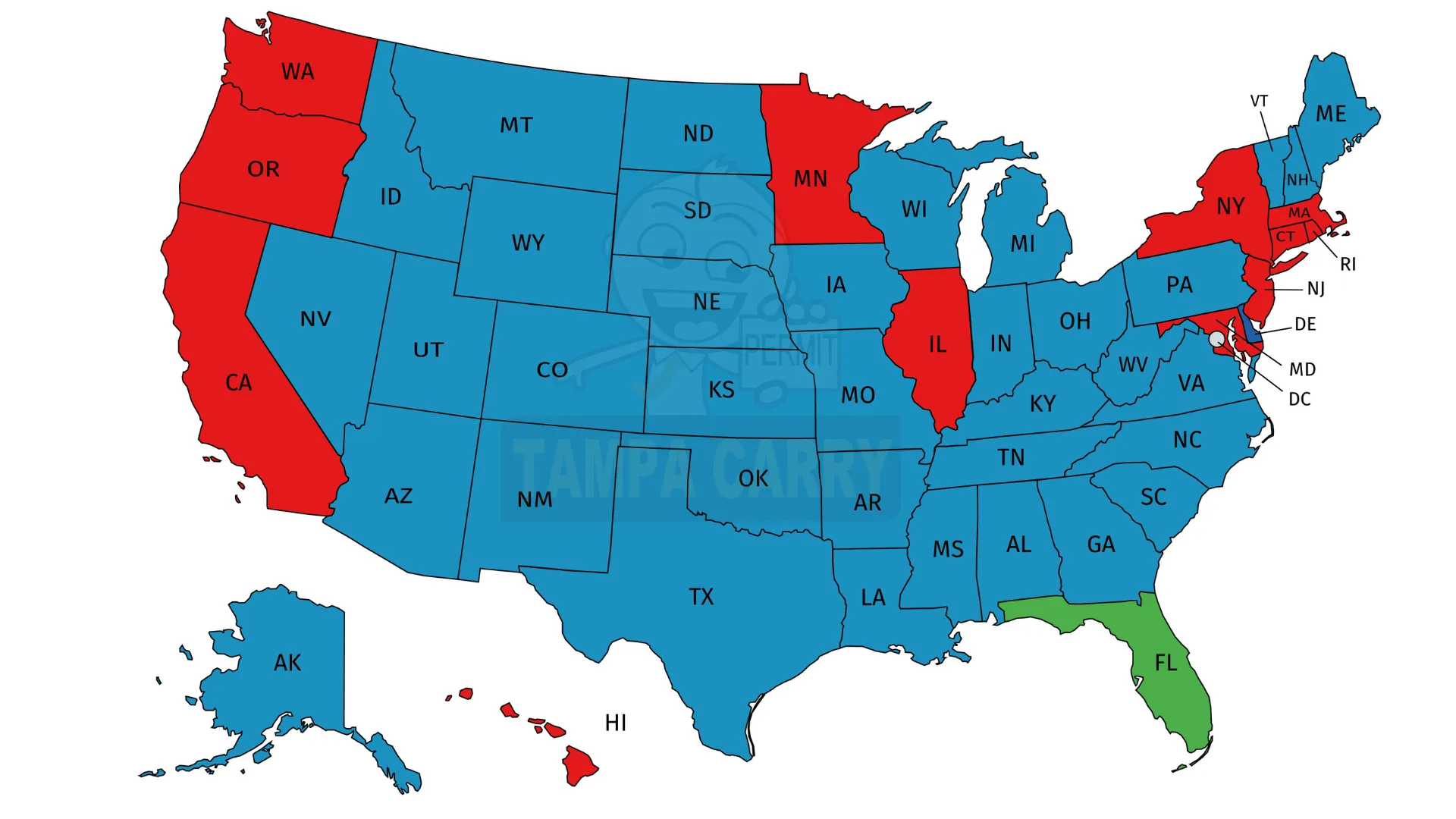
One of the significant advantages of a Florida CWFL for individuals who travel frequently is its recognition in many other states. Florida has reciprocity agreements or unilateral recognition with a substantial number of states across the United States. This means that a Florida CWFL holder may legally carry a concealed weapon in other states that recognize the Florida license, and vice-versa.
For example, a Florida license is often recognized in states like Georgia, Alabama, Texas, and many others, facilitating seamless travel for license holders. However, it is absolutely critical to research and understand the specific laws of each state you plan to visit or travel through. Reciprocity agreements can change, and the carrying laws, including prohibited places and duty-to-inform requirements, vary widely from state to state. What is legal in Florida may not be in California or New York. Relying on broad assumptions can lead to serious legal trouble. The FDACS website provides a helpful reciprocity map and list, but independent verification with the respective state’s attorney general or law enforcement agency is always prudent before embarking on interstate travel with a firearm.
Maintaining Your License: Renewals and Responsibilities
A Florida CWFL is valid for seven years. Approximately six months before expiration, the FDACS will send a renewal notice. The renewal process is generally simpler than the initial application, often requiring an updated application, payment of a renewal fee, and a new background check. Typically, additional training is not required for renewal, but remaining proficient and informed about current laws is an ongoing responsibility of every license holder.
Beyond renewals, continuous responsibility includes:
- Adhering to all laws: Always staying updated on Florida’s firearm laws and any changes.
- Safe storage: Ensuring firearms are stored securely to prevent unauthorized access, especially important for families with children or during hotel stays.
- Proficiency: Regularly practicing with your firearm to maintain competence.
- Reporting changes: Notifying the FDACS of any change of address or other relevant personal information.
Obtaining a CWFL in Florida is a commitment to responsible gun ownership and an informed lifestyle. By understanding the application process, respecting carry restrictions, and upholding ongoing responsibilities, license holders can confidently and lawfully exercise their rights while enjoying all that the diverse and dynamic Sunshine State has to offer. Whether you’re exploring its natural beauty, vibrant cities, or tranquil resorts, navigating these regulations thoughtfully is key to a secure and trouble-free experience.
LifeOutOfTheBox is a participant in the Amazon Services LLC Associates Program, an affiliate advertising program designed to provide a means for sites to earn advertising fees by advertising and linking to Amazon.com. Amazon, the Amazon logo, AmazonSupply, and the AmazonSupply logo are trademarks of Amazon.com, Inc. or its affiliates. As an Amazon Associate we earn affiliate commissions from qualifying purchases.