
Florida, often lauded as the Sunshine State, beckons millions of visitors annually with its pristine beaches, vibrant cities, world-class theme parks, and rich cultural tapestry. From the enchanting shores of Miami to the magical realms of Orlando and the historic charm of St. Augustine, it offers an unparalleled blend of adventure, relaxation, and unique lifestyle experiences. For many, Florida isn’t just a travel destination; it’s a place to call home, either permanently or for extended stays. As individuals consider relocation, long-term accommodation, or simply want to understand the nuances of local life while visiting, various aspects of state law come into focus, including those pertaining to personal safety and firearm ownership.

While the primary allure of Florida is its tourism and hospitality, a growing number of residents and potential new inhabitants are interested in understanding the state’s regulations regarding firearms. Whether for self-defense, sport shooting, hunting, or simply as a matter of personal lifestyle choice, knowing the process for obtaining a gun permit – specifically, a Concealed Weapon or Firearm License (CWFL) – is crucial. This article aims to demystify the steps involved, clarify recent legislative changes, and provide comprehensive guidance for anyone considering firearm ownership and concealed carry within the state. We will explore who is eligible, the application process, and vital regulations for carrying firearms responsibly in this popular destination, ensuring both residents and visitors can navigate Florida’s laws with confidence and clarity.
Florida’s Approach to Firearm Ownership and Carrying
Florida has a long-standing tradition of respecting the Second Amendment rights of its citizens, balanced with regulations designed to promote public safety. Over the years, the state’s firearm laws have evolved, with significant changes that impact how individuals can legally carry a firearm. Understanding these shifts is paramount for anyone seeking to acquire a gun permit or exercise their right to self-defense in the Sunshine State.
Constitutional Carry and Concealed Carry Explained
Historically, carrying a concealed firearm in Florida required a Concealed Weapon or Firearm License (CWFL). However, a significant legislative change took effect on July 1, 2023, introducing what is widely referred to as “Constitutional Carry.” This new law permits eligible individuals to carry a concealed firearm without first obtaining a CWFL. This means that if you are legally allowed to own a firearm, you can now carry it concealed without needing a state-issued license.
It’s crucial to understand what Constitutional Carry does and does not entail. While it removes the requirement for a permit to carry concealed, it does not alter who is legally allowed to possess a firearm under state and federal law. All existing disqualifications for firearm ownership (e.g., felony convictions, certain domestic violence offenses, involuntary mental health commitments) still apply. Furthermore, the law does not permit open carry of firearms, which generally remains prohibited in Florida, except in specific circumstances such as hunting, fishing, or while traveling to/from a shooting range.
Despite the advent of Constitutional Carry, obtaining a Concealed Weapon or Firearm License (CWFL) still offers significant advantages. These benefits include:
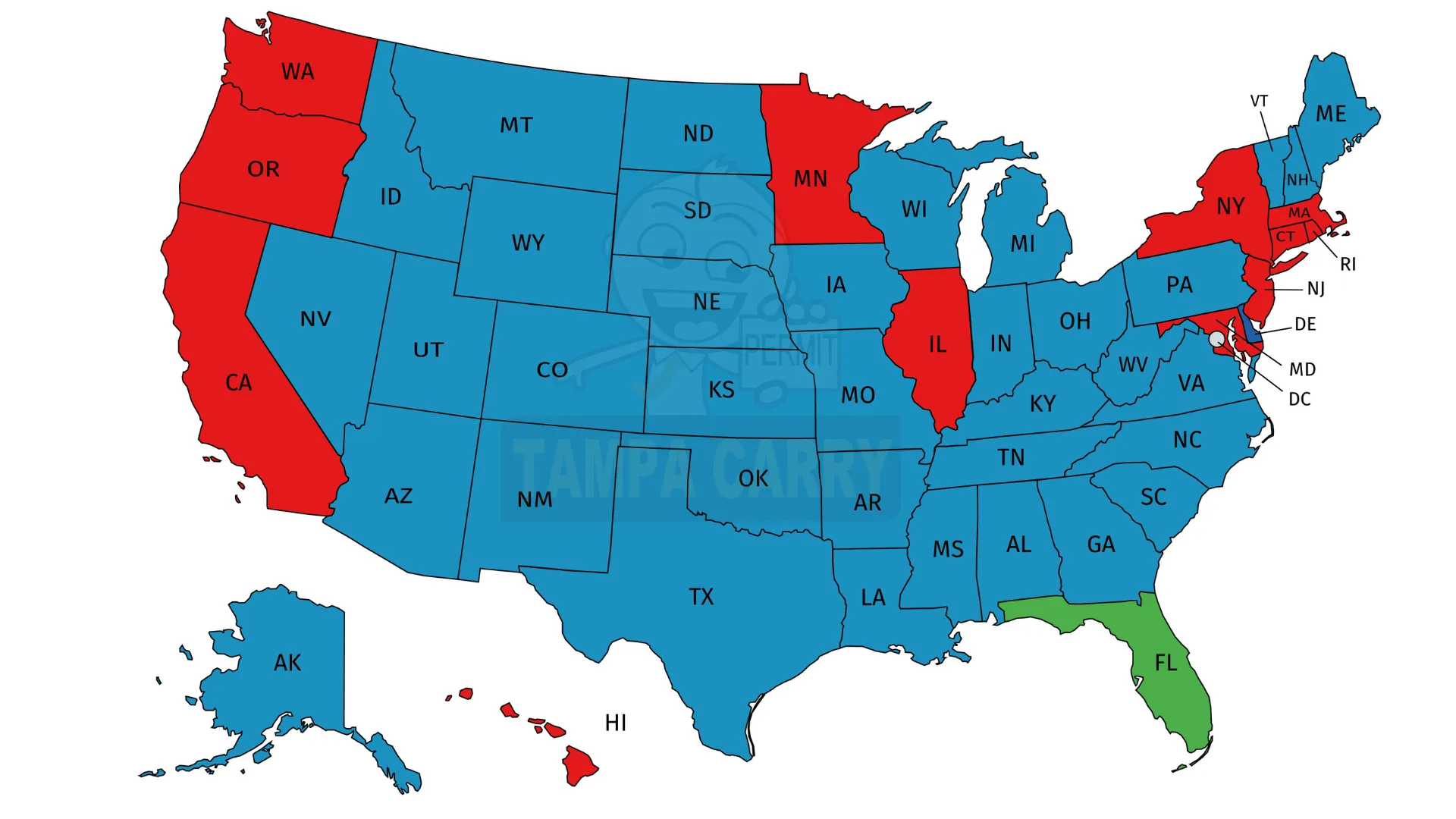
- Reciprocity with Other States: A Florida CWFL is recognized by many other states, allowing you to carry a concealed firearm legally when traveling outside Florida. Without a CWFL, your right to carry concealed is generally limited to Florida’s borders, unless the state you are visiting also has Constitutional Carry or permitless carry laws that apply to non-residents.
- Enhanced Legal Clarity and Knowledge: The training required for a CWFL provides invaluable education on firearm safety, the legal aspects of self-defense, and where you can and cannot carry. This comprehensive understanding can significantly reduce the risk of unintentional legal infractions.
- Streamlined Firearm Purchases: While not strictly a permit benefit, having a CWFL often allows for a faster firearm purchase process from licensed dealers, as it typically exempts you from the standard three-day waiting period for handgun purchases (unless local ordinances dictate otherwise).
- Peace of Mind: For many, holding a state-issued license provides an added layer of legal assurance and confidence, especially when interacting with law enforcement.
Therefore, while no longer legally mandated for concealed carry within Florida, pursuing a CWFL remains a wise and beneficial choice for those committed to responsible firearm ownership and wishing to maximize their legal carrying options.
Eligibility Requirements: Who Can Apply?
To apply for a Concealed Weapon or Firearm License (CWFL) in Florida, applicants must meet a stringent set of criteria established by state law. These requirements are in place to ensure that licenses are issued only to responsible individuals who pose no undue risk to public safety.
The primary eligibility requirements include:
- Age: You must be 21 years of age or older. Active duty military personnel and veterans are an exception and may apply at 18 years of age.
- Residency and Citizenship: You must be a U.S. citizen or a permanent resident alien. While you don’t necessarily need to be a Florida resident to obtain a CWFL, the state issues licenses primarily to residents and those with substantial connections to the state (e.g., owning property, employment). Non-residents must meet specific requirements and often must possess a valid concealed carry permit from another state that has reciprocity with Florida.
- Mental Health: You must not suffer from a physical infirmity that would prevent the safe handling of a handgun. Furthermore, you must not have been adjudicated an incapacitated person, nor have been committed to a mental institution, or been found guilty of a misdemeanor crime of domestic violence.
- Criminal Record: This is one of the most critical areas. You are generally disqualified if you have:
- A felony conviction.
- Certain misdemeanor convictions related to violence, drug offenses, or alcohol abuse within a specific timeframe (typically three to five years).
- Pending felony charges or an active warrant for your arrest.
- An injunction (restraining order) against you for domestic violence.
- Been dishonorably discharged from the U.S. Armed Forces.
It is crucial for any potential applicant to thoroughly review the most current statutory requirements on the official website of the Florida Department of Agriculture and Consumer Services (FDACS), which is the issuing authority for CWFLs. Any past legal issues, no matter how minor they seem, should be carefully considered and, if uncertain, legal counsel should be sought to determine eligibility. Transparency during the application process is key, as misrepresentation can lead to severe penalties.
The Step-by-Step Process for Obtaining a Florida CWFL
Acquiring a Concealed Weapon or Firearm License (CWFL) in Florida, while no longer strictly mandatory for concealed carry within the state, remains a structured process designed to ensure applicants are properly trained and vetted. For those committed to obtaining one for its myriad benefits, understanding each stage is vital.
Essential Training and Application Submission
The first and arguably most crucial step in obtaining a Florida CWFL is completing the required firearm training. This isn’t just a bureaucratic hurdle; it’s a foundational element for responsible gun ownership, emphasizing safety and legal compliance.
-
Required Firearm Training Course: Florida law mandates that applicants demonstrate competency with a firearm. This can be achieved through various means, but the most common and accessible method is completing a handgun safety course offered by a certified instructor. This course must:
- Be taught by an instructor certified by the National Rifle Association (NRA) or the Florida Fish and Wildlife Conservation Commission (FWC), or other approved entities.
- Include actual firing of a handgun in the physical presence of the instructor. Online-only courses are generally not sufficient as they typically lack the live-fire component.
- Cover fundamental safety rules, proper handling, storage, marksmanship principles, and an overview of relevant Florida laws regarding self-defense and carrying firearms.
- Upon successful completion, you will receive a certificate or other proof of training, which is a mandatory document for your application.
-
Gathering Necessary Documents: Before submitting your application, ensure you have all required documentation:
- Proof of Training: Your original certificate or document showing completion of the firearm safety course.
- Photograph: A passport-style color photograph of yourself.
- Proof of Identity: A copy of a valid photo identification (e.g., Florida driver’s license, state ID card, or military ID).
- Fingerprints: Your fingerprints must be electronically submitted. This is typically done at a law enforcement agency or a licensed live-scan provider. Instructions and forms are usually available through the FDACS website.
- Application Fee: Be prepared to pay the non-refundable application fee, which covers the cost of processing and background checks. The fee amount is subject to change, so always check the latest figures on the FDACS site.
- Application Submission Methods: Florida offers several convenient ways to submit your CWFL application:
- Online Application: This is often the quickest method. You can complete the application form online, upload supporting documents, and schedule fingerprinting.
- Mail-In Application: You can download the application packet from the FDACS website, fill it out, attach all required documents (including your physical fingerprints if not electronically submitted), and mail it to the department.
- In-Person at a Regional Office: The Florida Department of Agriculture and Consumer Services maintains regional offices in various cities across the state, including Tallahassee, Jacksonville, Orlando, Tampa, and West Palm Beach. Submitting in person allows staff to review your application for completeness on the spot, potentially reducing processing delays. Many offices also offer fingerprinting services.
Regardless of the submission method, ensure all information is accurate and complete to avoid delays or rejection.
Background Checks and Waiting Periods
Once your application is submitted, the process moves into the crucial phase of background checks and administrative review. This stage is designed to verify your eligibility and ensure you meet all legal requirements.
-
Detailed Background Check Process: The Florida Department of Agriculture and Consumer Services works in conjunction with the Florida Department of Law Enforcement (FDLE) and the Federal Bureau of Investigation (FBI) to conduct a thorough background investigation. This involves:
- Fingerprint Analysis: Your submitted fingerprints are checked against state and federal databases to identify any criminal history.
- Criminal History Review: A detailed review of your past criminal record, including arrests, convictions, and any disqualifying offenses.
- Mental Health Records Check: Verification against mental health databases to ensure no disqualifying adjudications or commitments.
- Verification of Eligibility: All other aspects of your application, such as age, citizenship, and training, are verified.
-
Processing Times: By law, the FDACS has 90 days to either issue or deny a CWFL application once a completed application is received. However, processing times can vary based on the volume of applications, the thoroughness of the background check required, and how quickly all necessary information is obtained. Some applicants may receive their license much sooner, while others might experience the full 90-day period. It’s advisable to factor this timeframe into your plans, especially if you’re relocating or have a specific need for the license by a certain date.
-
Status Tracking: The FDACS typically provides an online portal or a phone number where applicants can check the status of their application. This allows you to monitor its progress and address any potential requests for additional information promptly.
Upon successful completion of all checks and approval, your Concealed Weapon or Firearm License will be mailed to you. It is valid for seven years and must be renewed before its expiration date. The renewal process is generally simpler, requiring an updated application, fees, and a new background check, but usually no additional training.
Navigating Florida’s Firearm Regulations for Residents and Visitors
Understanding Florida’s firearm regulations extends beyond simply obtaining a permit. Both residents and visitors must be acutely aware of where firearms can and cannot be carried, how to ensure reciprocity for out-of-state permits, and the overarching principles of responsible gun ownership to remain compliant with the law and ensure safety. This is especially pertinent in a state rich with tourist attractions and diverse environments, from bustling cities like Miami Beach to natural wonders like Everglades National Park.
Where You Can and Cannot Carry
Even with a Concealed Weapon or Firearm License (CWFL) or under Florida’s Constitutional Carry provisions, there are numerous places where carrying a firearm, even concealed, is strictly prohibited. These “gun-free zones” are designed to protect sensitive locations and gatherings. Ignorance of these restrictions is not a valid defense and can lead to serious legal consequences, including felony charges.
Common places where carrying a firearm is generally prohibited include:
- Any place of nuisance as defined in Section 823.05, Florida Statutes.
- Any police station, sheriff’s office, or highway patrol station.
- Any detention facility, prison, or jail.
- Any courthouse.
- Any courtroom (except for judges or authorized law enforcement).
- Any polling place during an election.
- Any meeting of the governing body of a county, public school district, municipality, or special district.
- Any meeting of the Legislature or a committee thereof.
- Any school, college, or university facility (including athletic events not related to firearms).
- Any elementary or secondary school facility or administration building.
- Any career center.
- Any establishment licensed to dispense alcoholic beverages for consumption on the premises, such as bars or certain restaurants. However, carrying in a restaurant that also serves alcohol but primarily functions as a dining establishment may be permitted, provided the firearm remains concealed.
- Any portion of an airport designated for passenger screening or controlled access areas.
- Any place where federal law prohibits firearms (e.g., post offices, federal courthouses, military bases).
- Private property where the owner has explicitly prohibited firearms (e.g., with “No Guns Allowed” signs).
Storing Firearms in Vehicles/Hotel Rooms: When traveling or staying in hotels, understanding storage laws is crucial. Generally, a firearm can be securely encased in a vehicle (e.g., in a glove compartment, console, or secured in a holster) even without a CWFL. For hotel rooms or other accommodation options like those found through booking sites for villas or apartments in Miami or Orlando, it is typically permissible to possess a firearm within your rented space, similar to your own home. However, private property owners (including hotels or resort groups like Marriott International or Hilton Worldwide) can establish their own rules regarding firearms on their premises, which you must respect.
Reciprocity for Out-of-State Permit Holders
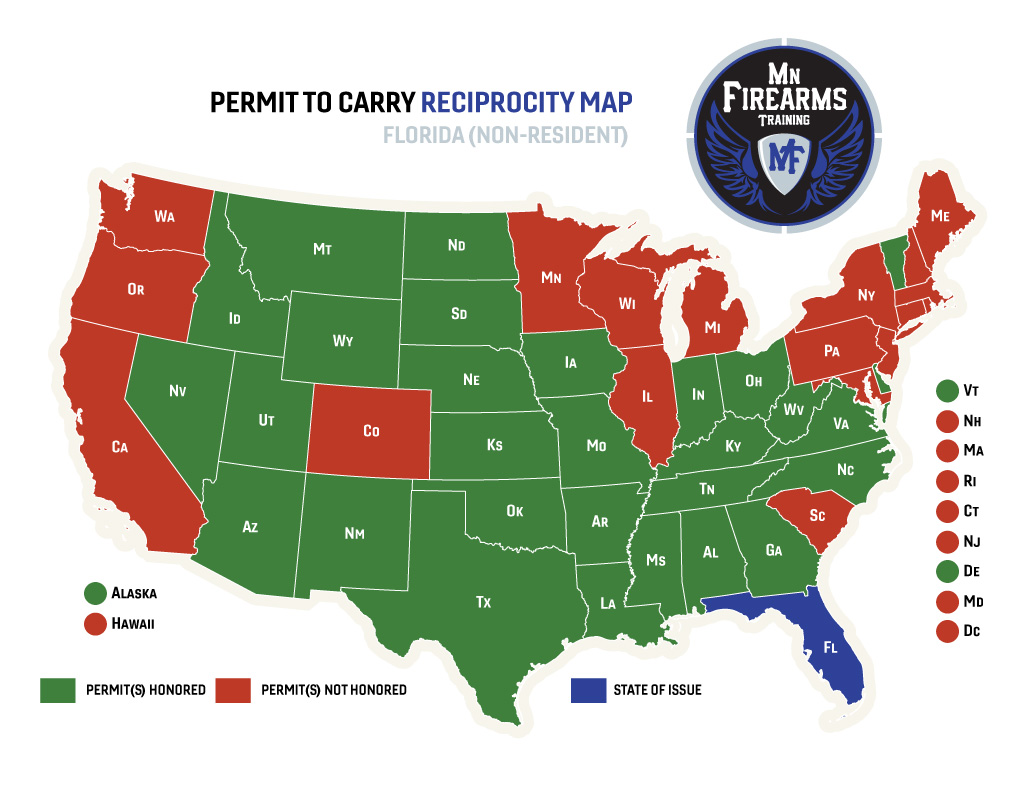
For visitors to Florida who hold a concealed carry permit from another state, reciprocity is a key concern. Florida law states that a valid concealed weapon license issued by another state or territory of the United States is recognized in Florida if the other state’s license requirements are substantially similar to or greater than Florida’s requirements.
- Understanding Reciprocity: This means that if you have a valid permit from a state with which Florida has reciprocity, you can carry a concealed firearm in Florida as if you had a Florida CWFL. However, you must adhere to all of Florida’s laws and regulations, including the “gun-free zones” mentioned above. You are not operating under your home state’s laws while in Florida.
- Checking Recognized States: The Florida Department of Agriculture and Consumer Services maintains an up-to-date list of states whose concealed weapon licenses Florida recognizes. It is imperative to check this official list before traveling to Florida with a firearm.
- Constitutional Carry for Non-Residents: It is important to note that Florida’s Constitutional Carry law extends to anyone legally allowed to possess a firearm, regardless of their residency. This means that if you are a non-resident and legally eligible to own a firearm under Florida and federal law, you can carry a concealed firearm in Florida without a permit. However, the benefits of holding a recognized permit (especially for travel outside Florida) still apply, and a permit provides the aforementioned legal clarity and educational foundation.
Responsible Gun Ownership and Safety
Regardless of whether you are a long-time resident or a temporary visitor, exercising your right to carry a firearm comes with immense responsibility. Responsible gun ownership is a cornerstone of safe communities and is central to the ethos of the website, promoting thoughtful lifestyle choices.
- Safe Storage: Always store firearms securely, unloaded, and separate from ammunition when not in immediate use. This is particularly vital in homes with children or when staying in hotels or vacation rentals where others might have access. Utilize safes, lockboxes, or trigger locks.
- Continuous Training and Practice: Firearm proficiency is perishable. Regular training at a local shooting range in cities like Tampa or Jacksonville and practice are essential to maintain skills and confidence. This includes understanding your firearm’s mechanics, proper grip, stance, and aiming.
- Knowledge of Laws: Laws can change. It is your responsibility to stay informed about Florida’s firearm statutes, local ordinances, and any updates to federal laws. Resources like the FDACS website and reputable legal organizations are invaluable.
- De-escalation and Awareness: Carrying a firearm for self-defense should always be a last resort. Prioritize situational awareness and de-escalation techniques. Knowing when and when not to draw your weapon is critical.
- Travel with Firearms: If you are flying, adhere strictly to airline and Transportation Security Administration (TSA) regulations for transporting firearms (unloaded, locked hard-sided container, declared at check-in). If driving, understand the laws of any states you will pass through, as reciprocity may not apply for transit.
In conclusion, while Florida’s recent legislative changes have simplified concealed carry within the state, obtaining a Concealed Weapon or Firearm License remains a highly recommended path for responsible individuals. It provides a deeper understanding of the law, broader carrying privileges across state lines, and a commitment to personal and public safety. Whether you’re planning a trip to Walt Disney World, exploring the vibrant nightlife of South Beach, or settling into a long-term stay, being well-informed about Florida’s firearm laws is an essential part of navigating its unique lifestyle landscape responsibly.
LifeOutOfTheBox is a participant in the Amazon Services LLC Associates Program, an affiliate advertising program designed to provide a means for sites to earn advertising fees by advertising and linking to Amazon.com. Amazon, the Amazon logo, AmazonSupply, and the AmazonSupply logo are trademarks of Amazon.com, Inc. or its affiliates. As an Amazon Associate we earn affiliate commissions from qualifying purchases.