
Florida, often dubbed the “Sunshine State”, beckons millions of travelers each year with its pristine beaches, vibrant cities, world-class attractions, and unique natural landscapes. From the theme park capital of Orlando to the Art Deco splendor of Miami, and the tranquil shores of the Panhandle, the state offers an unparalleled diversity of experiences. However, amidst the excitement of planning a perfect getaway, one crucial detail that often gets overlooked by visitors is Florida’s intriguing time zone situation. Unlike many states that adhere to a single time zone, Florida is unique in that it straddles two distinct time zones. This seemingly minor detail can have significant implications for travel itineraries, accommodation bookings, coordination of activities, and even simply making sure you don’t miss that important reservation. Understanding Florida’s time zones is not just about knowing “what time it is”; it’s about ensuring a seamless, stress-free, and thoroughly enjoyable journey through this captivating peninsula. This comprehensive guide will equip you with all the necessary information to confidently navigate the clocks of Florida, ensuring your vacation or business trip unfolds precisely as planned.
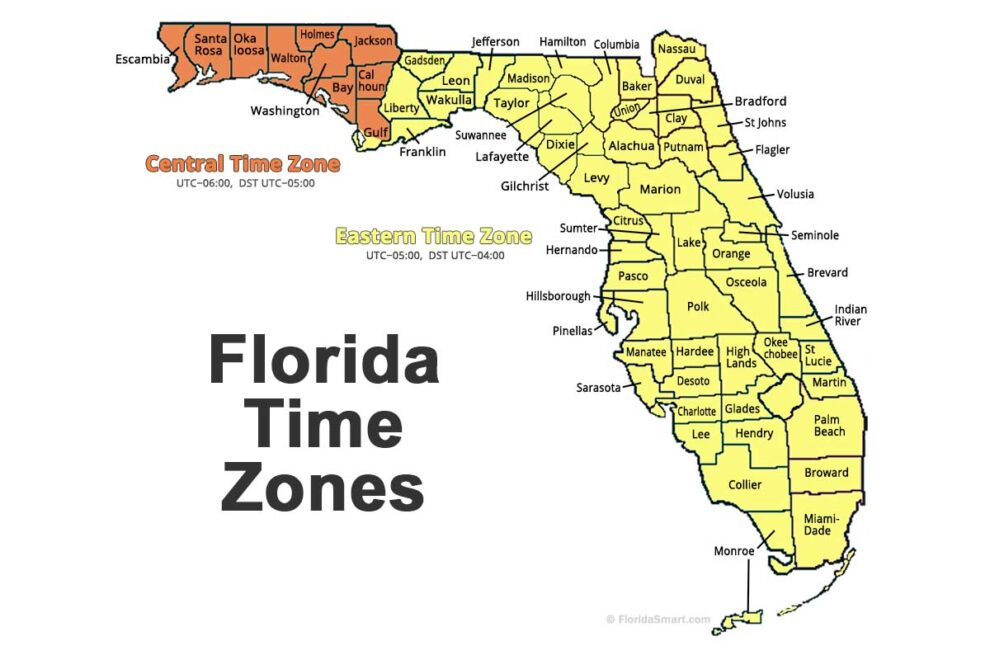
Florida’s Dual Clocks: Eastern vs. Central Time
At its core, Florida’s time zone landscape is divided between two major zones: Eastern Standard Time (EST) and Central Standard Time (CST). Both zones observe Daylight Saving Time, transitioning to Eastern Daylight Time (EDT) and Central Daylight Time (CDT) respectively during the warmer months. This means that for a significant portion of the year, there’s a one-hour difference between the majority of the state and its westernmost Panhandle region. For travelers planning to explore different corners of Florida, especially those traversing east to west or vice-versa, being aware of this division is paramount. For instance, a flight departing from Pensacola (CST/CDT) to Miami (EST/EDT) will effectively ‘lose’ an hour upon arrival, not just due to flight duration but because of the time zone shift. Conversely, traveling west means ‘gaining’ an hour, potentially allowing for an extra hour of relaxation or exploration, provided you’ve planned for it.
The Dominance of Eastern Time
The vast majority of Florida, encompassing its entire peninsula and stretching north to the borders with Georgia and the Atlantic Ocean, operates on Eastern Standard Time (EST) or Eastern Daylight Time. This includes all of the state’s most famous tourist hubs and major metropolitan areas. Cities like Orlando, home to the Walt Disney World Resort and Universal Orlando Resort, operate on Eastern Time. Similarly, the vibrant nightlife and beautiful beaches of Miami and Fort Lauderdale, the bustling port city of Jacksonville, and the Gulf Coast gems like Tampa, Sarasota, and Fort Myers, all adhere to this time zone. Even the picturesque Florida Keys, including popular Key West, are firmly in the Eastern Time zone.
For anyone planning a trip focused on theme parks, east coast beaches, or South Florida’s cultural attractions, their entire itinerary will likely unfold within EST/EDT. This simplifies planning considerably, as you won’t need to account for internal time zone shifts. However, it’s crucial to remember that if you are coordinating with family or friends coming from the Florida Panhandle or states further west, they will be an hour behind you. This can affect arrival times for joint activities, check-ins at shared accommodations, or even simple phone calls. Always confirm meeting times and flight schedules, specifying the time zone to avoid any confusion.
The Western Edge: Central Time in the Panhandle
The westernmost section of Florida, specifically the panhandle counties bordering Alabama and extending eastward to the Apalachicola River, falls under Central Standard Time (CST) or Central Daylight Time. This region includes popular destinations such as Pensacola, Destin, Panama City Beach, Panama City, and the state capital, Tallahassee. The beautiful white sand beaches of the Gulf of Mexico in these areas offer a slightly different vibe than their East Coast counterparts, and their time zone difference is part of that unique identity.
For travelers specifically visiting the Florida Panhandle, planning within CST/CDT is straightforward. However, the real challenge arises when combining a Panhandle visit with other parts of Florida. Imagine driving from Tallahassee to Jacksonville, or from Destin to Orlando. You will cross a time zone boundary, which means adjusting your watch and internal clock by an hour. This shift can be disorienting if not anticipated. For example, a restaurant reservation made for 7 PM in Tallahassee for a traveler driving from Orlando would feel like 8 PM to them, necessitating an earlier departure or careful time management. Conversely, heading from west to east means effectively ‘losing’ an hour, potentially making you late for an appointment if you don’t account for it. Travelers should always pay close attention to which time zone their destination is in, especially when making bookings for flights, hotels, or activities that span across the invisible time zone line.
Practical Implications for Travelers and Tourists
The presence of two time zones within Florida can influence various aspects of your trip, from the initial planning stages to your day-to-day activities. Being mindful of these nuances can save you from missed appointments, unnecessary stress, and even financial losses. Whether you’re a seasoned globetrotter or a first-time visitor to the Sunshine State, a keen awareness of time zone differences is an invaluable asset.
Planning Your Itinerary and Bookings
One of the most critical areas impacted by Florida’s dual time zones is the planning and booking of your itinerary. This applies to several key components of any travel experience:
- Flights: When booking flights into or out of Florida, always confirm the arrival and departure times in the local time zone of each airport. A flight from Pensacola (CDT) to Orlando (EDT) might show a seemingly short flight duration on paper, but upon arrival, you’ll find yourself an hour ahead. This “lost” hour must be factored into connecting flights, ground transportation, and hotel check-in times. Likewise, departing from an Eastern Time zone airport for a Central Time zone destination means “gaining” an hour, which could lead to an unexpected wait if you arrive too early.
- Hotel Check-in/Check-out: Most hotels, resorts, and vacation rentals operate on a strict check-in and check-out schedule based on their local time. If you’re arriving at a hotel in Destin (CDT) after a drive from Tampa (EDT), your internal clock might tell you it’s 2 PM, but the local time will be 1 PM, potentially allowing you to check in an hour earlier than anticipated. Conversely, traveling eastward could make you feel an hour behind schedule for check-out. Always confirm the local time with your accommodation provider.
- Attraction Opening Hours: Florida’s world-famous attractions, from the magical gates of Magic Kingdom at Walt Disney World Resort to the thrilling rides at Universal Studios Florida, and the historical sites of St. Augustine, all adhere to their respective local time zones. A museum in Tallahassee might open at 9 AM CDT, which would be 10 AM EDT to someone arriving from Jacksonville. Double-checking operating hours against your current time zone is essential to avoid disappointment or wasted travel time.
- Restaurant Reservations and Tour Schedules: Dining experiences and guided tours are often time-sensitive. A dinner reservation at a trendy restaurant in Naples (EDT) for 7 PM could be inadvertently missed if you’re coming from Panama City Beach (CDT) and forget to adjust your clock. Similarly, missing a dolphin-watching tour or a guided Everglades National Park airboat ride due to time zone miscalculation can be a frustrating experience. Always confirm the time zone for any pre-booked activity.
Communication and Business Stays

For those traveling to Florida for business or needing to maintain communication with colleagues, family, or clients in different time zones, the complexity increases.
- Business Meetings and Conferences: If your business stay involves coordinating meetings or conferences across different Florida cities, or even with participants outside the state, explicitly stating the time zone for each scheduled event is crucial. “10 AM EST” or “10 AM CDT” leaves no room for ambiguity, preventing missed calls or late arrivals.
- Staying Connected: Communicating with friends or family back home, especially if they are in a different time zone, requires careful consideration. A call home from Miami (EDT) to someone in California (PDT) means a three-hour difference, while a call to London (GMT) will be a five-hour difference. Within Florida, simply remembering the one-hour difference between the Panhandle and the rest of the state prevents early morning wake-up calls or late-night messages.
Adapting to Time Changes and Daylight Saving
Beyond the fixed time zones, Florida also observes Daylight Saving Time, like most of the United States. This means clocks “spring forward” by an hour in early spring and “fall back” by an hour in early autumn.
- Daylight Saving Time Considerations: If your trip coincides with these transitions, be extra vigilant. An overnight flight arriving on the day Daylight Saving Time begins could effectively lose two hours if not accounted for. Always confirm the exact date of these changes and adjust your devices accordingly. Most smartphones and smartwatches will update automatically, but manual clocks in rental cars or hotels might not.
- Minimizing Disorientation: While a one-hour time difference within the state might not induce severe jet lag, it can still cause minor disorientation, especially if you’re crossing the boundary frequently. Try to adjust your sleep schedule gradually if possible. If you’re driving west into Central Time, enjoy the “extra” hour. If heading east into Eastern Time, be prepared to lose an hour and perhaps plan a slightly lighter schedule for that transition day.
Exploring Florida’s Diverse Regions and Their Clocks
Understanding where each region falls in terms of time zones enriches your travel planning, allowing you to seamlessly move between Florida’s varied landscapes and experiences.
East Coast Adventures and Eastern Time
The east coast of Florida is a vibrant tapestry of sun-drenched beaches, bustling urban centers, and iconic attractions, all operating on Eastern Standard Time/Eastern Daylight Time.
- Theme Park Wonderland: Orlando is undeniably the heart of Florida’s tourism, attracting families and thrill-seekers to Walt Disney World Resort (including Magic Kingdom, Epcot, Hollywood Studios, and Animal Kingdom) and Universal Orlando Resort (featuring Universal Studios Florida and Islands of Adventure). Planning your days here is simpler, as all attractions, dining, and resort amenities operate on the same Eastern Time.
- Cosmic Journeys and Coastal Charm: Further east, the Kennedy Space Center Visitor Complex offers a glimpse into space exploration, while nearby Daytona Beach hosts motorsports events. Historical treasures await in St. Augustine, America’s oldest continuously inhabited European-established settlement. All these destinations share the Eastern Time zone.
- South Florida Sophistication: Down south, Miami offers Latin flair, stunning beaches like South Beach, and world-class dining. Fort Lauderdale is known for its canals and yachting scene. The serene beauty of the Florida Keys, stretching down to Key West, offers a laid-back vibe, all firmly within Eastern Time. This consistent time zone makes travel between these distinct regions straightforward, allowing you to focus on the experiences rather than clock adjustments.
Panhandle Charms and Central Time
The Florida Panhandle, hugging the Gulf of Mexico, offers a different kind of Southern charm and operates on Central Standard Time/Central Daylight Time.
- Emerald Coast Beauty: Destinations like Destin, Panama City Beach, and Pensacola are famous for their sugar-white sands and emerald waters. These family-friendly beach towns are popular for fishing, water sports, and relaxation. Exploring the historic forts in Pensacola or the natural beauty of Gulf Islands National Seashore will all be on Central Time.
- Capital City Culture: Tallahassee, Florida’s capital, offers a blend of history, politics, and vibrant college town atmosphere. Its museums, state parks, and government buildings all operate on Central Time, just like the surrounding Panhandle region.
- Hidden Gems: Smaller coastal towns like Port St. Joe, Mexico Beach, and Cape San Blas offer quieter escapes, known for their unspoiled natural beauty and excellent seafood, all under the Central Time clock.

Navigating the Time Zone Border
The most fascinating aspect of Florida’s time zones is the invisible line that divides them. This border primarily follows the Apalachicola River and then extends south along the eastern boundaries of several counties. Traveling across this line, for instance, from Tallahassee (CDT) to Apalachicola (EDT), means instantaneously changing your local time by one hour.
- Border Towns: Towns along this boundary, such as Apalachicola or Port St. Joe, can be particularly interesting. While the main parts of Apalachicola are in Eastern Time, some parts of the surrounding Franklin County may technically observe Central Time. It’s always best to verify the specific time zone for your precise location when close to the border.
- Driving Across the Line: If you’re undertaking a road trip that crosses this time zone divide, your smartphone or GPS device will typically update automatically, which is a great convenience. However, it’s a good practice to manually adjust any other clocks (like in your rental car) or simply make a mental note of the change. This is especially important if you have appointments or activities scheduled shortly after crossing the border. Always confirm any bookings by explicitly asking “What time zone is that in?” to avoid any mishaps.
- Local Nuances: Be aware that in some small, unincorporated areas directly on the border, locals might have their own unofficial interpretations or habits regarding which time zone they observe, especially in daily life. However, for official business, commerce, and tourism, the legally defined time zones are always in effect.
In conclusion, while Florida’s dual time zones might seem like a minor detail, a clear understanding of them is an essential tool for any traveler. From optimizing your flight connections and ensuring timely hotel check-ins to making the most of Walt Disney World Resort’s opening hours or enjoying a sunset dinner in Destin, knowing “what time it is” locally is fundamental. By being proactive in your planning, paying attention to local times, and confirming all bookings with time zones in mind, you can avoid common pitfalls and ensure your Florida adventure is as smooth and enjoyable as the state’s famous white-sand beaches. So go ahead, set your watch, and dive into the diverse and enchanting experiences that await you in the Sunshine State!
LifeOutOfTheBox is a participant in the Amazon Services LLC Associates Program, an affiliate advertising program designed to provide a means for sites to earn advertising fees by advertising and linking to Amazon.com. Amazon, the Amazon logo, AmazonSupply, and the AmazonSupply logo are trademarks of Amazon.com, Inc. or its affiliates. As an Amazon Associate we earn affiliate commissions from qualifying purchases.