
The story of Florida’s establishment is a vibrant tapestry woven with threads of exploration, conquest, shifting empires, and the relentless march toward statehood. Far more than a simple date, its foundation encompasses centuries of geopolitical struggle, cultural fusion, and the development of a unique identity that continues to captivate travelers and shape its diverse landscape today. From its designation as La Florida by early explorers to its modern status as a global tourism powerhouse, understanding Florida’s origins offers a deeper appreciation for its rich history, iconic landmarks, and dynamic lifestyle.
The Dawn of European Exploration: Ponce de León and La Florida
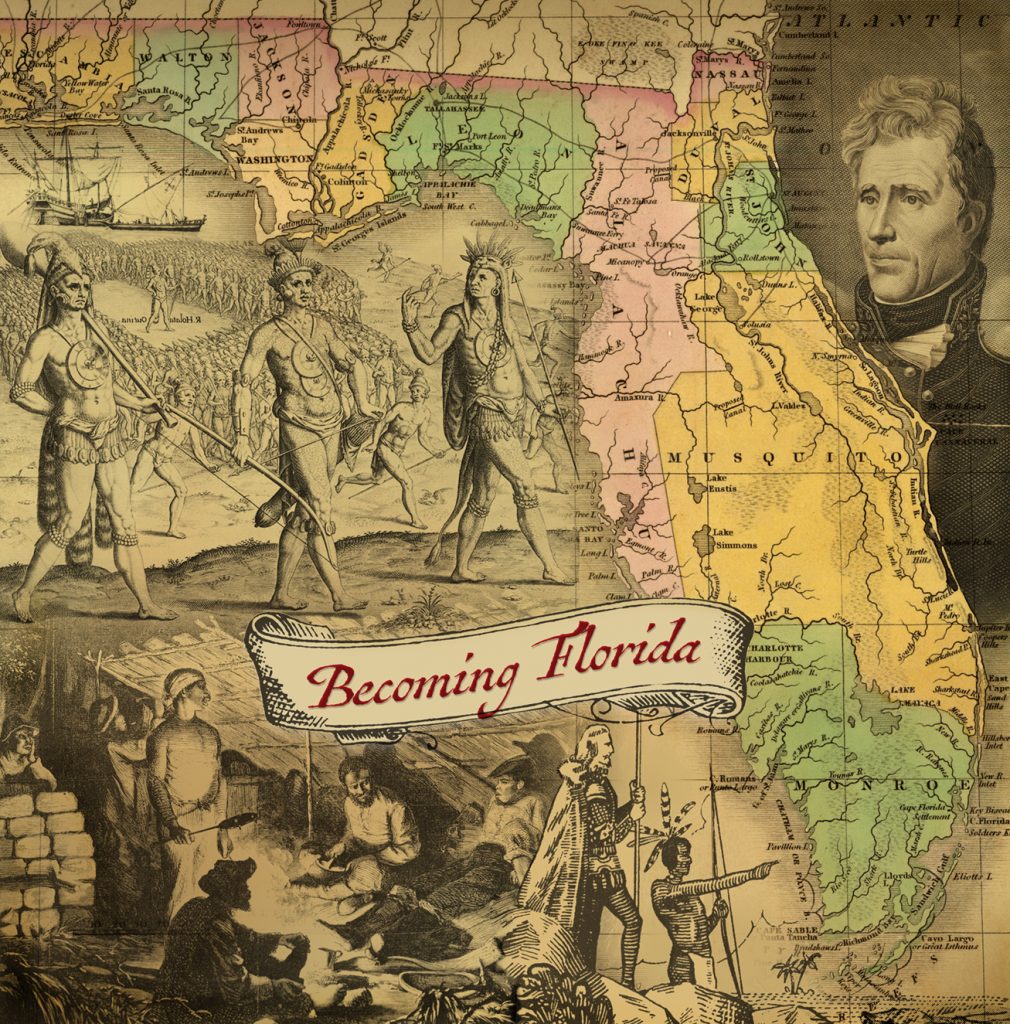
The European “discovery” of Florida is often attributed to Juan Ponce de León, a Spanish explorer who sighted the peninsula in 1513. While indigenous peoples had inhabited the land for millennia, it was Ponce de León‘s voyage that marked its entry into the European consciousness and the beginning of its long colonial history.
Early Encounters and Naming
On April 2, 1513, Juan Ponce de León and his crew sighted the verdant coast of what they believed to be a large island. It was Holy Week, a time when Spain celebrated Pascua Florida, or the “Feast of Flowers.” Enchanted by the lush landscape and blooming flora, Ponce de León named the new land “La Florida.” This name, meaning “flowery land” or “land of flowers,” has endured for over five centuries, forever linking the region to its vibrant natural beauty. He claimed the territory for the Spanish Crown, though his initial attempts to establish a permanent settlement were thwarted by resistance from the native Calusa, Timucua, Tocobaga, Tequesta, and Ais tribes. These early encounters highlight the complex interplay between European ambition and indigenous sovereignty that would define Florida’s development for centuries. For those interested in delving deeper into these foundational moments, historical markers and interpretive centers across the state offer fascinating insights into this initial contact. Modern travelers seeking a blend of history and natural beauty often gravitate towards the coastal regions first explored, where pristine beaches still echo the untouched grandeur that captivated Ponce de León.
The First Settlements: St. Augustine
Despite early challenges, Spain maintained its claim to La Florida. The true “establishment” of a lasting European presence came in 1565 with the founding of St. Augustine by Pedro Menéndez de Avilés. St. Augustine holds the distinction of being the oldest continuously inhabited European-established settlement in the United States. Its strategic location on the Atlantic Coast was chosen to protect Spanish shipping lanes and to counter incursions by the French, who had attempted to establish Fort Caroline National Memorial further north near modern-day Jacksonville.
The establishment of St. Augustine marked a pivotal moment. It wasn’t just a military outpost; it was a burgeoning community. Early inhabitants lived in modest dwellings, relied on the surrounding land and sea for sustenance, and began to build the infrastructure of a colonial town. This period laid the groundwork for future generations, creating a unique cultural blend that still resonates in the city’s charming architecture and traditions. Today, St. Augustine is a must-visit destination for anyone interested in Florida’s deep past. Its historic district, with cobblestone streets and well-preserved colonial buildings, transports visitors back in time. Iconic landmarks like the mighty Castillo de San Marcos, a massive masonry fort, and the Fort Matanzas National Monument stand as testaments to Spanish ingenuity and determination. Travelers can immerse themselves in history through guided tours, visit museums, or even stay in historic inns and boutique hotels that reflect the city’s enduring legacy, offering an authentic accommodation experience steeped in heritage.
Shifting Powers: Spanish, British, and Back Again
For over two centuries, Florida was a contested territory, a battleground for European colonial powers. Its strategic location at the southeastern tip of North America made it a valuable prize, leading to a complex history of transfers between Spain, Great Britain, and back to Spain, each leaving an indelible mark on its development.
The First Spanish Period: Colonial Expansion and Conflicts
From 1565 until 1763, Florida remained primarily under Spanish control. During this period, the Spanish attempted to expand their influence, establishing a network of missions throughout the northern and central parts of the peninsula to convert native populations and solidify their claim. These missions, while often short-lived due to native resistance and English raids, played a crucial role in shaping the early colonial landscape. St. Augustine remained the administrative and military hub, a fortified bastion against foreign encroachment. Life in Spanish Florida was characterized by constant threats from rival European powers, particularly the English from the north and the French from the west. The English frequently attacked St. Augustine, most notably by Sir Francis Drake in 1586, and by Governor James Moore of South Carolina in 1702, though the Castillo de San Marcos proved impregnable.
The colonial lifestyle was harsh, marked by isolation and limited resources. However, it fostered a unique frontier culture, drawing settlers from various backgrounds who contributed to the blend of traditions. Today, visitors can explore remnants of this period, from the preserved forts to archaeological sites that uncover the daily lives of early Spanish colonists and the indigenous peoples they encountered. Experiencing this history can be a fascinating part of a budget travel itinerary, with many historical sites offering free or low-cost admission, allowing all types of travelers to connect with the past.
British Florida: East and West
The geopolitical landscape of North America shifted dramatically with the conclusion of the Seven Years’ War (known in America as the French and Indian War) in 1763. Under the Treaty of Paris (1763), Spain ceded Florida to Great Britain in exchange for Havana, Cuba, which the British had captured. The British immediately recognized the vastness and diversity of the territory, dividing it into two distinct colonies: East Florida, with its capital at St. Augustine, and West Florida, with its capital at Pensacola. West Florida stretched westward to the Mississippi River, encompassing parts of modern-day Alabama and Mississippi.
British rule brought significant changes. The British actively promoted settlement and economic development, offering land grants to attract new colonists. Plantations began to emerge, cultivating crops like indigo and sugar. The British also invested in infrastructure, improving roads and trade routes. During the American Revolutionary War, Florida remained loyal to the British Crown, serving as a haven for Loyalists fleeing the rebellious colonies to the north. This period, though relatively short (1763-1783), left its own mark, contributing to the agricultural development and population growth of the region. Many historical sites and cultural centers in St. Augustine and Pensacola delve into this British chapter, allowing visitors to visualize life under a different colonial flag.
The Second Spanish Period: A Time of Transition
The tide turned once again with the conclusion of the American Revolutionary War. Under the Treaty of Paris (1783), Great Britain ceded Florida back to Spain. This second Spanish period (1783-1821) was vastly different from the first. Spain’s global power had waned, and its hold on Florida was tenuous. The new United States to the north was rapidly expanding, eyeing Florida’s fertile lands and strategic ports.
During this era, Florida became a frontier of international intrigue. It was a refuge for runaway slaves, a base for Native American tribes resisting American expansion, and a hotbed for filibustering expeditions by American adventurers seeking to annex the territory. The Spanish authorities struggled to maintain order, often relying on alliances with various Native American groups. Pensacola and St. Augustine remained the primary centers, but their influence was limited beyond their immediate surroundings. For a traveler, this era provides a unique backdrop for exploring the forts and historical buildings that served as defensive strongholds and administrative centers. Hotels and accommodations in these historic cities today blend modern comfort with architectural nods to their layered past, from luxury resorts offering a glimpse into grand colonial style to more budget-friendly options that still provide access to these compelling historical sites. This rich history offers a compelling narrative for tourists interested in the broader story of North American expansion.
From Territory to Statehood: The American Era
The eventual transfer of Florida to the United States was a significant chapter, marking the end of its long colonial past and the beginning of its journey toward American statehood. This period was characterized by military conflicts, territorial governance, and the relentless drive for expansion that defined the young American nation.
Acquisition by the United States
Growing American interests in Florida were undeniable. Its proximity to American borders, its use as a sanctuary for hostile Native American tribes and runaway slaves, and its strategic ports made its acquisition a priority for the United States. Tensions escalated, particularly along the border with Georgia and during the War of 1812, when British forces used Pensacola as a base. In 1818, General Andrew Jackson invaded Florida during the First Seminole War, ostensibly to punish Seminole raids, but effectively demonstrating American military dominance and Spain’s inability to control its territory.
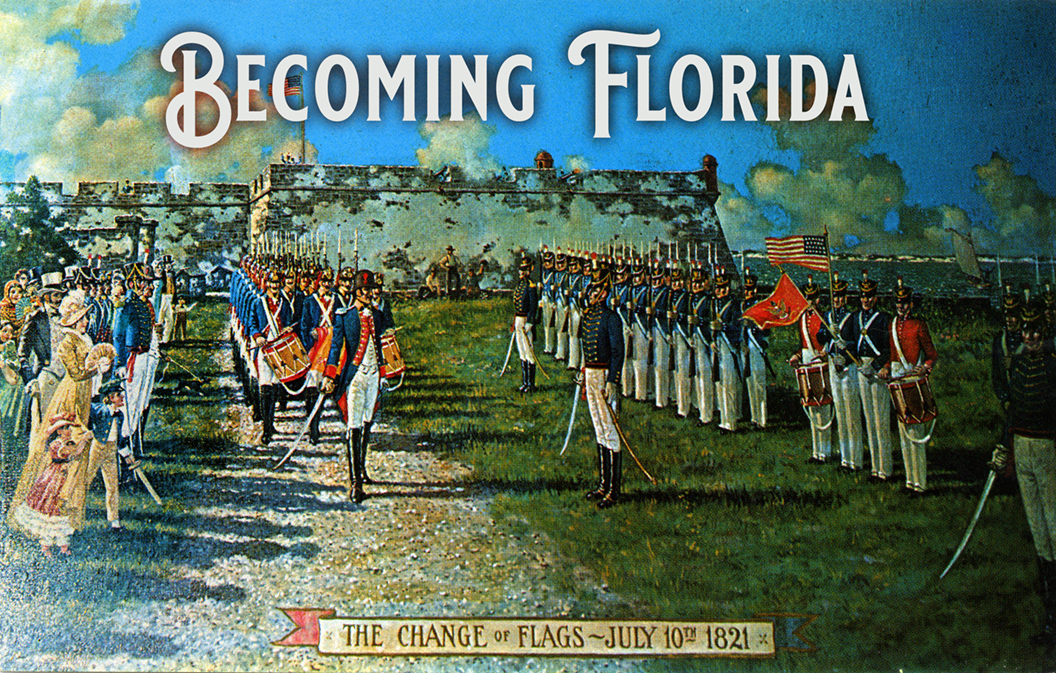
Recognizing the inevitable, and facing internal turmoil and financial strain, Spain finally agreed to cede Florida to the United States through the Adams-Onís Treaty, signed in 1819 and ratified in 1821. On July 17, 1821, Florida officially became a territory of the United States. This moment marked the “establishment” of Florida as an American entity, setting the stage for its rapid development and eventual statehood. Today, monuments and historical sites commemorate this transfer, offering visitors a glimpse into the geopolitical machinations of the early 19th century.
The Florida Territory and Seminole Wars
As a U.S. territory, Florida embarked on a new path. In 1824, Tallahassee was chosen as the capital, a strategic midway point between the former Spanish capitals of St. Augustine and Pensacola. The territorial period was marked by significant population growth, as American settlers, primarily from the southern states, streamed into the fertile lands, bringing with them plantation agriculture and an increasing demand for land. This expansion, however, brought settlers into direct conflict with the native Seminole people.
The result was a series of brutal and protracted conflicts known as the Seminole Wars. The Second Seminole War (1835-1842) was particularly devastating, becoming the longest and most costly Indian war in American history. Figures like Osceola emerged as legendary leaders of Seminole resistance. These wars largely focused on the removal of the Seminoles to Indian Territory (modern-day Oklahoma), a policy fueled by the Indian Removal Act of 1830. The Third Seminole War (1855-1858) ultimately led to the scattering of the remaining Seminole population into the remote Everglades National Park, where their descendants continue to live today. Visiting historical parks and museums in Florida provides invaluable insight into this difficult chapter, acknowledging the profound impact on native communities. Many accommodations, from quaint bed-and-breakfasts to larger resorts, are situated near these historical sites, allowing for easy access to educational experiences.
Achieving Statehood
Despite the ongoing conflicts and frontier challenges, the push for statehood gained momentum. By the 1830s, the territorial population had grown sufficiently, and leaders argued for the rights and responsibilities of full statehood. Debates arose, particularly concerning the issue of slavery, as Florida sought to enter the Union as a slave state. Eventually, a compromise was reached, and on March 3, 1845, Florida was admitted to the United States as the 27th state, simultaneously with Iowa entering as a free state.
This date, March 3, 1845, officially marks when Florida was “established” as a state within the American union. The declaration of statehood opened new avenues for economic development, infrastructure improvements, and increased political representation. While the Civil War soon followed, statehood was a critical milestone in Florida’s journey, cementing its place in the national fabric. This event launched Florida into a new era, paving the way for the incredible growth and transformation that would define the state in the following centuries.
Florida Today: A Legacy of History and Tourism
From its early establishment as La Florida to its formal incorporation into the United States, the state’s complex past has profoundly shaped its present, creating a diverse landscape that continues to attract millions of visitors annually. Today, Florida is renowned globally as the “Sunshine State,” a beacon for travel, lifestyle, and exceptional accommodation experiences.
Iconic Destinations and Historical Sites
Florida’s historical lineage is proudly displayed across its many attractions. Beyond the colonial charm of St. Augustine and Pensacola, travelers can explore a myriad of sites that tell the state’s story. The Florida Keys, for instance, offer not only stunning natural beauty but also a rich maritime history, with destinations like Key West boasting landmarks such as the Ernest Hemingway Home and Museum and the Southernmost Point Buoy. The Everglades National Park preserves the unique ecosystem that provided refuge for the Seminoles, while the vibrant cultural tapestry of Miami, with its Art Deco Historic District on South Beach and the Cuban heritage of Little Havana, reflects the waves of migration that have shaped modern Florida.
For families, the world-renowned theme parks of Orlando, such as Walt Disney World Resort and Universal Orlando Resort, represent a different kind of establishment – one built on entertainment and imagination, drawing millions to central Florida annually. Meanwhile, the Kennedy Space Center Visitor Complex stands as a monument to American innovation and its contributions to space exploration. Each of these landmarks, whether historical or modern, contributes to the state’s undeniable allure, offering diverse experiences for every type of traveler.
Modern Florida: A Global Hub for Travel and Accommodation
Today, Florida is a premier global destination, seamlessly blending its storied past with cutting-edge tourism and accommodation options. The state caters to every lifestyle, from luxury travelers seeking opulent resorts like The Breakers Palm Beach or Fontainebleau Miami Beach, to budget-conscious adventurers exploring its natural parks and affordable coastal towns. Family trips find endless joy in attractions like Busch Gardens Tampa Bay or the various parks within Walt Disney World Resort. Business stays are well-supported by numerous convention hotels in cities like Orlando and Miami, such as the Hyatt Regency Orlando or The Ritz-Carlton, Orlando, Grande Lakes.
Accommodation in Florida is incredibly diverse, ranging from lavish suites in South Beach to charming villas in Key West, and apartments suitable for long-term stays in vibrant communities across the state. The competition for tourism dollars has led to an emphasis on exceptional amenities, personalized service, and innovative booking options, making it easier than ever for visitors to find their ideal lodging. Review platforms and comparison sites allow travelers to easily navigate the vast array of choices, ensuring a perfect fit for their needs. This robust tourism infrastructure is a direct descendant of the state’s historical foundation, a testament to its enduring appeal as a place of discovery, enjoyment, and relaxation.
In conclusion, “When was Florida established?” is a question with multiple answers, reflecting its multifaceted journey. From its naming by Ponce de León in 1513, through the permanent settlement of St. Augustine in 1565, its acquisition by the United States in 1821, and finally, its admission as a state on March 3, 1845, Florida’s establishment is a continuous narrative of transformation. This dynamic history continues to enrich every travel experience, every landmark visited, and every stay enjoyed in this magnificent state.
LifeOutOfTheBox is a participant in the Amazon Services LLC Associates Program, an affiliate advertising program designed to provide a means for sites to earn advertising fees by advertising and linking to Amazon.com. Amazon, the Amazon logo, AmazonSupply, and the AmazonSupply logo are trademarks of Amazon.com, Inc. or its affiliates. As an Amazon Associate we earn affiliate commissions from qualifying purchases.