
The question of who owns the Roosevelt Hotel in New York City is one that carries significant weight, touching upon the rich history of a grand dame of hospitality, the complexities of international investment, and the ever-evolving landscape of urban development. For decades, this iconic establishment stood as a beacon in Midtown Manhattan, a testament to the city’s enduring allure and its reputation as a global hub for business and tourism. While its doors are currently closed, having ceased operations in late 2020, its ownership remains a point of interest, reflecting a unique chapter in its storied past.
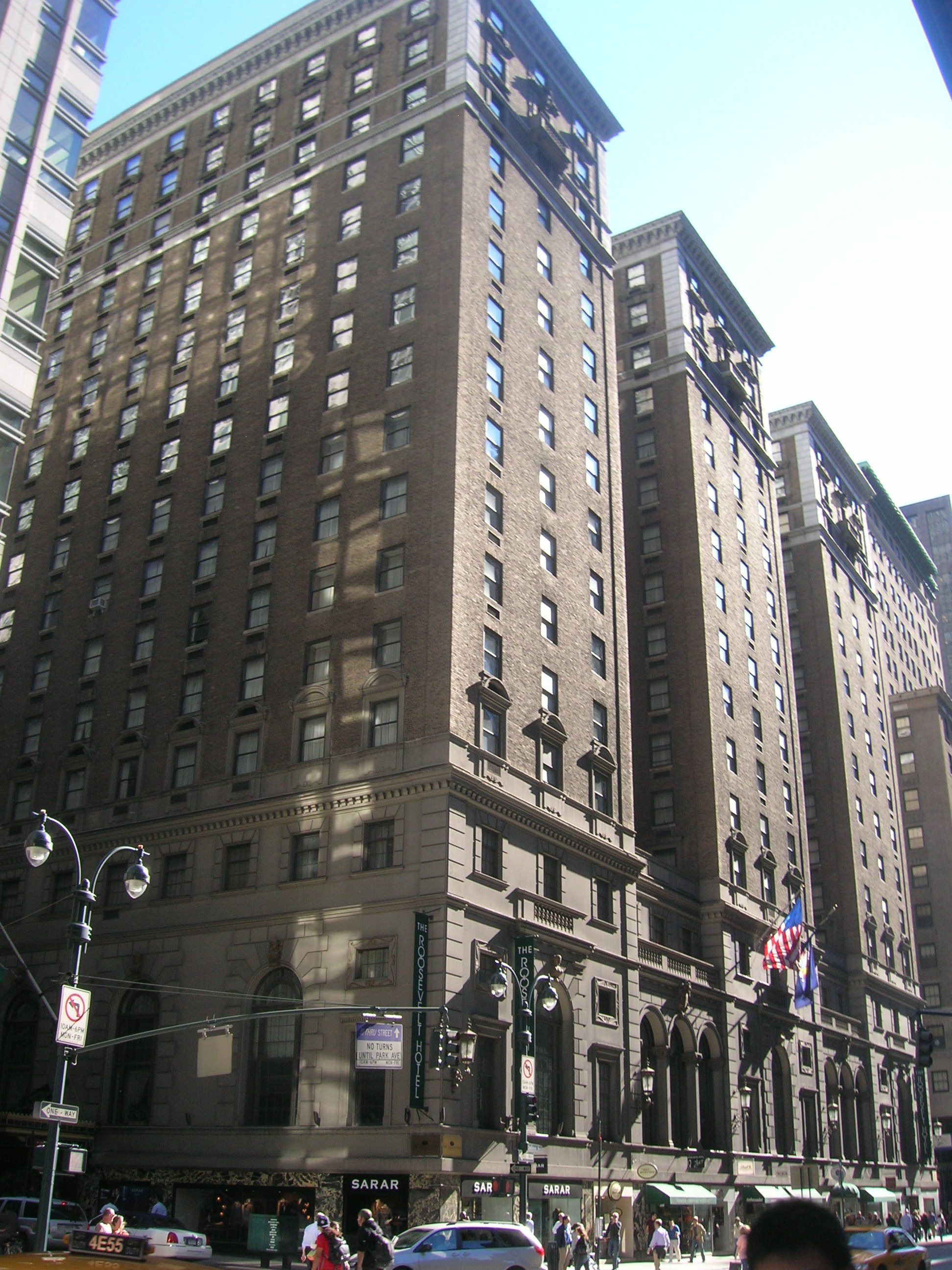
The Roosevelt Hotel, with its imposing architecture and prime location, has long been more than just a place to stay; it has been a landmark, a cultural touchstone, and an integral part of the New York City experience. Its strategic position near Grand Central Terminal made it a coveted address for travelers, offering unparalleled access to the Theater District, world-class shopping on Fifth Avenue, and countless other attractions that define the vibrancy of the Big Apple. The hotel’s closure sent ripples through the hospitality sector, prompting discussions about the future of historic properties and the impact of global events on the travel industry. Understanding its ownership sheds light not only on its financial journey but also on the broader economic forces at play in one of the world’s most dynamic cities.
A Grand Dame’s Illustrious History and Iconic Status
The story of the Roosevelt Hotel is inextricably linked with the golden age of New York City hotels. Opened in 1924, it quickly established itself as a premier destination, embodying the luxury and sophistication of the era. Named after President Theodore Roosevelt, a native New Yorker, the hotel was designed to exude elegance and offer unparalleled service, attracting a discerning clientele from its inception.
The Birth of a New York Landmark
The Roosevelt Hotel was an ambitious project from the outset, conceived by the renowned firm of George B. Post & Sons. Its construction represented a significant investment in Midtown Manhattan, a neighborhood that was rapidly transforming into the commercial and cultural heart of the city. Located at 45 East 45th Street, between Madison Avenue and Vanderbilt Avenue, its position was meticulously chosen to capitalize on the proximity to Grand Central Terminal, ensuring a steady stream of travelers and business professionals.
From its grand opening, the Roosevelt Hotel was a marvel. Its initial design boasted over 1,000 guest rooms, numerous dining options, and expansive ballrooms, all adorned with luxurious finishes that spoke to the opulence of the Roaring Twenties. The hotel quickly became a social epicenter, hosting glamorous events, political gatherings, and star-studded parties. Its early years saw it thrive as a symbol of New York City’s booming prosperity, a period of exuberant growth that defined the pre-Great Depression era. Even through challenging times, such as the Great Depression and World War II, the hotel maintained its stature, adapting to changing circumstances while preserving its essential character as a high-end accommodation option.
Architectural Splendor and Enduring Charm
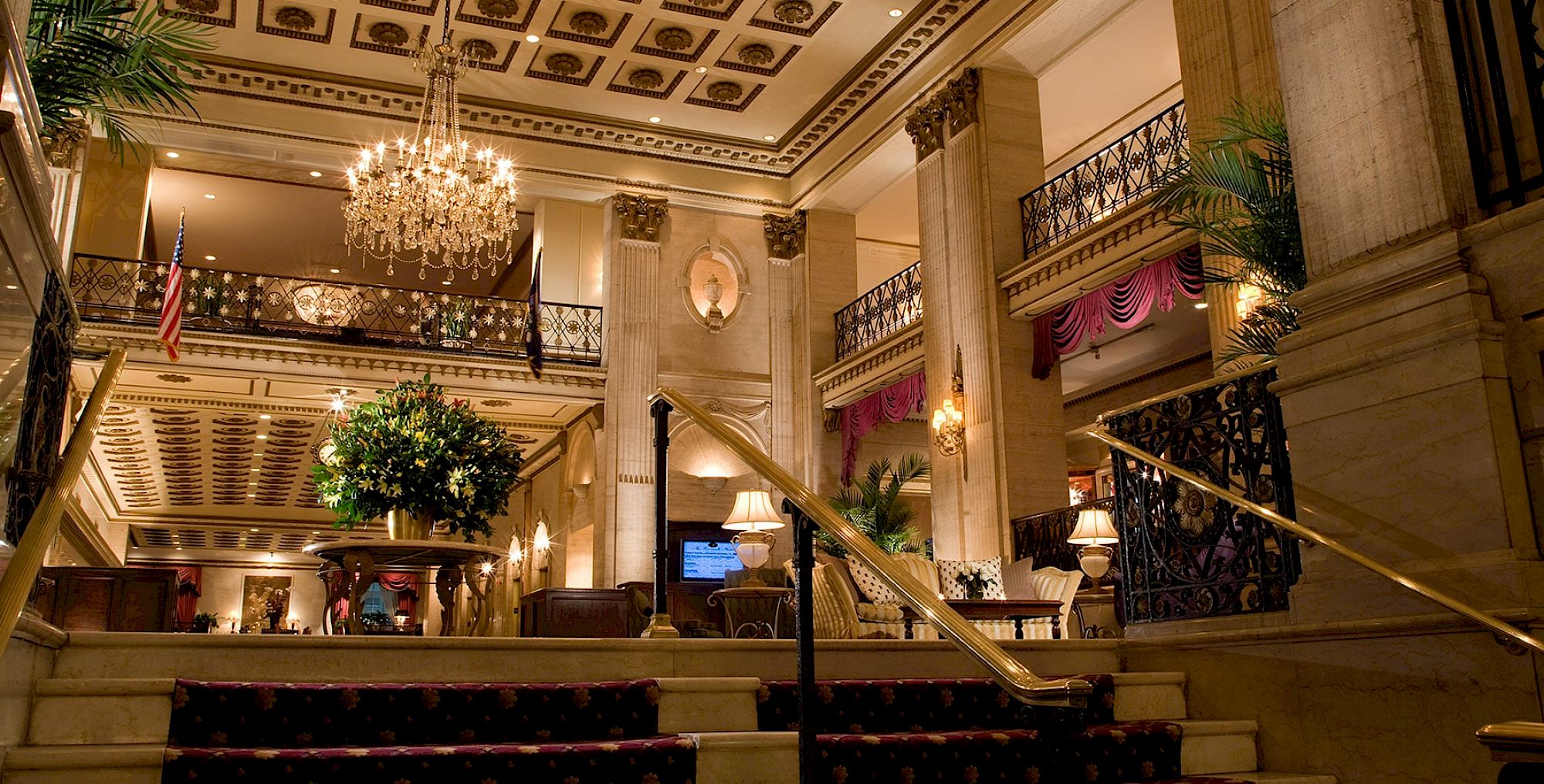
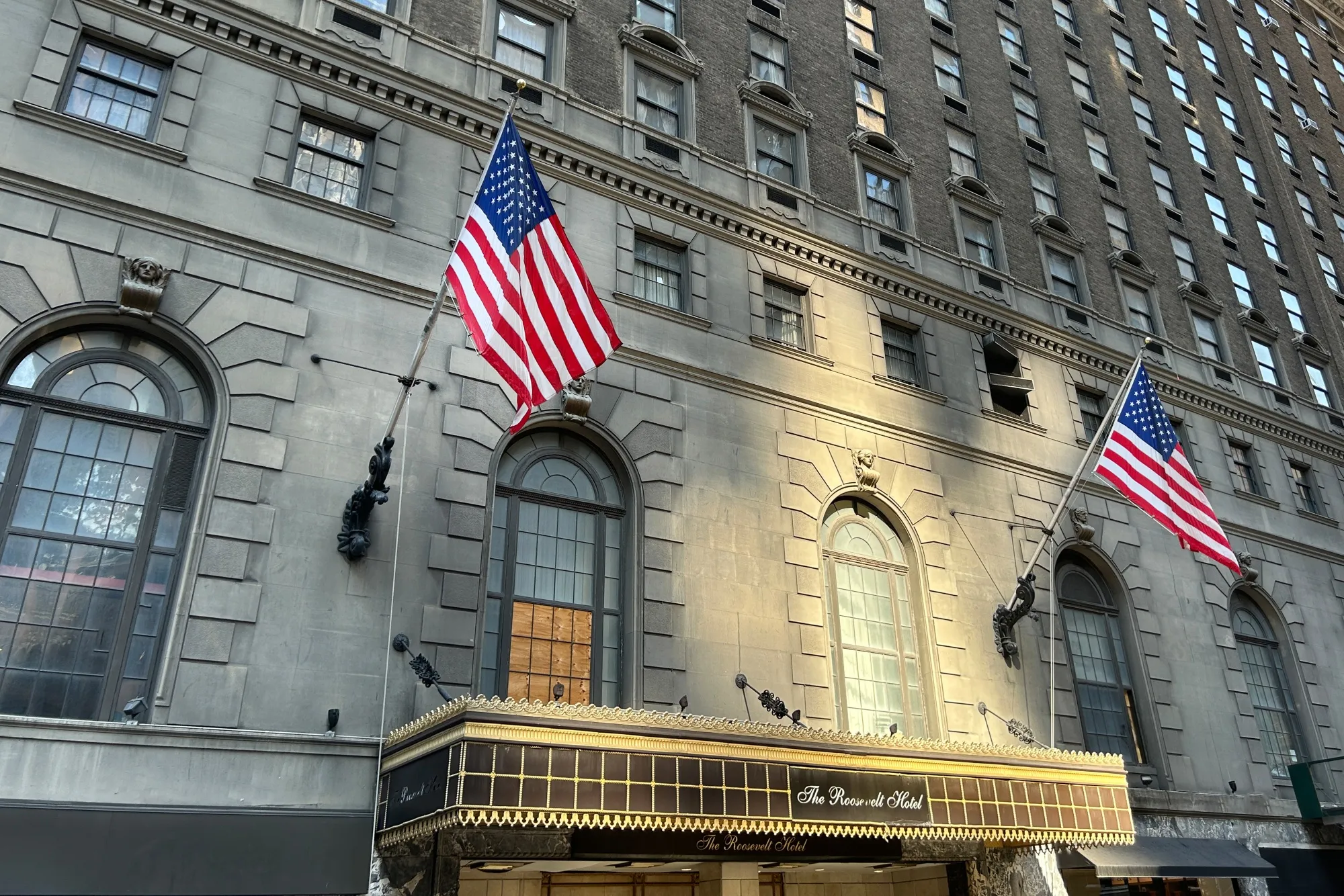
The architecture of the Roosevelt Hotel is a classic example of early 20th-century hotel design, blending elements of Beaux-Arts and Renaissance Revival styles. Its facade is characterized by intricate detailing, elegant cornices, and soaring windows that once offered breathtaking views of the city. Inside, the hotel’s public spaces were a sight to behold, particularly its magnificent lobby. This grand hall, often referred to as the “living room of Midtown Manhattan,” featured soaring ceilings, ornate chandeliers, polished marble floors, and rich wood paneling, creating an atmosphere of timeless luxury.
The hotel’s design aimed to create a self-contained world of comfort and extravagance for its guests. Amenities included multiple restaurants, such as the renowned Roosevelt Grill, and later, the popular Mad46 Rooftop Lounge, which offered stunning panoramic views. The guest rooms, while updated over the decades, retained a classic charm, providing comfortable and spacious retreats amidst the urban bustle. The Roosevelt Hotel’s location was a key part of its enduring appeal, offering unmatched convenience for travelers interested in exploring the city’s iconic landmarks. Guests could easily walk to Times Square, the Theater District, and upscale shopping. The hotel’s proximity to major transportation hubs, including Grand Central Terminal, made it an ideal base for both business travelers and tourists eager to delve into New York City’s myriad attractions.
A Hub of Social and Cultural Life
Beyond its architectural beauty, the Roosevelt Hotel cultivated a reputation as a vibrant cultural and social hub. It played host to countless famous personalities, from politicians and industrialists to film stars and musicians. Its ballrooms witnessed historical speeches, lavish weddings, and glittering galas. The hotel’s legendary Lobby Lounge was a favorite meeting spot, bustling with activity, conversations, and the occasional celebrity sighting.
One of its most notable claims to fame was its role in the career of Guy Lombardo and his Royal Canadians, who performed annually at the hotel for decades, broadcasting their New Year’s Eve performances live from the Roosevelt Grill to millions across the United States. This association firmly cemented the hotel’s place in American cultural memory. The Roosevelt Hotel also made appearances in numerous films and television shows, further enhancing its iconic status and drawing visitors eager to experience a piece of New York City history. Its ability to maintain a blend of luxury and historical charm, even as modern hotels like the Grand Hyatt New York (which replaced the Hotel Commodore nearby) emerged, spoke to its unique appeal in the competitive NYC hospitality market.
The Tangled Web of Ownership: Pakistan International Airlines (PIA) and the Government of Pakistan
The ownership of the Roosevelt Hotel is not a straightforward tale of local developers or prominent hospitality groups. Instead, it involves an unexpected international player: Pakistan International Airlines (PIA), the national flag carrier of Pakistan, and by extension, the Government of Pakistan. This unique ownership structure highlights the diverse ways in which global entities invest in prime real estate assets in major international cities.
PIA‘s Acquisition and Long-Term Stewardship
Pakistan International Airlines (PIA) first became involved with the Roosevelt Hotel in 1979, when it acquired a 50% stake in the property through its subsidiary, PIA Hotels Limited. This move was part of a broader strategy for the airline to invest in hospitality assets in key international travel hubs, providing accommodation options for its crew and passengers, and diversifying its revenue streams. The remaining 50% was initially held by the Saudi Royal family, demonstrating the international appeal of New York City real estate.
In 1999, PIA bought out its Saudi partners, gaining full ownership of the Roosevelt Hotel. For over two decades, under the complete control of PIA and the Government of Pakistan, the hotel continued its operations, albeit with varying degrees of financial success. The airline managed the hotel through a dedicated subsidiary, RHC Operating LLC, and invested in renovations and upgrades to maintain its competitive edge in the bustling New York City hotel market. This long-term stewardship by an international airline provided a stable, albeit sometimes complex, background for the hotel’s continued operation, distinguishing it from properties owned by traditional hotel chains like Marriott or Sheraton.
Financial Challenges and the Decision to Close
Despite its prime location and historical grandeur, the Roosevelt Hotel faced increasing financial pressures over the years. Operating a historic, large-scale hotel in New York City is a costly endeavor, with high property taxes, maintenance expenses for an aging infrastructure, and fierce competition from both established luxury hotels (like the Waldorf Astoria or Plaza Hotel) and newer, boutique accommodations. The financial health of the Roosevelt Hotel was also closely tied to the financial stability of its parent company, PIA, which itself has grappled with significant debt and operational challenges for decades.
The onset of the global COVID-19 pandemic in early 2020 delivered a devastating blow to the global travel and tourism industry, and New York City’s hospitality sector was among the hardest hit. With international travel severely restricted, business conventions canceled, and tourist numbers plummeting, hotels across the city experienced unprecedented drops in occupancy and revenue. For the Roosevelt Hotel, which was already operating with tight margins, the pandemic proved to be the final straw. In October 2020, after nearly a century of continuous operation, the management announced its permanent closure, citing the “unprecedented current environment” and “continuing financial losses.” This decision marked a somber moment for New York City, signifying the temporary or permanent loss of thousands of hotel rooms and jobs, and leaving a historic landmark in limbo.
The Current Predicament: Closure and Uncertainty
Since its closure in October 2020, the Roosevelt Hotel has remained dormant, a silent sentinel in the heart of Midtown Manhattan. While initially intended to be a permanent closure, subsequent discussions and proposals from the Government of Pakistan have hinted at various potential futures for the property. There have been talks of redevelopment, conversion into a mixed-use complex (residential and commercial), or even a future reopening under new management or a joint venture. The sheer size and prime location of the property make it an incredibly valuable asset, despite its current state of disuse.
The ownership by the Government of Pakistan adds a layer of diplomatic and economic complexity to its future. Any major decision regarding the sale or redevelopment of the hotel requires governmental approval and is often subject to political discourse within Pakistan. For a brief period in 2023, the hotel was repurposed by New York City to house migrants, reflecting the city’s urgent need for accommodation solutions and providing a temporary, albeit unconventional, use for the vacant property. This temporary use, while humanitarian, underscored the uncertain future of this grand historic building, highlighting the significant challenge its owners face in determining its next chapter.
The Roosevelt Hotel’s Legacy and Its Place in NYC Tourism
The closure of the Roosevelt Hotel represents not just the end of an era for a specific business but also a symbolic moment for New York City’s tourism and hospitality landscape. Its legacy, however, is far from over, as its history continues to inform our understanding of the city’s development and its enduring appeal as a global destination.
A Testament to New York’s Hospitality Landscape
For nearly a century, the Roosevelt Hotel was a quintessential part of New York’s robust hospitality sector. It offered a particular brand of classic elegance that appealed to travelers seeking a traditional New York City experience, often distinguishing itself from more modern, minimalist hotels. Its extensive meeting and event spaces made it a preferred venue for conferences, corporate gatherings, and social celebrations, contributing significantly to New York City’s reputation as a prime location for major events.
The hotel’s long history provided a tangible link to the past, allowing guests to immerse themselves in the glamour of bygone eras while enjoying modern conveniences. For many, staying at the Roosevelt Hotel was an experience in itself, offering a glimpse into the city’s rich social tapestry. Its presence helped define the character of Midtown Manhattan, sitting proudly alongside other architectural marvels like the MetLife Building and Grand Central Terminal. The hotel’s commitment to service and its ability to adapt over decades, even under international ownership, cemented its reputation as a significant player in the competitive NYC accommodation market.
The Broader Impact on Midtown Manhattan and the Local Economy
The closure of a hotel of the Roosevelt size has a palpable impact on the immediate neighborhood and the wider city economy. It means a loss of jobs for hundreds of employees, from front-desk staff to housekeepers, chefs, and maintenance workers. It also affects the ecosystem of businesses that rely on hotel guests and operations – local restaurants, shops, taxi services, and cultural attractions all feel the ripple effect.
In Midtown Manhattan, a district heavily reliant on tourism and business travel, the absence of the Roosevelt Hotel’s rooms reduces the overall capacity for visitors. While New York City boasts an extensive array of hotels, from budget-friendly options like Holiday Inn to ultra-luxury establishments like the St. Regis, every closure chips away at the diverse offerings that make NYC a top global destination. The economic void left by such a large property emphasizes the interconnectedness of urban tourism, accommodation, and the overall lifestyle of a vibrant city. Its prime location, once a magnet for tourists visiting nearby Rockefeller Center, Central Park, or Broadway shows, now awaits a new purpose.
What Lies Ahead for This Historic Property?
The future of the Roosevelt Hotel remains a subject of considerable speculation and public interest. Given its architectural significance, prime location, and historical value, many hope for a respectful renovation and a return to its former glory as a hotel or a thoughtful adaptive reuse that preserves its landmark status. Options could range from a comprehensive restoration, perhaps under the banner of a major international hospitality brand, to a conversion into high-end residential units or office spaces, or a combination of these. The Government of Pakistan faces the complex challenge of maximizing the asset’s value while navigating the political and economic realities of both Pakistan and New York City.
Whatever its ultimate fate, the story of the Roosevelt Hotel serves as a poignant reminder of the dynamic nature of urban landmarks. It underscores the challenges faced by historic properties in a rapidly modernizing world and the delicate balance between preservation and commercial viability. Its journey, from a symbol of American grandeur to an internationally owned property facing an uncertain future, reflects the ebb and flow of global economics and the enduring, yet sometimes vulnerable, charm of New York City’s architectural heritage.
In conclusion, the Roosevelt Hotel in New York City is owned by Pakistan International Airlines (PIA), a state-owned enterprise of the Government of Pakistan. While currently closed, its ownership saga is a fascinating chapter in the annals of New York City’s hospitality industry, awaiting a resolution that will hopefully honor its past while embracing a promising future. Its legacy as a grand, iconic destination will undoubtedly continue to resonate, regardless of what new form it may take in the vibrant tapestry of New York’s hotels and landmarks.
LifeOutOfTheBox is a participant in the Amazon Services LLC Associates Program, an affiliate advertising program designed to provide a means for sites to earn advertising fees by advertising and linking to Amazon.com. Amazon, the Amazon logo, AmazonSupply, and the AmazonSupply logo are trademarks of Amazon.com, Inc. or its affiliates. As an Amazon Associate we earn affiliate commissions from qualifying purchases.