
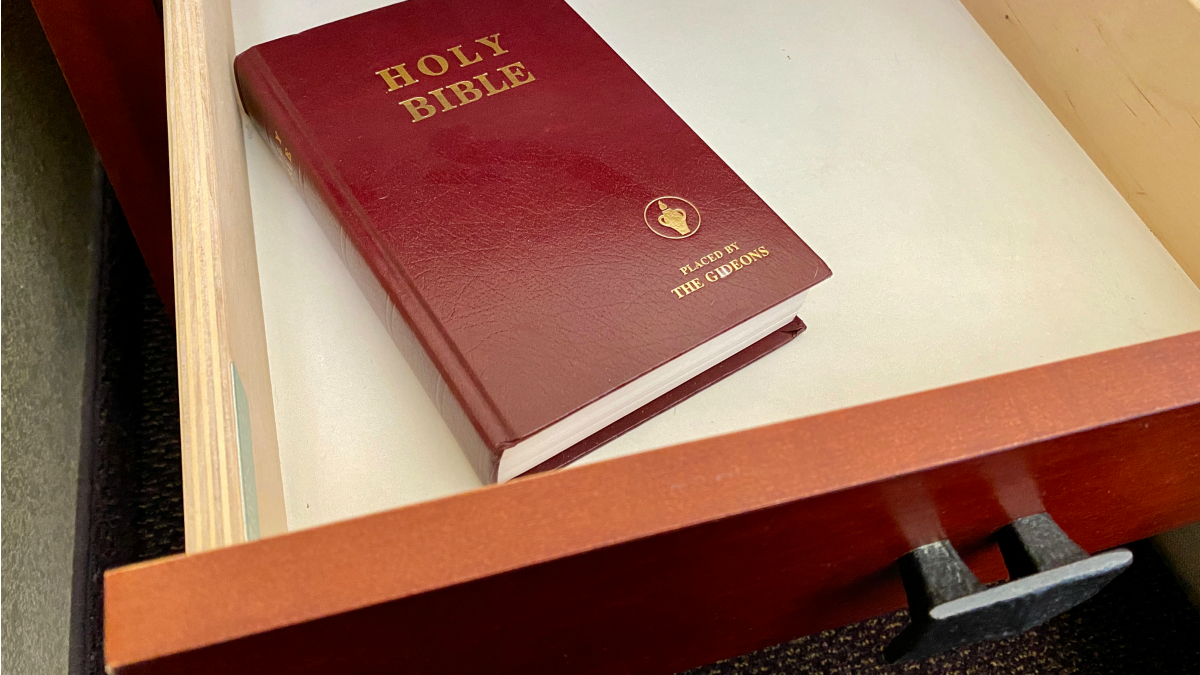
For generations of travelers across the globe, the sight of a Bible nestled in the drawer of a hotel room nightstand was as commonplace as the television remote or the complimentary soap. This enduring fixture, often bearing the distinctive imprint of Gideons International, became an almost universal symbol of hospitality, offering a quiet, spiritual presence for those seeking solace or reflection on their journeys. Yet, in an increasingly secular and diverse world, its presence has become a topic of discussion, a relic of a bygone era for some, and a comforting tradition for others. The story behind these ubiquitous texts is a fascinating blend of faith, philanthropy, and the evolving nature of the travel and accommodation industries.

From grand resorts to quaint roadside motels, the Bible in the room was a silent testament to a particular vision of care and comfort for guests. This practice, initiated over a century ago, aimed to provide spiritual sustenance to weary travelers far from home. However, as global tourism expands and the expectations of modern travelers shift, the question arises: why were they there in the first place, and why are they becoming less common today? This exploration delves into the historical roots, societal context, and contemporary shifts that are reshaping the in-room amenities of hotels worldwide.
The Enduring Legacy of Gideons International
The primary reason for the widespread distribution of Bibles in hotel rooms can be attributed almost entirely to one dedicated organization: Gideons International. Founded on a simple yet profound premise, their mission has profoundly impacted the lifestyle of millions of travelers.
A Mission Born of Philanthropy and Faith
The story of Gideons International began in 1898 in Janesville, Wisconsin, United States. It was formed by two traveling salesmen, John H. Nicholson and Samuel E. Hill, who, after sharing a hotel room and finding comfort in mutual prayer, conceived of an association for Christian commercial travelers. Their vision quickly evolved to include a powerful philanthropic endeavor: placing Bibles in hotel rooms. The foundational idea was rooted in the belief that people, especially those away from the familiarity of home, often face loneliness, anxiety, or spiritual questioning. A readily available Bible could offer solace, guidance, and a connection to faith during these vulnerable moments.
The organization’s name, “Gideons,” is derived from the biblical figure Gideon, a leader in the Old Testament known for his willingness to serve God with a small, dedicated army. This resonated with the founders’ commitment to spreading the Gospel through seemingly small, individual acts of distribution. What started as a modest effort among a few like-minded individuals quickly gained momentum, becoming a global phenomenon. Their mission explicitly states: to win men, women, boys, and girls to a saving knowledge of the Lord Jesus Christ through the association of Christian business and professional men for service, and by the distribution of Bibles and New Testaments. This clear, unwavering purpose has driven their operations for over a century.
The Mechanics of Distribution
The operational model of Gideons International is remarkably efficient, relying heavily on volunteer work and strategic partnerships. Gideons International does not sell Bibles; instead, they are purchased through donations and then distributed for free. Volunteers, who are members of the organization, personally deliver these Bibles to hotels, hospitals, schools, and prisons in over 200 countries, territories, and possessions. This direct approach ensures that the Bibles reach their intended locations and allows for personal interaction with hotel management.
For hotels, accepting a Bible from the Gideons has historically been a no-cost, low-effort way to offer an amenity that many guests appreciated. There is no financial transaction involved for the hotel; the Bibles are provided as a gift. The distinctive small, dark blue, or red-covered book, often inscribed with “Presented by The Gideons International,” became instantly recognizable. The scale of their operation is truly staggering; it is estimated that Gideons International has distributed over 2 billion Bibles and New Testaments since its inception, with millions more distributed annually. This sheer volume cemented the Bible as a common feature in hotel rooms, particularly in North America and parts of Europe, Asia, and Africa, making it a truly global phenomenon in the world of accommodation.
The Historical and Sociological Context
The widespread adoption of Gideon Bibles in hotel rooms wasn’t merely a matter of supply and demand; it was deeply intertwined with the prevailing social norms, religious landscape, and understanding of hospitality during the 20th century.
A Comfort for Travelers: From the Roaring Twenties to Today
The early 20th century, particularly the period following the First World War and into the Great Depression, saw significant growth in both travel and the expansion of the hotel industry. As more people traveled for business and leisure, often to unfamiliar cities and destinations, the concept of providing comfort and a sense of “home away from home” became paramount for hotels. In this era, religious faith played a more central role in public and private life for a significant portion of the population, especially in Western countries.
The Gideons International’ efforts dovetailed perfectly with this need. A Bible in the nightstand drawer was seen as a thoughtful gesture, a silent companion for the lonely traveler, a source of moral reflection, or a beacon of hope in times of personal crisis. It was an amenity that, while spiritual in nature, was embraced by many hotel operators as a sign of their commitment to guest welfare and moral uprightness. This wasn’t about imposing religion, but about providing an option for spiritual comfort that aligned with the dominant cultural lifestyle and expectations of guests at the time.

For decades, this practice became an unquestioned standard, an expected feature in most types of accommodation. It reflected a time when the majority of travelers in many regions shared a broadly Christian cultural background, or at least respected its public presence. The Bible was thus not just a religious text, but also, in a way, a cultural landmark within the hotel room, symbolizing a particular kind of traditional hospitality.
A Symbol of Hospitality or an Outdated Practice?
Despite its long-standing tradition, the presence of Bibles in hotel rooms has, in recent decades, become a subject of debate. For many, it remains a welcome, familiar sight – a quiet reassurance that some traditions endure. It can symbolize a universal message of hope and compassion, fitting within the broader theme of providing comfort to travelers. In certain regions, particularly those with a strong religious heritage, it is still viewed as an essential aspect of thoughtful hospitality, signaling a hotel’s awareness of guests’ potential spiritual needs.
However, as societies become increasingly diverse and secular, the practice has also faced criticism. Modern tourism caters to a global audience with a vast array of religious beliefs, non-beliefs, and cultural backgrounds. For guests who do not identify as Christian, or who value secular spaces, the presence of a Bible can be perceived as an imposition, a subtle endorsement of one faith over others. While Gideons International emphasizes that the books are merely offered, not forced upon anyone, the question of inclusivity in a multicultural world remains pertinent.
Hotels today operate in a delicate balance, aiming to create environments that are welcoming to all guests. This means re-evaluating long-held practices to ensure they align with contemporary values of diversity and secularism. The traditional “don’t ask, don’t tell” approach to the Bible in the room, where it’s present but guests are free to ignore it, is slowly being challenged by a desire for more explicit inclusivity. The debate often centers on whether a hotel, as a commercial entity, should implicitly endorse any particular religion through its standard amenities, or if it should maintain a neutral stance, allowing guests to bring their own spiritual resources.
The Shifting Landscape of Modern Hospitality
The past two decades have witnessed a profound transformation in the hospitality industry, driven by technological advancements, evolving guest demographics, and a heightened focus on personalization and inclusivity. These shifts have inevitably impacted the long-standing tradition of Bibles in hotel rooms.
The Decline of the Gideon Bible and Rise of Inclusivity
While Gideons International continues its mission, the visible presence of their Bibles in hotel rooms is undeniably declining, particularly in Western countries and among global hotel chains. Several factors contribute to this trend:
- Secularization and Diversity: The most significant driver is the increasing secularization of many societies and the growing recognition of global religious diversity. As hotels cater to guests from India, China, the Middle East, and various parts of Europe and North America, an amenity that caters primarily to one faith can feel out of place or even unwelcoming to others. Hotel brands are striving for a universal appeal, aiming for environments that are neutral and respectful of all beliefs, or lack thereof.
- Digitalization and Connectivity: We live in an age where information and comfort are largely mediated through digital devices. Guests carry smartphones, tablets, and e-readers, capable of accessing any religious text, spiritual content, or entertainment at a moment’s notice. From digital Bibles to meditation apps, the need for a physical book for spiritual solace has diminished significantly. Hotels are prioritizing high-speed Wi-Fi, smart TVs with streaming services, and charging ports as essential amenities over traditional printed materials.
- Brand Image and Modern Amenities: Contemporary hotel design often favors minimalist aesthetics and a focus on sleek, technologically advanced amenities. The emphasis is on unique experiences, luxury toiletries, bespoke bedding, and cutting-edge in-room technology. A traditional Bible in a drawer, while symbolic, might not align with the modern, often curated, brand image that many hotels and resorts wish to project. For instance, some upscale brands like certain Marriott International properties (e.g., W Hotels) and Hilton Hotels & Resorts have either removed Bibles or adopted policies where religious texts are available upon request, rather than being standard in every room.
- Cost and Space Considerations (Minor): While the Bibles themselves are free, there are marginal considerations of space in a drawer and the implied endorsement. Some budget hotels or those focusing on extreme minimalism might simply see it as an unnecessary item, especially if it doesn’t align with their target demographic or brand philosophy.
- Alternative Religious Texts: Some progressive accommodation providers, in an attempt to be truly inclusive, might offer a selection of religious texts – including the Koran, Torah, Book of Mormon, or texts from other faiths – available upon request. This approach moves away from a single default religious item to a more comprehensive and respectful offering.
As a result of these shifts, a growing number of hotels, particularly newer brands targeting younger demographics like Millennials and Generation Z, have opted to remove the Bibles entirely. This doesn’t necessarily signify anti-religious sentiment, but rather a strategic decision to appeal to a broader, more diverse customer base and align with contemporary lifestyle trends.
The Future of Spiritual Comfort in Travel
Despite the decline, the desire for spiritual comfort or moments of reflection hasn’t vanished from the travel experience. The ways in which hotels address this are simply evolving.
The future of spiritual resources in accommodation is likely to be characterized by:
- On-Demand Access: Rather than a default physical Bible, hotels might integrate digital libraries of religious texts into their in-room entertainment systems or dedicated guest service apps. This allows guests to access the text of their choice privately and conveniently.
- Personalization: The trend in hospitality is towards highly personalized experiences. A guest could potentially request a Bible, Koran, or another religious text upon booking or arrival, and it would be discreetly placed in their room, akin to requesting specific pillow types or dietary amenities.
- Continued Presence in Niche Markets: The Gideon Bible will likely not disappear entirely. It will continue to be found in budget hotels, smaller independent establishments, and in regions with particularly strong religious demographics in countries like the United States, Canada, Mexico, Australia, and various nations across Africa and South America. In these contexts, it continues to serve its original purpose and is still a welcomed feature by a significant portion of the traveling public.
Ultimately, the journey of the Bible in hotel rooms reflects the broader evolution of the hospitality industry itself – a constant adaptation to changing societal values, technological advancements, and the diverse needs and expectations of a global traveler base. What started as a sincere philanthropic gesture has morphed into a complex symbol, prompting hotels to rethink what truly constitutes comfort and inclusivity in the modern age of travel.
In conclusion, the presence of Bibles in hotel rooms is primarily the legacy of Gideons International, a Christian organization dedicated to distributing religious texts for spiritual comfort. This tradition flourished for decades, becoming a hallmark of hospitality and aligning with prevailing social and religious norms. However, as the world becomes increasingly diverse, digital, and secular, many modern hotels are re-evaluating this practice, opting for greater inclusivity or digital alternatives. While its ubiquitous presence may be fading in some sectors of the accommodation industry, the underlying desire for solace and reflection among travelers remains, finding new forms of expression in the ever-evolving landscape of global tourism and lifestyle.
LifeOutOfTheBox is a participant in the Amazon Services LLC Associates Program, an affiliate advertising program designed to provide a means for sites to earn advertising fees by advertising and linking to Amazon.com. Amazon, the Amazon logo, AmazonSupply, and the AmazonSupply logo are trademarks of Amazon.com, Inc. or its affiliates. As an Amazon Associate we earn affiliate commissions from qualifying purchases.