
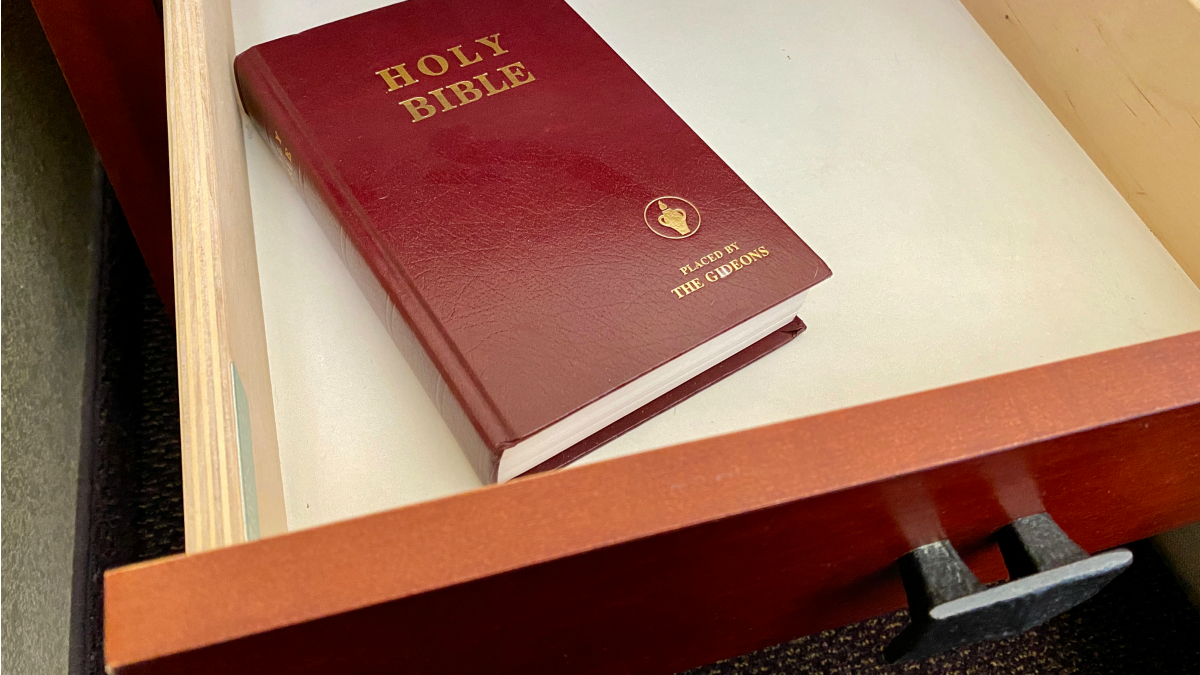
For countless travelers worldwide, the sight of a Bible neatly tucked into the drawer of a hotel room nightstand is as familiar as the crisp white sheets or the miniature complimentary toiletries. It’s a ubiquitous presence that often goes unnoticed, yet upon reflection, prompts a curious question: why is it there? Is it a universal mandate, a quirky tradition, or a subtle nod to a bygone era? Delving into the history and reasons behind this widespread practice reveals a fascinating intersection of faith, philanthropy, and the evolving landscape of global accommodation.
This enduring tradition isn’t a stipulation from major hotel chains or an industry standard. Instead, its roots lie in the benevolent mission of a single organization: The Gideons International. Since the turn of the 20th century, this Christian evangelism association has been dedicated to placing copies of The Bible, free of charge, in hotels, hospitals, prisons, and schools around the globe. Their commitment to providing spiritual comfort and guidance to individuals in transitional or vulnerable settings has etched their presence into the very fabric of the hospitality industry.

Understanding this phenomenon requires a journey back in time, exploring the origins of The Gideons International, the motivations behind their mission, and how the practice has evolved in response to a more diverse and secular global travel scene. From bustling New York City hotels to tranquil resorts in Bali, the presence of a Gideon Bible speaks volumes about a tradition that has, for generations, offered a quiet invitation to reflection amidst the hustle and bustle of travel.
The Enduring Presence: A Historical Overview
The story of the hotel Bible begins not with a grand corporate strategy, but with a chance encounter between two traveling salesmen in a humble Wisconsin hotel. The year was 1898, and the location was Boscobel. John H. Nicholson and Samuel E. Hill, both devout Christians, found themselves sharing a room due to overcrowded conditions. Their shared faith and evening prayer sparked an idea: to create an association of Christian traveling men for fellowship and evangelism. Just a year later, in 1899, they formally established The Gideons International in Janesville, Wisconsin. The name “Gideon” was inspired by the biblical figure from the Book of Judges, known for his faith, courage, and willingness to serve God.
Initially, their mission focused on supporting fellow Christian salesmen. However, a pivotal moment arrived in 1908 when one of the Gideons suggested placing Bibles in hotel rooms. The rationale was simple: traveling, particularly for business, could be a lonely and challenging experience. A Bible in the room could offer solace, guidance, and a sense of familiarity to weary travelers far from home. The first hotel to receive Gideons Bibles was in Iron Mountain, Michigan, but the concept quickly gained traction. By 1910, all hotels in the United States with more than 50 rooms had received Bibles from the organization. This marked the beginning of a tradition that would soon span continents and decades, establishing The Gideons International as a quiet yet powerful force in global evangelism.
The Genesis of The Gideons
The inception of The Gideons International was rooted in a simple yet profound desire to share the Christian faith. The founders envisioned an organization where Christian businessmen could support one another and collectively spread the Gospel. Their initial meetings in Janesville, Wisconsin, laid the groundwork for a movement that would grow exponentially. The decision to place Bibles in hotel rooms was not a sudden impulse but a carefully considered strategy to reach a transient population. Traveling salesmen, often spending nights alone in unfamiliar cities, were seen as prime candidates for spiritual reflection. The hotel room, a temporary sanctuary, became the perfect distribution point for a message of hope and comfort.
The choice of the King James Version for many years, though later diversified, reflected a common understanding and reverence for a widely accepted translation in the English-speaking world. The discreet placement of the Bible, typically in a bedside table drawer, ensured it was available for those who sought it, without being an overt or intrusive display. This subtle approach allowed hotels to maintain a secular public image while still accommodating a service that many guests found comforting. The success of this initiative was evident in its rapid expansion, first across the United States and then internationally, becoming a recognizable symbol of hospitality and faith.
Their Global Mission
From its humble beginnings, The Gideons International expanded its mission globally, establishing a presence in over 200 countries and territories. Today, they distribute Bibles and New Testaments in countless languages, reaching millions of people annually. Their global mission extends beyond hotels to hospitals, military bases, prisons, schools, and even directly to individuals. This expansive reach is testament to the enduring appeal and perceived need for spiritual texts in diverse settings.
The financing for these Bibles comes entirely from voluntary contributions by individuals and churches. The Gideons International operates on a non-profit basis, relying on the generosity of its supporters to fund its vast distribution network. This model has allowed them to provide Bibles to hotels at no cost, a key factor in the widespread adoption of the practice by the hospitality industry. For hotel owners, accepting a free Bible to place in guest rooms represents a low-cost way to potentially enhance guest experience and fulfill a perceived expectation, particularly in Western countries. The sheer scale of their operation means that a traveler checking into a Marriott International in London, a Hilton Worldwide in Sydney, or an independent boutique hotel in Dublin is likely to encounter the familiar Gideon Bible. This global saturation has ingrained the practice deeply into the collective consciousness of world tourism.
More Than Just a Book: The Underlying Reasons
The continued presence of Bibles in hotel rooms, despite shifts in societal norms and increasing secularization, is supported by several compelling reasons that extend beyond mere tradition. These reasons touch upon aspects of human psychology, the role of hospitality, and the practicalities of hotel management.
Providing Comfort and Familiarity
For many guests, particularly those from Christian backgrounds, finding a Bible in their hotel room offers a profound sense of comfort and familiarity. Travel can be disorienting and stressful, involving unfamiliar surroundings, new routines, and often, loneliness. A Bible can serve as a reassuring anchor, a tangible connection to home, faith, and routine. In moments of stress, anxiety, or insomnia, some travelers find solace in reading scripture or simply knowing that a spiritual resource is readily available.
This comfort isn’t necessarily about active proselytization but about providing an option for spiritual engagement. For individuals facing personal crises, business pressures, or emotional distress while away from their usual support systems, the presence of a Bible can be a quiet source of strength. It represents a potential haven for reflection, prayer, or moral guidance, fulfilling an unspoken need for emotional and spiritual well-being that hotels, in their role as temporary homes, aim to provide. The act of turning a page, even if just out of curiosity, can offer a moment of quiet respite.
A Legacy of Hospitality
The act of placing Bibles in hotel rooms has become intertwined with the broader concept of hospitality itself, particularly in cultures with a strong Christian heritage. Hospitality, by definition, involves extending a welcoming and generous hand to guests. For many years, providing a Bible was seen as an extension of this generosity, catering to the spiritual needs of guests alongside their physical comforts. It signified a hotel’s thoughtfulness and a subtle acknowledgment of the diverse needs of its clientele.
Furthermore, the practice largely continued unchallenged for decades. There was little organized opposition, and for many, it was an innocuous gesture. Hotels accepted the Bibles because they were free, took up minimal space, and were generally appreciated or ignored rather than causing offense. It became an almost invisible part of the hotel room setup, something that was simply there. For major hotel chains like Accor Hotels or InterContinental Hotels Group, maintaining this long-standing tradition without incurring cost or significant guest complaints was an easy decision, solidifying its place as a legacy of hospitality that continues in many establishments.
The Evolving Landscape of Hotel Accommodation
While the Gideon Bible remains a common sight, the world of hotel accommodation is constantly evolving, driven by changing guest demographics, cultural sensitivities, and technological advancements. This evolution has prompted some hotels to rethink their approach to in-room religious texts.
Diversification and Inclusivity
In an increasingly globalized and diverse world, hotels cater to guests from every imaginable background, faith, and worldview. Acknowledging this, some hotel groups, particularly high-end luxury hotels and those in religiously diverse regions, have begun to diversify their offerings of religious texts or remove them altogether. Instead of exclusively providing a Bible, a hotel might offer a selection of sacred texts, including the Quran, Torah, or Bhagavad Gita, upon request. This approach reflects a commitment to inclusivity and a recognition that not all guests share the same faith.
Brands like Four Seasons Hotels and Resorts or Ritz-Carlton often prioritize personalized experiences, which may mean offering a broader spiritual library or simply omitting physical texts in favor of a neutral stance. In countries like Japan or in certain regions of the Middle East, cultural norms or dominant religious practices might dictate the presence of different texts, or none at all. The move towards customization and respecting individual guest preferences is a significant trend in modern hospitality, influencing everything from dietary options to in-room amenities. Budget hotel chains, such as Travelodge or Premier Inn in the United Kingdom, may also opt to remove Bibles to save space or streamline their offerings, often focusing strictly on essential amenities.
The Digital Age and Future Trends
The digital revolution has also played a role in the changing dynamics of in-room religious texts. With smartphones, tablets, and e-readers, guests now have instant access to virtually any sacred text in multiple languages. Numerous apps and websites provide digital versions of The Bible, Quran, and other scriptures, often with enhanced features like search, annotations, and audio readings. This ubiquitous digital access diminishes the perceived necessity of a physical book in every room.
As hotels increasingly invest in smart room technology, interactive tablets, and high-speed Wi-Fi, the future of providing spiritual resources might lean towards digital libraries accessible through in-room entertainment systems. A guest could simply select their preferred religious text from a menu, rather than rummaging through a drawer for a specific physical book. This shift aligns with broader lifestyle trends towards minimalism, personalization, and seamless digital integration in daily life. While the traditional Gideon Bible may persist in many establishments due to tradition and cost-effectiveness, the landscape is undoubtedly moving towards more flexible, personalized, and digitally-enabled spiritual offerings, reflecting the diverse needs of modern travelers.

Impact and Perception: A Guest’s Perspective
The presence of a Bible in a hotel room evokes a range of reactions from guests, highlighting the complexities of catering to a global audience with diverse beliefs and expectations. For some, it is a non-issue, a detail unnoticed or unremarked upon. For others, it carries significant weight, either positively or negatively.
For many Christian travelers, particularly those from the United States, Canada, or parts of Europe, the Bible is a welcome sight. It provides a sense of peace, a familiar comfort, and a reminder of their faith while on the road. It can be a source of solace during lonely nights, a guide for morning devotion, or simply a familiar object in an unfamiliar space. Some guests actively seek out and read these Bibles, finding inspiration or comfort in their pages. For them, its presence is a thoughtful gesture of hospitality, reflecting a consideration for their spiritual well-being. This demographic often appreciates the tradition and views it as a positive amenity, even if they don’t always pick up the book themselves. It’s part of the familiar hotel experience, much like a fresh towel or a functioning television.
Conversely, for guests from non-Christian backgrounds, those who identify as secular, or individuals who prefer a strict separation of church and state, the Bible’s presence can be perplexing, irrelevant, or even unwelcome. While most non-Christian guests likely overlook the book or simply push it further into the drawer, a small but vocal minority might view it as an imposition, a subtle form of proselytization, or a lack of inclusivity. In today’s increasingly multicultural world, some argue that hotels should maintain a religiously neutral environment to respect all guests equally. This sentiment is more prevalent in urban centers like Los Angeles or Berlin, where diversity is celebrated, and expectations for secular spaces are higher.
The perception also varies significantly by geographic region. In countries with a predominantly Christian population, the Bible is often expected and accepted without question. In contrast, hotels in countries with a different dominant religion, such as Saudi Arabia or India, are unlikely to feature Bibles in their rooms, instead providing copies of the Quran or local scriptures, or no religious texts at all. This regional variation underscores that while the Gideon Bible is widespread, it is not universally adopted or universally welcomed.
From the hotel’s perspective, the decision to keep or remove Bibles often boils down to a cost-benefit analysis and brand image. Since The Gideons International provides Bibles for free, the direct cost to hotels is negligible. Removing them might alienate a segment of their clientele who appreciate the tradition, while keeping them might subtly deter others or invite occasional complaints. Many hotel operators likely conclude that the benefits of maintaining the tradition (free resource, perceived guest comfort) outweigh the potential drawbacks, particularly for economy and mid-range hotels that often prioritize consistency and cost-efficiency.
Ultimately, the Bible in the hotel room stands as a unique landmark of sorts in the history of global tourism and accommodation. It’s a quiet testament to a century-old mission, a subtle nod to the diverse spiritual needs of travelers, and an intriguing artifact in the ever-evolving story of hospitality. While its future may see shifts towards greater inclusivity and digitalization, its legacy as a widespread feature of hotel rooms across the world is undeniable and deeply ingrained. For now, it remains a quiet invitation, patiently waiting in the drawer for those who seek its pages.
LifeOutOfTheBox is a participant in the Amazon Services LLC Associates Program, an affiliate advertising program designed to provide a means for sites to earn advertising fees by advertising and linking to Amazon.com. Amazon, the Amazon logo, AmazonSupply, and the AmazonSupply logo are trademarks of Amazon.com, Inc. or its affiliates. As an Amazon Associate we earn affiliate commissions from qualifying purchases.