
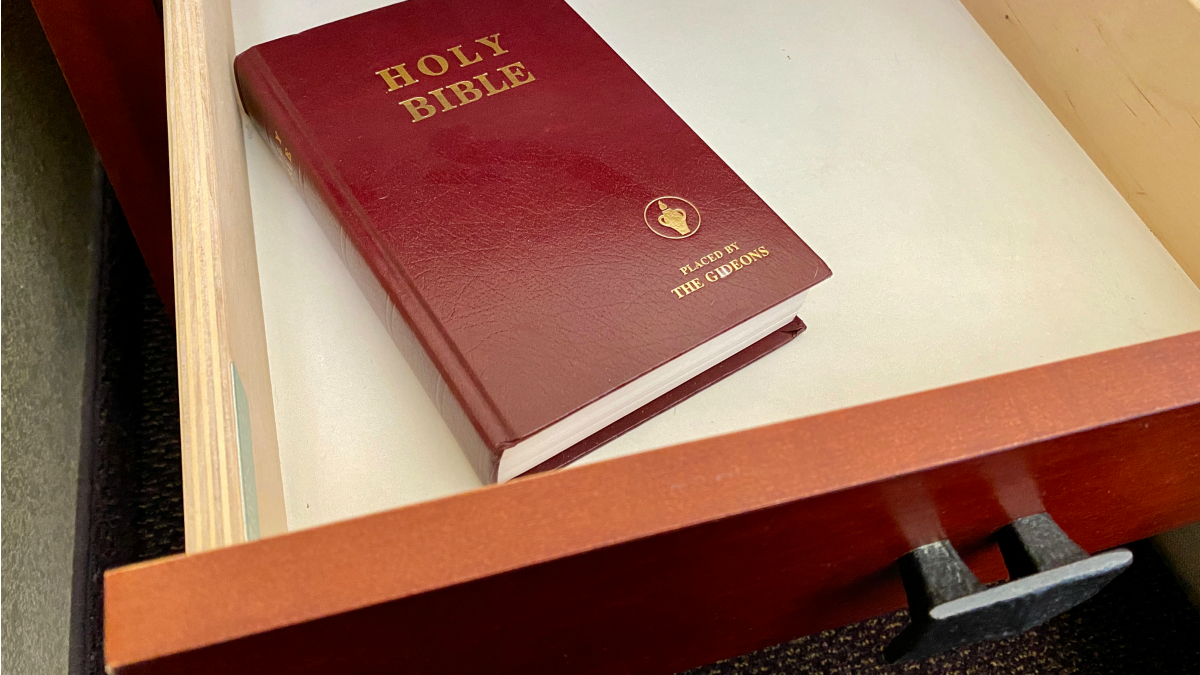
For many seasoned travelers, the sight of a Bible neatly tucked away in the bedside drawer of a hotel room is as familiar as the fresh towels or miniature toiletries. It’s a subtle, yet pervasive, amenity that has persisted across countless accommodations for decades, spanning a wide range of budgets and locations. From bustling urban centers like New York City and London to serene resorts in the countryside, this particular book often makes an appearance. But why is it there? Is it a marketing strategy, a historical relic, a spiritual offering, or simply a matter of enduring tradition? Delving into the origins and evolution of this practice uncovers a fascinating intersection of philanthropy, hospitality, and changing societal norms that impacts the modern travel experience.
A Centuries-Old Tradition: The Genesis of Guestroom Bibles
The presence of religious texts in places of public accommodation is not a new phenomenon. Historically, inns and taverns often catered to weary pilgrims and travelers seeking spiritual solace, and religious texts might have been available in common areas. However, the systematic placement of Bibles in individual hotel rooms, as we know it today, has a more specific and relatively recent history, largely shaped by a dedicated organization with a clear mission.
The Philanthropic Vision of The Gideons International
The primary force behind the widespread distribution of Bibles in hotel rooms is The Gideons International. Founded in 1899 by three traveling businessmen in Boscobel, Wisconsin, the organization was inspired by a shared vision to spread the Christian faith. These founding members, Samuel E. Hill, John H. Nicholson, and William J. Knights, found themselves sharing a room in a local hotel due to overcrowding. During their evening discussions, they realized a shared difficulty in maintaining their spiritual practices while on the road, often far from home and their usual church communities. This shared experience sparked an idea: to place Bibles in hotel rooms, making the Word of God readily accessible to fellow travelers.
The first Bible was placed in a hotel room in Iron Mountain, Michigan, in 1908. From this humble beginning, the initiative grew exponentially. The Gideons International operates through donations and the volunteer efforts of its members, distributing Bibles and New Testaments free of charge to hotels, hospitals, prisons, schools, and military personnel worldwide. Their iconic white Bibles, often bearing the Gideon emblem, are a familiar sight in an estimated 1.5 million hotel rooms across the United States alone, and in countless others across more than 200 countries, including nations in Europe, Asia, Africa, North America, and South America.
The motivation behind this immense undertaking is purely evangelical: to lead individuals to a personal relationship with Jesus Christ. For The Gideons International, a hotel room represents a unique opportunity. Travelers, often away from their established routines, perhaps feeling lonely, stressed, or contemplative, might be more receptive to spiritual guidance. A Bible in the nightstand drawer offers a discreet, non-intrusive opportunity for reflection and comfort during potentially challenging times. This mission aligns perfectly with the broader ethos of hospitality, providing an often-unseen layer of care for guests.
Early Hotel Pioneers and the Call for Comfort
While The Gideons International spearheaded the distribution, the willingness of hotel owners and management to accept these Bibles was crucial. Early hotel pioneers, particularly in the late 19th and early 20th centuries, often operated with a strong sense of community responsibility and, in many cases, personal religious conviction. Providing a Bible was seen as an extension of good hospitality – a way to offer a sense of home and moral grounding to guests who might be far from their own communities.
For hotels, accepting the Bibles came at no cost, as they were freely provided by The Gideons International. This “free amenity” model made it an easy decision for many establishments. It contributed to an atmosphere of moral rectitude and offered a tangible symbol of care, appealing to a broad demographic of travelers who, at the time, were largely Christian or at least held respect for Christian values. The practice became so ingrained that it evolved from a novel offering to an expected standard in many lodging establishments. Over time, it simply became part of the furniture, an unnoticed fixture that silently continued its tradition.
More Than Just a Book: The Reasons Behind the Practice
Beyond the philanthropic drive of The Gideons International, the continued presence of Bibles in hotel rooms speaks to several deeper reasons, ranging from offering solace to maintaining a sense of brand identity. Understanding these motivations helps to contextualize this unique amenity within the broader hospitality industry.
Offering Solace and Spiritual Comfort
One of the most profound reasons Bibles remain in hotel rooms is the perceived comfort and solace they can offer. Travel can be exhilarating, but it can also be isolating, stressful, or even traumatic. Business travelers might be grappling with demanding schedules and loneliness. Families might be facing unexpected challenges. Individuals might be traveling for difficult reasons, such as funerals or medical treatments. In these moments of vulnerability, a familiar religious text can provide immense comfort, a sense of grounding, or an opportunity for reflection and prayer.
The Bible, for many, represents a source of hope, wisdom, and strength. Having it readily available, even if only as a symbolic presence, can be reassuring. It’s a silent amenity that acknowledges a guest’s potential spiritual needs without being intrusive. While not every guest will open the Bible, its mere presence can serve as a subtle reminder that hotels aim to cater to the whole person, including their spiritual well-being, even if indirectly. This aligns with the broader goal of hotels to create a welcoming and comfortable “home away from home” experience.
A Symbol of Hospitality and Thoughtfulness
The act of placing a Bible, or any thoughtful amenity, in a guest room can be seen as an extension of hospitality. For many years, it was a subtle gesture that communicated a hotel’s consideration for its guests’ spiritual needs and moral compass. In an era when hotels were evolving from basic lodging to establishments offering a range of services and comforts, the Bible became a small, yet significant, symbol of enhanced hospitality.
It also serves as a subtle, non-verbal message about the values that the hotel might uphold or associate with. While most hotels today strive for neutrality and inclusivity, the tradition of the Bible has roots in a time when a certain moral framework was more universally accepted or at least expected by a significant portion of the traveling public. By including it, hotels demonstrated an adherence to widely recognized cultural norms and a commitment to providing a holistic guest experience. For many, it simply became a standard practice, akin to providing a telephone or a television, something expected in a quality room.
Upholding a Legacy and Brand Identity
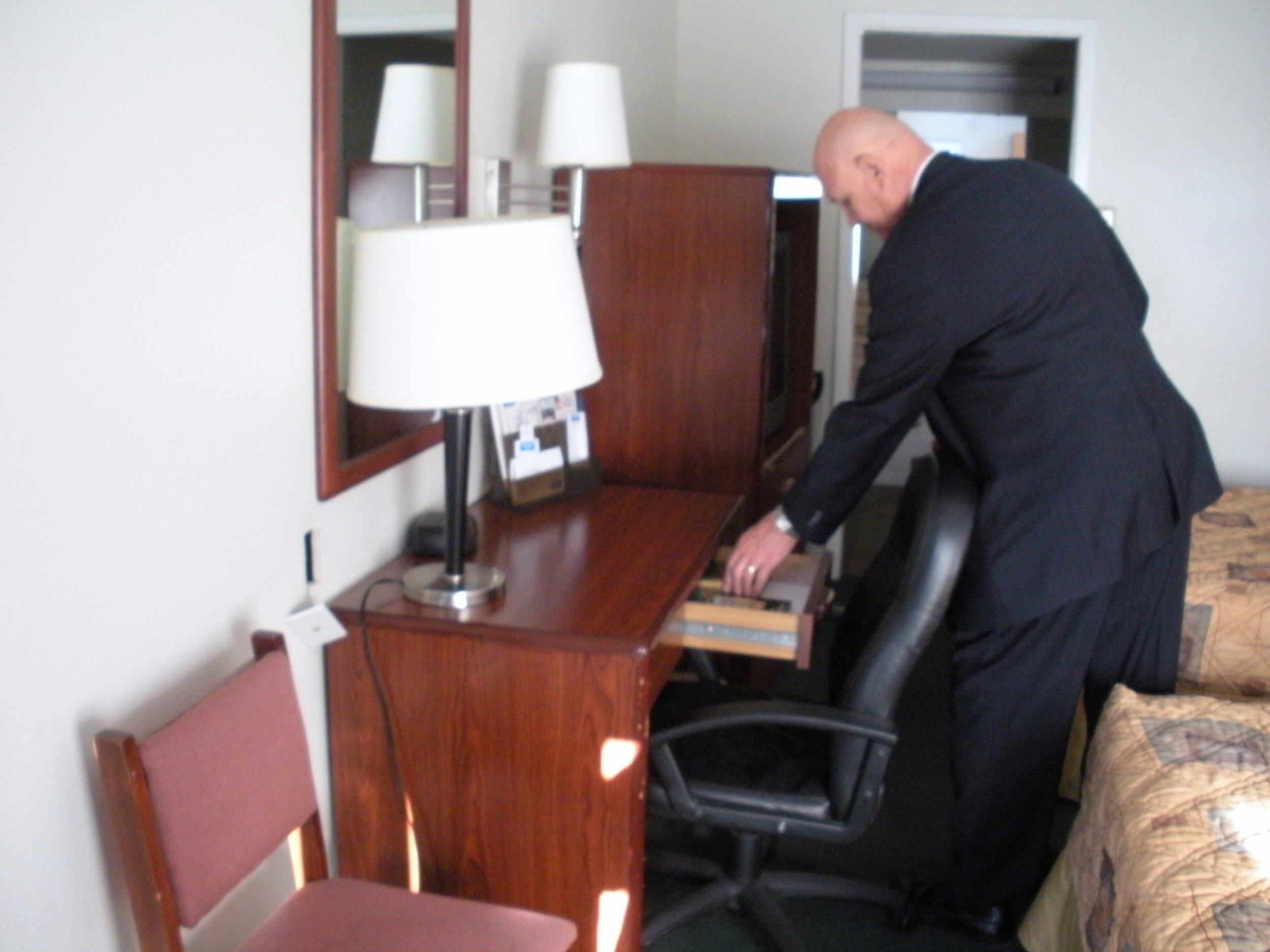
For many established hotel chains, particularly older ones or those with roots in North America and Europe, the Bible has become part of an ingrained legacy. Brands like Marriott International, Hilton Worldwide, and Best Western have long-standing relationships with The Gideons International. Removing the Bibles might be perceived by some guests as a departure from tradition or a subtle shift in values, potentially alienating a segment of their loyal customer base.
While hotels are increasingly adapting to modern sensibilities, some continue the practice simply because “it’s always been done that way.” It’s a low-cost, virtually no-effort amenity that maintains a connection to their historical practices and the expectations of a certain demographic. For some brands, particularly budget hotels or those catering to a more traditional clientele, the presence of the Bible might even contribute to a subtle aspect of their brand identity, signaling reliability and traditional values. Maintaining such traditions can be particularly important for hotels in regions with a strong religious demographic, where its absence might be more noticeable than its presence.
The Modern Perspective: Evolving Expectations and Diverse Beliefs
In an increasingly globalized and secular world, the tradition of placing Bibles in hotel rooms is not without its contemporary challenges and discussions. The hospitality industry, aiming to cater to an ever-diverse guest base, must continually re-evaluate its amenities and practices to ensure inclusivity and relevance.
The Rise of Secularism and Religious Diversity
One of the most significant shifts impacting the Bible-in-hotel-room tradition is the growing awareness of religious diversity and the rise of secularism, especially in Western countries. Travelers today come from every conceivable background, adhering to various faiths—Islam, Judaism, Hinduism, Buddhism, Sikhism, and countless others—or no faith at all. For non-Christian guests, the presence of a Bible might be irrelevant, or in some cases, even slightly alienating if it’s the only religious text provided.
This has led to discussions about whether providing only one religious text aligns with modern notions of inclusivity. Some argue that if religious texts are to be provided, a broader selection should be made available, perhaps including the Quran, the Torah, or the Bhagavad Gita, to truly cater to a diverse global clientele. Others suggest that in a truly secular society, no religious texts should be provided at all, leaving personal spiritual items to the individual traveler. The industry is grappling with how to respect tradition while evolving to meet the expectations of a global, diverse guest demographic.
Cost, Space, and Digital Alternatives
While The Gideons International provides Bibles free of charge, hotels still incur minor operational costs related to their presence, such as cleaning, occasional replacement due to wear and tear, or the very small amount of valuable drawer space they occupy. In an era where hotels are constantly optimizing room design and amenities, every inch and every item is evaluated for its utility and guest satisfaction.
Furthermore, the advent of digital technology has introduced new alternatives. Many travelers now carry smartphones or tablets with access to digital versions of countless religious texts, including various Bible translations, often for free. Apps and e-readers mean that physical books are becoming less essential for accessing information, including spiritual guidance. This raises the question: is a physical Bible still a necessary amenity when its digital counterpart is readily available and often preferred by guests? Some hotels, particularly boutique or more technologically forward-thinking establishments, are quietly discontinuing the practice, either by simply not requesting new Bibles or opting for a more minimalist approach. Brands like Travelodge and Premier Inn in the United Kingdom, for instance, have made headlines for removing Bibles from their rooms in favor of a more neutral stance and to save space.
Balancing Tradition with Inclusivity
Ultimately, the decision to include Bibles in hotel rooms often comes down to a delicate balance between upholding a long-standing tradition, respecting the needs of a segment of their clientele, and adapting to contemporary expectations of inclusivity and secularism. Major international chains often have differing policies depending on the region or specific brand. For example, a Ritz-Carlton or a Four Seasons Hotels and Resorts might choose to maintain a more traditional approach in certain markets, while a hip, design-focused boutique hotel in Paris or Tokyo might never consider placing one.
Many hotels have adopted a compromise: they don’t actively remove existing Bibles but also don’t replace them or request new ones when they are stolen or worn. Others, like the Hilton Worldwide brand Holiday Inn, have maintained the practice in most of their properties, recognizing its historical significance and the comfort it offers to many guests. The debate continues, reflecting broader societal conversations about the role of religion in public spaces and commercial enterprises.
Beyond the Bible: Other Amenities and Future Trends
The discourse around Bibles in hotel rooms is part of a larger conversation within the hospitality industry about amenities. What do guests truly value? How can hotels best cater to a diverse global audience while remaining true to their brand identity?
Welcoming All Faiths: Alternative Spiritual Offerings
As hotels strive for greater inclusivity, some are exploring alternatives to, or additions to, the single Bible in the drawer. A truly inclusive approach might involve a “spiritual menu” or a selection of texts from various world religions available upon request. Some upscale hotels, particularly in regions with diverse populations or those catering to specific clienteles (e.g., hotels near a major mosque or synagogue), might proactively offer copies of the Quran or Torah.
Another approach is to focus on amenities that promote general well-being without specific religious affiliation. This could include yoga mats, meditation guides, sound machines, or even curated playlists for relaxation. The goal remains the same: to provide comfort and a sense of calm for guests, but through broader, more universally appealing means. Some hotels, particularly luxury establishments, might also provide access to digital libraries of content, where guests can choose their preferred spiritual texts or wellness resources.

The Future of In-Room Literature
The future of in-room literature, beyond religious texts, is also evolving. While some hotels still offer a curated selection of magazines, local guides, or even classic novels, many are leaning towards digital solutions. QR codes linking to online visitor guides, in-room tablets offering access to news and entertainment, and robust Wi-Fi for personal device use are becoming standard.
The enduring presence of the Bible in many hotel rooms is a testament to the powerful legacy of The Gideons International and a deeply rooted tradition of hospitality. It speaks to a time when hotels aimed to provide not just physical shelter but also a sense of moral and spiritual anchor for travelers. While the world, and indeed the travel landscape, continues to change dramatically, the humble Bible in the bedside drawer remains a curious and often overlooked reminder of these historical and cultural threads woven into the fabric of our accommodation experiences. Whether it will remain a universal fixture in the decades to come is uncertain, but its story offers a unique insight into the heart of the hospitality industry and the diverse needs of those who wander.
LifeOutOfTheBox is a participant in the Amazon Services LLC Associates Program, an affiliate advertising program designed to provide a means for sites to earn advertising fees by advertising and linking to Amazon.com. Amazon, the Amazon logo, AmazonSupply, and the AmazonSupply logo are trademarks of Amazon.com, Inc. or its affiliates. As an Amazon Associate we earn affiliate commissions from qualifying purchases.