
The story of the Louisiana Purchase is not merely a tale of a land deal; it’s a profound narrative of vision, circumstance, and bold negotiation that irrevocably reshaped the geopolitical landscape of North America. It involved a constellation of powerful figures, each driven by distinct ambitions and facing unique challenges, whose decisions converged in 1803 to orchestrate one of history’s most significant territorial acquisitions. This monumental event effectively doubled the size of the nascent United States and laid the groundwork for its westward expansion, profoundly influencing everything from future travel routes and the establishment of new cities to the diverse cultural tapestry that defines many regions today. For anyone interested in the roots of American tourism, the genesis of its vast natural landmarks, or the sheer ambition of early American lifestyle and exploration, understanding the architects of the Louisiana Purchase is essential.

The Visionaries Behind a Continent’s Transformation
The impetus for the Louisiana Purchase arose from complex geopolitical maneuverings and the strategic foresight of leaders on both sides of the Atlantic. It wasn’t a simple transaction but the culmination of various pressures and opportunities.
Jefferson’s Agrarian Dream and the Imperative of New Orleans
At the heart of the American interest was President Thomas Jefferson. A man of profound intellect and a fervent believer in the yeoman farmer as the backbone of the republic, Jefferson envisioned an expansive nation built on agrarian principles. For this vision to flourish, secure access to the Western territories and, crucially, a reliable outlet for agricultural goods was paramount. The Mississippi River served as the vital artery for transporting produce from America’s burgeoning interior to global markets. Its strategic mouth, however, and the crucial port city of New Orleans, were not under American control.
Control of New Orleans had historically shifted between France and Spain. When news reached Jefferson that Spain had secretly ceded the vast Louisiana Territory back to France in 1800 via the Treaty of San Ildefonso, alarm bells rang in Washington D.C.. A weakened Spain as a neighbor was one thing, but a resurgent, ambitious France under Napoleon Bonaparte controlling America’s economic lifeline was an entirely different and terrifying prospect. Jefferson recognized that such a scenario threatened to strangle American westward expansion, potentially leading to future conflicts. His primary goal, therefore, was to purchase New Orleans and secure navigation rights on the Mississippi River for American vessels.
Napoleon’s Strategic Retreat from North America
On the other side of the chess board was Napoleon Bonaparte, the dynamic and unpredictable First Consul of France. Napoleon initially harbored grand ambitions for a vast French empire in North America, envisioning Louisiana as a breadbasket for the sugar-rich colony of Saint-Domingue (modern-day Haiti). However, several critical factors conspired to derail his plans and ultimately led him to consider divesting from the continent.
The most significant setback was the fierce and ultimately successful slave revolt in Saint-Domingue, led by the brilliant general Toussaint Louverture. The French efforts to crush the rebellion proved costly in both lives and resources. A massive expeditionary force sent by Napoleon was decimated not only by the tenacious resistance of the enslaved people but also by yellow fever, a harsh reminder of the challenges of colonial rule in the Caribbean. Without Saint-Domingue, Louisiana’s role as a logistical hub for a French Caribbean empire became largely obsolete.
Compounding this, Napoleon was bracing for renewed conflict with Great Britain in Europe. He desperately needed funds to finance his military campaigns and saw little value in holding a distant territory that he couldn’t effectively defend against the superior British navy. Furthermore, selling Louisiana to the United States would strategically strengthen America, creating a formidable rival to Great Britain in North America – a classic maneuver to complicate the affairs of his primary European adversary. These converging circumstances prompted Napoleon to make an astonishing offer that would change the course of history.
The Unprecedented Deal: Negotiation and Acquisition
The actual negotiation and subsequent acquisition of the Louisiana Territory unfolded with remarkable speed and an element of sheer serendipity, a testament to the boldness of the American envoys.
The American Envoys and Their Mandate
In January 1803, Thomas Jefferson dispatched James Monroe to France to assist the resident U.S. Minister, Robert Livingston. Their instructions were clear: secure the purchase of New Orleans and possibly the Floridas for up to $10 million. These men were seasoned diplomats, keenly aware of the stakes for their young nation. Livingston had already been making overtures to the French, but progress was slow and uncertain. The arrival of Monroe, a trusted confidante of Jefferson, underscored the urgency of the mission.
When Monroe arrived in Paris in April 1803, the situation shifted dramatically. Napoleon, recognizing the futility of his American empire dreams and the immediate need for funds, had already decided to sell the entire Louisiana Territory. This was a decision he made almost on a whim, surprising his own ministers.
A Bargain Too Good to Refuse: The Full Territory Offer
Just as Livingston and Monroe were preparing to negotiate for New Orleans, the French Foreign Minister, Charles Maurice de Talleyrand, made an astonishing proposition: France would sell the entire Louisiana Territory. This was far beyond the envoys’ mandate, but they immediately grasped the immense significance of the offer. Despite their lack of explicit authority, the diplomats understood that such an opportunity might never arise again. After some shrewd negotiation, they agreed on a price of $15 million. This sum, roughly $233 million in 2023 dollars, translated to approximately three cents per acre for 828,000 square miles of land.
The treaty was signed on April 30, 1803. Livingston famously remarked, “We have lived long, but this is the noblest work of our whole lives… From this day the United States take their place among the powers of the first rank.” Jefferson, while thrilled by the acquisition, privately wrestled with the constitutional implications, as the Constitution did not explicitly grant the president the power to acquire new territory. However, the overwhelming strategic and economic benefits ultimately led him to set aside his strict constructionist views for the greater good of the nation. The Senate swiftly ratified the treaty in October 1803, making the Louisiana Purchase official.
A Vast New World: Exploring the Acquired Lands
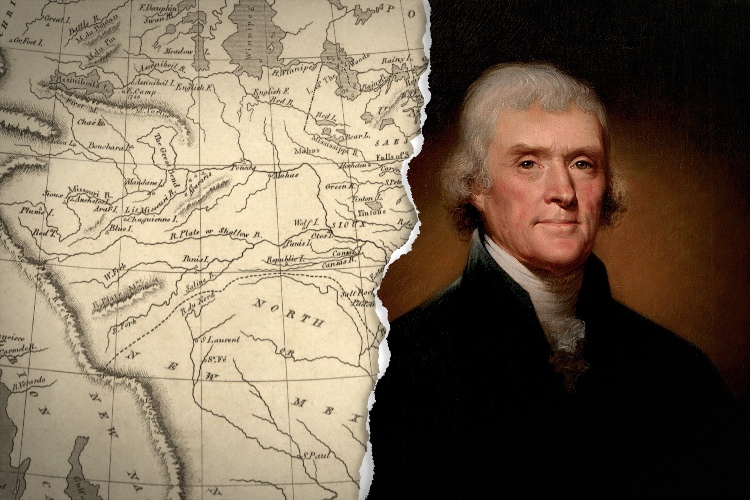
The ink on the treaty was barely dry before the American spirit of exploration and adventure was unleashed upon the newly acquired territories. The Louisiana Purchase wasn’t just a map expansion; it was an invitation to discover a vast, unknown wilderness, setting the stage for future travel, tourism, and settlement.
Mapping the Unknown: The Lewis and Clark Expedition
To fully understand and lay claim to the immense territory, Thomas Jefferson swiftly organized what would become one of the most iconic exploratory journeys in history: the Lewis and Clark Expedition, also known as the Corps of Discovery. Led by his private secretary, Meriwether Lewis, and a close friend, William Clark, the expedition’s objectives were manifold: to map the new territory, study its flora and fauna, establish trade relations with Native American tribes, and find a practical water route to the Pacific Ocean.
Beginning in St. Louis, Missouri, in May 1804, Lewis and Clark embarked on a perilous two-year journey that took them across diverse landscapes, through the heart of the continent, and eventually to the Pacific coast. Their expedition was made possible and significantly aided by individuals like Sacagawea, a Shoshone woman who served as an interpreter and guide, symbolizing the complex intercultural exchanges inherent in westward expansion. The journals kept by Lewis and Clark offered invaluable insights into the geography, resources, and indigenous populations of the region, opening the eyes of the young nation to the wonders that lay within its new borders. Their arduous travel experiences, confronting wild animals, extreme weather, and unknown terrains, are epic tales of perseverance that continue to inspire modern adventurers and nature enthusiasts.
Geographic Wonders and Future Destinations
The territory acquired through the Louisiana Purchase was truly gargantuan, encompassing parts or all of 15 future U.S. states: Arkansas, Missouri, Iowa, Oklahoma, Kansas, Nebraska, Minnesota, North Dakota, South Dakota, Montana, Wyoming, Colorado, Louisiana, and even small portions of Texas and New Mexico. This vast expanse stretched from the Mississippi Delta in the south to the Canadian border in the north, and from the Mississippi River in the east to the majestic Rocky Mountains in the west.
It encompassed an astonishing array of natural landscapes: fertile plains, rolling prairies, dense forests, intricate river systems, and soaring mountain ranges. These landscapes would, over time, become national parks, wilderness areas, and prime destinations for outdoor recreation and travel. Cities like St. Louis, Kansas City, and Denver would eventually rise from this territory, becoming major hubs for travel, commerce, and culture. The foresight of the Louisiana Purchase allowed for the unhindered development of what is now the heartland of America, providing countless attractions and experiences for modern tourists, from historical trails to vibrant urban centers.
The Enduring Legacy: Travel, Culture, and Modern Landmarks
The impact of the Louisiana Purchase reverberates through American society to this day, particularly in the realms of travel, tourism, and the unique cultural identities of the regions it encompassed. It laid the foundation for the diverse experiences that draw millions of visitors annually.
Cultural Crossroads: A Tapestry of Influences
The acquisition of Louisiana brought with it not just land but also a rich tapestry of cultures. New Orleans, already a vibrant port city, was a melting pot of French, Spanish, African, and Native American influences. The purchase meant these cultures, traditions, and languages would eventually blend and evolve with the incoming American settlers, creating unique regional identities. The French-speaking Creoles of Louisiana and the Spanish heritage evident in architecture and customs across the southwest are direct descendants of this historical moment.
Today, this cultural fusion is a major draw for tourists. Visitors flock to New Orleans to explore the historic French Quarter, savor Creole and Cajun cuisine, listen to jazz and blues music, and experience the city’s unique festive spirit. Similarly, regions across the former territory celebrate their diverse histories through festivals, museums, and preserved historical sites, offering immersive experiences that transport travelers back in time. Understanding these historical layers is key to appreciating the local culture, food, and activities available in these destinations.
Modern Tourism and Historical Reflection
The Louisiana Purchase didn’t just expand the map; it expanded the potential for human exploration and leisure. Many of the natural landmarks and historical sites born from or influenced by this event are now cornerstone attractions for travelers. The very trails blazed by Lewis and Clark are now designated national historic trails, inviting hikers, bikers, and motorists to retrace their footsteps and experience the wilderness as they did. From national parks in Montana and Wyoming to historical plantations in Louisiana, the legacy of the purchase offers countless opportunities for tourism.
Cities like St. Louis, often called the “Gateway to the West,” boast monuments like the Gateway Arch, symbolizing the westward expansion that the purchase enabled. Museums and historical societies throughout the Louisiana Purchase states preserve artifacts and stories, providing educational and engaging experiences for families and history enthusiasts. The lifestyle of pioneering, farming, and trade that developed in this vast area continues to be celebrated in heritage sites and living history museums, offering insights into the resilience and ingenuity of early American settlers. The infrastructure for travel, from roads to hotels and resorts, evolved to support this continuous movement and settlement, connecting far-flung communities into a cohesive nation.

Lifestyle Transformation and Economic Growth
The acquisition of the Louisiana Territory irrevocably altered the lifestyle of Americans and the indigenous peoples who had long inhabited the land. For American settlers, it ushered in an era of unprecedented opportunity for land ownership and agricultural expansion, fueling a massive wave of westward migration. This movement led to the establishment of countless new towns and cities, each requiring accommodation, services, and connections, thereby laying the foundation for a vibrant travel and hospitality industry. The new territories quickly became an engine of economic growth, with vast resources like timber, minerals, and fertile soil contributing to the nation’s prosperity.
However, this expansion came at a tremendous cost to Native American tribes, whose traditional lands and ways of life were profoundly disrupted. The narrative of the Louisiana Purchase is, therefore, also a complex one, intertwined with forced displacement and conflict, a crucial aspect of understanding the full historical impact and the diverse perspectives embedded within the landscape. Today, many indigenous communities actively share their heritage and history, contributing to the rich tourism offerings in states across the former territory.
In essence, the Louisiana Purchase was much more than a diplomatic transaction. It was a catalyst for exploration, a foundational act for American identity, and a profound shaper of the physical and cultural landscape. It created the very canvas upon which future generations would paint the story of American travel, from humble frontier accommodations to grand resorts, from arduous journeys across plains to accessible flights connecting bustling cities.
In conclusion, the individuals primarily responsible for the Louisiana Purchase were Thomas Jefferson, who envisioned and initiated the acquisition; Napoleon Bonaparte, whose strategic needs prompted the sale; and the American envoys, Robert Livingston and James Monroe, who seized the unprecedented opportunity. Together, these figures orchestrated a deal that defined the geographical contours of a nation, ignited a spirit of adventure and discovery, and laid the groundwork for the diverse travel, tourism, and lifestyle experiences that continue to define the heartland of the United States today.
LifeOutOfTheBox is a participant in the Amazon Services LLC Associates Program, an affiliate advertising program designed to provide a means for sites to earn advertising fees by advertising and linking to Amazon.com. Amazon, the Amazon logo, AmazonSupply, and the AmazonSupply logo are trademarks of Amazon.com, Inc. or its affiliates. As an Amazon Associate we earn affiliate commissions from qualifying purchases.