

This article delves into the specifics of where prostitution is permitted in [Nevada], exploring the historical context, the county-by-county regulations, and the broader implications for tourism and local culture. By understanding these nuances, travelers can gain a more informed perspective on [Nevada]’s unique legislative environment and plan a visit that encompasses its full spectrum of offerings, from world-class resorts and vibrant city life to breathtaking natural wonders and rich historical sites.
The Unique Legal Landscape of Nevada
The legal status of prostitution in [Nevada] is a topic frequently misunderstood by those outside the state. Contrary to popular belief, prostitution is not legal throughout [Nevada], nor is it permitted in its major metropolitan areas. Instead, it operates under a highly regulated system in a select number of rural counties, a legacy of the state’s pioneering past and its commitment to local governance. This system is designed to control, rather than eliminate, the practice, emphasizing public health and safety through stringent regulations.
A Brief History of Prostitution Laws in the Silver State
The roots of [Nevada]’s unique prostitution laws can be traced back to its frontier days during the [Wild West] era and the mining boom, particularly the [Comstock Lode] in the mid-19th century. During this time, mining towns swelled with a predominantly male population, and establishments catering to their needs, including brothels, became commonplace. Rather than attempting to suppress these activities entirely, local authorities often tolerated and, in some cases, indirectly regulated them, recognizing their presence as an entrenched part of frontier life.
As [Nevada] transitioned into statehood and beyond, various attempts were made to outlaw prostitution statewide. However, a strong tradition of local control persisted. In 1971, [Nevada] passed legislation that implicitly allowed counties to decide the legality of prostitution within their borders, provided they did not have a population exceeding 700,000 residents. This legislative move effectively cemented the practice in rural areas while reinforcing its prohibition in more populous counties. The rationale behind this approach often revolved around the idea that regulation could minimize negative social impacts, enhance public health oversight, and provide a degree of control over an activity that, if driven underground, might become more problematic. This historical journey underscores [Nevada]’s pragmatic and distinctive approach to social issues, often prioritizing local autonomy and regulated containment over outright prohibition.
County by County: Where it’s Permitted and Where it’s Not
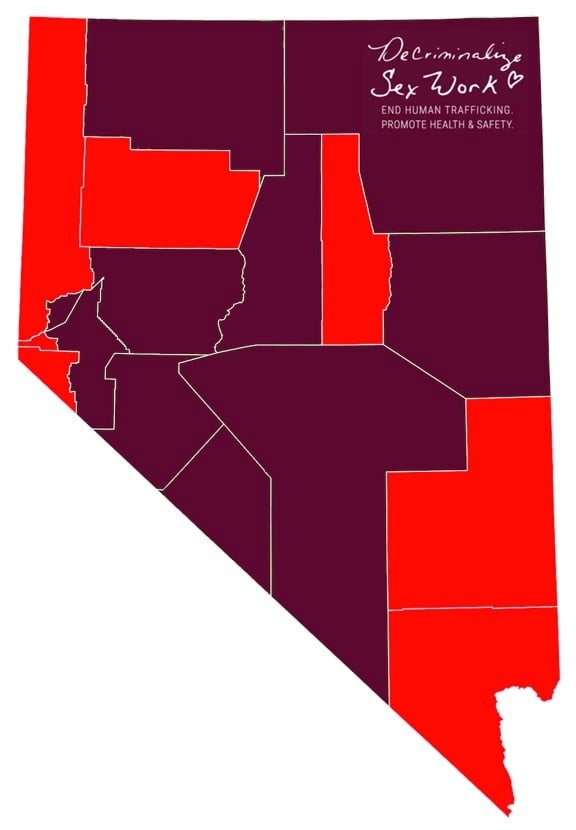
The legality of prostitution in [Nevada] is determined at the county level, with a critical distinction based on population. State law permits counties with a population under 700,000 to license brothels, but it does not mandate them to do so. This means that even in counties that could permit brothels, local ordinances may still prohibit them. Conversely, in counties with a population exceeding 700,000, prostitution is explicitly illegal by state statute.
The most important takeaway for travelers is that prostitution is strictly illegal in [Clark County], home to [Las Vegas], and [Washoe County], where [Reno] is located. It is also illegal in [Carson City], [Nevada]’s independent capital. This often comes as a surprise to visitors who associate [Las Vegas]’s “Sin City” moniker with broad legal adult services. Street prostitution and unlicensed operations are illegal everywhere in [Nevada] and are subject to severe penalties.
Here is a breakdown of counties where licensed brothels may operate (subject to local ordinance) and those where they are prohibited:
Counties Where Brothels Are Legal (by local ordinance):
- [Lyon County]: Located east of [Carson City], [Lyon County] is one of the most well-known for its brothels, including several prominent establishments.
- [Storey County]: East of [Reno], [Storey County] is another county historically associated with legal brothels, embracing its [Wild West] heritage.
- [Nye County]: [Nye County], a vast expanse stretching across central [Nevada], hosts several licensed brothels, particularly in its more remote areas.
- [Mineral County]: In southwestern [Nevada], [Mineral County] also allows licensed brothels.
- [Esmeralda County]: A very sparsely populated county in western [Nevada], it permits brothels.
- [Lander County]: In central [Nevada], [Lander County] is another area where brothels can legally operate.
- [Elko County]: Located in northeastern [Nevada], [Elko County] has permitted brothels, catering to its more isolated communities.
- [White Pine County]: In eastern [Nevada], [White Pine County] allows for the operation of licensed brothels.
- [Eureka County]: A small, rural county in central [Nevada], [Eureka County] also permits brothels.
- [Humboldt County]: In northwestern [Nevada], [Humboldt County] is on the list of counties where brothels can be licensed.
- [Pershing County]: Situated between [Humboldt County] and [Washoe County], [Pershing County] is another rural area that allows licensed brothels.
Counties Where Prostitution Is Illegal (by state law or local ordinance):
- [Clark County]: Includes [Las Vegas], [Henderson], and other major population centers. Strictly illegal.
- [Washoe County]: Includes [Reno] and [Sparks]. Strictly illegal.
- [Carson City]: As an independent city, it prohibits prostitution within its limits.
- Douglas County: Southeast of [Lake Tahoe], this county does not permit brothels.
- Churchill County: East of [Reno], brothels are prohibited here.
- Lincoln County: In southeastern [Nevada], it does not permit brothels.
This clear distinction means that any establishment advertising prostitution services outside of a licensed brothel in these approved rural counties is operating illegally. Visitors to [Nevada] should exercise caution and ensure they are aware of the specific laws of the area they are visiting to avoid inadvertently participating in illegal activities.
Understanding the Regulations: Brothels and Beyond
The legal brothel system in [Nevada] is characterized by strict regulations and oversight, setting it apart from unregulated prostitution found elsewhere. These regulations aim to manage public health, safety, and order. Licensed brothels are typically located in discreet areas, often along highways or on the outskirts of small towns in the aforementioned rural counties. They are not advertised on major billboards in urban centers, nor are they integrated into mainstream tourism attractions in [Las Vegas] or [Reno].
Key aspects of the regulatory framework include:
- Mandatory Health Checks: All legal sex workers in [Nevada]’s brothels are required by law to undergo regular health screenings for sexually transmitted infections (STIs), including weekly tests for certain conditions and monthly tests for HIV. This is a cornerstone of the public health strategy.
- Worker Registration: Sex workers are registered with the local county sheriff’s department and operate under strict guidelines.
- Licensing and Fees: Brothels themselves must obtain and maintain specific county and state licenses, paying associated fees and taxes. They are businesses subject to various inspections and regulations like any other enterprise.
- No Street Solicitation: Public solicitation or “streetwalking” is illegal throughout [Nevada], even in counties where brothels are permitted. All activities must occur within the confines of the licensed establishment.
- No Pimping: The exploitative practice of pimping is strictly illegal. Brothels are typically owned and managed by individuals or corporations who employ the workers.
- Age Restrictions: All sex workers must be adults, typically over the age of 18 or 21, depending on local ordinances. Clients must also be adults.
These comprehensive regulations demonstrate [Nevada]’s unique approach: not to condone or promote prostitution, but to manage and contain it within a specific, controlled environment. For tourists, it’s essential to understand that interacting with this system is a choice entirely separate from enjoying [Nevada]’s broader travel and tourism offerings. The brothels represent a very specific and niche aspect of the state’s legal framework, not a general characteristic of its lifestyle or accommodation industry.
Prostitution and Nevada’s Tourism Identity
[Nevada]’s tourism identity is multi-faceted, often characterized by the dazzling lights of [Las Vegas], its world-class entertainment, and its vast, dramatic natural landscapes. While the legal status of prostitution is a distinctive element of the state’s legal code, it represents a very small, specific segment of its overall appeal and is largely separate from mainstream tourism. The allure of [Nevada] for millions of visitors each year stems from its vibrant cities, outdoor adventures, rich history, and diverse cultural experiences, rather than the existence of licensed brothels.
Beyond the Brothels: Nevada’s Diverse Attractions
For those exploring [Nevada], the opportunities for adventure, relaxation, and cultural immersion are boundless. The state boasts an impressive array of attractions that cater to every taste, ensuring that any travel itinerary can be packed with unforgettable experiences.
Iconic City Experiences:
- [Las Vegas]: The entertainment capital of the world, [Las Vegas] is synonymous with luxury resorts, gourmet dining, spectacular shows, and world-class gambling. Visitors can stay at opulent hotels like the [Bellagio], [The Venetian Resort], [Caesars Palace], or [Wynn Las Vegas], each offering unique amenities, spas, and entertainment options. Beyond the casinos, [Las Vegas] offers the [Fremont Street Experience], countless shopping opportunities, vibrant nightlife, and family-friendly attractions.
- [Reno]: Known as “The Biggest Little City in the World,” [Reno] offers a more laid-back casino experience than [Las Vegas] but still provides a dynamic mix of entertainment, dining, and outdoor access. Its proximity to [Lake Tahoe] makes it a gateway for mountain adventures.
- [Carson City]: As the state capital, [Carson City] offers a glimpse into [Nevada]’s political history and a charming small-town atmosphere. Its historic downtown and nearby attractions make it a pleasant stop for those interested in heritage tourism.
- [Virginia City]: A well-preserved mining town from the [Comstock Lode] era, [Virginia City] transports visitors back to the 19th century with its historic buildings, museums, and Wild West charm. It’s a fantastic destination for history buffs and families.
Breathtaking Natural Wonders:
- [Lake Tahoe]: Straddling the border with [California], [Lake Tahoe] is a pristine alpine lake renowned for its stunning clear blue waters, surrounded by majestic mountains. It’s a year-round destination for skiing, snowboarding, hiking, boating, and enjoying picturesque scenery.
- [Red Rock Canyon National Conservation Area]: Just a short drive from [Las Vegas], this conservation area offers dramatic sandstone peaks and Native American petroglyphs, perfect for hiking, rock climbing, and scenic drives.
- [Valley of Fire State Park]: [Nevada]’s oldest state park features stunning red sandstone formations that appear to be ablaze when reflecting the sun’s rays. It’s an excellent spot for photography, hiking, and exploring ancient petroglyphs.
- [Hoover Dam]: An engineering marvel, the [Hoover Dam] is a popular tourist attraction on the border with [Arizona], offering guided tours and breathtaking views of the [Colorado River] and [Lake Mead].
- [Death Valley National Park]: While primarily in [California], a significant portion of [Death Valley National Park] extends into [Nevada]. It’s a land of extremes, featuring vast salt flats, colorful badlands, and towering dunes, offering unique photographic and hiking opportunities.
- [Great Basin National Park]: Located in eastern [Nevada], this park is a hidden gem, home to ancient bristlecone pines, Lehman Caves, and some of the darkest night skies in the [United States], ideal for stargazing.
These attractions underscore that [Nevada] is a destination rich in natural beauty, historical depth, and modern entertainment, with something to offer every traveler. The existence of legal brothels, while a distinct legal characteristic, does not define the broader tourist experience.
The Impact on Travelers and Local Culture
For the vast majority of travelers to [Nevada], particularly those visiting [Las Vegas] or [Reno], the legal brothel system has little to no direct impact on their experience. The establishments are located in rural areas, far from the bustling tourist corridors, and are not advertised in a way that would intrude upon general tourism. However, understanding this aspect of [Nevada]’s law is part of being an informed and responsible traveler.
Dispelling Misconceptions: One of the most significant impacts is the need to dispel the misconception that prostitution is legal anywhere in [Nevada], especially in [Las Vegas]. This misunderstanding can lead to dangerous situations for individuals who mistakenly believe they can engage in such activities outside of the strictly regulated brothel system. Local authorities in [Clark County] and [Washoe County] are vigilant in prosecuting illegal prostitution, emphasizing the importance of knowing where the boundaries lie.
Cultural Nuances: The presence of legal brothels in rural counties is often a legacy of local traditions and economic considerations in those specific communities. For residents of these areas, brothels are typically viewed as established businesses that contribute to the local economy and are managed within a regulated framework. For visitors, it highlights the diverse cultural and legal landscapes that can exist even within a single state.
Responsible Tourism: For those interested in exploring [Nevada]’s unique legal and cultural aspects, responsible tourism means respecting local laws, understanding the regulations, and making informed choices. It also means recognizing that the state’s true appeal lies in its broader offerings – its natural wonders, vibrant cities, and welcoming communities – rather than solely in this specific legal provision. Travel to [Nevada] is about experiencing its grandeur, its history, its entertainment, and its landscapes, all of which contribute to an enriching and memorable journey.
Planning Your Nevada Experience: More Than Just the Strip
Planning a trip to [Nevada] offers an exciting opportunity to explore a state rich in contrasts, from urban extravagance to rugged wilderness. With the understanding of its unique legal nuances regarding prostitution, travelers can confidently curate an itinerary that aligns with their interests, focusing on the myriad of family-friendly activities, luxury accommodations, and outdoor adventures available. [Nevada] is a destination designed for diverse preferences, offering far more than what its “Sin City” reputation might suggest.
Accommodation and Lifestyle Choices
[Nevada]’s accommodation options are as varied as its landscapes, catering to every budget and lifestyle. Whether you’re seeking the ultimate in luxury, a budget-friendly stay, or a cozy family retreat, [Nevada] has something to offer.Luxury Travel:
- [Las Vegas] Resorts: For those seeking opulence, [Las Vegas] is unparalleled. Hotels like the [Bellagio] with its famous fountains, the sprawling [The Venetian Resort] offering gondola rides, the iconic [Caesars Palace] with its Roman-inspired grandeur, and the ultra-luxury [Wynn Las Vegas] provide lavish suites, world-class spas, Michelin-starred dining, and exclusive entertainment. These resorts are designed to offer a complete, immersive luxury experience, often with amenities that mean you never need to leave the property.
- [Lake Tahoe] Lodges: High-end lodges and boutique hotels around [Lake Tahoe] offer luxury amidst breathtaking natural beauty, perfect for a serene escape with opportunities for skiing, hiking, and water sports.
Budget Travel:
- Mid-Range Hotels: Many hotels on the [Las Vegas Strip] and in [Reno] offer competitive rates, especially during off-peak seasons, providing comfortable stays without breaking the bank.
- Vacation Rentals: Options for apartments and villas are available throughout the state, particularly in areas like [Lake Tahoe] and around smaller towns, offering flexibility and often better value for longer stays or groups.
- Camping: [Nevada]’s numerous state parks and national conservation areas, such as [Red Rock Canyon National Conservation Area] and [Valley of Fire State Park], offer excellent camping facilities, providing an affordable way to connect with nature.
Family Trips:
- [Las Vegas] Beyond Gaming: While known for adult entertainment, [Las Vegas] also boasts numerous family-friendly attractions, including discovery museums, elaborate swimming pools, magic shows, and theme park rides at locations like [The Strat] (formerly [Stratosphere Tower]).
- Outdoor Adventures: [Lake Tahoe] and [Great Basin National Park] are ideal for families looking for outdoor activities like hiking, swimming, fishing, and stargazing. [Virginia City] offers a historical journey that’s engaging for all ages.
Business Stays:
- Convention Centers: [Las Vegas] and [Reno] are major convention hubs, with hotels offering extensive meeting facilities, business centers, and seamless connectivity, catering to corporate travelers.
Choosing accommodation in [Nevada] is about matching your travel style and budget with the incredible array of options available, ensuring a comfortable and memorable base for your adventures.
Exploring Nevada Responsibly
Exploring [Nevada] responsibly means approaching your trip with an open mind, a respect for local laws, and an appreciation for the state’s diverse offerings.
- Understand the Laws: Reiterate that prostitution is illegal in [Las Vegas], [Reno], and [Carson City]. Any interaction with prostitution should only be considered within the strictly regulated, legal brothels in specific rural counties, and only if you choose to engage with that very specific aspect of the state’s legal framework. Avoid illegal solicitations, which can lead to severe legal consequences.
- Respect the Environment: [Nevada] is home to stunning natural landscapes. Practice Leave No Trace principles when hiking or camping in areas like [Red Rock Canyon] or [Lake Tahoe]. Conserve water, especially in this arid region.
- Engage with Local Culture: Beyond the neon lights, [Nevada] has a rich history tied to mining, Native American heritage, and pioneering spirit. Visit museums, historical sites, and local festivals to immerse yourself in the state’s authentic culture.
- Support Local Businesses: From family-owned restaurants in [Virginia City] to boutique shops in [Reno], supporting local enterprises contributes directly to the communities you visit.
- Safety First: While generally safe for tourists, common-sense precautions apply. Be aware of your surroundings, particularly in crowded tourist areas, and safeguard your belongings.
By following these guidelines, travelers can ensure a safe, enjoyable, and enriching experience in [Nevada], discovering the depth and breadth of a state that truly offers something for everyone, far beyond its most sensationalized legal distinction. [Nevada] is a land of vibrant cities, majestic natural beauty, and a unique history waiting to be explored responsibly and with respect.
LifeOutOfTheBox is a participant in the Amazon Services LLC Associates Program, an affiliate advertising program designed to provide a means for sites to earn advertising fees by advertising and linking to Amazon.com. Amazon, the Amazon logo, AmazonSupply, and the AmazonSupply logo are trademarks of Amazon.com, Inc. or its affiliates. As an Amazon Associate we earn affiliate commissions from qualifying purchases.