
The Land of Enchantment, with its breathtaking landscapes, vibrant cultural tapestry, and profound historical depth, holds a special place in the story of the United States. Yet, despite its rich heritage and long-standing settlements, New Mexico was one of the last continental states to join the Union. Travelers often marvel at its unique blend of Native American, Spanish, and American influences, but few fully grasp the arduous journey that led to its official statehood. For those planning an immersive journey into the Southwest, understanding this pivotal moment not only enriches the travel experience but also unveils the resilience and distinct identity of this remarkable destination.

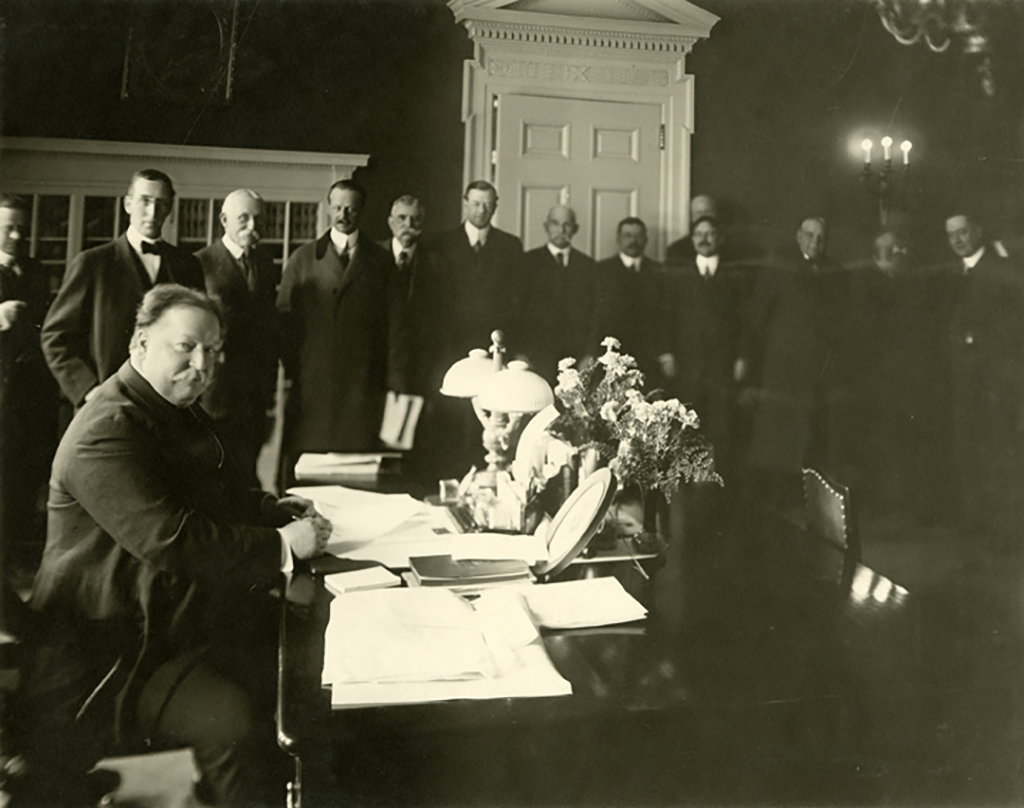
So, when did New Mexico finally earn its star on the American flag? The answer is January 6, 1912. On this day, President William Howard Taft signed the proclamation admitting New Mexico as the 47th state. This date, however, marks merely the culmination of a story that spans centuries, weaving through ancient civilizations, colonial ambitions, international conflicts, and intense political maneuvering. Exploring this timeline offers invaluable insights into why New Mexico is so distinct and why it remains a top choice for travelers seeking authenticity, history, and unparalleled natural beauty.
A Century in the Making: The Long Road to Statehood
The path to statehood for New Mexico was exceptionally protracted, taking more than 60 years from the time it became a U.S. territory to its eventual admission. This lengthy delay was not due to a lack of population or resources, but rather a complex interplay of political, cultural, linguistic, and even racial prejudices that held the territory back. To truly appreciate the significance of January 6, 1912, one must look further back, tracing the layers of history that shaped this unique land.
From Ancient Civilizations to Spanish Conquest
Long before the concept of American statehood even existed, the lands that would become New Mexico were home to thriving indigenous cultures. Ancestral Pueblo peoples constructed intricate cliff dwellings and vast cities, leaving behind impressive legacies like Chaco Culture National Historical Park and Bandelier National Monument, which continue to draw tourists and historians alike. These communities, often centered around the life-giving Rio Grande, developed sophisticated societies and rich spiritual traditions that form the bedrock of the region’s cultural identity.
The arrival of the Spanish Conquistadors in the late 16th century marked a dramatic turning point. Francisco Vásquez de Coronado explored the region in the 1540s, searching for mythical cities of gold. It was Don Juan de Oñate who formally established the province of Nuevo México in 1598, bringing with him the Spanish language, Catholicism, and new agricultural practices. Santa Fe was founded in 1610, making it one of the oldest continuously inhabited European settlements in the United States. The Spanish Colonial era profoundly shaped the architecture, legal systems, and social structures that persist today. Visitors exploring Santa Fe’s Palace of the Governors or San Miguel Chapel walk through living history, directly experiencing the legacy of this era. The Pueblo Revolt of 1680, a successful uprising by indigenous peoples against Spanish rule, further underscored the fierce independence and cultural resilience of the region’s inhabitants, a spirit still palpable in towns like Taos and its ancient Taos Pueblo, a UNESCO World Heritage Site.
Mexican Independence and American Expansion
For over two centuries, New Mexico remained a remote outpost of the Spanish Empire. However, 1821 brought another significant shift: Mexico gained independence from Spain, and New Mexico became a northern province of the new nation. This period, though brief, opened the region to American trade via the famed Santa Fe Trail, establishing critical economic and cultural ties with the burgeoning United States. Wagon trains brought goods and settlers, beginning the influx of Anglo-Americans who would soon seek to transform the region.
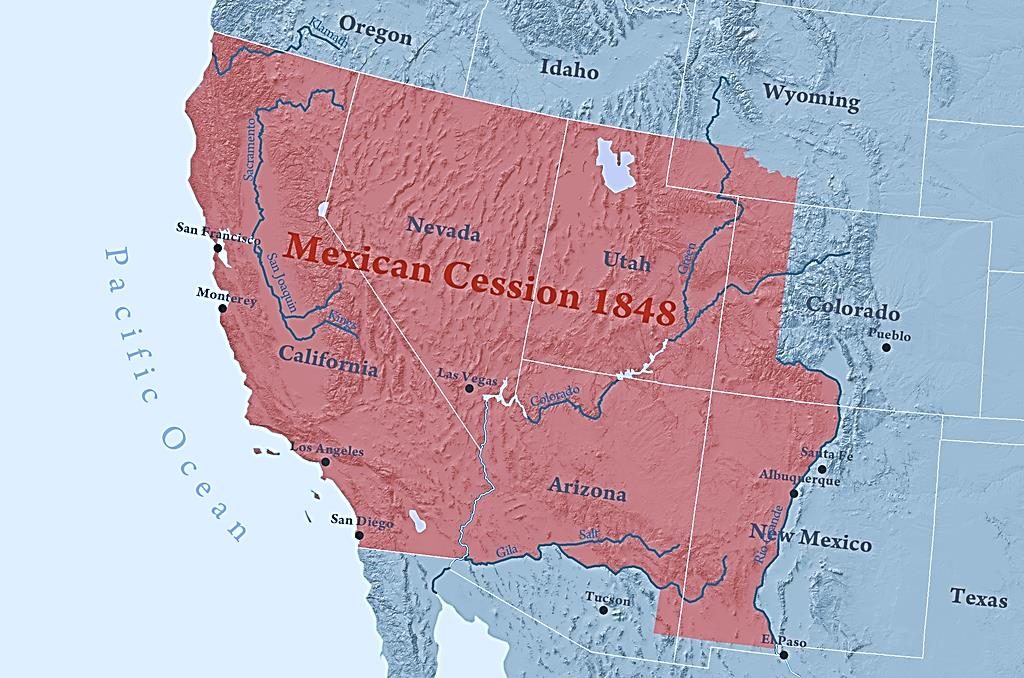
The mid-19th century witnessed the dramatic expansion of the United States westward. The Mexican-American War (1846-1848) irrevocably altered the destiny of New Mexico. Following the American victory, the Treaty of Guadalupe Hidalgo in 1848 ceded vast territories, including New Mexico, to the United States. This was followed by the Gadsden Purchase in 1853, which secured even more southern land for a potential transcontinental railroad route, solidifying the modern boundaries of the territory. In 1850, the New Mexico Territory was formally established by the United States Congress, encompassing not only present-day New Mexico but also much of Arizona and parts of Colorado and Nevada. This act initiated the formal, yet arduous, quest for statehood.
The Territorial Era: Challenges and Aspirations
Becoming a territory was merely the first step. The journey from territory to state was fraught with obstacles, many of which stemmed from the unique cultural and political landscape of New Mexico. While other western territories like California and Oregon achieved statehood relatively quickly, New Mexico’s path was stalled for decades.
Cultural Identity and Political Hurdles
One of the primary reasons for the delay was a deep-seated apprehension in Washington D.C. regarding the territory’s predominantly Hispanic, Catholic population. Many Anglo-American politicians feared admitting a state whose citizens largely spoke Spanish and whose culture was distinct from the Anglo-Protestant majority. There were concerns about “foreigners” influencing the United States Congress and a perceived lack of Americanization. Reports often highlighted New Mexico’s “un-American” characteristics, from its language to its legal traditions.
Political expediency also played a significant role. The national debate over slavery prior to the Civil War meant that admitting any new state could upset the delicate balance between free and slave states. Later, partisan politics often saw Republicans and Democrats blocking New Mexico’s statehood applications, fearing that it would lean towards the opposing party. This political football continued for half a century, with numerous bills failing to pass both houses of Congress. Despite repeated efforts by territorial delegates and the drafting of several state constitutions, New Mexico remained on the outside looking in.
During this period, the territory experienced significant events that solidified its identity, from the Lincoln County War involving figures like Billy the Kid, to the growing influence of the railroad, which transformed towns like Albuquerque into bustling centers of commerce. Tourism also began to blossom, with adventurous travelers drawn to the exotic beauty and unique cultures of the Southwest. Even then, the allure of New Mexico was undeniable, despite its political limbo.
The Enabling Act and Final Steps
The tide finally began to turn in the early 20th century. With the end of the Progressive Era and a growing sense of national unity, the political landscape shifted. The argument that New Mexico was not “American enough” began to lose ground. Furthermore, the push to admit Arizona as a state often linked its fate with New Mexico’s, as Congress initially sought to admit them together, even proposing a joint state of “Arizona-New Mexico” which was overwhelmingly rejected by the people of Arizona.
Finally, after decades of petitions and legislative battles, the United States Congress passed the Enabling Act of 1910. This crucial piece of legislation authorized both New Mexico and Arizona to draft state constitutions and prepare for admission into the Union. New Mexico’s constitutional convention worked diligently, crafting a document that sought to protect its unique cultural heritage while aligning with federal requirements. After approval by the territorial voters in November 1911, the constitution was sent to Washington D.C. for presidential review.
January 6, 1912: A New Star on the Flag
The moment arrived in the brisk winter of 1912. The stage was set for New Mexico to transition from a long-standing territory to a full-fledged member of the United States.
Celebrating New Mexico’s Entry into the Union
On January 6, 1912, at approximately 1:35 PM, President William Howard Taft signed the proclamation that formally declared New Mexico the 47th state. The signing took place in the Capitol Building in Washington D.C., witnessed by numerous dignitaries and representatives from New Mexico. Telegrams immediately relayed the news across the nation, sparking jubilation throughout the new state. In Santa Fe, celebrations erupted with parades, speeches, and the ringing of bells. Governor William C. McDonald raised the 47-star flag over the Palace of the Governors, marking a symbolic end to the territorial era and the dawn of a new chapter.
This moment was not just a political formality; it was a deeply meaningful recognition of New Mexico’s distinct identity, its rich history, and the perseverance of its people. It meant full representation in Congress, greater self-governance, and an equal standing within the nation. The statehood proclamation was a testament to the fact that diversity, rather than being a hindrance, could be a strength within the American fabric.
New Mexico Today: A Blend of History and Hospitality
Today, the spirit of that momentous day continues to resonate throughout New Mexico. Its status as a state has allowed it to flourish, while still preserving the unique cultural legacy that caused so much debate in the past. Modern New Mexico proudly embraces its tricultural heritage—Native American, Hispanic, and Anglo—making it an extraordinary destination for travelers.
From the ancient traditions celebrated in its many pueblos to the colonial charm of Santa Fe and Albuquerque’s Old Town, every corner of the state offers a journey through time. The art scene thrives, inspired by the likes of Georgia O’Keeffe and countless local artists who draw inspiration from the mesmerizing landscapes and profound spiritual connections to the land. Whether you’re exploring the history of the Manhattan Project in Los Alamos, tracing the historic Route 66, or marveling at the geological wonders of White Sands National Park and Carlsbad Caverns National Park, the story of New Mexico’s statehood is woven into its very fabric.
Experience New Mexico’s Enduring Legacy
For travelers, New Mexico offers an unparalleled array of experiences that cater to every interest, from luxury getaways to budget-friendly family adventures. Its history isn’t confined to museums; it’s a living, breathing part of the landscape and the people.
Historic Destinations and Iconic Landmarks
To truly connect with New Mexico’s journey to statehood, visiting its historic sites is a must.
- Santa Fe: The capital city is a treasure trove of history. Stroll through the Santa Fe Plaza, the heart of the city for over 400 years, surrounded by historic buildings like the Palace of the Governors. Explore the mysterious staircase of the Loretto Chapel or immerse yourself in art at the Georgia O’Keeffe Museum. The city’s numerous markets, including the Spanish Market and Indian Market, offer glimpses into traditional crafts and vibrant cultural expressions. Don’t miss the immersive art experience at Meow Wolf Santa Fe for a more contemporary cultural highlight.
- Albuquerque: Dive into the Old Town district, where Spanish colonial architecture and charming shops abound. Take the Sandia Peak Tramway for panoramic views of the city and its surrounding mountains, a landscape that has witnessed centuries of human history. The Petroglyph National Monument offers a direct connection to the ancient inhabitants of the Rio Grande valley.
- Taos: Home to the ancient Taos Pueblo, a continuously inhabited Native American community for over 1,000 years, Taos is a spiritual and artistic hub. The Rio Grande Gorge Bridge offers spectacular natural views, contrasting with the man-made marvel of the pueblo.
- Beyond the Cities: Venture out to El Santuario de Chimayó, a historic pilgrimage site, or explore the ruins of Pecos National Historical Park, which tells the story of early encounters between Pueblo peoples, Spanish Conquistadors, and American settlers. For a taste of modern history and science, a visit to Los Alamos and the nearby Trinity Site (open only twice a year) reveals New Mexico’s critical role in the atomic age.
Planning Your New Mexico Adventure
When planning your trip to New Mexico, you’ll find a wide range of accommodation options to suit every style and budget. For a luxurious experience in Santa Fe, consider the Four Seasons Resort Rancho Encantado Santa Fe or the historic charm of the Inn of the Governors. Mid-range options like The Lodge at Santa Fe or the Hilton Santa Fe Historic Plaza offer comfortable stays with excellent access to city attractions. In Albuquerque, the Hotel Albuquerque at Old Town provides a culturally rich stay, while the contemporary Hotel Chaco offers modern luxury. For a unique wellness experience, the historic Ojo Caliente Mineral Springs Resort & Spa north of Santa Fe combines relaxation with natural beauty.
Exploring New Mexico is an experience of immersion. Engage with the local culture by sampling traditional New Mexican cuisine, famous for its red and green chile. Attend local festivals, which often celebrate the state’s diverse heritage. Whether you’re interested in the ancient past, the colonial era, or the modern fusion of cultures, New Mexico delivers a profound and memorable travel experience. Its long journey to statehood is a testament to its enduring spirit, making every visit a step into a living history book. From the vibrant streets of Las Cruces to the mysterious allure of Roswell, New Mexico invites you to explore its unique story, etched into every landscape and echoed in every cultural tradition.
LifeOutOfTheBox is a participant in the Amazon Services LLC Associates Program, an affiliate advertising program designed to provide a means for sites to earn advertising fees by advertising and linking to Amazon.com. Amazon, the Amazon logo, AmazonSupply, and the AmazonSupply logo are trademarks of Amazon.com, Inc. or its affiliates. As an Amazon Associate we earn affiliate commissions from qualifying purchases.