
The city that never sleeps is also a city perpetually connected, a sprawling metropolis woven together by an intricate network of pathways that defy the numerous waterways dissecting its terrain. New York, a global hub of culture, finance, and innovation, owes much of its dynamic character and logistical prowess to its bridges. These magnificent structures are not merely utilitarian; they are iconic landmarks, engineering marvels, and vital arteries that pulse with the rhythm of daily life, ferrying millions of residents and visitors across rivers, bays, and boroughs every single day.
When posing the question “How many bridges are in New York?”, one might expect a straightforward numerical answer. However, the reality is far more complex and fascinating, revealing layers of urban planning, historical development, and the sheer scale of the city’s infrastructure. From globally recognized suspension bridges that define the city’s skyline to smaller, local overpasses crucial for neighborhood connectivity, each bridge tells a part of New York’s ongoing story. For anyone planning a visit, understanding these connections enriches the travel experience, offering new perspectives on its diverse destinations and attractions.
The Intricacies of Counting: Defining “New York’s Bridges”
To arrive at a meaningful answer to “How many bridges?”, we must first define what constitutes a “bridge” within the context of New York City. The definition can vary wildly depending on the administering authority and the scope of the inquiry. Does it include only vehicular bridges? What about pedestrian pathways, railroad bridges, or even small culverts? The responsibility for these structures is fragmented across multiple agencies, including the New York City Department of Transportation (NYC DOT), the New York State Department of Transportation (NYSDOT), the Metropolitan Transportation Authority (MTA), and the Port Authority of New York and New Jersey. Each agency maintains its own inventory, making a single, definitive count elusive.
Borough-Specific Counts and Jurisdictional Complexities
The five boroughs of New York City – Manhattan, Brooklyn, Queens, the Bronx, and Staten Island – are each extensively networked with bridges. Manhattan, an island itself, is particularly dependent on bridges and tunnels to connect with the mainland and other boroughs. The Bronx, the only mainland borough, still relies on numerous bridges to cross the Harlem River into Manhattan and various smaller waterways. Brooklyn and Queens share crucial crossings over the East River with Manhattan and possess a multitude of smaller bridges crisscrossing their expansive territories. Staten Island connects to Brooklyn via the Verrazzano-Narrows Bridge and to New Jersey via several Port Authority crossings.
The NYC DOT alone manages over 790 bridges and tunnels within the city limits. This count primarily includes bridges on city streets, but excludes major state-owned structures, MTA bridges over rail lines, and the colossal crossings maintained by the Port Authority of New York and New Jersey that link New York to New Jersey. When all these entities’ structures are tallied, the number easily surpasses 2,000, and some estimates push it even higher when every small pedestrian walkway, park bridge, and railroad overpass is considered. It’s a testament to the city’s complex geography and the relentless drive for connectivity that characterizes New York’s lifestyle.
Diverse Types of Bridges Serving Varied Needs
The bridges of New York come in an astonishing variety of types, each designed for specific purposes and to overcome unique geographical challenges.
- Suspension Bridges: Majestic and often soaring high above major waterways, these are the postcard images of New York, such as the Brooklyn Bridge and the George Washington Bridge.
- Cable-Stayed Bridges: Similar in appearance to suspension bridges but with cables directly connecting the deck to the towers, like portions of the Kosciusko Bridge.
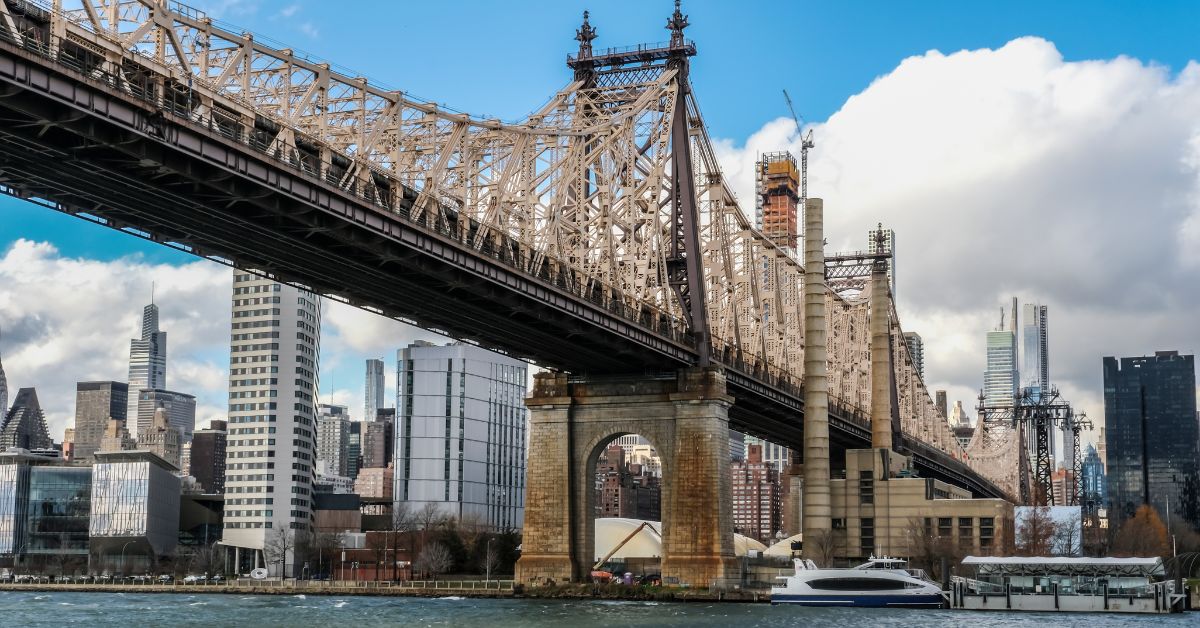
- Cantilever Bridges: Characterized by structures that project horizontally into space, supporting the roadway from above, an example being the Queensboro Bridge.
- Truss Bridges: Composed of connected elements forming triangular units, common for railway crossings and smaller vehicular spans.
- Arch Bridges: Utilizing a curved structure for support, found in parks and for specific architectural needs.
- Beam and Girder Bridges: The most common and simplest type, used for countless overpasses and shorter spans.
- Drawbridges (or Bascule Bridges): Critical for allowing marine traffic to pass, particularly over the Harlem River and other navigable channels. These are fascinating to observe in action, offering a glimpse into the city’s dynamic operations and a unique tourism experience for those interested in industrial heritage.
The diversity reflects not only engineering evolution but also the continuous adaptation of the city’s infrastructure to its ever-growing demands.
Iconic Spans: New York’s Most Famous Bridges
While the sheer number of bridges is impressive, it’s the iconic structures that truly capture the imagination and serve as global symbols of New York. These landmarks are more than just crossings; they are destinations in themselves, offering unparalleled views and a tangible connection to the city’s rich history.
Architectural Marvels and Engineering Feats
-
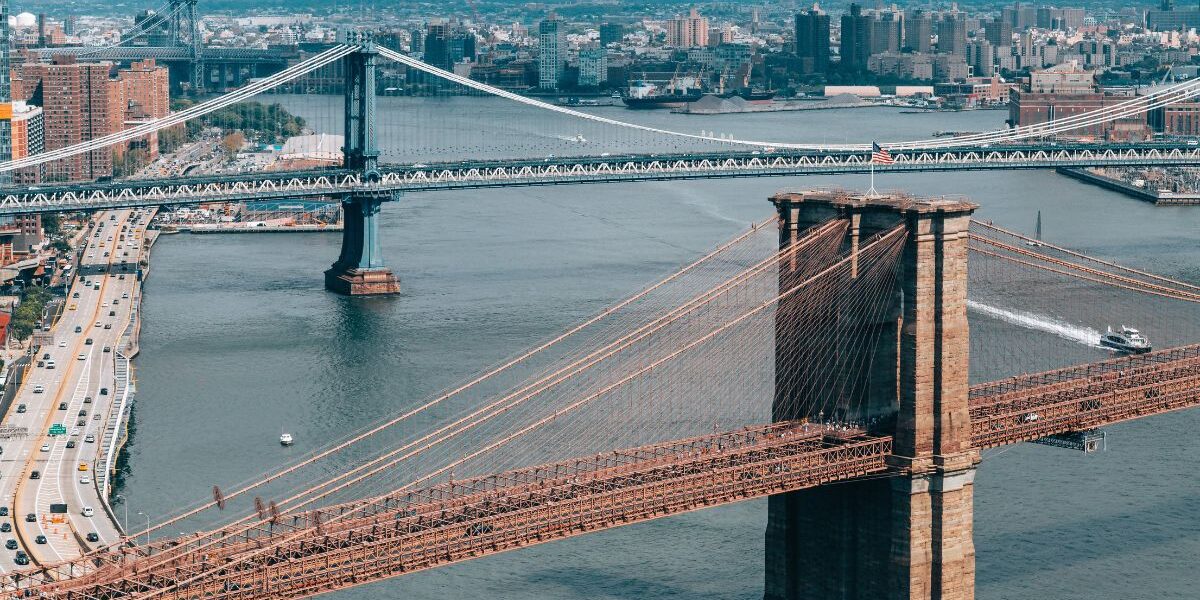
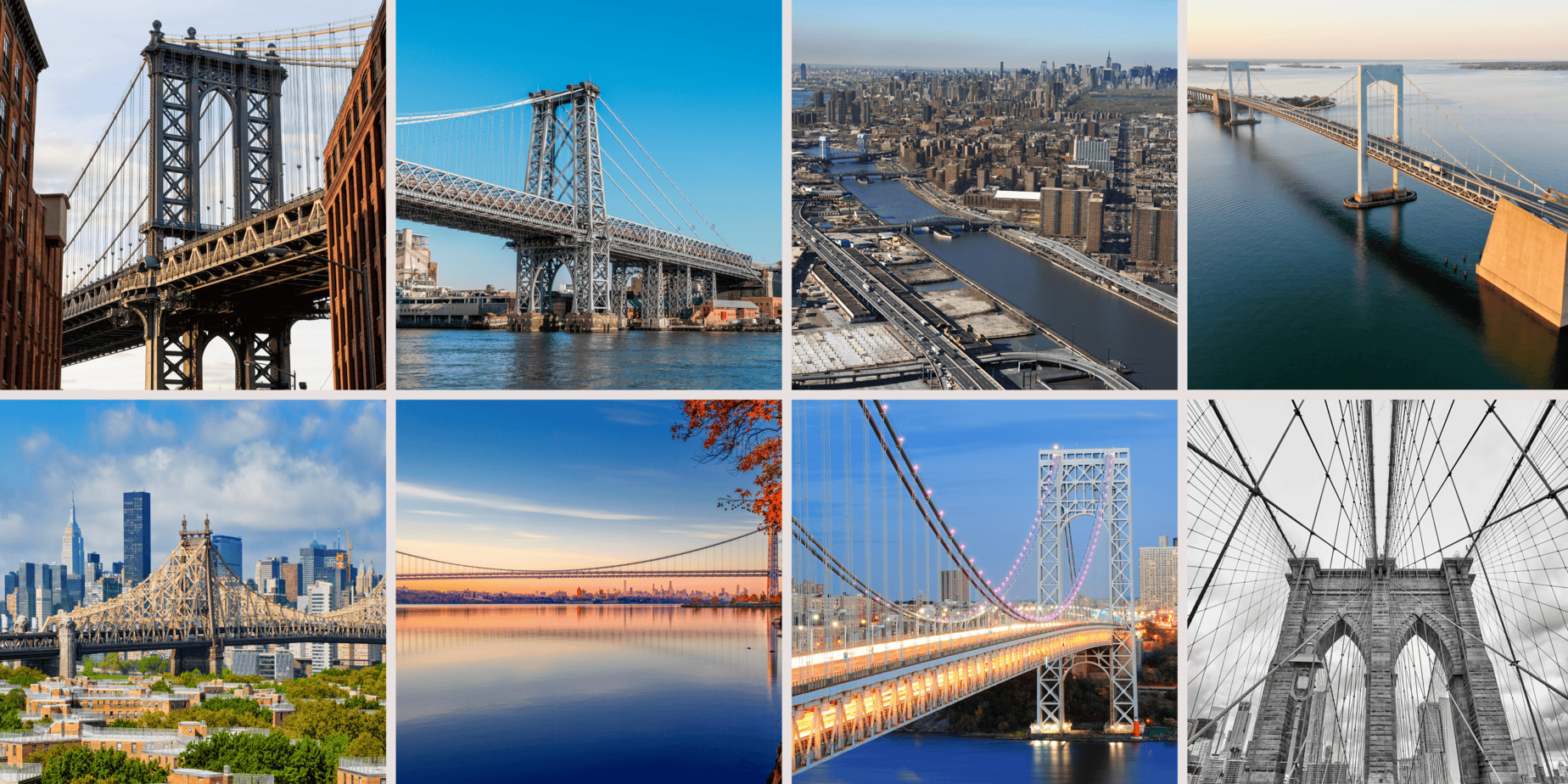
The Brooklyn Bridge: Perhaps the most famous bridge in the world, the Brooklyn Bridge connects Manhattan and Brooklyn over the East River. Opened in 1883, it was an engineering marvel of its time, the longest suspension bridge in the world, and the first to use steel for its cables. Its majestic Gothic arches and intricate web of steel cables have inspired countless artists and photographers. Walking or cycling across its promenade is an absolute must for any visitor, providing breathtaking panoramas of the Manhattan skyline, Brooklyn, and the Statue of Liberty. This experience is a prime example of tourism at its best, blending history, architecture, and stunning scenery.
-
The Manhattan Bridge: A neighbor to the Brooklyn Bridge, the Manhattan Bridge also crosses the East River, connecting Lower Manhattan with Downtown Brooklyn. Completed in 1909, it’s a stunning example of a suspension bridge, known for its iconic view from the Dumbo neighborhood and its unique double-deck design carrying both vehicular traffic and subway lines. Its pedestrian walkway offers distinct views, particularly of the Brooklyn Bridge itself, making it another favorite for urban explorers and photographers.
-
The Williamsburg Bridge: The third of the great East River crossings, the Williamsburg Bridge links the Lower East Side of Manhattan with the Williamsburg neighborhood of Brooklyn. Opened in 1903, it was for a time the longest suspension bridge span in the world. It’s a vital artery for daily commuters and a vibrant connection between two culturally rich areas, offering a different perspective of the city’s waterfront. Like its counterparts, it provides dedicated lanes for pedestrians and cyclists, contributing to New York’s active lifestyle.
-
The George Washington Bridge: Spanning the Hudson River to connect Manhattan with Fort Lee, New Jersey, the George Washington Bridge is one of the busiest bridges in the world by vehicle traffic. Completed in 1931, it was an immense engineering feat, boasting the longest main span in the world for several decades. Its unclad steel towers, particularly from the New Jersey side, offer a raw, industrial beauty that is distinct from its East River cousins. It is a critical gateway for regional travel and commerce, managed by the Port Authority of New York and New Jersey.
-
The Verrazzano-Narrows Bridge: Connecting Brooklyn and Staten Island across the Narrows, the entrance to New York Harbor, this double-deck suspension bridge was the longest in the world when it opened in 1964 and remains the longest in the Western Hemisphere. Its colossal scale is best appreciated from the waters of the harbor or by participating in the New York City Marathon, which famously begins on its upper deck. It serves as a majestic maritime gateway and offers dramatic views of ships sailing into the city.
Beyond the Big Ones: Lesser-Known but Vital Connections
While the “Big Five” bridges capture headlines, numerous other bridges play equally critical, albeit less glamorous, roles in New York’s daily operations.
-
The Robert F. Kennedy Bridge (formerly Triborough Bridge): This complex of three separate bridges and approach viaducts connects Manhattan, the Bronx, and Queens via Randalls and Wards Islands. It’s an incredibly intricate piece of infrastructure managed by the MTA, crucial for inter-borough travel and an impressive sight for those interested in large-scale urban engineering.
-
The Ed Koch Queensboro Bridge (formerly Queensboro Bridge): Connecting Midtown Manhattan with Long Island City in Queens across the East River and Roosevelt Island, this cantilever bridge offers a unique profile. With an upper and lower roadway, it carries heavy traffic, and its pedestrian/cyclist path offers stunning views, particularly of the United Nations Headquarters and the Manhattan skyline.
-
Port Authority Bridges to New Jersey: Besides the George Washington Bridge, the Port Authority of New York and New Jersey also manages three critical bridges connecting Staten Island to New Jersey: the Bayonne Bridge, the Goethals Bridge, and the Outerbridge Crossing. These are vital for regional commerce and commuter travel between the two states. The Bayonne Bridge, an arch bridge, underwent a remarkable reconstruction to raise its roadway for larger cargo ships, a testament to ongoing infrastructure investment.
Bridges as Tourist Attractions and Lifestyle Enhancers
Beyond their functional purpose, New York’s bridges are integral to the city’s vibrant tourism landscape and the daily lifestyle of its residents. They are often featured in films, literature, and art, solidifying their status as cultural icons.
Walking, Cycling, and Photography Hotspots
Many of New York’s major bridges feature dedicated pedestrian and cycling paths, transforming them into popular recreational routes and observation decks.
- Brooklyn Bridge Promenade: A bucket-list item for many tourists, offering iconic views and an unforgettable experience.
- Manhattan Bridge and Williamsburg Bridge Paths: Popular with locals and more adventurous visitors seeking slightly less crowded (but equally scenic) alternatives.
- George Washington Bridge Paths: Offer sweeping vistas of the Hudson River, the Palisades in New Jersey, and the Manhattan skyline to the south.
These paths are perfect for active travel and offer endless opportunities for photography, capturing the dynamic interplay of architecture, nature, and urban life. From sunrise to sunset, the bridges transform, offering different moods and photographic opportunities. Engaging with these structures actively provides a deeper appreciation for their scale and significance, embodying the true spirit of New York City experiences.
Impact on Urban Planning and Daily Life
The placement and design of New York’s bridges have profoundly shaped its urban development. They facilitated the expansion of residential and commercial areas, turning once-remote neighborhoods into thriving communities. Without these connections, the concept of a unified New York City as we know it today would be inconceivable. They are the conduits for daily commutes, allowing workers to reach Manhattan from surrounding boroughs and states, and for goods and services to flow efficiently throughout the region. This constant movement underscores the city’s energetic lifestyle and robust economy.
For budget travel enthusiasts, walking or cycling across a bridge is a free activity that offers some of the best views and photo opportunities in the city, an excellent way to soak in the atmosphere without spending a dime. For those on a luxury travel itinerary, a helicopter tour often highlights these bridges from above, offering a unique and exclusive perspective of their grandeur. Regardless of your travel style, New York’s bridges are an undeniable part of its charm and functionality.
The Sheer Number: Estimating New York’s Bridge Count
So, back to the original question: How many bridges are in New York? As discussed, there is no single, universally agreed-upon number due to varying definitions and jurisdictions. However, we can arrive at a comprehensive estimate.
Official Figures vs. Comprehensive Tallies
- The NYC DOT, as the primary municipal agency, manages approximately 790 bridges and tunnels. This includes a vast array of vehicular, pedestrian, and shared-use bridges, mostly within the city’s street network.
- The MTA Bridges and Tunnels, a subsidiary of the Metropolitan Transportation Authority, operates 7 toll bridges and 2 toll tunnels that are crucial for regional travel (e.g., RFK Bridge, Verrazzano-Narrows Bridge).
- The Port Authority of New York and New Jersey oversees 4 major bridges connecting New York and New Jersey (e.g., George Washington Bridge, Bayonne Bridge).
- The New York State Department of Transportation manages many bridges on state highways and parkways within the city limits.
- Additionally, numerous smaller bridges are found in city parks (like Central Park alone has 36 bridges and archways), on private properties, within rail yards, and as pedestrian overpasses not explicitly counted by major road authorities.
A Staggering Sum
When aggregating these various inventories, a conservative estimate places the total number of bridges in New York City well over 2,000. Some comprehensive infrastructure reports suggest the figure could approach 3,000 or even higher, depending on the granular definition of what constitutes a “bridge” (e.g., including short spans over streams, pipes, or very small gaps). This staggering number underscores the incredible density of development and the formidable engineering effort required to build and maintain such a complex urban environment.
Each of these bridges, whether a grand suspension span or a modest overpass, is a testament to human ingenuity and the enduring need to connect. They facilitate not just traffic, but also culture, commerce, and community, allowing New York City to thrive as a truly global crossroads. When you visit New York, take a moment to appreciate these silent sentinels that link its many facets, enabling the extraordinary daily ballet of urban life. They are more than just infrastructure; they are the literal and metaphorical threads that hold the fabric of this iconic city together. Whether you are staying in a luxury hotel in Manhattan or a charming apartment in Brooklyn, these bridges are an omnipresent and essential part of your New York experience.
LifeOutOfTheBox is a participant in the Amazon Services LLC Associates Program, an affiliate advertising program designed to provide a means for sites to earn advertising fees by advertising and linking to Amazon.com. Amazon, the Amazon logo, AmazonSupply, and the AmazonSupply logo are trademarks of Amazon.com, Inc. or its affiliates. As an Amazon Associate we earn affiliate commissions from qualifying purchases.