
Imagine this: You’ve just returned from an exhilarating trip to New York City. The memories of bustling streets, iconic landmarks like the Empire State Building and Central Park, and the vibrant energy of Times Square are still fresh in your mind. But beyond the sights, what truly lingered was the taste – specifically, that unforgettable, perfectly seared New York Strip you savored at a classic Manhattan steakhouse. As a traveler who appreciates the finer things, bringing those experiences home is part of the journey. What if you could recreate that same restaurant-quality steak right in your own kitchen, no fancy grill required?

This article isn’t just about cooking a piece of meat; it’s about embarking on a culinary journey, extending the essence of your travels, and mastering a skill that elevates your lifestyle. Whether you’re planning a trip to the United States and want to familiarize yourself with American gastronomy, or you simply wish to indulge in a gourmet experience without leaving your home, learning to cook a New York Strip on the stove is an invaluable skill. It’s perfect for those evenings when you’re reminiscing about a luxurious stay at a Waldorf Astoria property or a charming boutique hotel with an impeccable dining scene. This guide will walk you through transforming a simple cut of beef into a masterpiece, connecting your domestic culinary pursuits with the broader world of travel, tourism, and refined living.
The Allure of the New York Strip: A Global Culinary Icon
The New York Strip steak holds a legendary status in the culinary world, synonymous with robust flavor, a tender chew, and the quintessential steakhouse experience. It’s more than just a cut of beef; it’s a cultural touchstone, deeply embedded in the gastronomic history of New York City itself. For any discerning palate, understanding its heritage adds another layer of appreciation to every succulent bite.
Tracing its Origins: A Bite of American Gastronomy
The story of the New York Strip begins in the vibrant heart of America, particularly within the bustling kitchens of Manhattan’s elite dining establishments. While its exact origins are debated, it’s widely believed that the cut gained prominence in the mid-19th century at iconic restaurants like Delmonico’s, one of the United States’ first fine dining restaurants. Here, it was famously known as the “Delmonico Steak,” a boneless top loin cut prized for its rich marbling and intense beefy flavor. Over time, as New York City solidified its reputation as a global culinary capital, the steak became inextricably linked with the city, adopting the moniker ” New York Strip.”
Today, steakhouses across the globe, from the historic Peter Luger Steak House in Brooklyn to international chains like Wolfgang’s Steakhouse and Gallaghers Steakhouse, proudly feature the New York Strip as a centerpiece. It represents not just a meal, but an experience – a testament to quality, tradition, and the art of simple, yet profound, cooking. For travelers seeking authentic local culture and food, a visit to a classic New York City steakhouse is a pilgrimage, offering a taste of history alongside exceptional cuisine. Learning to prepare this dish at home allows you to extend that cultural immersion beyond your trip, bringing a piece of American culinary heritage into your daily life.
Why the Stovetop Method Appeals to the Discerning Traveler
While grilling offers its own charm, the stovetop method for cooking a New York Strip is an unsung hero, particularly appealing to the modern, often nomadic, lifestyle of a traveler. This technique thrives on simplicity and accessibility, making it ideal for various accommodation scenarios. Imagine staying in a chic apartment in Paris, a cozy villa in Tuscany, or even a well-appointed suite at a Marriott International or Hilton Worldwide property with kitchen facilities. The stovetop is almost universally available, unlike a grill.
Furthermore, the stovetop method, especially when paired with a good cast iron skillet, allows for an unparalleled sear, creating a rich, deeply caramelized crust that locks in juices and amplifies flavor. This technique offers precise control over temperature and cooking, leading to consistently perfect results. For those who appreciate the convenience and efficiency of city living or the freedom of self-catering accommodations, mastering the stovetop method means you can enjoy a gourmet steak dinner wherever your travels take you, transforming any kitchen into a personal, high-end restaurant. It’s a skill that speaks to the adaptability and refined taste of the contemporary globetrotter.
Preparing for Your Culinary Adventure: Essential Ingredients and Tools
Before you dive into the sizzle, a successful New York Strip begins with meticulous preparation. Just as you’d research the best hotels or local attractions for a trip, sourcing the right ingredients and ensuring you have the proper tools are paramount to a flawless culinary outcome. This isn’t just cooking; it’s crafting an experience, much like planning an exquisite travel itinerary.
Sourcing the Perfect Cut: A Traveler’s Guide to Quality Meat
The foundation of an exceptional steak is, quite naturally, the steak itself. The quality of your New York Strip will dictate the final flavor and texture more than any other factor. As a seasoned traveler knows, seeking out local gems is key, and the same applies to your butcher.
When selecting your New York Strip, look for a cut that is:
- Thick: Aim for a steak at least 1.25 to 1.5 inches thick. Thicker steaks are easier to cook to your desired doneness without overcooking the exterior.
- Well-Marbled: Marbling refers to the intramuscular fat flecks throughout the meat. This fat melts during cooking, basting the steak from within, imparting incredible flavor and tenderness. Look for an even distribution of fine white flecks.
- Bright Red: A vibrant red color indicates freshness. Avoid any meat that appears dull or brownish.
- Aged: Many premium steaks are dry-aged for several weeks, which concentrates the flavor and tenderizes the meat. If available, a dry-aged New York Strip is a true indulgence, akin to staying in a historic Gramercy Park Hotel compared to a standard chain.
When you travel, you seek out authentic experiences, perhaps visiting a local market in France or a traditional butcher in Italy. Apply the same philosophy at home. Establish a relationship with a reputable local butcher. They can guide you through different grades (e.g., USDA Prime, Choice) and origins (e.g., Australia grass-fed, American grain-fed), helping you select the best possible cut. Don’t hesitate to ask questions; a good butcher is a fount of knowledge, much like a seasoned tour guide. While you won’t always find exotic cuts like Japanese Wagyu, understanding the nuances of available beef elevates your culinary appreciation.
Equipping Your Kitchen: From Boutique Hotel Kitchenette to Home
Just as a well-packed suitcase is essential for a seamless trip, the right kitchen tools are indispensable for a perfectly cooked steak. The beauty of the stovetop method is that it doesn’t require a vast array of specialized equipment, making it highly adaptable whether you’re in your home kitchen or a compact kitchenette in a luxury apartment rental abroad.
Here’s what you’ll need:
- Heavy-Bottomed Skillet (preferably Cast Iron): This is your primary tool. A heavy skillet, especially cast iron, retains heat exceptionally well and distributes it evenly, crucial for achieving that coveted, crusty sear. A 10-inch or 12-inch skillet is ideal for one or two steaks.
- Tongs: For easy handling and flipping of the steak.
- Instant-Read Meat Thermometer: This is your best friend for achieving perfect doneness. Guessing is a gamble; precise temperature measurement ensures consistent results every time. Think of it as your culinary GPS, guiding you to the right destination.
- Cutting Board: A sturdy board for seasoning, resting, and slicing your steak.
- Small Plate or Rack: For resting the steak after cooking.
- High Smoke Point Oil: Oils like grapeseed, avocado, or canola are excellent as they can withstand high heat without burning, preventing off-flavors.
- Unsalted Butter: Essential for basting and adding richness in the final stages of cooking.
- Fresh Herbs (Rosemary, Thyme) and Garlic Cloves: These aromatics infuse the butter and the steak with incredible fragrance and flavor.
- Kosher Salt and Freshly Ground Black Pepper: Simple seasonings are all you need to let the quality of the beef shine.
Even if you’re staying in an Accor property with a small kitchenette, a basic skillet and a few essentials can empower you to create a memorable meal. The emphasis here is on quality over quantity; investing in a good cast iron skillet, for example, is a long-term investment that will serve you well, much like a durable piece of luggage.
Mastering the Stovetop Sear: A Step-by-Step Guide
The heart of cooking a perfect New York Strip on the stove lies in mastering the stovetop sear. This technique, while seemingly straightforward, requires attention to detail and a keen understanding of heat. It’s akin to navigating a bustling city like New York – a series of precise movements leading to a desired outcome. Follow these steps, and you’ll be rewarded with a steak that rivals those served at renowned establishments like Gramercy Tavern or Gordon Ramsay Steak.
The Art of the Perfect Crust: Techniques for Flavor and Texture
Achieving that irresistible, deeply browned crust – the Maillard reaction at its finest – is the hallmark of a perfectly seared steak.
- Bring Steak to Room Temperature: Remove your New York Strip from the refrigerator at least 30-60 minutes before cooking. A cold steak hitting a hot pan will cook unevenly. This step is often overlooked but crucial for uniform doneness.
- Pat Dry Thoroughly: Moisture is the enemy of a good sear. Use paper towels to pat the steak completely dry on all sides. Any surface moisture will steam the steak instead of searing it, preventing crust formation.
- Season Generously: Season the steak liberally with kosher salt and freshly ground black pepper on all sides. Don’t be shy! A thick steak can handle a good amount of seasoning.
- Preheat Your Skillet: Place your heavy-bottomed (preferably cast iron) skillet over medium-high to high heat. Allow it to preheat for 5-10 minutes until it’s screaming hot and just barely smoking. This intense initial heat is key for the sear.
- Add High Smoke Point Oil: Add a thin layer of high smoke point oil (like grapeseed or avocado oil) to the hot pan. Swirl to coat the bottom.
- Sear the Steak: Carefully place the seasoned steak into the hot skillet. It should sizzle immediately and loudly. Do not move the steak for 2-3 minutes. Let it develop that beautiful, dark brown crust. If your steak has a fat cap on the side, you can render this down by holding the steak upright with tongs for a minute or two before searing the flat sides.
- Flip and Sear Other Side: Flip the steak and sear the other side for another 2-3 minutes to develop a similar crust.
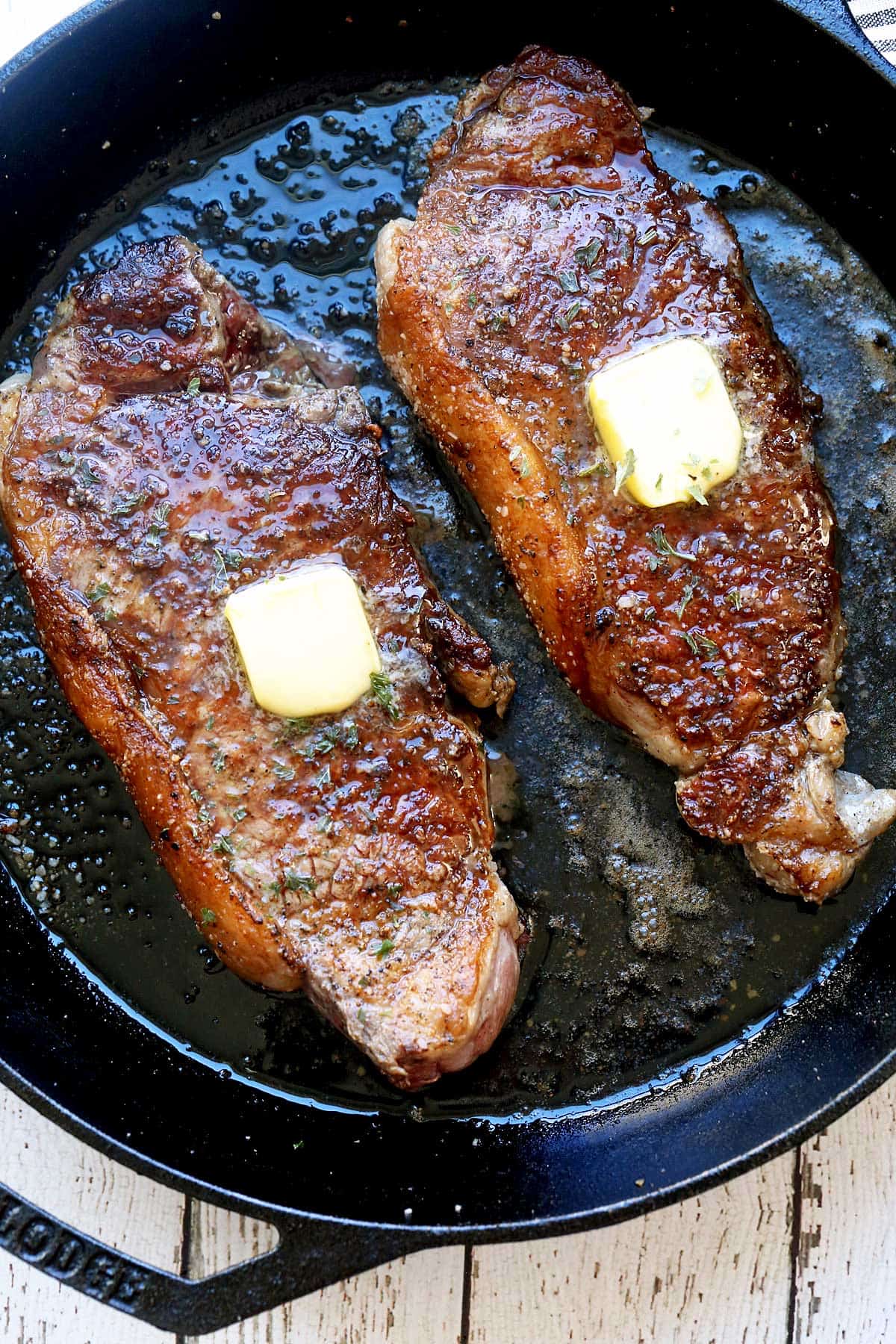
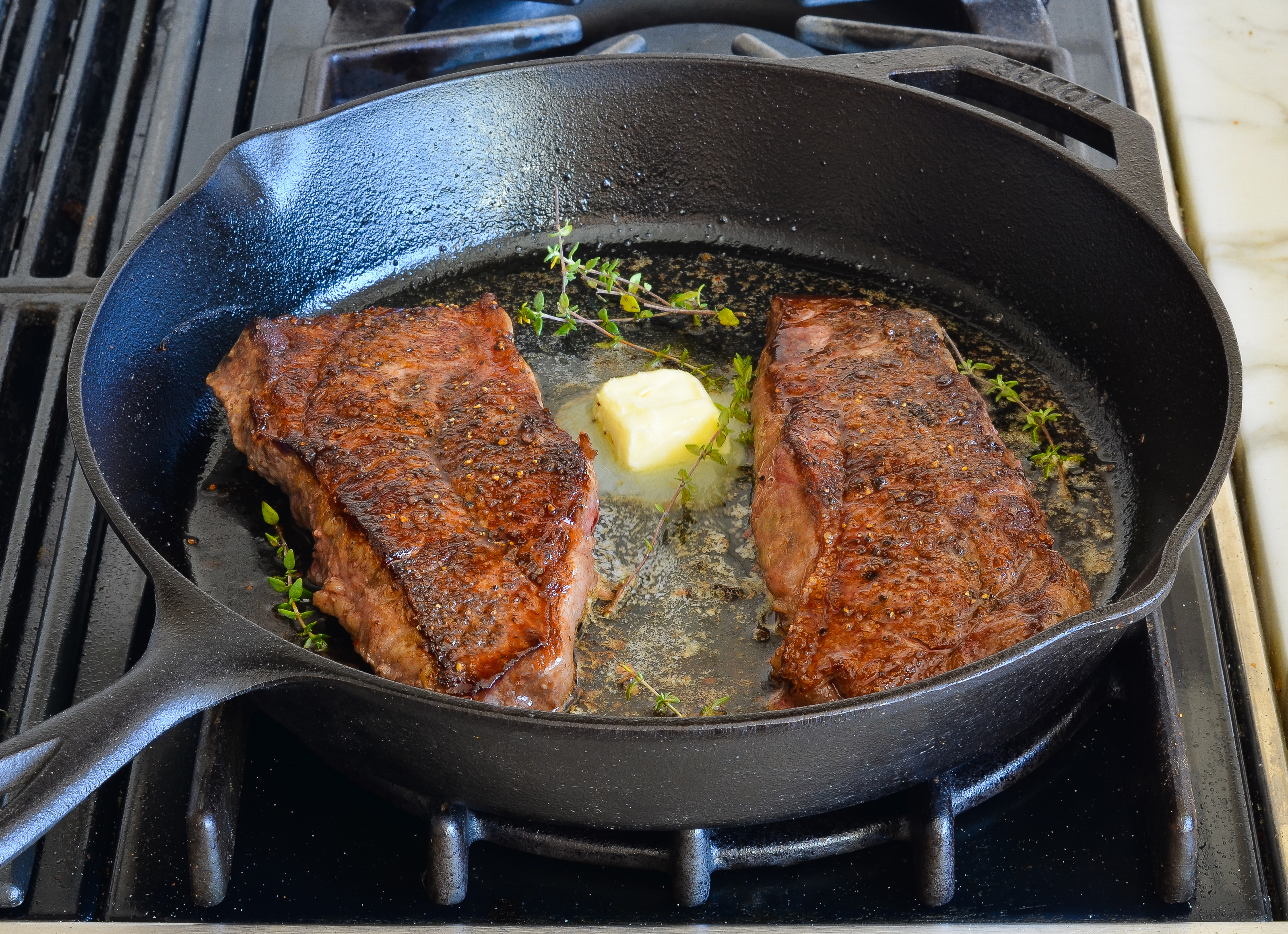
- Add Butter and Aromatics (Basting): Reduce the heat to medium. Add 2-3 tablespoons of unsalted butter to the pan along with a few sprigs of fresh rosemary or thyme and a couple of smashed garlic cloves. As the butter melts and the aromatics infuse, tilt the pan slightly and, using a spoon, continuously baste the melted butter over the steak for 1-2 minutes. This infuses the steak with incredible flavor and helps create an even crust.
Achieving Doneness Like a Seasoned Chef: Temperature and Rest
The final frontier in steak perfection is achieving your desired doneness. This is where your instant-read meat thermometer becomes indispensable. Forget the “poke test” – precision is the mark of a true culinary artist.
-
Monitor Internal Temperature: Insert the instant-read thermometer horizontally into the thickest part of the steak, avoiding the bone if present (though a New York Strip is typically boneless). Cook, flipping occasionally and basting, until the steak reaches a few degrees below your target final temperature, as it will continue to cook during resting.
- Rare: 120-125°F (49-52°C)
- Medium-Rare: 125-130°F (52-54°C)
- Medium: 130-135°F (54-57°C)
- Medium-Well: 135-140°F (57-60°C)
- Well-Done: 140°F+ (60°C+) (Generally not recommended for a New York Strip if you want tenderness.)
-
The Critical Rest: Once the steak reaches your desired temperature, immediately transfer it to a cutting board or a wire rack set over a plate. This is arguably the most crucial step. Cover loosely with foil and let it rest for at least 5-10 minutes. During this time, the muscle fibers relax, and the juices, which have migrated to the center during cooking, redistribute throughout the steak, ensuring every bite is moist and flavorful. Cutting into a steak too soon will result in a dry, tough piece of meat with all the delicious juices spilling out onto the board.
This period of rest is much like the downtime on a long journey, allowing you to recharge and reflect before reaching your final destination. It allows the flavors to truly meld and the texture to become perfectly tender.
Elevating the Experience: Pairing and Presentation for the Globetrotter
Cooking a perfect New York Strip is a triumph, but the experience truly shines when it’s elevated with thoughtful pairings and presentation. For the globetrotter who appreciates culture and sophisticated living, the meal becomes an entire event, a mini-celebration of tastes from around the world brought into your home. It’s the difference between a simple hotel room and a luxurious suite with all the amenities.
Wine Pairings and Side Dishes: A Taste of International Cuisine
A superb steak deserves an equally superb companion. Thoughtful pairings transform a meal into an indulgent experience, echoing the curated experiences one seeks out in travel.
-
Wine Pairings: The classic pairing for a New York Strip is a full-bodied red wine. The tannins in the wine cut through the richness of the steak, creating a harmonious balance. Consider these global selections:
- Bordeaux ( France): A timeless choice, offering complexity and structure.
- Cabernet Sauvignon ( Napa Valley or Sonoma County, United States): Bold and fruit-forward, reflecting the robust character of American winemaking.
- Malbec ( Argentina): A softer, fruitier option, perfect for a slightly less intense, yet still flavorful, pairing from South America.
- Shiraz/Syrah ( Australia or Europe): Offers peppery notes that complement the savory aspects of the steak.
Each wine tells a story of its region, much like a souvenir from a distant land. Exploring these pairings is a taste of international cuisine in itself.
-
Side Dishes: Traditional steakhouse sides enhance the meal without overshadowing the star of the show.
- Creamed Spinach: A rich, savory classic that’s a staple in any New York City steakhouse.
- Roasted Asparagus or Broccolini: Provides a fresh, slightly crisp counterpoint to the rich meat.
- Garlic Mashed Potatoes or Yukon Gold Potatoes au Gratin: Creamy, comforting carbs are always a welcome addition.
- Crispy French Fries or Onion Rings: For a touch of satisfying indulgence.
- Sauces: While a perfectly cooked steak often needs nothing more than its own juices, a classic Béarnaise sauce, a vibrant Argentinian chimichurri, or a simple peppercorn sauce can add an extra layer of flavor and sophistication, reminiscent of gourmet dining in Europe or South America.
Bringing the Restaurant Experience Home: Presentation Tips
Presentation is key to a truly luxurious dining experience. Just as a well-designed hotel room enhances your stay, an artfully plated meal elevates your culinary journey. Bringing the restaurant experience home is about more than just the food; it’s about the ambiance.
- Slice Against the Grain: Once rested, slice your New York Strip against the grain into ½ to ¾-inch thick pieces. This shortens the muscle fibers, making each bite incredibly tender. Arrange the slices fanned out on the plate.
- Garnish Simply: A sprinkle of flaky sea salt, a crack of fresh black pepper, a sprig of fresh rosemary, or a drizzle of any pan juices from the resting board (or a prepared sauce) can add visual appeal and an extra touch of flavor.
- Warm Plates: Serve your masterpiece on warm plates to ensure the steak stays at its optimal temperature for longer.
- Set the Mood: Dim the lights, light a candle, put on some soothing music, and use your best dinnerware. The environment plays a huge role in the dining experience, transforming your kitchen table into a private dining room rivaling those found in exclusive hotels.
By mastering the art of cooking a New York Strip on the stove, you’re not just preparing a meal; you’re embracing a lifestyle. You’re bringing the global sophistication of New York City’s culinary scene, the refined elegance of a gourmet restaurant, and the warmth of a home-cooked meal together. This skill allows you to relive travel memories, prepare for future adventures by indulging in local cuisine, and cultivate a sense of luxury and appreciation for fine food, no matter where you are in the world – whether it’s your own home or a charming boutique hotel with a well-equipped kitchen across Europe, Asia, or Africa. So, tie on your apron, fire up that skillet, and let your culinary adventure begin.
LifeOutOfTheBox is a participant in the Amazon Services LLC Associates Program, an affiliate advertising program designed to provide a means for sites to earn advertising fees by advertising and linking to Amazon.com. Amazon, the Amazon logo, AmazonSupply, and the AmazonSupply logo are trademarks of Amazon.com, Inc. or its affiliates. As an Amazon Associate we earn affiliate commissions from qualifying purchases.