
New York City, a global beacon for travel, tourism, and vibrant lifestyle, draws millions of visitors each year. From the iconic skyline of Manhattan to the artistic streets of Brooklyn, the allure of the Big Apple is undeniable. For many years, the rise of short-term rental platforms like Airbnb offered travelers a unique way to experience NYC, promising authentic local accommodation and often more budget-friendly options than traditional hotels. However, the question of “Is Airbnb illegal in New York?” is far from straightforward and has become increasingly complex, culminating in some of the strictest regulations in the United States.
What began as a convenient alternative for both hosts seeking extra income and guests looking for unique stays has evolved into a fiercely debated legal battleground. New York State and New York City authorities have progressively tightened the reins, citing concerns over housing affordability, quality of life for permanent residents, and safety standards. For anyone planning a trip to New York or considering renting out their property, understanding these intricate regulations is paramount to avoid potential legal pitfalls and ensure a smooth, compliant experience. This guide delves into the specifics of New York’s short-term rental laws, their implications for travelers and hosts, and the broader context for tourism and accommodation in this bustling metropolis.
Navigating the Complex Landscape of Short-Term Rentals in New York City
The legal status of short-term rentals in New York City is defined by a series of laws primarily aimed at preventing residential units from being converted into de facto hotel rooms. These regulations are designed to protect the city’s housing stock and maintain the residential character of its diverse neighborhoods.
The Regulatory Maze: Understanding New York’s Key Laws
At the heart of New York’s short-term rental regulations is the New York State Multiple Dwelling Law, which applies to buildings with three or more residential units. The core principle of this law, particularly as it pertains to short-term rentals, is that renting out an entire apartment for less than 30 days is generally illegal if the permanent tenant or owner is not physically present during the guest’s stay. This distinction is critical and often misunderstood by both visitors and prospective hosts.
The initial legislative push came in 2010 when New York State passed a law making it illegal to rent out an apartment in a multi-unit building for fewer than 30 days unless the permanent resident was living in the apartment at the same time. This was followed by a 2016 law that made it illegal to advertise such rentals, effectively targeting platforms like Airbnb directly. These laws aimed to curb the proliferation of “ghost hotels”—apartments rented out year-round to tourists, reducing available housing for New Yorkers.
However, the most significant shift came with New York City’s Local Law 18, also known as the “Short-Term Rental Registration Law,” which went into effect in September 2023. This law mandates that all short-term rental hosts in NYC must register with the Mayor’s Office of Special Enforcement (OSE) and obtain a valid registration number before they can legally operate. Without this registration, platforms like Airbnb are prohibited from processing transactions for unregistered listings, essentially creating a gatekeeper for all short-term rental activity.
Primary Residence Rule and its Implications
The concept of “primary residence” is central to understanding legality in New York. For a short-term rental (less than 30 days) to be legal in a multi-unit building:
- Host Presence is Mandatory: The host must be living in the same unit as the guest during their stay. This means renting out a spare bedroom while the host is home is generally permissible.
- No Entire Apartment Rentals: Renting out an entire apartment or home when the host is not present is illegal for stays under 30 days.
- Limited to Two Guests: In many cases, the law specifies a limit of two paying guests at a time.
These rules fundamentally distinguish between a homeowner sharing a portion of their home, which aligns with the original spirit of Airbnb, and commercial operators effectively running unregulated hotel businesses out of residential buildings. Single-family homes, or buildings with fewer than three units (though less common in dense urban areas like Manhattan), may have different rules, but the vast majority of NYC apartments fall under the stricter multi-dwelling regulations.
What Constitutes an “Illegal” Rental?
Based on the current regulatory framework, an Airbnb rental in New York City is generally illegal if:
- It is in a building with three or more units.
- The entire apartment or home is rented out.
- The host is not present during the guest’s stay.
- The rental period is for less than 30 consecutive days.
- The host does not possess a valid registration number from the Office of Special Enforcement (as of September 2023).
This means that the vast majority of typical Airbnb listings that offer an entire apartment for a weekend getaway or a week-long vacation, without the host on premises, are now explicitly illegal and face severe penalties. The implementation of Local Law 18 has added an extra layer of difficulty, making it nearly impossible for non-compliant listings to even be advertised or booked through major platforms.
The Impact on Travelers and Local Accommodation
The evolving legal landscape has significant implications for both visitors planning their New York trip and the broader accommodation sector.
Why Travelers Choose Airbnb: Benefits and Appeal
Before the stringent new regulations, Airbnb offered numerous attractions for travelers seeking an authentic New York experience:
- Local Immersion: Staying in residential neighborhoods like Greenwich Village or Williamsburg allowed guests to live like a local, discover hidden gems, and experience the city beyond typical tourist traps near Times Square.
- Cost-Effectiveness: Often, particularly for groups or longer stays, Airbnb could be more affordable than traditional hotels, offering more space and the option to cook meals, reducing dining costs. This appealed to both budget travelers and families.
- Unique Stays: From brownstones in Brooklyn to loft apartments in SoHo, Airbnb listings often provided a distinctive charm and character that large hotel chains could not replicate.
- Amenities: Many listings offered conveniences like full kitchens, laundry facilities, and multiple bedrooms, which are invaluable for family trips or extended stays.
This allure, however, is now largely overshadowed by the legal risks and the difficulty of finding compliant options.
The Traditional Hotel Sector vs. Short-Term Rentals
The tightening of short-term rental laws has undoubtedly strengthened the position of the traditional hotel sector in New York City. Hotels offer a guaranteed legal and regulated accommodation option, with established safety standards, professional service, and a range of amenities from concierge services to on-site dining.
NYC boasts an impressive array of hotels, from luxury hotels like The St. Regis New York and Mandarin Oriental, New York to mid-range options and budget hotels. Chains like Marriott International, Hilton Worldwide, and Hyatt Hotels Corporation operate numerous properties across the city, catering to every price point and preference, including business stays and leisure travel. While potentially more expensive than a non-compliant Airbnb once was, the security and predictability of a hotel stay remain unparalleled.
Finding Legal and Safe Stays in NYC
For travelers, navigating the new rules means being more discerning about accommodation choices.
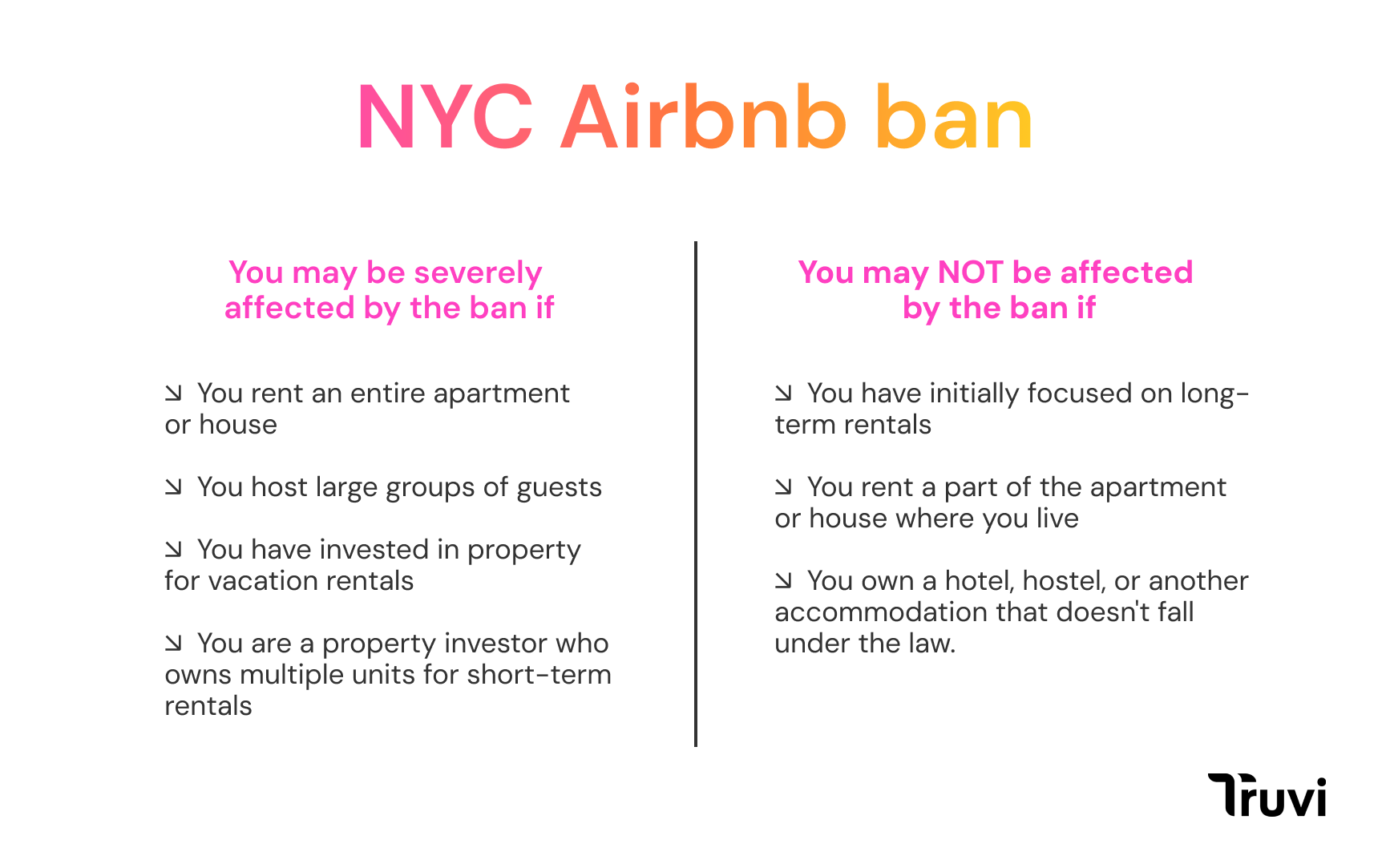
- Opt for Hotels: The safest and most straightforward option is to book a stay at a licensed hotel, hostel, or serviced apartment. These establishments are designed for short-term stays and comply with all local regulations.
- Verify Airbnb Listings: If still considering Airbnb or similar platforms, rigorously check the listing details. Look for evidence that the host will be present during your stay if it’s less than 30 days. Crucially, as of Local Law 18’s implementation, every legitimate listing should display a valid NYC registration number. Without it, the booking is likely illegal and could be canceled without notice, or the host could face penalties.
- Consider Longer Stays: If your travel plans allow for a stay of 30 days or more, the regulations become significantly more lenient. Long-term rentals are generally not subject to the same restrictions as short-term ones, offering more flexibility for apartment rentals where the host is not present. This is a viable option for long-term stay visitors, students, or those on extended business trips.
- Explore Other Platforms: Beyond Airbnb, other platforms specialize in extended stays or legally compliant serviced apartments. Companies like Furnished Quarters or Oakwood provide options specifically designed for corporate or longer-term accommodation that meet all regulatory requirements.
Enforcement, Penalties, and the Future of Airbnb in NYC
New York City has demonstrated a firm commitment to enforcing its short-term rental laws, with significant penalties for non-compliance.
Strict Enforcement and High Fines for Non-Compliance
The Mayor’s Office of Special Enforcement (OSE) is the primary agency tasked with investigating illegal short-term rentals. Hosts found in violation of the laws face substantial fines, which can range from $1,000 for a first offense to $5,000 for a second offense, and up to $7,500 for a third and subsequent offenses. These penalties are designed to be a strong deterrent against illegal commercial operations.
Furthermore, with the implementation of Local Law 18, Airbnb and other booking platforms face fines for processing transactions for unregistered listings. This effectively puts the onus on the platforms to ensure compliance, making it extremely difficult for illegal listings to even appear, let alone be booked. This shift marks a significant change from previous enforcement strategies that primarily targeted individual hosts.
The Evolving Legal Battle: Past, Present, and Future
The relationship between Airbnb and New York City has been contentious for years, marked by numerous legal challenges and public relations campaigns. Airbnb has often argued that its platform provides economic opportunities for residents and affordable accommodation for visitors, highlighting the personal nature of home-sharing. However, NYC officials and housing advocates have consistently prioritized protecting the city’s housing supply and the rights of long-term residents.
The passage and implementation of Local Law 18 represent a significant victory for New York City in this ongoing battle. The law has dramatically reduced the number of short-term rental listings available in the city, particularly those for entire apartments where the host is absent. While some legal challenges persist and the situation may continue to evolve, the current trajectory indicates a strong regulatory environment that heavily favors traditional hotels and long-term rentals over short-term home-sharing in multi-unit buildings.
Tips for Hosts and Guests to Ensure Compliance
For those still considering participating in the short-term rental market in New York, whether as a host or a guest, adherence to the law is paramount.
For Hosts:
- Understand the Law: Before listing, thoroughly research the New York State Multiple Dwelling Law and New York City Local Law 18.
- Register with OSE: If your property meets the strict criteria for legal short-term rental (e.g., you are present and it’s a room rental), you must register with the Mayor’s Office of Special Enforcement and obtain a valid registration number.
- Be Present: For stays under 30 days in multi-unit buildings, you must be physically present in your unit with your guests.
- Know Your Building Rules: Even if city laws allow it, your building’s co-op board, condo association, or landlord may have their own rules prohibiting short-term rentals. Always check your lease or building bylaws.
For Guests:
- Prioritize Registered Listings: When browsing Airbnb or similar sites, specifically look for listings that display an NYC registration number. This is your clearest indicator of legality.
- Confirm Host Presence: If booking a private room for a short stay, ensure the host will be on-site throughout your visit.
- Beware of Deals That Seem Too Good: Unusually low prices for entire apartments in prime Manhattan locations for short durations should raise a red flag.
- Consider Alternatives: Given the complexity, hotels, aparthotels, and hostels remain the most reliable and risk-free accommodation options for short stays in New York City.
Beyond the Legalities: The Broader Context for New York Tourism
While the debate around Airbnb and similar platforms is intensely focused on legalities, it also touches upon broader issues relevant to New York’s identity as a premier travel destination.
Preserving Residential Character and Housing Affordability
One of the primary motivations behind New York City’s strict short-term rental laws is the preservation of its residential character. When apartments are converted into full-time transient accommodations, it can lead to issues for permanent residents, including increased noise, security concerns, and a reduction in community cohesion. Neighbors may find themselves living next to a rotating cast of strangers rather than a stable community.
Crucially, the regulation aims to address the acute housing affordability crisis in NYC. Every apartment converted to a short-term rental takes a unit out of the long-term housing market, exacerbating scarcity and driving up rents for permanent New Yorkers. By limiting the ability to commercialize residential units, the city hopes to steer more properties back into the long-term rental pool, making housing more accessible for its residents. This policy directly impacts the lifestyle of millions of people who call New York home.
Exploring Diverse Accommodation Options in the Big Apple
Despite the challenges with unregulated short-term rentals, New York City remains an unparalleled travel destination offering a vast array of accommodation choices to suit every taste and budget. Visitors can still enjoy authentic NYC experiences by choosing from a diverse portfolio of legal options:
- Luxury Hotels: Indulge in five-star service and iconic views at renowned establishments such as The Plaza Hotel or The Ritz-Carlton New York, Central Park, often located near major landmarks like Central Park and the Museum of Modern Art.
- Boutique Hotels: Discover unique charm and personalized service at countless boutique hotels scattered across vibrant neighborhoods like SoHo, Tribeca, or the Meatpacking District.
- Budget-Friendly Stays: For budget travelers, hostels like HI New York City Hostel or select hotel chains offer comfortable and affordable rooms, often with excellent access to public transportation and major attractions like the Statue of Liberty ferry.
- Extended Stay Hotels/Aparthotels: For those requiring more space or a longer duration, options like Citadines Connect Fifth Avenue New York or properties from brands like Residence Inn by Marriott offer apartment-style living with hotel amenities, legally equipped for short or long durations.
- Bed & Breakfasts: Though less common than in other regions, a few charming bed & breakfasts exist, often in historic neighborhoods of Brooklyn or Queens, where the host is always on-site.
In conclusion, the simple answer to “Is Airbnb illegal in New York?” is nuanced, but the practical reality is that most casual short-term rentals of entire apartments without the host present are now illegal and extremely difficult to book. While the dream of a quintessential NYC apartment rental for a short trip may have faded, the city continues to thrive as a global destination, offering a plethora of legal and fantastic accommodation options for every kind of traveler eager to explore its incredible attractions and experiences.
LifeOutOfTheBox is a participant in the Amazon Services LLC Associates Program, an affiliate advertising program designed to provide a means for sites to earn advertising fees by advertising and linking to Amazon.com. Amazon, the Amazon logo, AmazonSupply, and the AmazonSupply logo are trademarks of Amazon.com, Inc. or its affiliates. As an Amazon Associate we earn affiliate commissions from qualifying purchases.