
New York, a state renowned globally for its iconic New York City landmarks like Times Square, the Statue of Liberty, and the Empire State Building, as well as the serene beauty of Upstate New York and Niagara Falls, stands as a beacon of culture, innovation, and diverse experiences. For travelers exploring its vibrant cities, tranquil natural retreats, or historical sites, understanding the local legal and societal landscape is often part of gaining a complete picture of a destination. Among the many questions that might arise about its legal framework, one that occasionally surfaces, perhaps due to historical precedents or differing laws across the United States, is whether the death penalty is still in effect.

The answer, in clear and unequivocal terms, is no. The death penalty is not currently an active form of punishment in New York. While the state has a long and complex history with capital punishment, including periods of its active use and subsequent abolition, the legal mechanisms for carrying out executions have been deemed unconstitutional and are no longer employed. This legal stance contributes to the overall progressive image that New York often projects, reflecting a broader shift in judicial philosophy that can also impact how the state is perceived by both residents and international visitors. Understanding this evolution not only provides insight into New York’s justice system but also subtly informs the “lifestyle” aspect of being in or visiting the state, where discussions of human rights and legal advancements are often part of the civic discourse.
A Glimpse into New York’s Capital Punishment History
The history of capital punishment in New York is as intricate and varied as the state itself, stretching back to colonial times and evolving through significant legislative and judicial shifts. For centuries, the death penalty was a common feature of the legal landscape, applied for a range of offenses. Early methods of execution were often brutal, mirroring practices in other parts of the world, before the introduction of more “humane” methods such as the electric chair.
Early Implementations and Notable Sites
During the 18th and 19th centuries, public executions were not uncommon, serving as grim spectacles intended to deter crime. As the state matured, and particularly after the formation of the United States, these practices gradually receded from public view, moving into correctional facilities. The state’s most infamous site for executions was Sing Sing Prison in Ossining, which operated its electric chair from 1891 until the last execution in New York in 1963. Sing Sing remains a historically significant landmark, a testament to a bygone era of penal justice and a site of profound historical interest for those delving into the darker aspects of New York’s past. While not a tourist attraction in the traditional sense, its historical weight adds a layer of depth to the region’s historical narrative, influencing the perception of judicial history within the state.
Throughout the early 20th century, New York continued to apply the death penalty, albeit with growing public debate and scrutiny. The methods and legal processes underwent various reforms, but the fundamental legality of capital punishment remained unchallenged for much of this period. This era also saw the execution of individuals for increasingly severe crimes, reflecting a societal consensus that certain offenses warranted the ultimate penalty. The historical record, including archived legal documents and prison records, forms an important part of New York’s heritage, offering insights into the evolution of its justice system and the broader societal values of different periods. For those interested in legal history or the evolution of societal norms, exploring these historical contexts provides a richer understanding of what makes New York the state it is today.
The Tumultuous Path to Deactivation: Key Legal Decisions
The journey towards the deactivation of the death penalty in New York was not a singular event but rather a protracted legal and legislative battle, punctuated by pivotal court rulings and shifts in political will. This legal odyssey offers a fascinating case study for those interested in the intricate workings of the American justice system and how state laws can evolve under the weight of constitutional interpretation and changing societal values.
The Landmark 1972 U.S. Supreme Court Ruling
A significant turning point for capital punishment across the United States, including New York, came with the U.S. Supreme Court’s decision in Furman v. Georgia in 1972. This ruling did not outright declare the death penalty unconstitutional but found that its arbitrary and capricious application violated the Eighth Amendment’s prohibition against cruel and unusual punishment. While it led to a nationwide moratorium on executions, it effectively nullified existing death penalty statutes, including New York’s. States were then tasked with reforming their statutes to ensure that capital sentences were applied in a more consistent and less arbitrary manner. This decision prompted widespread legal reconsideration and set the stage for subsequent legislative action.
New York’s Reinstatement and the 1995 Law
Following the Furman decision and subsequent guidance from the U.S. Supreme Court in Gregg v. Georgia (1976), which clarified how states could constitutionally reintroduce the death penalty, New York began efforts to reinstate capital punishment. After years of intense debate, a new death penalty statute was signed into law in 1995 by then-Governor George Pataki. This law was carefully crafted to address the constitutional concerns raised by Furman, establishing specific criteria for capital crimes and procedures for sentencing. It targeted only the most heinous murders and included provisions for bifurcated trials (guilt phase and penalty phase) and automatic appellate review, aiming to ensure fairness and reduce arbitrariness. This reinstatement marked a period where the death penalty was technically back on the books in New York, though its practical application would soon face new challenges.
The Crucial 2004 New York Court of Appeals Decision
The decisive blow to the death penalty in New York came in 2004 with the ruling by the New York Court of Appeals in People v. LaValle. In this landmark case, the state’s highest court declared a critical portion of the 1995 capital punishment statute unconstitutional. Specifically, the court found fault with the “deadlock instruction” provided to juries. This instruction, intended to prevent hung juries in the penalty phase, informed jurors that if they couldn’t agree on a death sentence or a life sentence, the judge would sentence the defendant to life imprisonment without parole, but with the possibility of parole after 20 to 25 years. The court reasoned that this instruction coerced jurors into voting for death, fearing that a deadlock would lead to the defendant’s eventual release, thereby violating the New York State Constitution’s due process clause and right to a fair trial.
While the LaValle decision did not explicitly abolish the death penalty in its entirety, it effectively rendered the existing statute inoperable by striking down the sentencing mechanism. No executions have occurred in New York since 1963, and the LaValle ruling ensured that no new death sentences could be carried out under the then-existing law. Subsequent attempts by the state legislature, based in Albany, to revise the statute to address the court’s concerns failed to gain traction, leading to the current de facto abolition of capital punishment. In 2007, the last remaining person on death row had their sentence converted to life imprisonment, further solidifying the state’s position. This legal trajectory underlines New York’s commitment to a nuanced interpretation of justice, a reflection of its broader societal values that are sometimes perceived by travelers when engaging with local culture and the general disposition of its residents.

Societal Implications and the Visitor’s Perspective
The absence of the death penalty in New York is more than just a legal technicality; it reflects and contributes to a broader societal ethos that can subtly influence the state’s appeal to visitors and residents alike. When travelers consider destinations, factors like perceived safety, governmental stability, and even the human rights record of a region can play a role, consciously or subconsciously, in their choices.
Perception of Justice and Safety
For many international travelers and domestic visitors, a state’s stance on capital punishment is often viewed through the lens of its overall approach to justice and human rights. New York’s deactivation of the death penalty aligns with the legal trends of many European and other developed nations, which have largely abolished capital punishment. This can foster a sense of shared values and a perception of a more progressive and humane legal system. While tourists are primarily focused on attractions, hotels, and experiences in places like Manhattan, Brooklyn, or the scenic Hudson Valley, the underlying legal framework contributes to the state’s overall character.
The absence of capital punishment does not, of course, diminish the seriousness with which New York approaches severe crimes. The state maintains rigorous law enforcement, a robust judicial system, and secure correctional facilities like Green Haven Correctional Facility. The focus shifts to long-term incarceration, often without the possibility of parole for the most egregious offenses, ensuring public safety while adhering to a more rehabilitative or certainly less retributive penal philosophy. This approach can be seen as part of the broader “lifestyle” experience in New York, where there’s a strong emphasis on social justice discussions and reform efforts across various sectors, from education to environmental policy.
Impact on Tourism and Lifestyle
While no one plans a vacation around a state’s death penalty status, this aspect of New York’s legal code can feed into its reputation as a globally aware and ethically conscious destination. For those interested in cultural tourism, human rights, or simply experiencing a society that prioritizes complex legal and ethical considerations, New York offers a rich environment. Its historical sites, particularly those related to legal history and social movements, provide tangible links to these ongoing debates.
Furthermore, the “lifestyle” component of a destination is often tied to its sense of community, its social values, and the general feeling of security and fairness it offers. Whether exploring the vibrant neighborhoods of Queens and the Bronx, or the serene wilderness of the Adirondacks, the confidence in a justice system that has thoughtfully grappled with profound ethical questions can enhance a traveler’s overall experience. It contributes to the sense of a stable, modern society where human dignity, even for those accused of severe crimes, remains a significant consideration. This perspective shapes how New York is positioned on the world stage, not just as a center for commerce and culture, but also as a state with a well-considered and progressive legal framework.
The Enduring Discussion
Even with the effective abolition of the death penalty in New York, the topic remains a subject of occasional public and political debate. Arguments for and against capital punishment are deeply rooted in philosophical, ethical, and practical considerations, and these discussions are part of the vibrant intellectual landscape of New York.
Arguments for Reinstatement
Proponents of the death penalty often cite arguments such as its potential as a deterrent for violent crime, the concept of “an eye for an eye” justice for heinous offenses, and the idea of ensuring that dangerous criminals can never harm society again. They may point to public opinion polls that occasionally show support for capital punishment, especially after particularly horrific crimes. These voices sometimes argue that the absence of the death penalty diminishes the ultimate punishment available to the state, and that the 2004 LaValle decision was a technicality rather than a fundamental rejection of the death penalty’s principle. For some, the pursuit of absolute justice for victims’ families is paramount. This perspective is part of the ongoing dialogue that shapes New York’s dynamic political and social environment, a backdrop against which all aspects of life, including tourism and hospitality, unfold.
Arguments Against Reinstatement
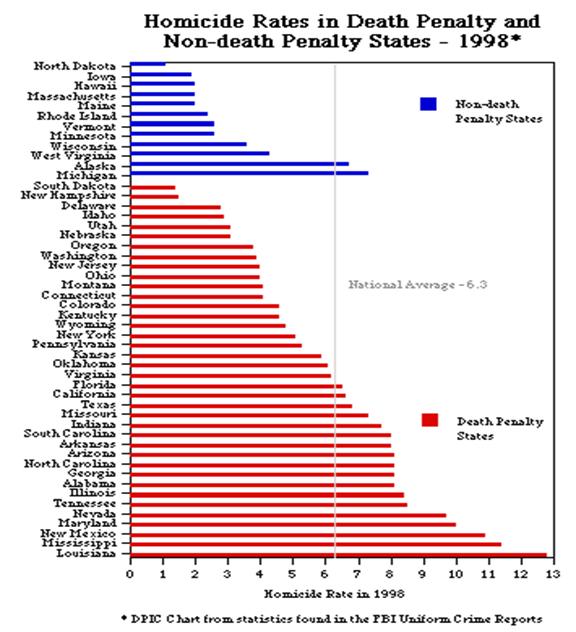
Opponents of capital punishment, on the other hand, emphasize the risk of executing innocent individuals, the disproportionate application of the death penalty based on race and socioeconomic status, and its effectiveness (or lack thereof) as a deterrent. They often highlight the moral and ethical implications of state-sanctioned killing, regardless of the crime committed. They also point to the high costs associated with capital cases, which are often more expensive due to lengthy appeals processes than life imprisonment. The global trend towards abolition and the recognition of fundamental human rights also heavily influence this side of the debate. New York’s current de facto abolition aligns more closely with these arguments, positioning the state within a growing number of jurisdictions worldwide that have moved away from capital punishment. This stance often resonates positively with visitors from countries where human rights are a central tenet of their legal systems.
Conclusion
In conclusion, for anyone asking “Is there a death penalty in New York?”, the definitive answer is no. While New York has a complex and often turbulent history with capital punishment, its active implementation ceased in 1963, and the state’s highest court effectively rendered the death penalty statute unconstitutional in 2004. This legal evolution, marked by significant court decisions and shifting societal values, places New York among the states that have abolished or effectively deactivated capital punishment.
This legal stance is more than just a footnote in the state’s statutes; it is a facet of New York’s identity. It contributes to the state’s image as a place that grapples with profound ethical questions, values progressive legal thought, and is aligned with a global movement towards human rights protections. Whether you are exploring the bustling streets of New York City, the historical sites of Staten Island, or the serene natural beauty of Upstate New York, understanding these nuances enriches the overall experience of this dynamic and historically rich state. The journey through New York’s legal landscape, much like a journey through its diverse attractions, offers a deeper appreciation of its unique character and enduring commitment to evolving principles of justice.
LifeOutOfTheBox is a participant in the Amazon Services LLC Associates Program, an affiliate advertising program designed to provide a means for sites to earn advertising fees by advertising and linking to Amazon.com. Amazon, the Amazon logo, AmazonSupply, and the AmazonSupply logo are trademarks of Amazon.com, Inc. or its affiliates. As an Amazon Associate we earn affiliate commissions from qualifying purchases.