
The vibrant metropolis we know today as New York City, a global epicenter of culture, finance, and innovation, boasts a history as dynamic and diverse as its population. Its iconic skyline, bustling streets, and world-renowned landmarks like the Statue of Liberty and Central Park tell a story of ambition, transformation, and enduring spirit. But when exactly did this incredible urban tapestry begin to weave itself? Pinpointing the exact “founding” of New York City isn’t as simple as marking a single date on a calendar, as its origins are a fascinating blend of indigenous heritage, European exploration, colonial ambitions, and a relentless drive for growth. Understanding its birth involves delving into layers of history, from its first inhabitants to its Dutch beginnings and subsequent British renaming, all of which contribute to the multifaceted character that makes it a premier travel destination and a treasure trove for tourism.

Tracing the Indigenous Roots: A Land Before Its Name
Long before European ships dotted the horizon of what is now New York Harbor, the land was home to a thriving indigenous civilization. The area was primarily inhabited by the Lenape people, an Algonquian-speaking nation whose ancestral territory, known as Lenapehoking, stretched across what is now New Jersey, eastern Pennsylvania, southeastern New York, and northern Delaware. The island we now call Manhattan Island was referred to by the Lenape as “Manna-hatta,” often translated as “island of many hills” or “hilly island.” For millennia, the Lenape lived in harmony with the rich natural environment, utilizing its abundant resources from the rivers, forests, and fertile plains. Their culture revolved around hunting, fishing, and agriculture, forming a sophisticated society with established trade routes and spiritual practices. The deep waterways and lush landscapes provided sustenance and protection, shaping a distinct way of life that predates any colonial presence.
While the Lenape inhabited the land, the first documented European contact with the area occurred in 1524 when Italian explorer Giovanni da Verrazzano, sailing under the French flag, entered New York Harbor. He described the area as “a very agreeable situation located between two small prominent hills,” observing the natural beauty and the presence of native inhabitants. However, Verrazzano did not establish a settlement, and it would be more than eight decades before another European ventured into the waters that would become so crucial to the city’s future. This initial glimpse, though fleeting, marked the dawn of European awareness of this strategically important and resource-rich region, setting the stage for the dramatic changes that would soon follow and forever alter the landscape and its people. For modern travelers, understanding this pre-colonial history enriches visits to cultural institutions like the National Museum of the American Indian in Lower Manhattan, offering a vital perspective on the land’s original stewards.
The Dutch Dawn: From New Netherland to New Amsterdam
The story of New York City’s formal establishment truly begins in the early 17th century with the arrival of the Dutch. In 1609, Henry Hudson, an English explorer commissioned by the Dutch East India Company, sailed his ship, the Half Moon, into the expansive river that now bears his name: the Hudson River. Hudson‘s voyage was initially an attempt to find a Northwest Passage to Asia, but instead, he discovered a vast, navigable waterway and a wealth of natural resources, particularly beaver pelts, which were highly prized in Europe for hat making. His glowing reports back to the Netherlands sparked significant interest and quickly led to the establishment of fur trading posts in the region.
Over the next decade, Dutch traders frequently visited the area, engaging in commerce with the Lenape. Recognizing the immense potential for trade and colonization, the Dutch West India Company was chartered in 1621 with the explicit goal of developing the territory, which they named New Netherland. The company sought to establish a permanent presence to secure their trading interests and lay claim to the land.
The Establishment of New Amsterdam
The pivotal moment often cited as the “founding” of the city occurred in 1626. This year saw the arrival of Peter Minuit, the third Director-General of New Netherland. Minuit famously “purchased” Manhattan Island from the Lenape people for goods valued at 60 Dutch guilders, a sum equivalent to roughly $1,000 USD today. While this transaction is a cornerstone of the city’s narrative, its true nature and ethical implications remain a subject of historical debate, given the vastly different understandings of land ownership between European colonizers and indigenous peoples. Nevertheless, this acquisition paved the way for the creation of a formal settlement.
Soon after, the Dutch established New Amsterdam at the southern tip of Manhattan Island. A fort, named Fort Amsterdam, was constructed to defend the nascent colony and protect the burgeoning fur trade. The settlement quickly grew, attracting a diverse array of settlers, including Dutch, French Huguenots, Walloons, and Africans (both free and enslaved). This early diversity was a hallmark of New Amsterdam, laying the groundwork for the multicultural mosaic that defines New York City to this day. Visitors interested in this period can explore remnants of Dutch colonial life in Lower Manhattan, particularly around Stone Street, one of the city’s oldest thoroughfares.
Life in New Amsterdam was challenging, marked by conflicts with native tribes and internal governance issues. One of the most significant figures in the colony’s early history was Peter Stuyvesant, who served as Director-General from 1647 to 1664. Stuyvesant was a formidable leader, known for his peg leg and autocratic style, who brought much-needed order and stability to the unruly settlement. He implemented stricter laws, improved infrastructure, and expanded the colony’s territory, establishing a defensive wall along what is now Wall Street. Under his leadership, New Amsterdam began to flourish, evolving from a mere trading post into a significant colonial town.

The British Era: Birth of New York
The Dutch dominance over New Netherland was, however, destined to be relatively short-lived. England, viewing the Dutch presence as an encroachment on its North American colonial claims, launched an aggressive campaign to seize control. In 1664, during the Second Anglo-Dutch War, an English fleet commanded by Colonel Richard Nicolls arrived in New York Harbor. Despite Peter Stuyvesant’s initial resistance, the citizens of New Amsterdam, weary of conflict and recognizing the overwhelming English naval power, pressured him to surrender without a fight.
With the peaceful transfer of power, the English promptly renamed the colony and its primary settlement. New Netherland became the Province of New York, and New Amsterdam was christened New York City, in honor of James, Duke of York, who later became King James II. This change marked a significant turning point, cementing the English language and legal system as dominant forces, although the Dutch cultural influence would persist for generations. The city’s strategic harbor continued to be its greatest asset, facilitating trade and positioning it as a vital port within the British colonial empire.
From Colony to Global City: Shaping Modern New York
Under British rule, New York City continued to grow in size and importance. Its deep-water port made it a crucial hub for transatlantic trade, connecting the burgeoning American colonies with the markets of England and beyond. This economic dynamism fueled a steady population increase and the expansion of its urban footprint. The city’s strategic location also made it a key battleground during the American Revolutionary War. Following its occupation by British forces for most of the war, New York City served as the British military and political headquarters in North America. After the war, it briefly served as the capital of the newly formed United States from 1785 to 1790, a testament to its emerging prominence.
The 19th century witnessed an astonishing period of growth and transformation for New York City. The completion of the Erie Canal in 1825, connecting the Hudson River to the Great Lakes, solidified New York’s position as the nation’s premier port and economic engine. Goods from the American interior flowed through the canal to New York Harbor, and from there, to the world. This infrastructure marvel transformed not only trade but also immigration. Waves of immigrants from Ireland, Germany, Italy, and later from Eastern Europe and beyond, poured into the city, seeking opportunity and a new life. Ellis Island, located in New York Harbor, became the gateway to America for millions, indelibly shaping the city’s demographics and contributing to its vibrant cultural tapestry.
This era also saw the planning and development of many of New York City’s most recognizable features. The Commissioner’s Plan of 1811 laid out the iconic grid system for Manhattan Island, anticipating future growth. The creation of Central Park in the mid-19th century, a monumental urban oasis designed by Frederick Law Olmsted and Calvert Vaux, demonstrated the city’s foresight in preserving green space amidst rapid urbanization. The construction of the Brooklyn Bridge in 1883 was another engineering marvel, connecting Manhattan with Brooklyn and symbolizing the city’s ambition and technological prowess. By the end of the 19th century, the city had officially consolidated its five boroughs—Manhattan, Brooklyn, Queens, the Bronx, and Staten Island—into a single municipal entity, solidifying its status as a megacity.
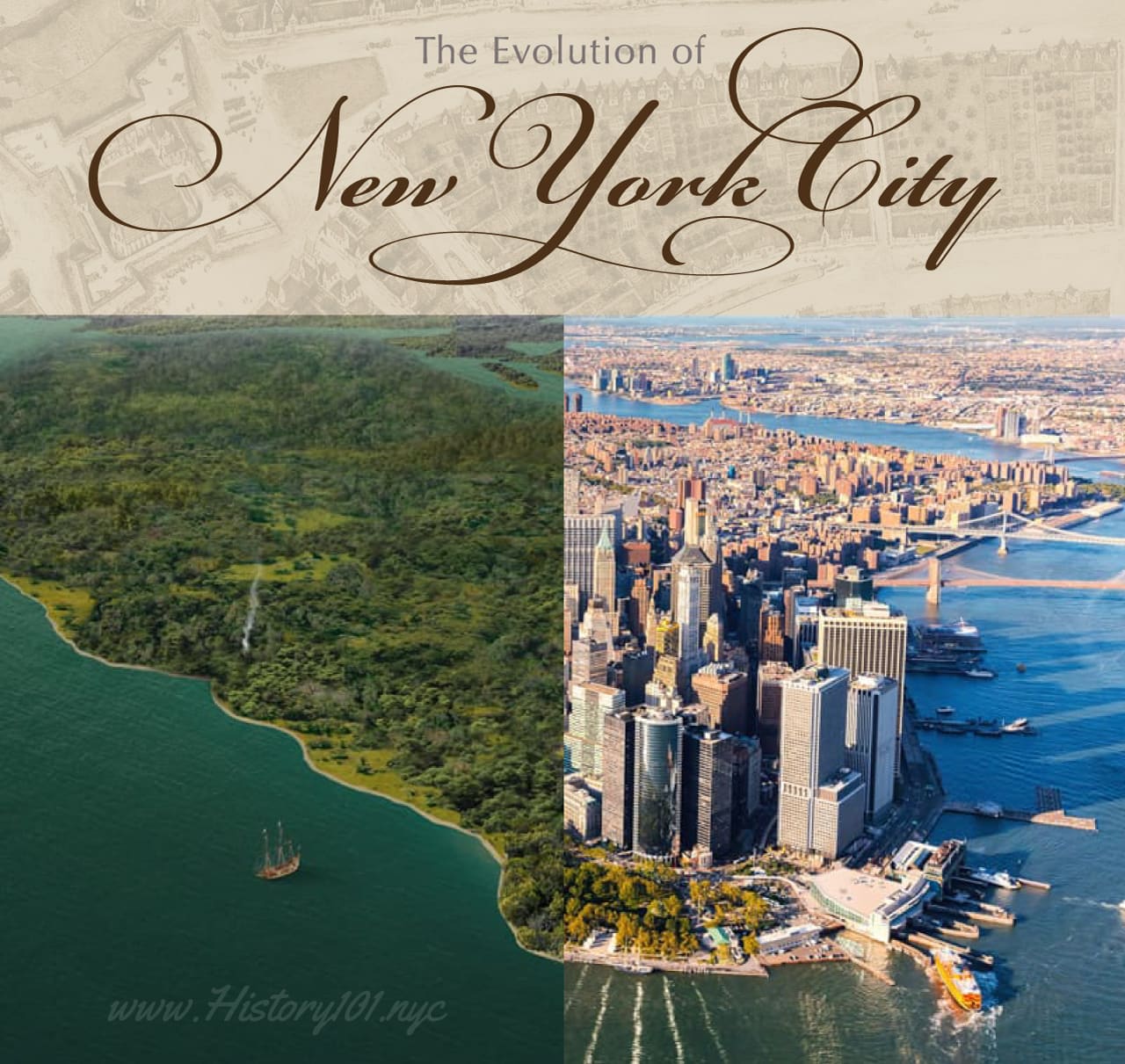
New York City Today: A Living Legacy
Today, New York City stands as a testament to its long and intricate history. While the “founding” date can be debated, whether one points to Verrazzano’s sighting, Hudson’s exploration, Minuit’s purchase, or the English renaming, each event contributed layers to the city’s identity. The earliest foundations laid by the Lenape and later by the Dutch settlers are still discernible for those who know where to look. The narrow, winding streets of the Financial District in Lower Manhattan contrast sharply with the grid pattern further north, a direct legacy of New Amsterdam’s organic growth versus British urban planning.
For modern travelers and tourism enthusiasts, New York City offers an unparalleled journey through time. From the historical buildings in the Financial District to the vibrant immigrant communities across its boroughs, the city wears its history proudly. Visitors can explore sites like Fraunces Tavern Museum, where George Washington bade farewell to his officers, or walk along the route of Wall Street, once the northern boundary of the Dutch settlement. The architectural marvels, from colonial-era churches to Art Deco skyscrapers like the Empire State Building, reflect the successive chapters of its development.
The city’s vibrant lifestyle, from its diverse culinary scene to its world-class hotels and luxurious accommodations, is a direct result of centuries of immigration and cultural exchange. Each neighborhood, from the artistic enclave of Greenwich Village to the bustling energy of Times Square and the theatrical heart of Broadway, tells a piece of New York’s evolving story. Even the language spoken on the streets, a rich tapestry of accents and dialects, echoes the myriad of peoples who have called this city home since its earliest days.
In essence, the “founding” of New York City is not a singular event but a continuous process of layering, adaptation, and reinvention. From the tranquil existence of the Lenape to the bustling Dutch trading post, the British colonial power, and finally the global beacon it is today, New York City has always been a place of incredible energy and boundless ambition. Its past is not merely confined to history books but is alive in its streets, its people, and its enduring spirit, inviting every traveler to explore, discover, and become a part of its ongoing narrative. Whether you’re seeking luxury travel experiences or budget-friendly adventures, the historical depth of New York City adds an invaluable dimension to any visit, reminding us that every corner holds a piece of its extraordinary journey from a wild island to an urban marvel.
LifeOutOfTheBox is a participant in the Amazon Services LLC Associates Program, an affiliate advertising program designed to provide a means for sites to earn advertising fees by advertising and linking to Amazon.com. Amazon, the Amazon logo, AmazonSupply, and the AmazonSupply logo are trademarks of Amazon.com, Inc. or its affiliates. As an Amazon Associate we earn affiliate commissions from qualifying purchases.