
The story of New York City, a global titan of culture, finance, and innovation, is as complex and captivating as the metropolis itself. Among the many intriguing questions surrounding its origins, one frequently surfaces: Did the British buy New York from the Netherlands? The simple answer is no, not in the way one might imagine a typical land transaction. The true narrative is far richer, woven with threads of exploration, conquest, geopolitical rivalry, and strategic diplomacy, reflecting the ambitious spirit that would come to define this iconic destination.
Understanding the transition of power requires a journey back to the 17th century, a tumultuous era when European empires vied for dominance across oceans, eager to carve out new territories and establish lucrative trade routes. What began as the modest Dutch settlement of New Amsterdam eventually transformed into the sprawling New York we know today, but this evolution was far from a straightforward purchase. It was a strategic acquisition, born out of conflict and solidified by treaties, leaving an indelible mark on the city’s identity, its landmarks, and its enduring lifestyle.
The Dawn of a Metropolis: New Amsterdam’s Dutch Roots
Before the familiar skyscrapers pierced the skyline, the island of Manhattan was the heart of New Amsterdam, a thriving Dutch trading post that was a microcosm of European ambitions in the New World. The Dutch presence in North America was driven primarily by economic motives, seeking to establish a foothold in the lucrative fur trade and expand their global commercial empire.
A Vision for the New World: The Dutch West India Company
The early 17th century saw the Netherlands emerge as a formidable maritime and economic power. The Dutch West India Company, chartered in 1621, was a private company with quasi-governmental powers, tasked with exploiting the resources of the Americas and establishing colonies. Its primary goal was to compete with the Spanish and Portuguese in the southern Atlantic and to develop trade in the north. The company’s vision led them to the mouth of the magnificent Hudson River, a strategic location that promised access to inland fur-rich territories and a superb harbor for shipping.
The settlement they founded, New Amsterdam, rapidly grew into a bustling port. Unlike many contemporary colonies that focused on religious freedom or agricultural expansion, New Amsterdam was a commercial hub from its inception. Its diverse population reflected this, attracting traders, sailors, and settlers from across Europe, establishing a multicultural foundation that continues to define New York today. This early emphasis on trade and cosmopolitanism laid the groundwork for New York’s future as a global tourism and economic powerhouse.
The Infamous Purchase: Myth vs. Reality
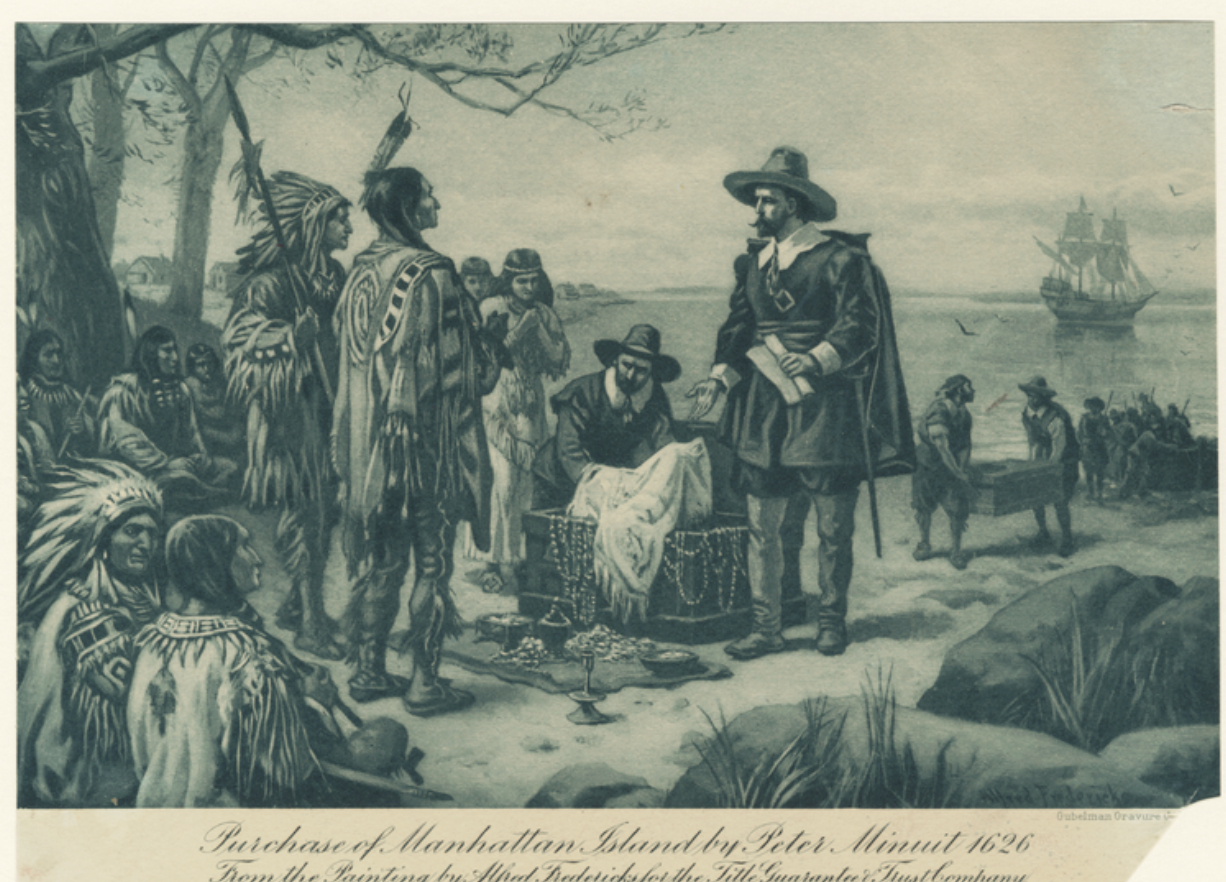
One of the most enduring stories associated with New Amsterdam is the so-called “purchase” of Manhattan Island. In 1626, Peter Minuit, the Dutch Director-General of New Netherland, is famously said to have bought the island from the local Lenape people for goods worth 60 Dutch guilders, an amount often mythologized as “24 dollars.” This transaction, while historically documented, is fraught with differing interpretations and cultural misunderstandings.
For the European colonists, the exchange represented a legal transfer of land ownership in perpetuity. For the Lenape, whose concept of land was tied to usage and shared resources rather than exclusive individual possession, it likely signified an agreement for shared access or hunting rights. The “purchase” was crucial for the Dutch to legitimize their claim to the territory in the eyes of other European powers, solidifying New Amsterdam’s position as the capital of New Netherland. This early transaction, though controversial by modern standards, marked the definitive beginning of European settlement on Manhattan, turning it into a thriving center for fur trade and a burgeoning port city. Today, this historical event is a fascinating aspect of New York’s story, often pondered by visitors exploring Lower Manhattan and its historical sites.
The Shifting Tides of Empire: Anglo-Dutch Rivalry
The relative peace and prosperity of New Amsterdam were not destined to last. The burgeoning Dutch presence in North America increasingly became a thorn in the side of the ambitious English Crown, setting the stage for a dramatic confrontation that would forever alter the course of the colony’s history.
A Contest for Supremacy: The Anglo-Dutch Wars
The mid-17th century was a period of intense rivalry between England and the Netherlands, two maritime powers vying for global economic and naval supremacy. Their competition played out across oceans, leading to a series of naval conflicts known as the Anglo-Dutch Wars. These wars were primarily fought over trade routes, colonial possessions, and commercial dominance. New Netherland, strategically located between the English colonies of New England to the north and Virginia to the south, represented both a geopolitical inconvenience and a tantalizing prize for the English. Its excellent harbor and control of the Hudson River system were invaluable assets.
The Second Anglo-Dutch War (1665-1667) proved to be the pivotal moment for New Amsterdam. King Charles II of England, eager to consolidate English control over the Atlantic Seaboard, granted the territory of New Netherland to his brother, James, Duke of York, even before war was officially declared. This bold move signaled England’s clear intent to seize the Dutch colony by force. The stage was set for a dramatic, though surprisingly bloodless, confrontation that would rewrite the map of North America and reshape the future of what would become one of the world’s greatest cities.
The Conquest, Not a Purchase: The 1664 Takeover
In August 1664, a formidable English fleet, commanded by Colonel Richard Nicolls, sailed into New Amsterdam’s harbor and demanded its surrender. The colony’s Director-General, Peter Stuyvesant, a staunch and often autocratic leader, initially resisted, rallying the citizens to defend their settlement. However, New Amsterdam was ill-prepared for a siege. Its defenses were weak, its garrison small, and many of its diverse inhabitants were more interested in commerce than conflict.
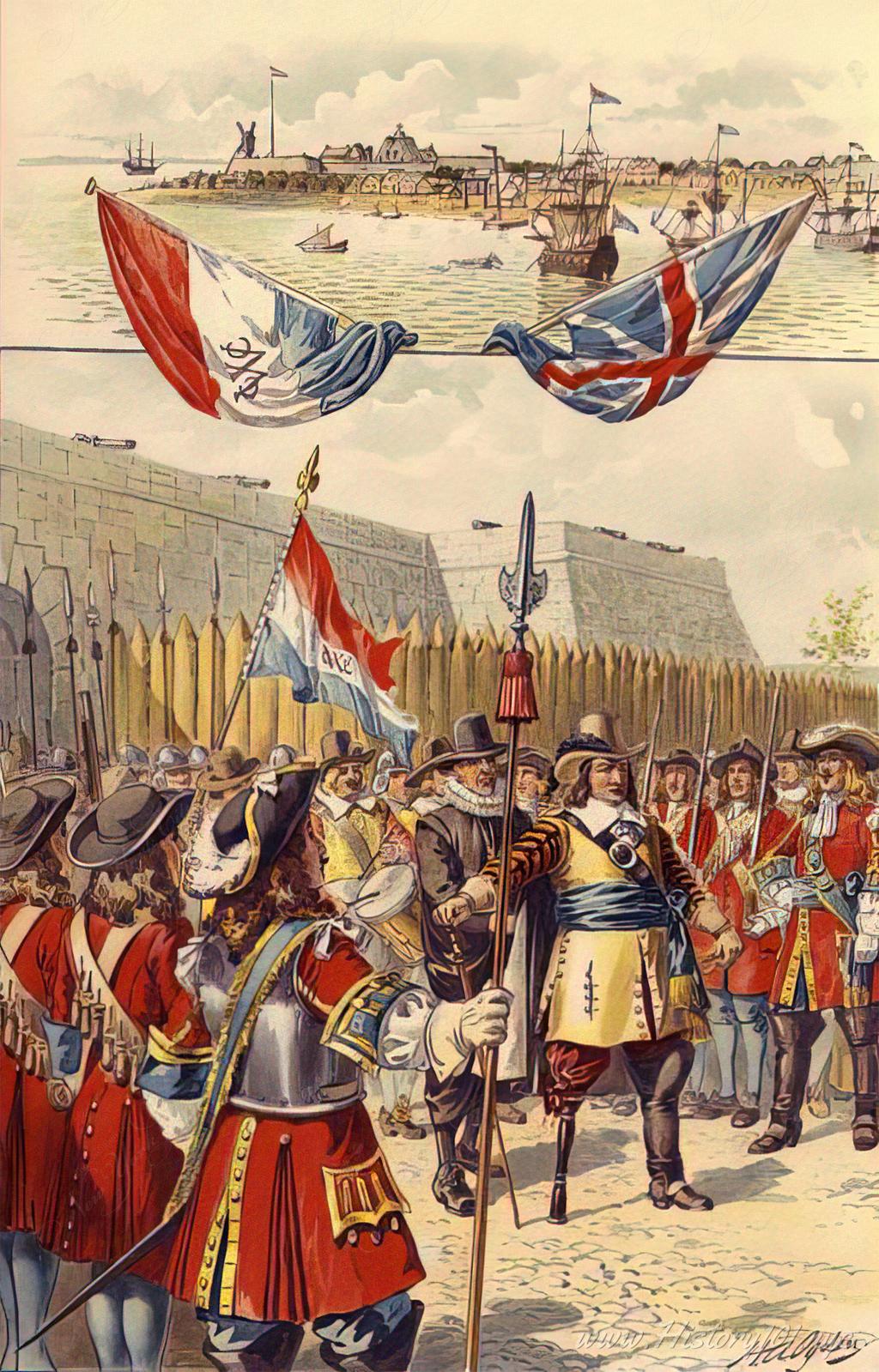
Faced with overwhelming English force and pressure from the city’s leading citizens who feared a destructive battle, Stuyvesant was compelled to surrender. The formal transfer of power occurred on September 8, 1664, effectively bloodlessly. This was not a commercial transaction where the British bought the land from the Dutch government. Instead, it was a military conquest, a forced seizure of territory during a period of imperial expansion and conflict.
Following the takeover, Colonel Nicolls became the first English governor. In honor of the proprietor, James, Duke of York, the city of New Amsterdam was promptly renamed New York. This pivotal event fundamentally altered the linguistic, legal, and political landscape of the colony, setting it on a new trajectory under British rule. For tourists today, walking through the historic streets of Lower Manhattan offers a tangible connection to this dramatic moment in time.
The Treaty of Breda and Subsequent Reversals
While the 1664 takeover was a decisive military act, its permanence was not immediately guaranteed. The Second Anglo-Dutch War concluded with the Treaty of Breda in 1667. This treaty officially ended hostilities and solidified the territorial changes resulting from the war. Under its terms, the Dutch formally ceded New Netherland to the English. In exchange, the English recognized Dutch claims to Suriname in South America and Run Island in the East Indies, which was crucial for the lucrative spice trade. This exchange illustrates that the transfer of New York was part of a larger, complex diplomatic chess game rather than an isolated sale.
However, the story wasn’t quite over. During the Third Anglo-Dutch War (1672-1674), the Dutch briefly recaptured New York in 1673, renaming it New Orange and reinstalling Dutch governance. This recapture was short-lived, as the conflict concluded with the Treaty of Westminster in 1674, which definitively returned New York to English control. From this point forward, the city remained firmly under British rule until the American Revolution a century later. This series of events underscores that the acquisition was a result of military might and diplomatic negotiation, not a purchase.
A Legacy Woven in Stone and Culture: Dutch and British Influences
The successive layers of Dutch and British rule have profoundly shaped the character of New York City, leaving an enduring legacy visible in its street plan, architecture, language, and cultural traditions. This rich historical tapestry is a key draw for travelers and history enthusiasts alike.
Echoes of New Amsterdam in Modern New York
Despite over three centuries of British and later American governance, the spirit of New Amsterdam continues to resonate throughout New York City. Perhaps the most evident reminders are the street names that trace their origins back to the Dutch period. Wall Street, the global financial heart, takes its name from the defensive wall built by the Dutch settlers. Broadway is a direct translation of “Breede Wegh,” meaning “broad road.” Many iconic New York neighborhoods and boroughs also bear Dutch names: Harlem (Haarlem), Brooklyn (Breukelen), Bronx (named after Jonas Bronck, an early Dutch settler), and Staten Island (Staaten Eylandt, “States’ Island”).
Beyond names, early Dutch architectural influences, such as stepped gable roofs and narrow-fronted houses, can still be glimpsed in certain historic districts. Even cultural traditions have Dutch roots, most notably the figure of Santa Claus, a corruption of the Dutch “Sinterklaas.” For visitors keen on exploring the city’s roots, guided tours often highlight these fascinating connections, making the early history of New Amsterdam a compelling aspect of any New York travel experience. Identifying these historical landmarks provides a rich context for understanding the city’s development.
British Foundation of an Empire City
While the Dutch laid the initial groundwork, it was the British who established the administrative, legal, and political foundations that transformed New York from a trading post into a major imperial city. Under British rule, the city’s governance structure became more formal, adopting English Common Law, which remains influential in the American legal system. The English language became dominant, though a vibrant mix of languages persisted.
During the British colonial period, New York grew significantly, becoming a vital port and a strategic military outpost. Its population swelled, and its role in transatlantic trade solidified. This era saw the establishment of institutions, infrastructure, and an economic system that would propel New York toward its future as a global metropolis. Many of New York’s most iconic buildings and public spaces, while perhaps not dating back to the 17th century, stand on ground fundamentally shaped by British urban planning and colonial aspirations. The city’s role during the American Revolution, serving as a British military headquarters, further embedded its place in the broader narrative of American history, ultimately leading to its current status as a bustling center for both luxury travel and crucial business stays.

New York Today: A Tapestry of History and Modernity
Today, New York City stands as a vibrant testament to its layered past. The question, “Did the British buy New York from the Netherlands?” ultimately leads to a deeper appreciation of the city’s complex origins. It wasn’t a simple purchase but a strategic acquisition born from geopolitical rivalry and secured through military might and diplomatic treaties.
For those planning to travel to New York, understanding this history enriches the entire experience. Walking the cobbled streets of Lower Manhattan, visitors can trace the lines of the old Dutch fort near Bowling Green, envision the bustling docks where ships from the Dutch West India Company once moored, and admire landmarks like Federal Hall and Trinity Church, which emerged during the British era. These sites are not merely historical relics; they are living narratives that contribute to New York’s unparalleled appeal as a tourist destination.
The city’s diverse culture, innovative spirit, and cosmopolitan lifestyle are direct descendants of its Dutch and British heritage. From exploring the historical attractions to enjoying the myriad food options influenced by centuries of immigration, or choosing from a range of accommodation options that dot its historic neighborhoods, New York continuously offers new insights into its vibrant past. Whether you’re staying in a luxurious suite overlooking the Hudson River or a budget-friendly hotel in a culturally rich district, the echoes of New Amsterdam and colonial New York are always present, making every visit a journey through time.
So, while the direct answer to the question is a resounding no, the captivating saga of New York’s transfer of power from the Dutch to the British remains a cornerstone of its identity. It is a story of ambition, conflict, and eventual integration, crafting a city that is truly one of a kind, a global landmark built on successive layers of history and dreams.
LifeOutOfTheBox is a participant in the Amazon Services LLC Associates Program, an affiliate advertising program designed to provide a means for sites to earn advertising fees by advertising and linking to Amazon.com. Amazon, the Amazon logo, AmazonSupply, and the AmazonSupply logo are trademarks of Amazon.com, Inc. or its affiliates. As an Amazon Associate we earn affiliate commissions from qualifying purchases.