
Navigating the legal landscape of cannabis consumption, particularly concerning edibles, in a state as vast and varied as Texas can be a complex undertaking for any traveler or resident. While the Lone Star State has a reputation for its conservative approach to drug policy, the nuances of its laws, especially regarding hemp-derived products, have evolved. This article delves into the current legal status of edibles in Texas, aiming to provide clarity for those curious about their legality, potential consumption, and the implications for visitors and locals alike. Understanding these regulations is crucial for responsible engagement with the evolving cannabis market.

The Shifting Sands of Texas Cannabis Law
The legal status of cannabis in Texas is not a simple black and white issue. It’s a spectrum influenced by federal legislation, state-specific bills, and the definition of what constitutes “cannabis.” Historically, all forms of marijuana have been illegal. However, recent legislative changes, primarily driven by the 2018 Farm Bill at the federal level, have introduced a significant distinction between hemp and marijuana. This distinction is paramount to understanding the legality of edibles in Texas.
Hemp vs. Marijuana: A Crucial Distinction
The core of the legality debate for edibles in Texas hinges on the definition of hemp. Under federal law, and subsequently adopted by Texas through House Bill 1325 in 2019, hemp is defined as cannabis with a delta-9 tetrahydrocannabinol (THC) concentration of no more than 0.3% on a dry weight basis. Products derived from hemp that meet this threshold are generally considered legal. This includes a wide array of cannabinoids, such as delta-8 THC, delta-10 THC, and even products that might contain trace amounts of delta-9 THC within the legal limit.
Conversely, marijuana, defined as cannabis containing more than 0.3% delta-9 THC, remains illegal in Texas for recreational use. Possession of even small amounts can lead to arrest and criminal charges. Therefore, when considering edibles, the source of the cannabinoids and their concentration is the determining factor for legality. Edibles containing only hemp-derived cannabinoids that comply with the 0.3% delta-9 THC limit are generally permitted.
The Rise of Hemp-Derived Cannabinoids
The legality of hemp has opened the door for a burgeoning market of hemp-derived cannabinoid products, including edibles. Products infused with delta-8 THC, for instance, became widely available in Texas following the passage of HB 1325. Delta-8 THC, an isomer of delta-9 THC, offers psychoactive effects that are often described as milder than those of traditional marijuana. Since it is derived from hemp, and its own delta-9 THC content (if any) falls within the legal limit, it has navigated a legal gray area that has, for the most part, allowed its sale.
However, the legality of some hemp-derived cannabinoids has faced scrutiny and legislative challenges. Some jurisdictions and states have moved to ban or heavily regulate certain compounds like delta-8 THC, citing concerns about potency and regulation. Texas has seen attempts to ban these products, but as of now, they remain largely accessible, provided they adhere to the strict definition of hemp. It is essential for consumers to be aware that the legal landscape can change, and staying informed about the latest legislative updates is advisable.
Understanding Edibles and Their Legal Status in Texas
When we speak of “edibles” in the context of Texas legality, we are primarily referring to ingestible products that contain cannabinoids derived from hemp. This can include gummies, chocolates, baked goods, and beverages. The key to their legality lies in their composition.
Gummies and Confections: The Most Common Form
Hemp-derived gummies are perhaps the most popular form of edible in Texas. These are typically infused with cannabinoids like delta-8 THC, or sometimes a blend of other minor cannabinoids such as CBD, CBN, or HHC. Because these products are manufactured using hemp as the source material and are intended to contain no more than 0.3% delta-9 THC, they are generally considered legal for sale and possession.
Purchasing these edibles is often done through online retailers or specialized smoke shops and dispensaries that focus on hemp-derived products. It’s important for consumers to seek out reputable vendors who provide third-party lab testing (Certificate of Analysis or COA) for their products. These lab reports verify the cannabinoid content, ensuring that the product indeed falls within the legal delta-9 THC limits and is free from harmful contaminants. This due diligence is critical for both safety and legal compliance.
Other Ingestible Products
Beyond gummies, the range of hemp-derived edibles in Texas is expanding. This includes chocolates, cookies, brownies, and even beverages. The same legal principles apply: as long as the cannabinoids are derived from hemp and the product does not exceed the 0.3% delta-9 THC limit, these items are generally permissible.
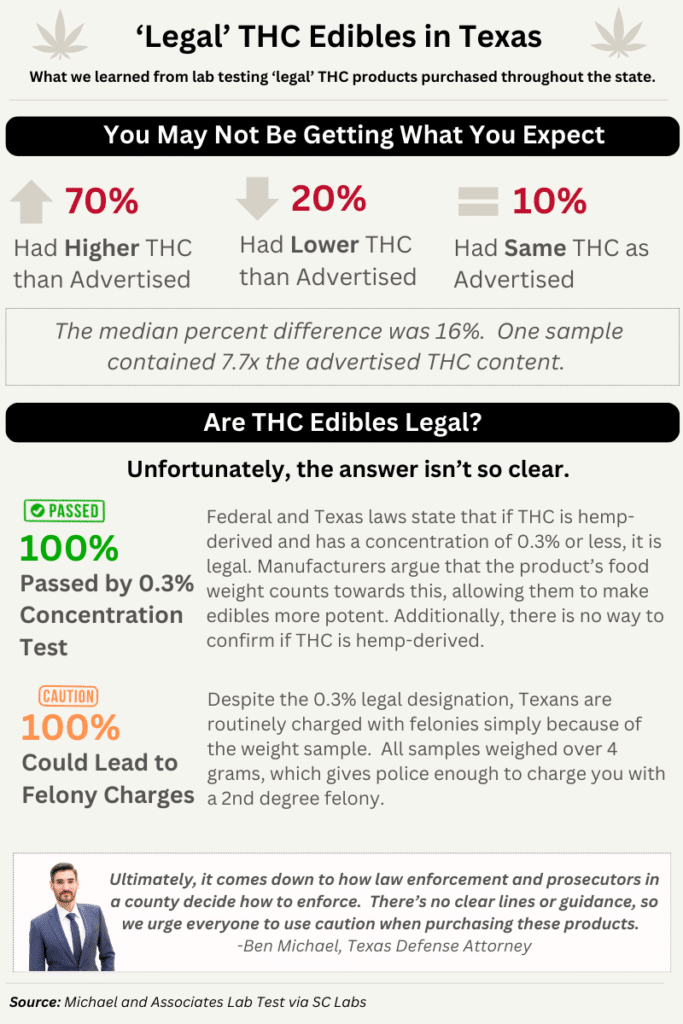
The legal interpretation has been that products containing a 0.3% delta-9 THC concentration on a dry weight basis are classified as hemp and are therefore legal under state law. This interpretation has allowed for a wider variety of products to enter the market. However, it is crucial to reiterate that this is a rapidly evolving area of law. Any new legislation or judicial interpretation could alter the current status. Consumers should always prioritize purchasing from licensed and transparent vendors.
Navigating Consumption and Possession in Texas
While the legality of purchasing and possessing hemp-derived edibles in Texas is a significant aspect, understanding the practicalities of consumption and potential interactions with law enforcement is equally important.
Where Can Edibles Be Consumed?
The legality of consumption generally follows the legality of possession. Since hemp-derived edibles are considered legal, their consumption is permissible in private settings. However, as with any substance that can alter one’s perception or faculties, consuming them in public places, particularly in areas where public intoxication or the use of controlled substances is prohibited, could lead to legal issues.
Furthermore, driving under the influence of any substance that impairs judgment or reaction time is illegal and dangerous. Travelers should exercise extreme caution and responsible behavior. The effects of edibles can be potent and long-lasting, and it is essential to consume them in a safe and controlled environment, especially when unfamiliar with their effects or potency.
Potential Encounters with Law Enforcement
Despite the legality of hemp-derived edibles, confusion can arise. Law enforcement officers may not always be fully abreast of the distinctions between hemp and marijuana, or the nuances of cannabinoid legality. If stopped and found in possession of edibles, it’s advisable to remain calm and cooperative. If the products are indeed derived from hemp and comply with the 0.3% delta-9 THC limit, they are legal.
Having readily accessible proof of purchase or third-party lab reports can be beneficial in such situations. These documents can help demonstrate that the product is legal hemp. However, it’s also important to understand that legal interpretations can vary, and officers have discretion. It’s always prudent to be informed and to act responsibly. For travelers, this means being aware of the laws in Texas and avoiding any actions that could be misconstrued as illegal activity.
The Future of Edibles and Cannabis in Texas
The current legal status of edibles in Texas is a direct result of the intersection of federal and state legislation, with hemp-derived products occupying a unique space. However, the landscape is far from static.
Legislative Trends and Potential Changes
The burgeoning market for hemp-derived cannabinoids has not gone unnoticed by lawmakers. There have been ongoing discussions and legislative efforts to further regulate or even ban certain compounds. Concerns often cited include the potency of some products, the lack of stringent federal oversight compared to the regulated medical and recreational marijuana markets in other states, and potential public health impacts.
It is highly probable that Texas will see further legislative action regarding hemp-derived cannabinoids in the coming years. Whether this leads to stricter controls, outright bans on specific compounds, or even a pathway toward a more regulated medical or recreational cannabis program remains to be seen. Travelers and residents should anticipate potential shifts and stay informed about legislative developments.

The Medical Marijuana Program
It is also important to distinguish the legal status of hemp-derived edibles from the state’s medical marijuana program. Texas has a limited medical cannabis program, known as the Texas Compassionate Use Program (TCUP). This program allows for the prescription of low-THC cannabis (typically with a THC content of 10% or less) for specific medical conditions. Edibles are not a primary delivery method within TCUP, and obtaining them requires a prescription from a qualified physician. This program operates under entirely different regulations than the hemp market.
In conclusion, while the question “Are Edibles Legal In Texas?” doesn’t have a simple yes or no answer, the current legal framework permits hemp-derived edibles that comply with the 0.3% delta-9 THC limit. However, the evolving nature of cannabis law in Texas necessitates ongoing awareness and responsible consumption for anyone looking to explore these products.
LifeOutOfTheBox is a participant in the Amazon Services LLC Associates Program, an affiliate advertising program designed to provide a means for sites to earn advertising fees by advertising and linking to Amazon.com. Amazon, the Amazon logo, AmazonSupply, and the AmazonSupply logo are trademarks of Amazon.com, Inc. or its affiliates. As an Amazon Associate we earn affiliate commissions from qualifying purchases.