
Embarking on a career in real estate in the vibrant state of Texas offers more than just a job; it presents a gateway to a dynamic lifestyle, unparalleled professional growth, and the unique opportunity to intimately connect with the diverse landscapes and thriving communities that make Texas a destination in itself. For many, the allure of real estate lies in its promise of flexibility, the potential for significant earnings, and the chance to contribute to people’s most significant life decisions – finding a home or investment property. This profession seamlessly integrates with a broader lifestyle vision, one that often includes the freedom to travel, explore local culture, and experience the rich tapestry of destinations Texas has to offer.
From the bustling metropolitan hubs of Houston and Dallas to the live music capital of Austin and the historic charm of San Antonio, the real estate market in Texas is as varied as its geography. Imagine helping a client discover a serene ranch in the Hill Country, a luxury condo with city views, or a vacation rental near the pristine beaches of South Padre Island. A real estate license in Texas not only equips you with the skills to navigate this exciting market but also positions you as a local expert, guiding individuals through the intricacies of buying and selling in a state that consistently ranks among the top for economic growth and population influx. This article will serve as your comprehensive guide to obtaining a real estate license in Texas, framed within the context of the appealing lifestyle and expansive tourism opportunities that await.
The Allure of Texas Real Estate: A Lifestyle and Investment Opportunity
Texas’s unique blend of culture, robust economy, and diverse geography makes it an irresistible magnet for residents, businesses, and tourists alike. This desirability fuels a consistently active real estate market, presenting boundless opportunities for licensed professionals. Understanding this broader context is key to appreciating the value of a Texas real estate license.
Why Texas Stands Out
Texas offers a kaleidoscope of experiences that appeal to a wide array of individuals, directly impacting its real estate market. The state’s economic powerhouse, driven by industries like energy, technology, healthcare, and manufacturing, ensures a steady influx of new residents seeking employment and a better quality of life. Cities like Austin, often celebrated for its innovative tech scene and vibrant arts culture, attract young professionals and families. Dallas and Houston, global hubs with impressive skylines, offer sophisticated urban living and extensive career paths. Meanwhile, San Antonio captivates with its rich history, epitomized by the Alamo and the Riverwalk, drawing millions of tourism dollars annually and creating a strong demand for both residential and commercial properties, including a thriving market for hotels and short-term accommodation options.
For a real estate agent, this means not only a robust market but also the chance to specialize in various property types, from sprawling ranches in West Texas to beachfront properties along the Gulf Coast. The opportunity to explore these distinct regions as part of your profession adds an element of adventure to the daily routine. Imagine advising clients on investment properties in the quirky art town of Marfa, or showcasing luxury suites overlooking Lady Bird Lake in Austin. A real estate career in Texas is truly about immersing oneself in the state’s expansive character.
Real Estate as a Pathway to a Flexible Lifestyle
One of the most appealing aspects of a real estate career is the potential for a flexible schedule, which can be tailored to support a lifestyle that prioritizes travel and personal enrichment. Many successful agents find that their profession allows them to manage their own time, offering the freedom to take extended trips, explore new destinations, or simply enjoy more leisure time. Whether it’s a quick weekend getaway to Galveston or an ambitious international adventure, the autonomy afforded by real estate can facilitate these pursuits. This career isn’t just about transactions; it’s about building a life that accommodates your passions. The skills acquired in real estate – negotiation, marketing, and client management – are highly transferable and beneficial, even if you choose to take a break or pivot your career path to explore other avenues, perhaps even within the hospitality or tourism sectors.
Moreover, a deep understanding of the real estate market, especially concerning vacation homes, investment properties, and various forms of accommodation like short-term rentals, can directly benefit your personal travel and investment goals. You become adept at identifying promising locations, understanding market trends, and recognizing the value of properties, whether they are for personal use or for generating passive income that can further fund your globetrotting ambitions.
Navigating the Path to a Texas Real Estate License
Obtaining your real estate license in Texas involves a structured process overseen by the Texas Real Estate Commission (TREC). This regulatory body ensures that all licensees meet high standards of education, ethics, and professional conduct, safeguarding the public and maintaining the integrity of the profession.
Step 1: Meet Eligibility Requirements
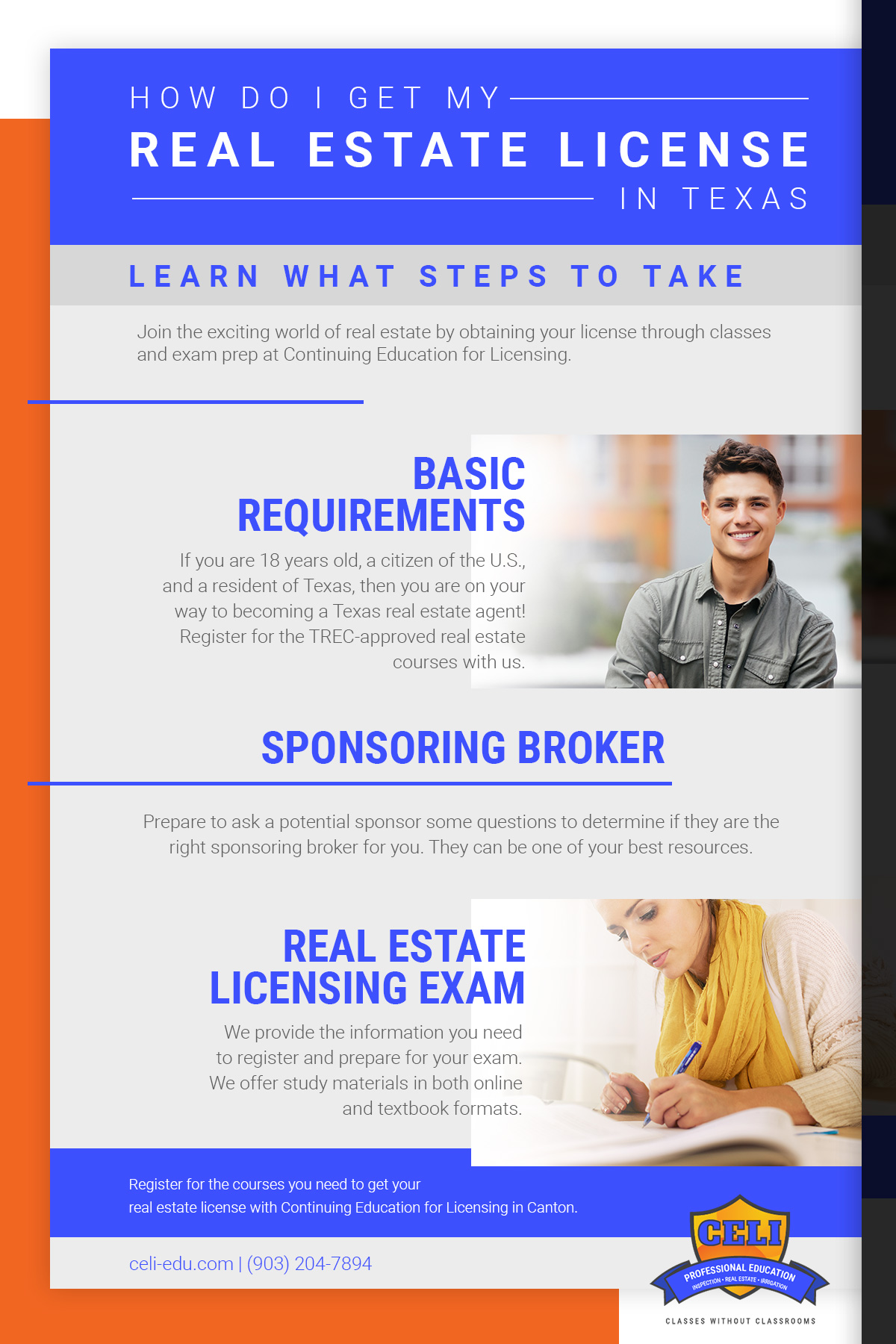
Before you even begin the educational component, ensure you meet TREC’s fundamental eligibility criteria:
- Age: You must be at least 18 years old.
- Citizenship/Residency: You must be a citizen of the United States or a lawfully admitted alien. You also need to be a resident of Texas.
- Moral Character: TREC requires that applicants possess honesty, trustworthiness, and integrity. Any criminal history, particularly involving felonies or crimes of moral turpitude, will be scrutinized and may require a “fitness determination” before you can apply for a license. It’s advisable to disclose any such issues upfront to TREC.
Meeting these prerequisites is your first step towards unlocking a career that can offer both professional fulfillment and a robust lifestyle foundation.
Step 2: Complete Your Pre-Licensing Education
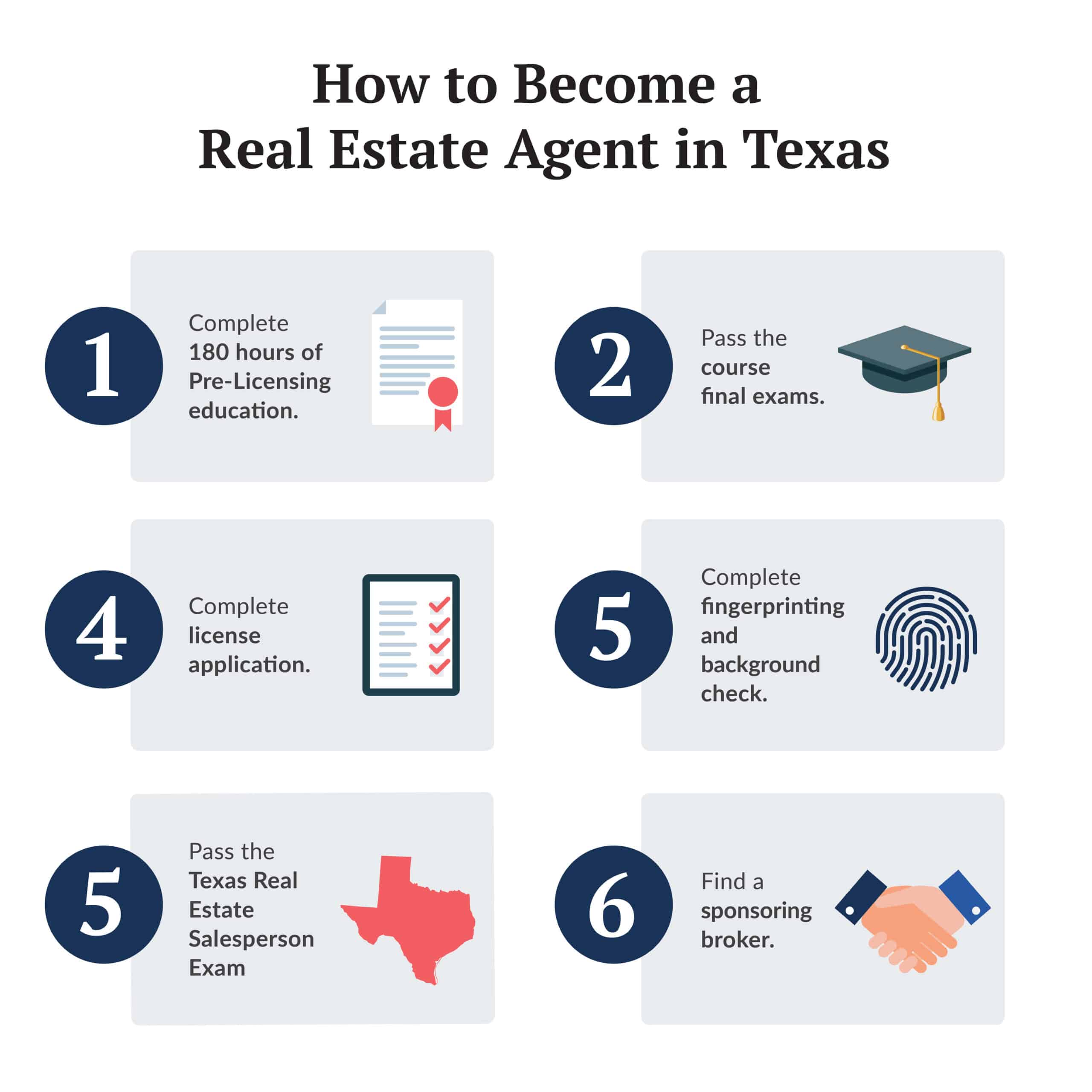
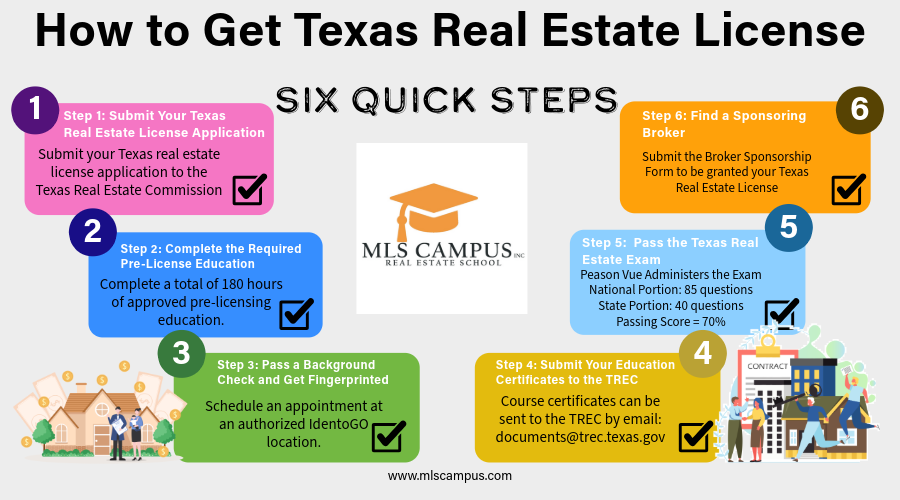
This is arguably the most substantial part of the licensing process. Texas requires aspiring real estate salespersons to complete a total of 180 classroom hours of TREC-approved courses. These courses are designed to provide a foundational understanding of real estate principles, law, and practice, equipping you with the knowledge necessary to succeed in the market.
The required courses include:
- Principles of Real Estate I (30 hours): Covers fundamental concepts like property rights, legal descriptions, contracts, and agency relationships.
- Principles of Real Estate II (30 hours): Delves deeper into topics such as finance, appraisals, fair housing, and professional responsibility.
- Law of Agency (30 hours): Focuses specifically on the legal aspects of agency relationships between real estate agents, brokers, and clients.
- Law of Contracts (30 hours): Essential for understanding the various types of contracts used in real estate transactions, their elements, and enforceability.
- Promulgated Contracts (30 hours): Teaches the use of contract forms published by TREC for mandatory use by licensees.
- Real Estate Finance (30 hours): Explores financing options, loan types, and the overall financial aspects of real estate transactions.
You can complete these courses through various approved providers, including traditional brick-and-mortar schools, community colleges, and online platforms. The flexibility of online learning, in particular, caters to those with a desire for a mobile lifestyle or existing commitments, allowing you to study from anywhere—perhaps even while enjoying a stay at a charming boutique hotel in the Hill Country or a resort along the Gulf Coast. Many institutions, such as the University of Texas at Austin or Texas A&M University (through their continuing education departments), offer these programs, providing quality instruction that prepares you for the rigorous state exam.
Step 3: Apply for Your Salesperson License
Once your pre-licensing education is complete, the next step is to submit your application to TREC. This involves completing an online application, providing proof of your course completion, and paying the application fee. It’s crucial to be meticulous in this process, ensuring all information is accurate and complete to avoid delays. This application also initiates the background check process.
Step 4: Fingerprinting and Background Check
As part of maintaining public trust, TREC requires all applicants to undergo a thorough background check. This involves submitting your fingerprints to IdentoGO, a third-party vendor, for a criminal history check. This step is mandatory and ensures that all licensed professionals meet the ethical and moral standards expected of those handling significant financial transactions and personal information. This commitment to security underscores the professionalism inherent in the Texas real estate industry.
Step 5: Pass the Texas Real Estate Salesperson Exam
After TREC approves your application and you’ve completed your background check, you’ll receive an authorization to take the Texas Real Estate Salesperson Exam. This challenging exam is administered by Pearson VUE and consists of two parts: a national portion and a state-specific portion.
- National Portion: Covers general real estate principles, practices, and laws applicable across most states.
- State Portion: Focuses specifically on Texas real estate laws, rules, and TREC regulations.
Thorough preparation is paramount. Many pre-licensing course providers offer exam prep materials, practice tests, and study guides. Success on this exam is your final academic hurdle before becoming a licensed agent, signifying your readiness to navigate the complexities of property transactions in places ranging from Fort Worth’s historic stockyards to the modern developments in Plano.
Step 6: Find a Sponsoring Broker
Upon passing the state exam, you are not yet authorized to practice real estate independently. In Texas, all new salespersons must be sponsored by an active Texas real estate broker. Your broker will provide mentorship, guidance, and the legal framework under which you will conduct your business. Choosing the right broker is a critical decision that can significantly impact your early career success. Consider factors like:
- Training and Support: Does the brokerage offer comprehensive training programs, especially for new agents?
- Company Culture: Does the environment align with your professional goals and personal values?
- Commission Splits and Fees: Understand the financial structure and how it impacts your earnings.
- Geographic Focus: Does the broker specialize in areas or property types that interest you, such as luxury homes, commercial properties, or vacation rentals in popular tourism hotspots?
Many brokers have offices in major cities or even smaller towns, offering you diverse settings to begin your real estate journey and engage with different communities.
Thriving in Texas Real Estate: Beyond the License
Obtaining your license is just the beginning. To truly thrive in the Texas real estate market, you need to commit to continuous learning, networking, and adapting to market trends.
Continuing Education and Professional Growth
The real estate landscape is constantly evolving, with new laws, technologies, and market dynamics emerging regularly. TREC requires all licensees to complete continuing education (CE) courses to renew their licenses. This ensures that agents remain knowledgeable and competent. These courses often cover current industry trends, ethical considerations, and specialized topics that can enhance your expertise. For instance, you might take a CE course on sustainable building practices, short-term rental regulations (highly relevant to accommodation and tourism), or the nuances of selling properties near significant landmarks or attractions. This ongoing education not only satisfies regulatory requirements but also empowers you to offer superior service to your clients and stay ahead in a competitive field.
Networking and Community Engagement
Building a strong professional network is indispensable in real estate. Attending local real estate association meetings, industry conferences (often held at impressive hotels or convention centers in cities like Houston or Dallas), and community events can help you connect with fellow agents, brokers, lenders, and potential clients. These interactions are not just about business; they are about becoming an integral part of the community. As a real estate agent, you’re often a local ambassador, especially when working with clients relocating from out of state or looking for vacation properties. Your knowledge of local restaurants, attractions, hotels, and lifestyle amenities becomes an invaluable asset, enhancing the client experience and distinguishing you from the competition.
Embracing the Texas Lifestyle Through Your Career
A real estate career in Texas offers a unique vantage point from which to experience the state. You’ll develop an intimate understanding of its diverse neighborhoods, from the historic grandeur of San Antonio’s King William District to the modern master-planned communities of Frisco. Your work might take you to show a luxury resort property near a golf course, or an urban loft close to a burgeoning arts district. This continuous exploration can be incredibly enriching, blurring the lines between work and personal interest.
Moreover, the flexibility often associated with real estate can empower you to pursue your own travel passions. Imagine closing a significant deal and then taking a well-deserved trip to Big Bend National Park to hike its majestic trails, or spending a week exploring the wineries of the Hill Country. The dynamic nature of the job, coupled with the freedom to manage your own schedule, means that your real estate license in Texas isn’t just a professional credential; it’s a key to a more fulfilling and adventuresome lifestyle.
In conclusion, securing a real estate license in Texas is a structured yet achievable process that opens doors to a rewarding career. Beyond the practical steps of education, application, and examination, it offers the promise of a flexible, engaging lifestyle deeply intertwined with the vibrant culture, economic dynamism, and vast geographical beauty of one of America’s most exciting states. Whether your passion lies in helping families find their dream homes, advising investors on lucrative commercial ventures, or simply enjoying the freedom to explore the world, a Texas real estate license can be the cornerstone of your journey.
LifeOutOfTheBox is a participant in the Amazon Services LLC Associates Program, an affiliate advertising program designed to provide a means for sites to earn advertising fees by advertising and linking to Amazon.com. Amazon, the Amazon logo, AmazonSupply, and the AmazonSupply logo are trademarks of Amazon.com, Inc. or its affiliates. As an Amazon Associate we earn affiliate commissions from qualifying purchases.