
For families residing in or considering a move to the vast and vibrant state of Texas, understanding the nuances of school attendance laws is paramount. Whether you’re planning a family vacation to the historical sites of San Antonio, a bustling city break in Houston, or an educational tour of the Dallas museums, knowing the rules around student absences can significantly impact your travel plans and overall lifestyle. The Texas education system, like many across the United States, takes student attendance seriously, emphasizing the importance of consistent presence for academic success. This guide aims to demystify the regulations surrounding unexcused absences, providing clarity for parents and guardians navigating the state’s educational landscape.

At its core, Texas law mandates that students attend school, with specific provisions designed to ensure they receive a comprehensive education. The concept of “unexcused absences” plays a critical role in this framework, differentiating between legitimate reasons for missing school and those that may lead to legal repercussions. For families who love to travel, understanding these distinctions is not just about compliance; it’s about responsible planning, ensuring that enriching experiences outside the classroom don’t inadvertently lead to complications within the school system.
Understanding Texas School Attendance Laws
The foundation of attendance requirements in Texas is laid out in the Texas Education Code. This code stipulates that a child who is at least six years of age, or who is younger than six years of age and has previously been enrolled in first grade, and who has not yet reached 19 years of age, must attend school. This compulsory attendance law applies to students enrolled in public schools, private schools, and even those opting for homeschooling, though the specifics vary slightly. The overarching goal is to ensure every child receives an education, fostering a learning environment that supports academic growth and future success.
The law also dictates that students must attend school each school day for the entire period the program of instruction is offered. This means not only showing up but being present for the full school day, from bell to bell. It’s a critical point for parents, especially those who might consider early pickups for appointments or late arrivals due to travel, as these partial absences can accumulate and count towards the total number of missed days.
The 90% Rule: A Core Principle
Central to Texas attendance policy is the “90% Rule.” This rule, found in Texas Education Code § 25.092, requires students to attend at least 90% of the days a course is offered to receive credit for that course or to be promoted to the next grade level. This isn’t just about showing up; it’s about being present enough to genuinely engage with the curriculum. If a student falls below this threshold due to excused or unexcused absences, the school district has discretion to determine if the student has earned credit for the course or should be promoted. This determination often involves evaluating the student’s academic performance, engagement with make-up work, and the specific circumstances surrounding the absences.
For families planning extended trips, whether it’s a month-long European tour or an immersive cultural experience in South America, this 90% rule is a crucial consideration. While such experiences can be incredibly enriching, they must be balanced against the academic requirements and potential impact on a student’s standing within their school. Proactive communication with school administrators and teachers is vital in these scenarios to understand potential implications and explore options for mitigating any negative effects.
The Definition of Unexcused Absences and Truancy
Distinguishing between excused and unexcused absences is fundamental to understanding Texas attendance laws. An excused absence is typically one where the student misses school for a valid, pre-approved reason recognized by the school district. These often include personal illness, medical appointments, death in the immediate family, religious holy days, or mandated court appearances. Each school district in Texas will have its own specific policy detailing what constitutes an excused absence and the required documentation, such as a doctor’s note or a parental note submitted within a certain timeframe.
An unexcused absence, on the other hand, is any absence from school that does not fall under the district’s definition of an excused absence. This could range from oversleeping, missing the bus, or simply choosing not to attend school without a legitimate reason. It also includes absences due to non-school-related travel or vacations that have not been approved by the school as an educational experience. The distinction is critical because unexcused absences are the primary trigger for truancy interventions and potential legal consequences.
The Truancy Threshold
Under Texas law, a student is considered truant when they accumulate a certain number of unexcused absences. Specifically, a student commits an offense if they are absent from school without excuse on 10 or more days or parts of days within a six-month period in the same school year, or on three or more days or parts of days within a four-week period. This latter definition, often referred to as “failure to attend school,” is the more common trigger for initial interventions.
It’s important to note that the law differentiates between the student’s offense and the parent’s offense. While the student may be charged with “failure to attend school,” parents or guardians can also face charges if they contribute to the child’s truancy. This dual responsibility underscores the serious nature of school attendance in Texas. For traveling families, understanding this threshold is crucial. A few extra days added to a holiday trip, while seemingly innocuous, could push a student over the limit, leading to unintended legal complications.
Potential Consequences for Unexcused Absences
When a student accumulates unexcused absences that meet the truancy threshold, the school district is mandated to take action. These actions are designed to encourage attendance and address underlying issues, but they can escalate if truancy persists.
School-Based Interventions
Initial responses to unexcused absences often begin at the school level. When a student has three or more unexcused absences in a four-week period, the school is required to implement truancy prevention measures. These measures can include:
- Parent-Teacher Conferences: To discuss the reasons for absence and develop a plan for improved attendance.
- Behavioral Interventions: Such as attendance contracts, counseling, or mentoring programs.
- Referral to Community Resources: Connecting families with support services that might address barriers to attendance.
- Warning Letters: Official notifications to parents regarding the student’s attendance record and the potential consequences of continued truancy.
These early interventions are critical for identifying and resolving attendance issues before they escalate. Schools often work diligently with families to understand challenges and provide support, reflecting a commitment to student success.
Legal Ramifications for Students and Parents
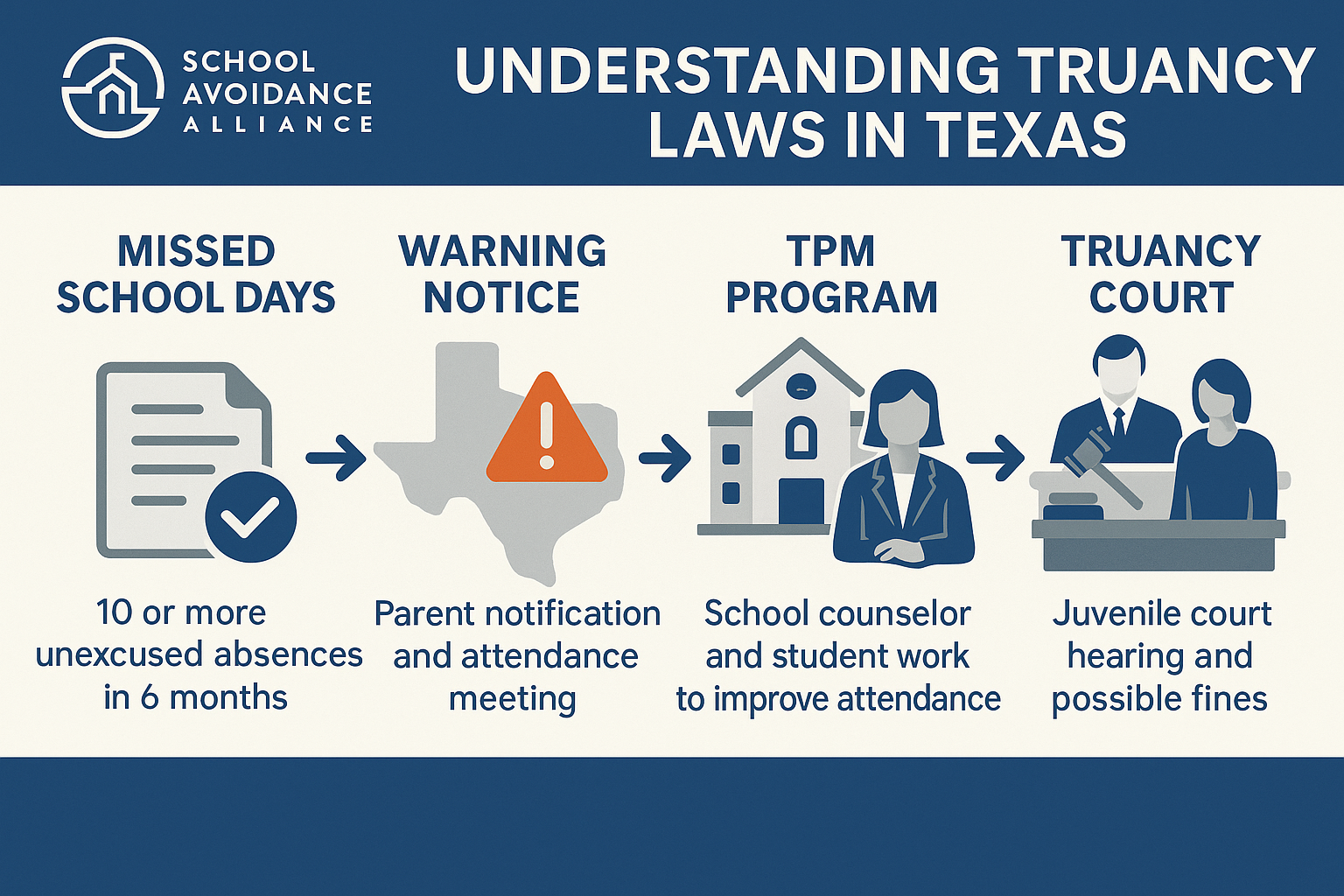
If truancy prevention measures fail and a student continues to accrue unexcused absences, legal action can be pursued.
-
For Students: A student who is 12 years of age or older at the time the conduct occurs and is absent from school without excuse for 10 or more days or parts of days within a six-month period in the same school year, or three or more days or parts of days within a four-week period, can be referred to a truancy court. These cases are heard in a Justice of the Peace court or a Municipal Court. If found guilty, consequences for students can include fines (up to $500), court costs, community service, or required attendance in educational programs. These legal proceedings can be stressful and disruptive, impacting both the student’s academic life and the family’s overall well-being.
-
For Parents/Guardians: Parents or guardians can also face charges under the Texas Penal Code if they “fail to require a child to attend school.” This offense, known as “Parent Contributing to Nonattendance,” can result in a fine of up to $500 per violation. The law aims to ensure parental responsibility in enforcing school attendance. For families engaged in extensive travel, a lack of communication with the school or inadequate planning for educational continuity during trips could inadvertently lead to such charges. It’s a stark reminder that even the most well-intentioned travel plans need to align with educational mandates.
Exemptions and Excused Absences: Navigating the System
While the rules around unexcused absences are strict, Texas law and individual school district policies do provide for various types of excused absences. Understanding these exemptions is key for parents to manage their child’s attendance proactively and avoid truancy issues.
Valid Reasons for Absence
Common reasons for excused absences include:
- Personal Illness: A student’s temporary physical or mental illness, typically requiring a doctor’s note for extended or frequent absences.
- Medical/Dental Appointments: Scheduled appointments with healthcare providers. Documentation from the provider is usually required.
- Death in Immediate Family: Time off for funerals or mourning periods.
- Religious Holy Days: Absences for religious observations, provided they are sanctioned by a religious organization.
- Court Appearances: If the student is subpoenaed or required to appear in court.
- Approved Extracurricular Activities: Participation in school-sponsored events, field trips, or competitions.
- Activities Related to Mental Health: Including mental health appointments, counseling sessions, or related treatment programs, with proper documentation.
Crucially, Texas law also permits a student to be excused for up to two days for the purpose of visiting a college or university, provided the student is a junior or senior and has prior approval from the school. This specific exemption highlights the state’s support for higher education exploration.
Family Vacations and Educational Travel
This is where the intersection of school attendance and the website’s focus on travel, tourism, and lifestyle becomes most pertinent. Generally, family vacations are not automatically considered excused absences in Texas. Taking a child out of school for a leisure trip without prior approval from the school administration will typically result in unexcused absences.
However, some school districts may offer provisions for “educational leave” or “pre-approved absences for educational purposes.” If a family trip has a significant educational component—perhaps visiting historical landmarks, experiencing diverse cultures, or engaging in a learning-focused adventure—parents might be able to request an excused absence. This usually requires:
- Prior Approval: Submitting a request to the school administration well in advance, outlining the dates and educational objectives of the trip.
- Educational Justification: Providing a clear explanation of how the trip will contribute to the student’s learning and development.
- Completion of Missed Work: Agreeing to ensure the student completes all missed assignments and coursework.
Each school district’s policy on educational leave will vary, so direct communication with the principal or attendance officer is essential. Some districts are more flexible, recognizing the value of experiential learning, while others may adhere more strictly to the standard excused absence criteria. For families who frequently travel, building a strong relationship with school staff and proactively communicating travel plans can significantly smooth the process.
Impact on Family Travel and Planning Your Texas Adventures
For globetrotting families or those simply keen on exploring the rich tapestry of Texas itself, understanding these attendance rules isn’t just a legal necessity; it’s a critical component of responsible travel planning. Imagine a dream trip to explore the Big Bend National Park or a cultural immersion in Austin’s vibrant music scene. These experiences, while invaluable, must be harmonized with school commitments.
Proactive Planning and Communication
The golden rule for combining travel with schooling in Texas is proactive planning and open communication.
- Review District Policy: Before booking flights or making hotel reservations for that boutique stay in Galveston or a resort in South Padre Island, familiarize yourself with your specific school district’s attendance policy, particularly regarding non-medical or non-emergency absences.
- Speak to School Administration: Engage with your child’s teacher, counselor, or principal well in advance of any planned travel. Discuss the dates, duration, and potential educational aspects of your trip. Inquire about the process for requesting an excused absence for educational travel.
- Academic Preparation: Work with teachers to obtain assignments, reading materials, or projects that can be completed during the trip. This demonstrates a commitment to your child’s education and can make the case for an excused absence stronger. Many schools also leverage online learning platforms that can facilitate remote engagement during short trips.
- Consider Timing: Whenever possible, schedule extensive travel during school holidays, summer breaks, or long weekends to minimize disruption to academic instruction and avoid accumulating unexcused absences.

Balancing Experiential Learning with Formal Education
While formal classroom instruction is vital, experiential learning gained through travel can be incredibly enriching, fostering global awareness, cultural understanding, and practical life skills. For families committed to both, the challenge lies in striking a balance.
- Integrate Learning: Frame your travel plans with educational objectives. Visiting historical sites, exploring museums, learning about local ecosystems, or engaging with different cultures can be powerful learning opportunities. Document these experiences through journaling, photography, or project-based learning to present to the school.
- Utilize Technology: Leverage educational apps, online courses, and virtual tours to supplement learning while on the road. Many Texas schools utilize platforms that allow students to access materials and communicate with teachers from anywhere.
- Prioritize Attendance: Recognize that while travel is valuable, consistent school attendance is a legal requirement and fundamental for academic continuity. Make informed decisions, understanding the potential impact of prolonged absences on your child’s grades, credit accumulation, and overall academic standing.
In conclusion, the question of “How many unexcused absences are allowed in Texas?” doesn’t have a simple, fixed number that guarantees immunity from consequences. Instead, it revolves around thresholds (three in four weeks, ten in six months), the distinction between excused and unexcused absences, and the 90% attendance rule for course credit. For families who enjoy the vibrant lifestyle of travel and exploration, managing school attendance effectively requires diligence, open communication with school authorities, and a clear understanding of the legal framework in Texas. By doing so, you can ensure your child benefits from both a robust education and the invaluable experiences that travel offers, making for a truly enriching upbringing in the Lone Star State.
LifeOutOfTheBox is a participant in the Amazon Services LLC Associates Program, an affiliate advertising program designed to provide a means for sites to earn advertising fees by advertising and linking to Amazon.com. Amazon, the Amazon logo, AmazonSupply, and the AmazonSupply logo are trademarks of Amazon.com, Inc. or its affiliates. As an Amazon Associate we earn affiliate commissions from qualifying purchases.