
The vast and diverse landscape of Texas, often dubbed the Lone Star State, is a beacon for travelers, history buffs, and business professionals alike. From the bustling metropolises of Dallas and Houston to the rugged, awe-inspiring beauty of its western deserts, Texas offers an unparalleled array of experiences. However, one question frequently arises for those planning a visit or considering a move: “Is Texas in Central Time?” While largely true, the answer is not a simple yes, and understanding the nuances of Texas’ time zones is crucial for seamless travel, efficient business operations, and an overall enriched experience of this magnificent state.
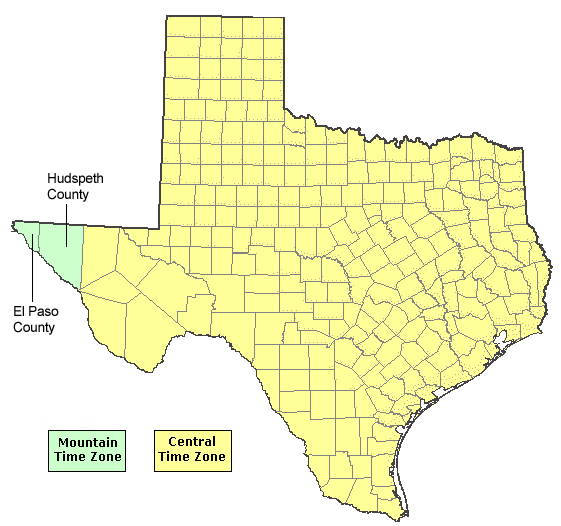
For most of its expansive geography, Texas proudly operates within the Central Time Zone (CT). This includes its major population centers and iconic tourist destinations, meaning that the rhythm of life for millions of Texans and visitors aligns with this specific time standard. However, the state’s westernmost regions, particularly around the vibrant city of El Paso, observe Mountain Time (MT). This dual time zone reality is a fascinating aspect of Texas that impacts everything from flight schedules and hotel bookings to the timing of local festivals and the coordination of business meetings. Delving into the specifics of these time zones is not just a matter of curiosity; it’s a practical necessity for anyone looking to fully explore and engage with all that Texas has to offer. Whether you’re planning a luxury escape, a budget-friendly family trip, or an essential business stay, knowing your time zone is the first step towards an unforgettable Texas adventure.
A Geographical Overview: The Dual Time Zones of Texas
Texas’ immense size is perhaps its most defining geographical feature, spanning over 268,000 square miles. This vastness necessitates a division into two distinct time zones, reflecting the practicalities of daylight hours and administrative alignment with neighboring states. Understanding where these divisions lie is fundamental to appreciating the state’s unique temporal tapestry.
The Dominance of Central Time
The vast majority of Texas falls squarely within the Central Time Zone. This includes all of the state’s major population centers and bustling urban hubs. Cities like Dallas, known for its thriving arts scene and impressive skyline, and Houston, a global hub for space exploration and energy, operate on CT. Similarly, the state capital, Austin, famous for its live music and vibrant culture, along with San Antonio, home to the historic The Alamo, also observe Central Time.
For travelers arriving in these major airports, booking accommodations, or attending conferences, Central Time is the standard to follow. This uniformity across most of the state simplifies travel planning for domestic and international visitors alike. Whether you’re exploring the upscale boutiques in Dallas, enjoying the culinary delights of Houston, or soaking in the history of San Antonio, your clocks will be set to CT, which is typically six hours behind Coordinated Universal Time (UTC-6) during standard time and five hours behind (UTC-5) during Daylight Saving Time. This makes scheduling tours, restaurant reservations, and attraction visits straightforward across most of the state’s popular destinations.
The Western Exception: Embracing Mountain Time
While Central Time covers the lion’s share of Texas, the westernmost part of the state, particularly the Trans-Pecos region, observes Mountain Time (MT). The most notable city in this time zone is El Paso, which shares a border with New Mexico and is geographically closer to the states that predominantly observe Mountain Time, such as Arizona and New Mexico. Historically, aligning with Mountain Time made more sense for El Paso due to its strong economic and cultural ties with its western neighbors.
Specifically, El Paso County and a portion of Hudspeth County officially operate on Mountain Time. This means that if you’re traveling from, say, Austin to El Paso, you’ll need to adjust your clock back one hour upon arrival. Mountain Time is typically seven hours behind Coordinated Universal Time (UTC-7) during standard time and six hours behind (UTC-6) during Daylight Saving Time. This shift is a critical consideration for any itinerary that bridges the vast distances between Central and Western Texas, influencing everything from flight connections to the timing of sunset over the rugged mountains. Even Big Bend National Park, despite its far-western location and proximity to the Mountain Time Zone, predominantly observes Central Time for park operations, adding another layer of complexity that savvy travelers must keep in mind.
Navigating Time Zones for Seamless Texas Travel
Understanding the dual time zones in Texas is more than just a trivia fact; it’s a practical guide for ensuring your travel plans unfold smoothly. Whether you’re on a meticulous business trip or a relaxed family vacation, a small oversight in time zone calculation can lead to missed connections, late arrivals, or an unnecessarily rushed experience.
Planning Your Itinerary: Flights, Road Trips, and Tours
For those arriving by air, the time zone difference primarily impacts long-haul flights into El Paso International Airport from other parts of Texas or the broader United States. A flight from Houston to El Paso might depart at 10:00 AM CT but arrive at 11:00 AM MT, effectively taking two hours in travel time, despite the one-hour numerical difference. This adjustment is crucial for connecting flights or pre-booked airport transfers.
Road trips across the state are where the time zone change becomes most apparent. Imagine driving from San Antonio to El Paso – a journey that spans over 500 miles and several hours. Upon crossing into Hudspeth County from the east, you will physically enter the Mountain Time Zone. Road signs often indicate the change, but having your phone’s time settings on automatic update is highly recommended. For guided tours or excursions, always confirm the departure and return times with the tour operator, specifying their local time zone. This ensures you’re not left behind for a breathtaking Guadalupe Mountains National Park sunrise tour because you were operating on Central Time. Travel guides and destination apps are invaluable resources for real-time information and planning.
Accommodation and Hospitality: Checking In Across Time
The impact of time zones extends directly to your accommodation experience. Hotels, resorts, apartments, and villas all operate on their local time. For example, a 3:00 PM check-in at a Dallas hotel means 3:00 PM CT. If you’re arriving at an El Paso hotel after a long drive from Austin, remember that 3:00 PM local time is actually 4:00 PM for your internal clock, potentially making you feel later than you actually are.
When booking accommodation online, particularly through comparison sites or direct hotel websites, always double-check the listed check-in/check-out times against the property’s local time zone. This is especially critical for those with tight schedules or early morning departures. Likewise, scheduled amenities such as breakfast hours, spa appointments, or shuttle services will adhere to the hotel’s local time. For long-term stays or business travelers, coordinating with colleagues in different parts of Texas means constantly being aware of the one-hour shift between CT and MT, a small detail that can prevent missed calls or delayed meetings. Reputable hotels often provide clear guidance on their local time, but it never hurts to confirm upon booking and arrival.
Experiencing Texas: Iconic Landmarks Across Time Zones
Texas is brimming with iconic landmarks, from historic sites that echo tales of independence to natural wonders that showcase the state’s incredible biodiversity. The operating hours of these attractions, just like any other business, are governed by their local time zones, a detail that can significantly influence your sightseeing schedule.
Central Time Zone Treasures: Bustling Cities and Historic Sites
Within the sprawling Central Time Zone, Texas offers a wealth of destinations. In San Antonio, visitors flock to The Alamo, a site steeped in revolutionary history, along with the scenic River Walk. Both operate on CT, typically opening around 9:00 AM and closing in the late afternoon or early evening. Similarly, in Houston, a visit to Space Center Houston, where you can marvel at space artifacts and learn about NASA’s missions, also adheres to Central Time.
Dallas, a hub for culture and commerce, boasts the magnificent Dallas Arts District with its world-class museums and performance venues. All these attractions, along with the city’s myriad dining and entertainment options, strictly follow Central Time. When planning your visits, always consult the official websites for the most up-to-date operating hours, especially considering seasonal changes or special events that might alter schedules. Factor in travel time between different sites, ensuring you don’t underestimate the time needed to move between these magnificent, yet sprawling, urban attractions.
Mountain Time Zone Wonders: Desert Landscapes and Frontier Towns
Shifting gears to Mountain Time, the western part of Texas presents a dramatic contrast with its rugged desert landscapes and unique cultural heritage. The city of El Paso itself is a landmark, serving as a gateway to the region’s natural beauty. Attractions like the Franklin Mountains State Park, offering incredible hiking and panoramic views, open and close according to Mountain Time.
Further afield, but still within the general region, lies Guadalupe Mountains National Park, a true marvel for outdoor enthusiasts. This park, home to Texas’ highest peak, Guadalupe Peak, is definitively in the Mountain Time Zone. For campers, hikers, and stargazers, aligning with the park’s local time is essential for everything from checking into campsites to participating in ranger-led programs. Always confirm entrance fees, trail access, and visitor center hours based on MT when planning your adventure in this stunning, often remote, part of Texas. These western wonders offer a different pace of life, where the vastness of the landscape often dictates the rhythm, but time zones remain a critical practical consideration.
Lifestyle and Local Culture: The Rhythm of Texas Time
Beyond travel logistics and landmark visits, the division of Texas into two time zones subtly influences the daily lifestyle and local culture, creating distinct rhythms in different parts of the state. From how businesses conduct operations to when communities gather for festivities, time is a silent determinant.
Business, Daily Life, and Remote Work Considerations
For businesses operating across Texas, particularly those with offices or clients in both Central Time and Mountain Time, strategic scheduling is paramount. A 9:00 AM meeting for an employee in Houston means 8:00 AM for a colleague in El Paso, requiring careful coordination to avoid miscommunications or disruptions. Many companies adopt unified communication platforms that display participant time zones automatically, but individual awareness remains key. This is especially true for the growing contingent of remote workers who might be collaborating with teams across these geographical divides.
Daily life for residents is also shaped by their local time zone. School start times, banking hours, and government office operations all adhere to CT in the east and MT in the west. This alignment fosters a localized sense of community rhythm, ensuring that daily routines flow efficiently within each zone. However, if a family member is in a different time zone, phone calls and virtual gatherings require that extra bit of planning, becoming a familiar part of life in such a sprawling state.

Dining, Entertainment, and Community Events
For tourists and locals alike, the timing of dining and entertainment experiences is directly linked to the local time zone. Restaurants in Dallas will open for dinner at 5:00 PM CT, while a similar establishment in El Paso will open at 5:00 PM MT. This seemingly obvious point can become a minor annoyance for travelers whose internal clocks are still adjusting, potentially leading to arriving too early or too late for reservations if not properly accounted for.
Local cultural events, festivals, and sporting events also operate on their respective time zones. A concert scheduled for 7:00 PM in Austin will be 7:00 PM CT, while a rodeo in a West Texas town operating on Mountain Time would follow its MT schedule. This is particularly relevant for those planning to immerse themselves in local culture, as missing the start of a parade or a live music performance due to a time zone miscalculation can detract from the overall experience. Always verify event schedules with local sources or official tourism guides, and set reminders according to the local time zone of your destination to truly embrace the unique rhythm of each Texas region.
In conclusion, the question “Is Texas in Central Time?” is best answered with a resounding “mostly, but not entirely.” The vast majority of the state, including its most populous cities and popular travel destinations, observes Central Time. However, the westernmost segment, primarily El Paso and parts of Hudspeth County, operates on Mountain Time, creating a fascinating temporal divide. For any traveler or business person engaging with the Lone Star State, acknowledging and planning for this dual time zone reality is paramount.
From booking hotels and coordinating flights to visiting historic landmarks and immersing yourself in local culture, a conscious awareness of whether you are in CT or MT will streamline your experience. Always cross-reference schedules, set your devices to automatic time updates, and don’t hesitate to confirm times with local establishments. This simple yet critical detail ensures that your journey through Texas, whether for leisure or business, is as smooth, enjoyable, and time-efficient as possible, allowing you to fully appreciate the incredible diversity and grandeur of this remarkable state.
LifeOutOfTheBox is a participant in the Amazon Services LLC Associates Program, an affiliate advertising program designed to provide a means for sites to earn advertising fees by advertising and linking to Amazon.com. Amazon, the Amazon logo, AmazonSupply, and the AmazonSupply logo are trademarks of Amazon.com, Inc. or its affiliates. As an Amazon Associate we earn affiliate commissions from qualifying purchases.