
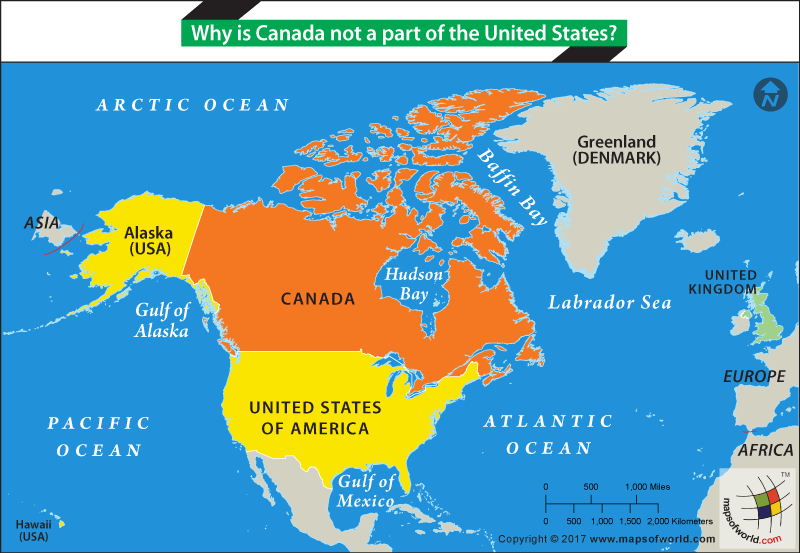
The vast, wild expanse of Alaska, known for its dramatic landscapes, abundant wildlife, and rugged frontier spirit, holds a unique place on the map of North America. Bordering Canada to the east and the Arctic Ocean to the north, its geographical proximity often prompts a curious question: why isn’t Alaska part of Canada? The answer lies not in geography, but in a fascinating tapestry of historical events, strategic geopolitical maneuvers, and the opportune moment of a monumental transaction between two powerful nations. This story unravels in the mid-19th century, revealing how the ambition of the United States and the declining fortunes of the Russian Empire converged, ultimately shaping the political boundaries we recognize today and turning a seemingly desolate land into a prime destination for travel and exploration.

The Dawn of a New World: Russian Exploration and Claims
The narrative of Alaska’s ownership begins much earlier than its purchase by the United States. It starts with the eastward expansion of the Russian Empire across Siberia, eventually leading its explorers to the shores of what would become Alaska. In 1741, the Danish-born explorer Vitus Bering, sailing under the Russian flag, embarked on a perilous voyage that would mark the official “discovery” of Alaska by Europeans. His expedition, though tragic for many involved, opened up a lucrative new frontier for Russia: the fur trade.
Early Encounters and the Fur Trade
The initial contact between Russian trappers and the indigenous Alaska Natives was often fraught with conflict, yet it quickly led to the establishment of scattered trading posts. The immense wealth generated from sea otter pelts, highly prized in markets across Asia and Europe, spurred further Russian expansion. By the late 18th century, several private Russian trading companies were operating in the region. To consolidate control and maximize profits, Emperor Paul I granted a monopoly to the Russian-American Company in 1799. This powerful, state-sponsored corporation became the de facto governing body of Russian Alaska for the next seven decades.
The Russian-American Company established its primary settlement at Sitka (then named New Archangel), which served as the administrative capital of Russian America. From this base, the company managed its vast trapping operations, engaged in trade, and even extended its influence southwards, establishing Fort Ross in California in the early 19th century. However, despite its early success, the vast distances, harsh climate, and the depletion of fur resources made maintaining and defending its distant North American possessions an increasingly challenging and expensive endeavor for the Russian Empire. The realization that Alaska was more of a liability than an asset began to set in, paving the way for one of history’s most significant real estate transactions.
A Deal of the Century: The Alaska Purchase
The mid-19th century was a tumultuous time on the global stage, marked by wars, shifting alliances, and burgeoning imperial ambitions. It was against this backdrop that the fate of Russian Alaska was decided, culminating in its sale to the United States rather than its northern neighbor, Canada.
Russia’s Strategic Retreat
Several factors contributed to Russia’s decision to sell Alaska. The most pressing was the financial strain imposed by the recent Crimean War (1853-1856), a devastating conflict against an alliance of the Ottoman Empire, France, Sardinia, and Great Britain. The war had depleted the Russian Empire’s treasury and demonstrated the immense logistical challenges of projecting power across vast distances. Maintaining a remote colony like Alaska, with its sparse population and dwindling fur resources, became an unsustainable burden.
Furthermore, Russia harbored a deep-seated fear that Alaska would inevitably fall into the hands of its rival, Great Britain. With British Canada bordering Alaska to the east, and a formidable British naval presence in the Pacific Ocean, Russia felt its North American territory was vulnerable to invasion. Selling Alaska to the United States was seen as a strategic move to prevent it from strengthening a primary geopolitical competitor, while simultaneously fostering goodwill with an emerging continental power. Emperor Alexander II recognized that holding onto Alaska was simply not worth the cost or the risk.
America’s Bold Acquisition
On the American side, the idea of acquiring Alaska was championed by William H. Seward, the then-Secretary of State under President Andrew Johnson. Seward was a staunch expansionist, a proponent of what was often termed “Manifest Destiny” – the belief in the inevitable westward expansion of the United States across the North American continent. He saw Alaska as a crucial strategic asset, offering potential resources, naval bases, and a significant boost to American influence in the Pacific. The recent conclusion of the American Civil War in 1865 had also fostered a renewed sense of national purpose and a desire for expansion.
The negotiations between Russia and the United States were remarkably swift and secretive. On March 30, 1867, a treaty of cession was signed in Washington D.C. The purchase price was set at $7.2 million, a sum that, at the time, amounted to approximately two cents per acre for 586,412 square miles of land. This represented an extraordinary bargain for one of the world’s largest tracts of undeveloped territory. Despite initial skepticism from some members of Congress, who derided the acquisition as “Seward’s Folly” or “Seward’s Icebox,” the Senate ratified the treaty by a significant margin, followed by the necessary appropriations from the House of Representatives. The formal transfer ceremony took place on October 18, 1867, in Sitka, marking the end of Russian presence in North America and the beginning of Alaska’s journey as an American territory.
The Uncharted Path: Why Canada Wasn’t a Contender
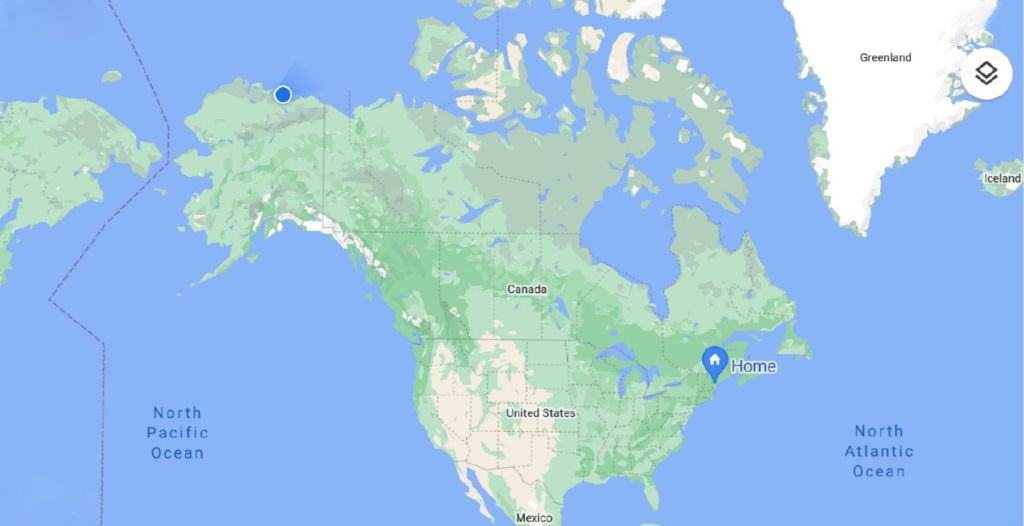
The absence of Canada in the negotiations for Alaska is a critical piece of the puzzle, and it speaks volumes about the political landscape of North America in the mid-19th century. At this pivotal moment, Canada simply wasn’t in a position to make such a grand acquisition.
A Nation in Formation
In 1867, the year the Alaska Purchase was finalized, Canada as a unified nation was still in its nascent stages. The Confederation, which brought together several British North America colonies to form the Dominion of Canada, had only just occurred on July 1, 1867, mere months before the formal transfer of Alaska to the United States. At this time, the new dominion was primarily focused on consolidating its existing territories, establishing its internal governance, and fending off potential American expansionist desires, particularly during and after the American Civil War.
The newly formed Dominion of Canada did not possess an independent foreign policy-making apparatus nor the substantial financial resources required for such a large-scale territorial acquisition. Its external affairs and major policy decisions were still largely dictated by Imperial Britain. Therefore, even if the idea had been contemplated, the practical and political mechanisms for Canada to enter into negotiations for the purchase of Alaska simply did not exist.
British Ambivalence and American Ambition
Great Britain, as the imperial power governing Canada, was also not interested in purchasing Alaska. After the Crimean War, the British government recognized the strategic vulnerabilities of remote, sparsely populated colonies and was more concerned with solidifying its holdings and protecting its vast empire elsewhere. For Britain, the financial outlay and the administrative burden of acquiring and developing Alaska would have been immense, with questionable returns. Furthermore, selling to the United States served Russia’s strategic interest of creating a buffer against British influence in the Pacific and North America.
The United States, on the other hand, was aggressively pursuing its vision of continental expansion. The post-Civil War era saw a surge in national confidence and a desire to project American power. William H. Seward’s persistent advocacy for the purchase aligned perfectly with this burgeoning national spirit. The timing was impeccable: Russia was keen to sell, Great Britain was indifferent, and the United States was ready and able to buy. This confluence of circumstances ensured that Alaska’s destiny lay with the United States, not its northern neighbor, which was still finding its feet as a nation.
Alaska’s Enduring Legacy: From Barren Land to Tourist Gem
The initial skepticism surrounding the Alaska Purchase quickly evaporated as the territory revealed its immense value, transforming from “Seward’s Folly” into one of America’s most strategically important and naturally beautiful assets. Today, Alaska stands as a testament to the foresight of those who saw beyond the ice and barren landscapes, offering unparalleled experiences for travelers and adventurers.
A Land of Riches and Strategic Importance
The true worth of Alaska began to unfold with the discovery of gold. The Klondike Gold Rush of the late 1890s, though primarily centered in Canada’s Yukon territory, brought thousands of prospectors through Alaska, spurring the growth of towns and infrastructure. Later discoveries of vast oil reserves, particularly in the North Slope at Prudhoe Bay, cemented Alaska’s economic significance, making it a vital source of energy for the United States. Beyond gold and oil, Alaska is rich in timber, fish, and other natural resources.
Its strategic importance was further highlighted during World War II, when the Aleutian Islands Campaign saw Japanese forces briefly occupy parts of the Aleutian Islands, underscoring Alaska’s role in North American defense. During the Cold War, Alaska’s proximity to the Soviet Union made it a critical outpost for military installations and early warning systems. These events firmly established Alaska as a cornerstone of American security and economic prosperity.
Modern Alaska: A Premier Travel Destination
Today, Alaska is much more than just a resource-rich, strategically important state; it is a world-class travel destination. Its unparalleled natural beauty attracts millions of visitors seeking adventure, tranquility, and unique cultural experiences. For those planning a trip, Alaska offers a diverse range of attractions that cater to every lifestyle, from luxury travel to budget-friendly family trips.
Travelers can embark on unforgettable journeys through majestic national parks like Denali National Park, home to North America’s highest peak, Denali, where wildlife viewing opportunities are abundant. Glacier Bay National Park offers breathtaking views of tidewater glaciers and marine life, often best experienced on a cruise through the iconic Inside Passage. The allure of seeing the magical Northern Lights dancing across the night sky draws visitors to destinations like Fairbanks during the darker months, providing an ethereal spectacle.
Cities such as Anchorage, the state’s largest city, and the charming capital, Juneau, offer excellent bases for exploring the surrounding wilderness, with a wide array of hotels, resorts, and apartments to suit any accommodation preference. Visitors can find everything from boutique hotels offering exquisite amenities to cozy cabins for a more rustic experience. Expert guides are readily available for activities like fishing, hiking in places like Chugach State Park, or even traversing the legendary Alaska Highway. The local culture, rich with indigenous traditions and frontier history, provides a vibrant backdrop for tourism, with opportunities to savor unique Alaskan cuisine and explore local crafts. Alaska truly offers an unparalleled experience, making it a must-visit for any discerning traveler.
In conclusion, Alaska is not part of Canada due to a specific historical confluence of Russian financial woes, British disinterest, and American expansionist ambitions. This pivotal moment in 1867 forever altered the geopolitical map of North America, creating a state that, despite its initial cold reception, has since blossomed into a land of profound economic importance and captivating natural beauty, standing as a premier destination on the global travel stage.
LifeOutOfTheBox is a participant in the Amazon Services LLC Associates Program, an affiliate advertising program designed to provide a means for sites to earn advertising fees by advertising and linking to Amazon.com. Amazon, the Amazon logo, AmazonSupply, and the AmazonSupply logo are trademarks of Amazon.com, Inc. or its affiliates. As an Amazon Associate we earn affiliate commissions from qualifying purchases.