
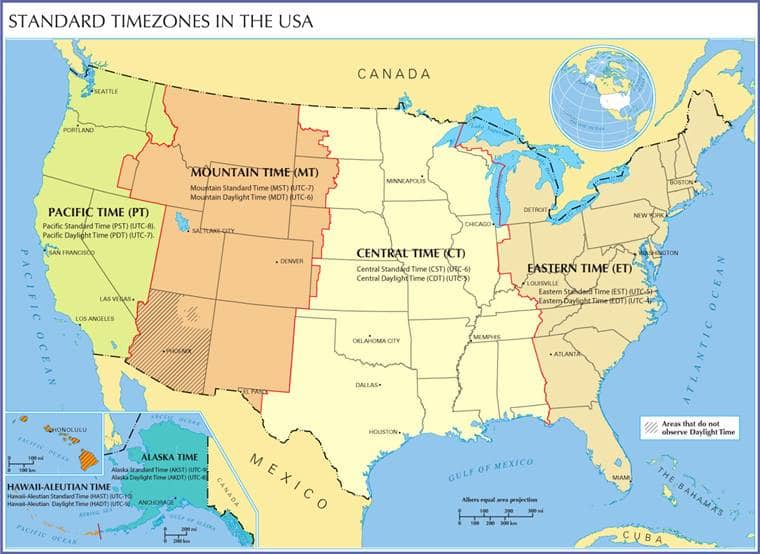
For travelers heading to the southwestern United States, particularly the captivating state of Arizona, understanding the local time can be surprisingly counterintuitive. While much of the nation “springs forward” and “falls back” with Daylight Saving Time (DST), Arizona largely dances to its own timeless beat. The simple answer to “What’s the time in Arizona?” is that the state primarily observes Mountain Standard Time (MST) year-round, making it a unique geographical and chronological curiosity that significantly impacts everything from travel planning and hotel bookings to local tourism experiences and the overall lifestyle enjoyed by residents and visitors alike.

This distinctive approach to timekeeping, rooted in practical considerations and historical decisions, means that during roughly half the year, Arizona aligns with Pacific Daylight Time (PDT), sharing the same clock as cities like Los Angeles and Las Vegas. For the other half, when other Mountain Time Zone states shift to Mountain Daylight Time (MDT), Arizona remains an hour behind them. This peculiarity is more than just a fun fact; it’s a crucial piece of information for anyone planning an adventure in the Grand Canyon State, influencing everything from flight schedules and attraction opening hours to coordinating business calls and sunset hikes.
Understanding Arizona’s Unique Time Zone Dance
The primary reason Arizona does not observe Daylight Saving Time dates back to the early 1970s. The argument against it largely revolved around the state’s extreme summer heat. With average daytime temperatures often soaring well above 100°F (38°C), extending daylight into the evening would mean even more hours of scorching sun. Residents preferred an earlier sunrise to start their day’s activities before the worst of the heat set in, and an earlier sunset to allow for cooler evenings. This practical desire for comfort and energy conservation led to the state’s exemption from DST, making it one of only two states (the other being Hawaii) to largely forego the time change.
The Navajo Nation Exception
While most of Arizona sticks to Mountain Standard Time (UTC-7) year-round, there’s one significant exception: the Navajo Nation. This vast autonomous territory, sprawling across northeastern Arizona, New Mexico, and Utah, does observe Daylight Saving Time. The decision to observe DST was made to align with the rest of the Navajo Nation’s territory, which spans multiple states, and to maintain uniformity in tribal operations, school schedules, and business dealings across its expansive lands.
This means that for a few months each year, if you travel from, say, Flagstaff (MST) to Monument Valley (which is within the Navajo Nation and observes MDT during DST), you would need to adjust your clock forward by one hour. Conversely, traveling from Monument Valley back into the rest of Arizona would require setting your clock back. This unique nuance is particularly important for tourists planning visits to iconic sites like Antelope Canyon, Canyon de Chelly National Monument, or the Grand Canyon’s east entrance, all of which are on Navajo Nation land. Always double-check local times, especially when crossing into or out of tribal lands, to avoid missing tours or appointments.
Navigating Travel and Tourism in the Grand Canyon State
The fixed time zone in Arizona profoundly impacts how visitors plan their trips, from booking flights and hotels to scheduling excursions and enjoying local culture. For the savvy traveler, understanding this time difference is key to a seamless and stress-free vacation.
Planning Your Itinerary and Bookings
When traveling to Arizona, particularly during the spring, summer, and early fall months when DST is observed in other states, time zone calculations become paramount.
- Flights: If you’re flying into Phoenix Sky Harbor International Airport (PHX) or Tucson International Airport (TUS) from a state that observes DST, remember that your arrival time might effectively be an hour “earlier” than what your body clock expects if you’re coming from the Pacific Time Zone, or an hour “later” if coming from the Mountain Daylight Time zone. This can affect connecting flights, ground transportation, and early check-ins.
- Hotel Check-ins and Check-outs: Most hotels and resorts across Arizona — from luxury properties like The Phoenician, a Luxury Collection Resort, Scottsdale and JW Marriott Desert Ridge Resort & Spa in Phoenix, to family-friendly options like Great Wolf Lodge Arizona in Scottsdale — will operate strictly on Mountain Standard Time. Ensure your booking confirmations reflect this local time to avoid any misunderstandings regarding arrival or departure. This also applies to booking long-term stays or comparing accommodation options; always verify the local time settings of any digital calendars or booking platforms you use.
- Tour Reservations: Booking tours for popular attractions such as the Grand Canyon National Park, Hoover Dam, or various Sedona vortex hikes requires careful attention to time. Remember the Navajo Nation exception when visiting sites like Antelope Canyon or Monument Valley, as these will follow Mountain Daylight Time during the summer. Missing a scheduled tour because of a time zone miscalculation can be a costly and frustrating mistake.
- Restaurant Reservations: For travelers from California, Nevada, or other Pacific Time Zone states during DST, dining out in Arizona will feel like it’s an hour earlier. An 8 PM dinner reservation in Scottsdale will feel like 7 PM to your body, potentially making for a very late evening if you’re not prepared.

Experiencing Arizona’s Attractions and Culture
The consistent Mountain Standard Time also subtly shapes the rhythm of daily life and tourism activities across Arizona.
- Outdoor Activities: The earlier sunrises during summer months (relative to DST-observing states) are a blessing for those eager to explore the Sonoran Desert. Early morning hikes in Saguaro National Park, Camelback Mountain in Phoenix, or the red rocks of Sedona are cooler and more pleasant. Conversely, sunsets arrive earlier than in DST regions, providing breathtaking golden hour views at destinations like Papago Park or Lake Havasu City.
- Museums and Gardens: Visiting hours for cultural landmarks such as the Heard Museum or the Desert Botanical Garden in Phoenix will always be based on local MST. It’s wise to confirm operating hours directly, especially if your travel dates fall around the DST transition periods elsewhere.
- Local Culture and Events: Farmers’ markets, street festivals in Old Town Scottsdale, or performances in Tucson will adhere to the local Mountain Standard Time. Embracing this consistent schedule can actually simplify planning once you’re on the ground, as you don’t need to worry about a time shift messing up your internal clock halfway through your trip.
Accommodation and Lifestyle: Adjusting to Arizona Time
Beyond travel itineraries, Arizona’s unique time zone impacts the broader lifestyle experience for both short-term visitors and those considering longer stays. From luxury retreats to budget-friendly adventures, the steady clock influences daily rhythms and communication.
Smooth Stays for Every Traveler
Regardless of your travel style, a mindful approach to Arizona’s time can enhance your experience.
- Luxury Travel: For guests indulging in spa treatments at Four Seasons Resort Scottsdale at Troon North or enjoying fine dining at Omni Scottsdale Resort & Spa at Montelucia, understanding the local time ensures you’re punctual for every bespoke experience. A delayed arrival due to a time zone miscalculation can disrupt meticulously planned relaxation.
- Business Stays: Professionals attending conferences in Phoenix, Scottsdale, Tempe, or Mesa need to be particularly diligent. Coordinating calls with colleagues in New York, Chicago, or San Francisco requires constant awareness of the varying time differences. During DST, Arizona will be three hours behind Eastern Daylight Time (EDT), two hours behind Central Daylight Time (CDT), and the same time as Pacific Daylight Time (PDT). When DST ends, Arizona will be two hours behind Central Standard Time (CST), one hour behind Mountain Standard Time (MST) (for states that observed DST), and one hour ahead of Pacific Standard Time (PST). This consistent MST in Arizona can simplify communication with Pacific Time Zone counterparts during summer months, but complicates it with Mountain Time Zone ones.
- Family Trips: Managing children’s schedules, especially when transitioning across time zones, is always a challenge. The consistent time in Arizona can actually help minimize disruption once you’ve adjusted. Planning activities like visits to the Arizona-Sonora Desert Museum or Kartchner Caverns State Park around meal and nap times is easier when the clock isn’t changing.
- Budget Travel: Maximizing daylight hours for free outdoor activities or early bird specials becomes easier. You’ll know exactly how much light you have for exploring historic sites like Montezuma Castle National Monument or driving scenic Route 66 segments near Kingman.
Navigating Communication and Connectivity
The time difference can also affect personal communication and remote work. If you have friends or family in other states, be mindful of the time adjustments required for calls or video chats. Many smartphone clocks and computers will automatically adjust to Arizona’s time when you arrive, which is a great help, but manual verification is always a good practice, especially for important engagements. Remote workers need to be particularly cautious, as meeting schedules might appear to shift if their system isn’t correctly recognizing Arizona’s unique DST exemption.
Practical Tips for a Timeless Arizona Adventure
To ensure your trip to Arizona is as smooth as a Sonoran Desert sunset, here are some actionable tips:
- Always Confirm Times: When booking anything – flights, hotels, tours, restaurant reservations – always confirm the time explicitly in local Arizona time.
- Understand the Navajo Nation: If your itinerary includes destinations within the Navajo Nation (e.g., Antelope Canyon, Monument Valley, Canyon de Chelly National Monument), remember they do observe DST. Plan accordingly for that hour shift.
- Rely on Digital Devices: Most modern smartphones, smartwatches, and GPS devices will automatically adjust to the local time when you enter Arizona. Ensure your device’s automatic time zone setting is enabled.
- Communicate Clearly: When coordinating with people outside Arizona, specify that you are referring to “Arizona Time” or “Mountain Standard Time (No DST)” to avoid confusion.
- Embrace the Rhythm: The consistent time zone is part of Arizona’s unique charm. Embrace the earlier sunrises for morning adventures and the equally early sunsets that paint the desert sky, creating stunning backdrops for evening relaxation. This consistent rhythm can make for a more peaceful and predictable travel experience once you’ve adjusted your internal clock.
- Consider Your Origin: If you’re coming from the Pacific Time Zone during DST, Arizona will be on the same time as your home. If you’re coming from the Mountain Daylight Time zone, Arizona will be one hour behind. From the Central Daylight Time zone, Arizona will be two hours behind, and from Eastern Daylight Time, three hours behind.
In essence, while the rest of the world debates the merits of Daylight Saving Time, Arizona calmly adheres to its chosen path, providing a predictable clock for its stunning landmarks, vibrant cities like Glendale and Chandler, and rich cultural tapestry. This straightforward approach, with the crucial Navajo Nation exception, simplifies travel planning once understood, allowing visitors to focus on the myriad of incredible experiences awaiting them in the sun-drenched landscape. So, when you ask, “What’s the time in Arizona?” the answer is refreshingly simple: it’s Mountain Standard Time – all day, every day, almost everywhere.
LifeOutOfTheBox is a participant in the Amazon Services LLC Associates Program, an affiliate advertising program designed to provide a means for sites to earn advertising fees by advertising and linking to Amazon.com. Amazon, the Amazon logo, AmazonSupply, and the AmazonSupply logo are trademarks of Amazon.com, Inc. or its affiliates. As an Amazon Associate we earn affiliate commissions from qualifying purchases.