
The question of whether the Pilgrims founded Boston is a fascinating historical puzzle, often leading to a common misconception. While both the Pilgrims and the subsequent Puritan settlers played pivotal roles in shaping early New England, their stories, initial settlements, and motivations were distinct. For travelers exploring the rich historical tapestry of Massachusetts, understanding this distinction is key to truly appreciating the cultural depth and foundational narratives of these iconic American destinations. From walking the cobblestone streets of historic Boston to stepping back in time at Plimoth Patuxet Museums, the journey through New England‘s colonial past is an immersive experience that reveals more than just dates and names; it uncovers the very spirit of a nation.
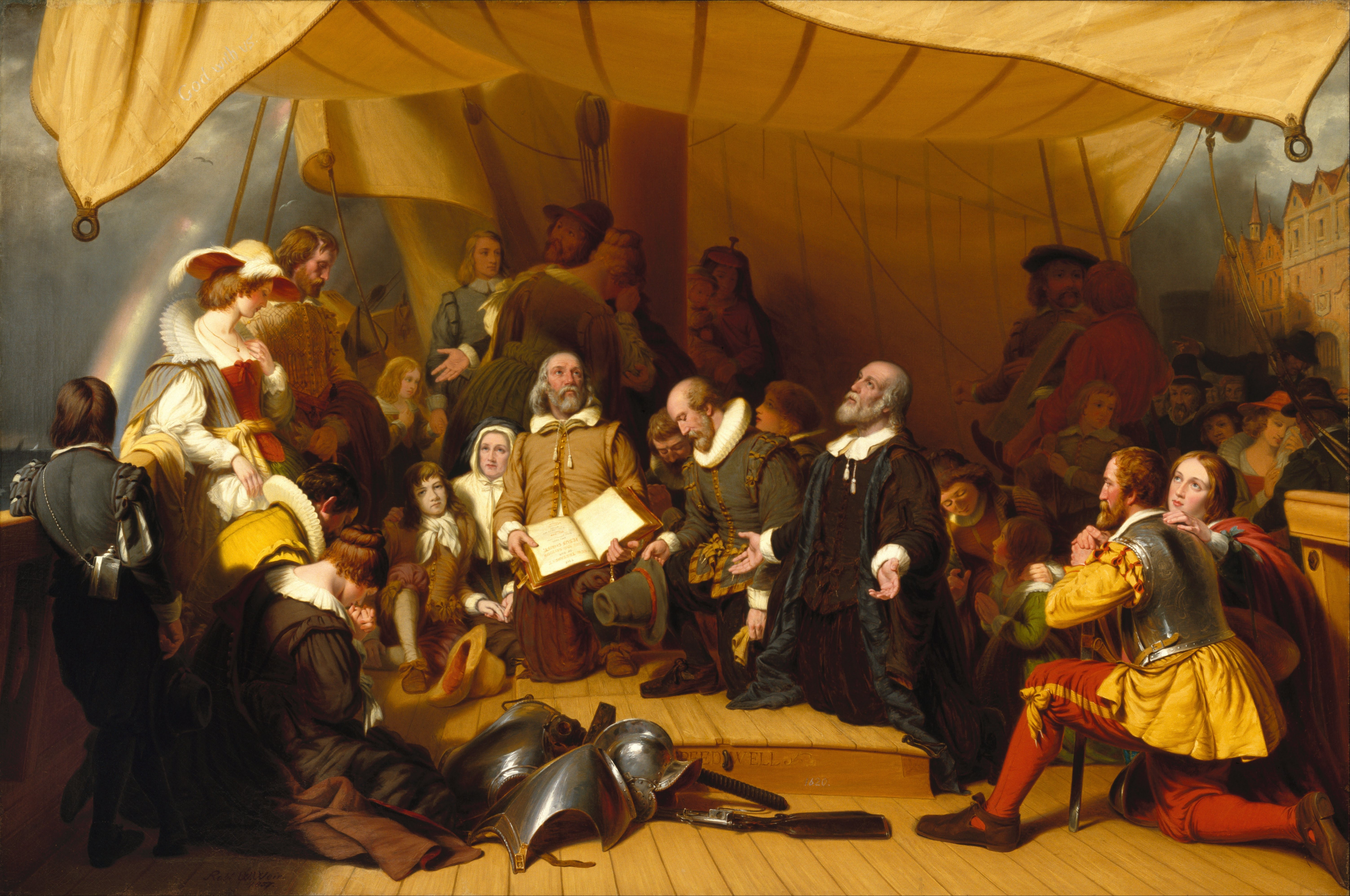
The allure of Boston as a travel destination lies not just in its vibrant modern culture, renowned universities, and thriving culinary scene, but significantly in its profound historical roots. Visitors often arrive eager to connect with the origins of American democracy, the Revolutionary War, and the enduring legacy of early European settlement. However, the narrative around the Pilgrims and their connection to Boston often blurs. The simple answer to the question is no, the Pilgrims did not found Boston. Their momentous arrival aboard the Mayflower in 1620 led to the establishment of Plymouth Colony, a significant but distinct venture from the later founding of Boston by the Puritans of the Massachusetts Bay Company. This article will delve into these separate yet intertwined histories, offering a guide for history enthusiasts, cultural explorers, and anyone planning a comprehensive travel experience through Massachusetts‘s captivating past. We will explore the landmarks, cultural activities, and travel tips that allow you to fully immerse yourself in the stories of both Plymouth and Boston, understanding their unique contributions to American heritage.
The Pilgrims’ Journey: Plymouth’s Enduring Legacy
The story of the Pilgrims is one of profound faith, arduous journey, and an unwavering quest for religious freedom. This group of English Separatists, having initially sought refuge in Leiden, Netherlands, decided to embark on an even grander voyage to the New World in search of a place where they could practice their beliefs without persecution. Their journey laid the groundwork for a new society and cemented their place in American lore, but it was a journey that ultimately led them to a different shore than Boston.
A Fateful Landing: Patuxet and Plymouth Colony
In September 1620, after a grueling 66-day voyage across the Atlantic, the Mayflower finally sighted land. Their original patent was for a settlement in the northern part of the Virginia Colony, near the mouth of the Hudson River. However, storms and navigational challenges pushed them further north, eventually bringing them to the shores of Cape Cod. After exploring the area for several weeks, they ultimately chose a site on the western side of Cape Cod Bay, an abandoned Wampanoag village known as Patuxet. It was here, on December 18, 1620 (December 21 by modern calendar), that the Pilgrims formally landed. Prior to disembarking, recognizing they were outside the jurisdiction of their original patent, the male passengers drafted and signed the Mayflower Compact, a groundbreaking document establishing a self-governing body. This act of collective self-determination is a cornerstone of American democratic principles, showcasing the Pilgrims‘ ingenuity and commitment to orderly governance.
The site they chose, Plymouth, was strategically advantageous despite the harsh winter conditions they soon faced. The existing clearings and freshwater springs, coupled with the tragic decimation of the local Wampanoag population by disease prior to their arrival, made it a relatively hospitable (albeit challenging) place for settlement. The first winter was brutal, with many colonists succumbing to disease and starvation. Yet, through resilience and eventually, crucial assistance from the native peoples, Plymouth endured. Today, visitors can experience this pivotal moment in history at the Plimoth Patuxet Museums, an immersive living history museum that recreates the 17th-century English village and a Wampanoag Homesite, offering an unparalleled glimpse into early colonial life and the indigenous cultures that shaped it. It’s an essential stop for anyone interested in authentic historical experiences and local culture.
The Birth of a New Society: Early Plymouth Life
Life in Plymouth Colony was a testament to survival, faith, and adaptation. The early years were fraught with hardship, but the colonists slowly began to establish their community. A critical turning point was the spring of 1621 when they encountered Squanto, a member of the Patuxet tribe who had learned English after being captured and taken to Europe. Squanto became an invaluable interpreter and teacher, showing the Pilgrims how to cultivate local crops like corn, fish, and identify edible plants. His assistance was instrumental in the colonists’ ability to survive and thrive. This partnership culminated in the famous “First Thanksgiving” in the autumn of 1621, a harvest feast shared between the Pilgrims and the Wampanoag people, led by Chief Massasoit. This event symbolizes an early moment of intercultural cooperation, a profound example of how local culture and indigenous knowledge were vital for the newcomers’ survival.
Plymouth Colony developed a unique identity, distinct from future settlements. Its government, initially guided by Governor William Bradford (a name that doesn’t need a link as it’s not a proper noun in the context of a destination/landmark), evolved from the Mayflower Compact into a form of direct democracy. The colony grew slowly, focusing on farming, fishing, and trade. While smaller and less influential politically and economically than later colonies, Plymouth‘s legacy endures as a powerful symbol of religious freedom, perseverance, and the foundational myths of America. For today’s traveler, exploring Plymouth means encountering history firsthand – from seeing Plymouth Rock (a symbol of their landing) to walking through the recreated village and engaging with historical interpreters. It’s an authentic experience that connects visitors with the earliest European settlers and the indigenous peoples who inhabited the land long before.
Boston’s True Origins: A Puritan Commonwealth
While the Pilgrims were establishing their modest colony in Plymouth, a much larger and more ambitious project was taking shape across the Atlantic, one that would eventually lead to the founding of Boston. This was the venture of the Puritans, a different group of English Protestants with a distinct vision for their new society. Their arrival marked the beginning of what would become a powerful and influential colonial hub, setting a different course for New England‘s development.
The Great Migration and the Massachusetts Bay Company
The true founders of Boston were the Puritans, who arrived in significantly greater numbers a decade after the Pilgrims. Unlike the Pilgrims, who were Separatists wishing to break entirely from the Church of England, the Puritans sought to “purify” the Church from within. Facing increasing persecution and a desire to create a “city upon a hill” – a model Christian society – they organized the Massachusetts Bay Company. This was a joint-stock company granted a royal charter in 1629, empowering them to establish a colony in New England. Their leader, John Winthrop, articulated their grand vision during the voyage to America in 1630, emphasizing communal responsibility and religious devotion.
The “Great Migration” of the 1630s saw tens of thousands of Puritans leave England for Massachusetts. This influx dwarfed the Pilgrim settlement at Plymouth, rapidly transforming the landscape of New England. The Puritans were not only driven by religious zeal but also possessed significant resources, intellectual capital, and a sophisticated organizational structure. They envisioned a commonwealth built on strict religious principles, communal living, and hard work, aiming to create a society that would serve as an example for the rest of the world. This massive movement of people and resources quickly established a much larger and more robust colonial presence, laying the groundwork for future economic and political dominance in the region. For travelers, understanding the scale of the Great Migration helps contextualize the numerous historical landmarks and the enduring cultural values still present in modern Boston.
Shawmut Peninsula to Boston: Establishing a Hub
The initial Puritan expedition, led by John Winthrop, arrived in the summer of 1630. They explored various locations for their primary settlement, including areas north of modern-day Boston. However, it was the Shawmut Peninsula, a strategically defensible location with excellent harbor access and a reliable freshwater spring, that ultimately captured their attention. This peninsula was already home to an eccentric Anglican clergyman named William Blackstone, who had been living there alone since 1625. He graciously invited Winthrop’s group to settle on his land, particularly drawn by the fresh spring water from the Shawmut Peninsula’s triple-peaked hills (known as Trimountain).

On September 7, 1630, the settlement was officially named Boston, after the town in Lincolnshire, England, from which many of the Puritan settlers originated. This act marked the official founding of one of America’s most historic cities. Unlike Plymouth, which remained primarily an agricultural community, Boston quickly developed into a bustling port town, a center for trade, commerce, and intellectual life. Its deep harbor made it a natural hub for shipping, while its strong religious and civic leadership fostered the establishment of institutions like Harvard University in nearby Cambridge (a distinct but closely related settlement) in 1636. This rapid development set Boston on a path to becoming the most influential city in colonial New England, a far cry from the more modest and isolated beginnings of Plymouth Colony. For travelers today, exploring Boston means walking through layers of history, from its colonial origins as a Puritan stronghold to its pivotal role in the American Revolution and its evolution into a modern global city.
Bridging the Gap: Intertwined Histories, Separate Destinies
While the founding stories of Plymouth and Boston are distinct, their histories in New England were far from isolated. Over the decades, these two colonial centers, despite their different origins and initial trajectories, developed an intertwined relationship, eventually leading to their unification. Understanding this broader regional context is crucial for any traveler seeking to grasp the full scope of New England‘s early development.
Early Interactions and Regional Development
Initially, Plymouth Colony and the Massachusetts Bay Colony (of which Boston was the capital) existed as separate entities, each with its own governance and distinct character. However, as both colonies grew, their paths inevitably crossed. They shared common challenges, such as relations with indigenous peoples, defense against external threats, and the complexities of establishing new societies in a wilderness. They engaged in trade, exchanged ideas, and sometimes collaborated on military matters. Despite their differences, they were part of a larger colonial experiment in New England.
Over time, the sheer size, economic power, and political influence of the Massachusetts Bay Colony began to overshadow Plymouth. Boston, with its bustling port and growing merchant class, became the undisputed economic and political center of the region. By the late 17th century, a push for greater administrative efficiency and royal control over the colonies led to significant changes. In 1691, under a new royal charter, Plymouth Colony was formally incorporated into the Province of Massachusetts Bay. This merger marked the end of Plymouth‘s independent existence and brought its settlers under the direct governance of Boston. While this meant the loss of Plymouth‘s distinct political identity, it also integrated its people and resources into a larger, more powerful colonial entity, further solidifying Boston‘s position as the regional capital and accelerating its growth. This historical consolidation is important for travelers, as it explains why many of the colonial landmarks in Massachusetts now fall under the larger historical umbrella originating from Boston.
Boston Today: A Hub of History, Culture, and Modern Travel
Today, Boston stands as a vibrant testament to its layered history, a destination that seamlessly blends colonial charm with modern urban sophistication. For history buffs, the city is an unparalleled outdoor museum. The Freedom Trail, a 2.5-mile walking path, guides visitors through 16 historically significant sites, including the Massachusetts State House, Faneuil Hall, the Old North Church (where Paul Revere‘s lanterns famously signaled), and the site of the Boston Massacre. Other iconic landmarks like Boston Common, the nation’s oldest park, and the historic Beacon Hill neighborhood, offer glimpses into different eras.
Beyond its colonial and Revolutionary War sites, Boston is a cultural powerhouse. The Museum of Fine Arts, the Isabella Stewart Gardner Museum, and the Boston Tea Party Ships & Museum provide diverse cultural experiences. The city’s academic prestige, fueled by institutions like Harvard University and MIT (a proper noun that needs linking), lends an intellectual vibrancy to its atmosphere. From a travel perspective, Boston offers a range of accommodation options, from luxury hotels in historic buildings to boutique hotels in trendy neighborhoods and budget-friendly apartments. Its food scene is diverse, from classic New England seafood shacks to world-class fine dining, reflecting its local culture and cosmopolitan flair. Whether you’re planning a family trip to explore American history, a business stay with cultural evenings, or a luxury travel experience encompassing exquisite dining and top-tier amenities, Boston caters to all lifestyles.
Planning Your Historical Journey: Experiencing Colonial New England
Embarking on a journey through colonial New England offers an enriching blend of education, exploration, and immersive experiences. To truly appreciate the stories of the Pilgrims and the Puritans, and to understand their distinct contributions to American history, a well-planned itinerary is essential. This section provides tips for making the most of your historical adventure, connecting you with the past while enjoying the comforts and conveniences of modern travel.
Must-See Landmarks and Attractions
Your historical deep dive should definitely include both Boston and Plymouth. In Boston, begin with the Freedom Trail to hit the major Revolutionary War sites. Don’t miss the Old North Church and the Paul Revere House for a glimpse into the Revolutionary War, and then venture to the USS Constitution and the Bunker Hill Monument in Charlestown. For a deeper dive into colonial daily life, explore the Boston Common and the Granary Burying Ground. Beyond the main trail, consider a visit to the Boston Tea Party Ships & Museum for an interactive experience. A day trip to Plymouth is highly recommended. Here, the Plimoth Patuxet Museums offers an unparalleled opportunity to walk through a recreated 17th-century village and a Wampanoag Homesite, bringing the Pilgrims‘ story to life. See Plymouth Rock and the Mayflower II (a replica of the original ship). For those interested in the darker aspects of New England history, a trip to Salem, famous for its witch trials, can be a fascinating addition, showcasing another unique facet of Puritan colonial life. Each of these landmarks offers a distinct window into the region’s rich past, making for a truly comprehensive historical itinerary.
Accommodation and Travel Tips
When planning your visit, consider the type of experience you desire. Boston offers a vast array of accommodation options. For luxury travel, consider iconic hotels like The Ritz-Carlton, Boston or The Langham, Boston in historic buildings, offering top-tier amenities and service. For a more boutique experience, explore hotels in neighborhoods like Beacon Hill or the North End. If you’re on a budget travel plan, numerous chain hotels and apartments are available outside the immediate city center, with easy access via Boston‘s efficient public transportation system, the “T.” For family trips, look for suites or resorts with pools and kid-friendly activities, often found outside the downtown core but still within easy reach of attractions. Long-term stay options are also available for those wishing to immerse themselves more deeply in the city’s culture.
Getting around Boston is best done on foot for the Freedom Trail and by public transport for longer distances. Renting a car is recommended for day trips to Plymouth, Salem, or Cape Cod, as it offers flexibility to explore at your own pace. Early booking for popular attractions and accommodations, especially during peak tourist seasons (summer and fall foliage), is always a wise tip.

Savoring New England’s Heritage
No visit to New England is complete without indulging in its local culture and culinary delights. Boston is famous for its fresh seafood, particularly clam chowder, lobster rolls, and oysters. Explore the North End for authentic Italian cuisine, a testament to the city’s rich immigrant history, and a vibrant aspect of its local culture. Don’t forget to try a Boston cream pie or a classic cannoli. In Plymouth, enjoy traditional New England fare, often with a focus on seasonal and local ingredients. Engaging with local guides, whether for a historical walking tour or a food tour, can significantly enhance your experience, providing insights that go beyond guidebooks. Attending a Red Sox game at Fenway Park offers a taste of modern Boston‘s passion and community spirit, blending seamlessly with the historical backdrop. These activities, from historical immersion to gastronomic adventures, create a holistic travel experience, weaving together the past and present of this remarkable region.
In conclusion, while the Pilgrims did not found Boston, their separate journey to Plymouth laid a distinct but equally significant foundation for early American history. Boston, established by the Puritans a decade later, quickly grew into a powerful hub, eventually encompassing the smaller Plymouth Colony. Together, these two stories form the compelling narrative of New England‘s colonial beginnings. For any traveler, exploring both Plymouth‘s authentic living history and Boston‘s rich layers of historical landmarks, vibrant culture, and diverse travel experiences offers an unforgettable journey into the heart of America’s past.
LifeOutOfTheBox is a participant in the Amazon Services LLC Associates Program, an affiliate advertising program designed to provide a means for sites to earn advertising fees by advertising and linking to Amazon.com. Amazon, the Amazon logo, AmazonSupply, and the AmazonSupply logo are trademarks of Amazon.com, Inc. or its affiliates. As an Amazon Associate we earn affiliate commissions from qualifying purchases.