
California, a state renowned for its breathtaking landscapes, vibrant cities, and diverse culture, attracts millions of visitors annually. From the sun-kissed beaches of Southern California to the majestic redwoods of the north, and from the bustling urban centers of Los Angeles and San Francisco to the serene vineyards of Napa Valley, the Golden State offers an unparalleled array of experiences for travelers of all ages. Many families visit with teenagers who might be curious about local work opportunities, perhaps seeking a summer job in a popular tourist destination like Santa Monica or at an iconic attraction such as Disneyland. Others might be planning a longer stay or even considering relocating, making the nuances of local employment laws, particularly concerning minors, a crucial piece of information.

Understanding the regulations surrounding minor employment in California is essential for parents, guardians, young individuals themselves, and potential employers in the hospitality, tourism, and various other sectors. These laws are designed to protect the well-being, health, safety, and educational opportunities of young people, ensuring that work does not interfere with their development or schooling. The United States Department of Labor and the California Labor Commissioner’s Office jointly oversee these regulations, establishing clear guidelines on age limits, working hours, types of employment, and the mandatory work permit process. For families traveling or considering a stay in California where a minor might wish to work, or for businesses within the state’s expansive tourism industry, knowing these rules is not just a legal obligation but a cornerstone of responsible engagement.
This comprehensive guide will delve into the specifics of California’s minor labor laws, shedding light on how many hours a minor can work, the necessary permits, occupational restrictions, and the critical role these regulations play in balancing work and education. Whether you’re a parent planning a summer vacation where your teen might want to earn some extra pocket money, a young adult exploring seasonal employment options in a resort town, or a hotel owner looking to hire young talent, this information will provide valuable insights into navigating the landscape of minor employment in the Golden State.
Navigating Age and Hour Restrictions for Minor Workers
California’s labor laws for minors are meticulously structured, primarily differentiating between various age groups and whether school is in session or not. These distinctions are vital, reflecting the state’s commitment to ensuring minors prioritize their education and have sufficient time for rest and development. Understanding these specific hour limitations is the first step for anyone considering minor employment in the state.
Minors Aged 14 and 15: Striking a Balance with School
For minors who are 14 or 15 years old, the regulations are particularly stringent, emphasizing the paramount importance of their education. These rules are designed to prevent overwork and ensure that academic performance does not suffer.
When School Is In Session:
- Daily Hours: A minor aged 14 or 15 is generally permitted to work a maximum of 3 hours on any school day. This limited duration ensures that students can attend school, complete homework, and still have some time for work without being unduly fatigued.
- Weekly Hours: During school weeks, the total number of hours a 14 or 15-year-old can work is capped at 18 hours. This weekly limit further reinforces the focus on academic responsibilities.
- Time Restrictions: Work must typically be performed outside of school hours. Furthermore, a 14 or 15-year-old cannot begin work before 7:00 AM and must conclude their workday by 7:00 PM. This early evening cutoff is crucial for allowing adequate rest and family time.
When School Is Not In Session (e.g., Summer Vacation, Holidays):
- Daily Hours: When school is out, the daily limit for 14 and 15-year-olds extends to a maximum of 8 hours per day. This allows for more substantial part-time or full-time summer employment opportunities, which might be appealing for teens looking to work at a local San Diego amusement park or a coastal resort near Big Sur.
- Weekly Hours: The weekly cap increases significantly to 40 hours during non-school periods. This aligns with standard full-time workweeks for adults, providing ample opportunity for minors to gain valuable work experience.
- Time Restrictions: During non-school periods, the evening work restriction is relaxed slightly, allowing work until 9:00 PM. The morning start time remains 7:00 AM.
These regulations ensure that while minors in this age group can gain valuable work experience, their primary focus remains on their education and overall development. For a family planning a summer visit to California and considering a temporary job for their 14-year-old in a local shop in Carmel-by-the-Sea, these rules would be directly applicable.
Minors Aged 16 and 17: Greater Flexibility, Continued Protection
As minors approach adulthood, the labor laws in California offer a bit more flexibility, acknowledging their increasing maturity and the potential for greater independence. However, the state’s commitment to protecting young workers and their educational pursuits remains a priority.
When School Is In Session:
- Daily Hours: Minors aged 16 and 17 can work up to 4 hours on any school day. This slight increase from the younger age group recognizes their potentially more robust academic schedules and ability to handle more work.
- Weekly Hours: The weekly limit during school is 28 hours. This still ensures a substantial portion of the week is dedicated to school and extracurricular activities.
- Time Restrictions: Work cannot begin before 5:00 AM and must conclude by 10:00 PM on a school night. On nights preceding a non-school day (e.g., Friday night), the cutoff extends to 12:30 AM. This flexibility allows for evening shifts, which are common in many hospitality settings like restaurants in Hollywood or hotels in downtown San Francisco.
When School Is Not In Session:
- Daily Hours: Similar to younger minors, 16 and 17-year-olds can work up to 8 hours per day when school is not in session. This opens up opportunities for full-time summer or holiday work in various sectors, from retail in Beverly Hills to entry-level positions at theme parks like Universal Studios Hollywood.
- Weekly Hours: The weekly limit during non-school periods is 40 hours, providing extensive opportunities for earning and gaining experience.
- Time Restrictions: The time restrictions are the same as school nights preceding a non-school day: work can begin at 5:00 AM and extend until 12:30 AM. This extended window is particularly relevant for businesses with later operating hours, common in the tourism and entertainment industries across California.
These regulations for 16 and 17-year-olds reflect a balanced approach, granting more autonomy while still providing a robust framework of protection. They are crucial considerations for both teens seeking work during a family trip to California and for businesses operating in tourist-heavy areas like the Pacific Ocean coastline, looking to fill seasonal roles.
Essential Prerequisites: Work Permits and Occupations
Beyond the strict hourly limitations, California mandates additional requirements and restrictions for minor employment. These measures are designed to ensure that minors are employed legally, safely, and in roles that do not compromise their well-being or ethical development.
The Mandatory Work Permit Process
One of the most critical aspects of minor employment in California is the requirement for a work permit. This isn’t just a bureaucratic hurdle; it’s a vital safeguard that connects the minor’s employment to their educational institution, ensuring that school remains the priority.
Who Needs a Work Permit?
All minors under the age of 18 are generally required to obtain a work permit from their school district before they can legally begin employment. This includes children performing in the entertainment industry, though specific rules might apply. For instance, a teen seeking a summer job at a boutique hotel in Palm Springs or a national park concessionaire in Yosemite National Park would absolutely need this permit.
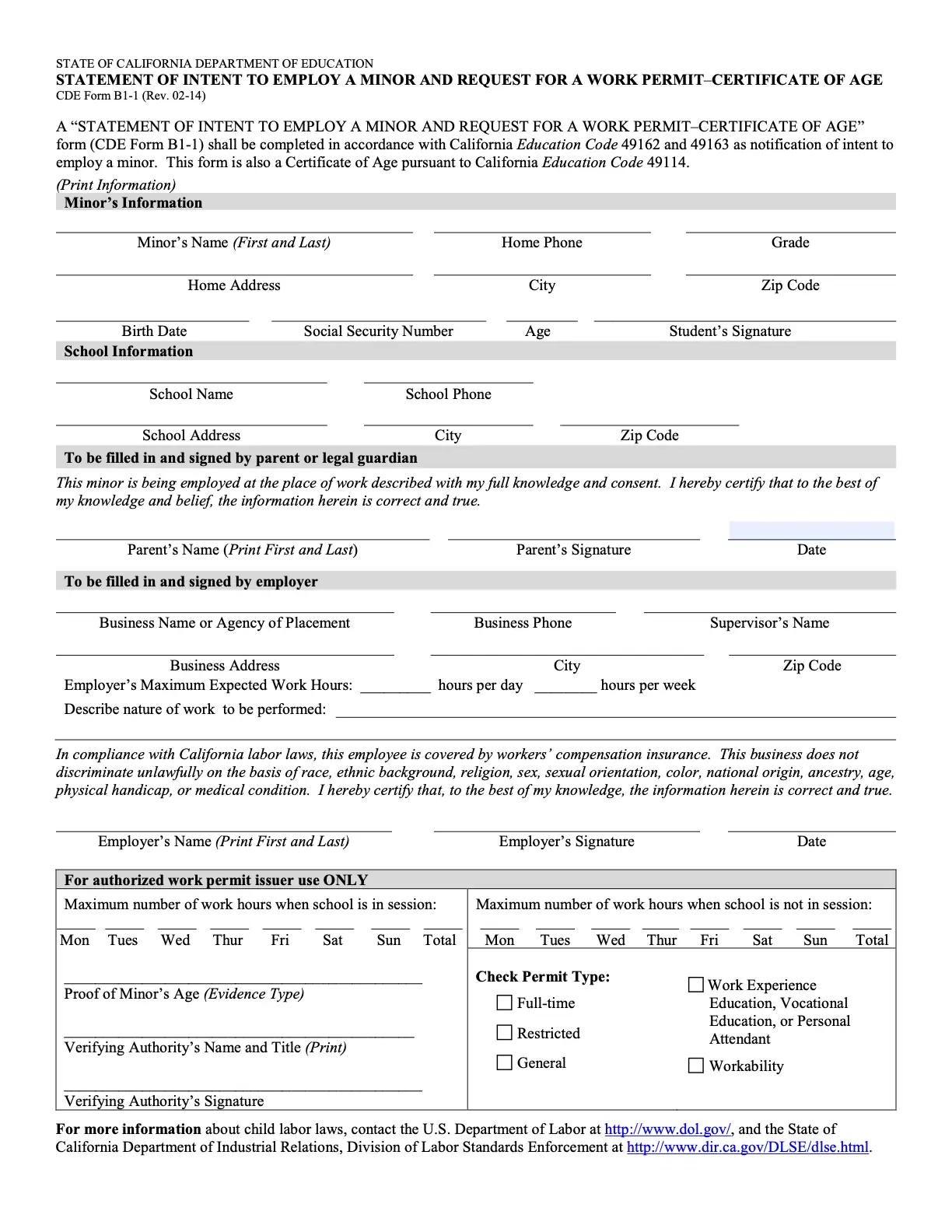
How to Obtain a Work Permit:
The process typically involves several steps:
- Application: The minor obtains a “Statement of Intent to Employ a Minor and Request for a Work Permit – Certificate of Age” (Form B1-1) from their school.
- Employer Information: The prospective employer completes their section of the form, detailing the job, hours, and wages.
- Parent/Guardian Consent: A parent or legal guardian must sign the form, giving their consent for the minor to work.
- School Authorization: The minor returns the completed form to their school (often the counseling office or attendance office). School officials review the student’s academic standing and attendance records to ensure that the proposed work will not negatively impact their education. If approved, the school issues the official work permit.
- Employer Retention: The employer is legally required to keep the work permit on file for the duration of the minor’s employment.
It’s crucial for families traveling to California who might be considering a short-term employment opportunity for their teen to be aware that this permit often requires coordination with their home school district if they are not enrolled in a California school. However, for those enrolled in California schools, the process is streamlined through their local educational institution, usually in cities like Sacramento or Fresno.
Prohibited Occupations and Hazardous Work
California law, in conjunction with federal regulations, strictly prohibits minors from working in certain occupations deemed hazardous or detrimental to their health, safety, or moral well-being. These restrictions are in place to prevent serious injuries and exploitation.
Common Prohibited Occupations for Minors (especially under 16):
- Operating Power-Driven Machinery: This includes most heavy machinery, saws, cutters, and other equipment commonly found in manufacturing, construction, or even some large commercial kitchens in hotels or resorts.
- Driving Motor Vehicles on Public Roads: Minors are generally prohibited from driving company vehicles for work purposes, except for specific agricultural or logging operations under strict conditions, or as allowed by federal regulations for 16 and 17-year-olds in limited circumstances (e.g., incidental driving).
- Mining and Quarrying: These industries are inherently dangerous and off-limits for minors.
- Explosives and Pyrotechnics: Handling or manufacturing explosives is strictly prohibited.
- Logging and Sawmilling: Hazardous machinery and environments make these unsuitable for young workers.
- Roofing Operations: Working at heights and exposure to dangerous tools are prohibited.
- Excavation Operations: Deep excavations pose significant safety risks.
- Exposure to Radioactive Substances or Harmful Chemicals: Any job involving such exposure is forbidden.
- Occupations Involving Exposure to Dangerous or Unsanitary Conditions: This can be broadly interpreted to protect minors from environments that are physically or morally unsafe. For example, working alone late at night in certain establishments might be deemed unsafe.
- Retail/Hospitality Specifics: While minors can work in retail and hospitality, certain tasks within these sectors might be restricted. For example, operating a meat slicer in a restaurant kitchen, compacting trash using a power baler, or working in bar areas where alcohol is served (beyond specific serving roles for older minors with supervision) could be prohibited.
- Manufacturing and Warehousing: Many tasks in these environments involve heavy machinery or hazardous materials, making them unsuitable for minors.
These restrictions are paramount for protecting young individuals from situations that could lead to serious injury or long-term health issues. Employers in tourist-heavy areas like Lake Tahoe or Orange County, who might be eager to hire seasonal staff, must be acutely aware of these prohibitions to avoid legal penalties and ensure the safety of their young employees.
Special Circumstances and Enforcement in the Golden State
While the general rules cover most minor employment scenarios, California also addresses specific industries and provides mechanisms for enforcement to ensure compliance. These elements are crucial for understanding the full scope of minor labor laws within the state.
Exemptions and Industry-Specific Rules
Certain situations and industries have unique considerations that may alter the general minor labor laws:
- Entertainment Industry: California’s thriving entertainment industry, particularly in Hollywood and Burbank, has its own set of stringent rules for child performers. These include specific permit requirements, trust fund mandates (Coogan Accounts) to protect earnings, stricter limits on working hours, mandatory on-set teachers for schooling, and provisions for adequate rest and recreation. These rules are far more detailed than general labor laws, acknowledging the unique demands and potential pressures on young actors and models.
- Agricultural Work: While agricultural work is generally allowed for minors, specific federal and state laws apply regarding age, hazardous tasks, and pesticide exposure. For instance, minors under 12 are generally prohibited from working in agriculture unless employed on farms owned or operated by their parents.
- Self-Employment and Family Businesses: Minors who are self-employed (e.g., babysitting, lawn care for neighbors) or who work for their parents in businesses exclusively owned and operated by their parents are often exempt from many of the general permit and hour restrictions, though safety and educational attendance remain implied responsibilities.
- Volunteering: Generally, bona fide volunteering for non-profit organizations, religious institutions, or governmental agencies is not considered “employment” and thus not subject to the same labor laws, as long as there is no expectation of compensation.
These specific rules highlight California’s nuanced approach to child labor, recognizing the diverse ways young people engage with work while striving to maintain protective safeguards. A family exploring the wineries of Sonoma County might encounter minor agricultural workers, while a visit to Los Angeles could involve seeing child actors at work, each operating under a distinct set of regulations.
Enforcement and Penalties for Non-Compliance
The California Labor Commissioner’s Office is the primary authority responsible for enforcing child labor laws. Employers who violate these regulations face significant penalties, underscoring the seriousness with which the state views the protection of its young workforce.
Potential Consequences for Employers:
- Fines: Employers can face substantial civil penalties for each child labor violation, which can be compounded if multiple minors are involved or if violations are repeated. Fines can range from hundreds to thousands of dollars per violation.
- Criminal Charges: In cases of severe or willful violations, especially those involving hazardous occupations or repeated offenses, employers could face criminal charges, leading to jail time in addition to hefty fines.
- Stop Orders: The Labor Commissioner has the authority to issue “Stop Orders” prohibiting illegal child labor, effectively shutting down operations if violations are egregious.
- Reputational Damage: Beyond legal and financial penalties, businesses, especially those in the hospitality and tourism sector, can suffer significant reputational damage from child labor violations, potentially impacting their brand, customer trust, and future bookings. This is particularly relevant for hotels, resorts, and attractions in popular destinations like Anaheim or San Diego.
Importance of Compliance:
For any employer in California, whether a small family-run diner in Santa Barbara or a large chain hotel in downtown Oakland, strict adherence to minor labor laws is not only a legal imperative but a moral one. It ensures a safe, fair, and educational environment for young workers, contributing positively to their development and to the community at large. Parents, too, play a role in ensuring their children are employed legally and safely, including verifying the work permit and understanding the permitted hours and tasks.

Conclusion: Balancing Opportunity with Protection for California’s Young Workforce
California’s approach to minor employment is a testament to its commitment to the welfare and future of its young residents. The intricate web of regulations governing working hours, permit requirements, and occupational restrictions serves a dual purpose: to provide minors with opportunities to gain valuable work experience and develop essential life skills, while simultaneously safeguarding their health, safety, and educational journey. For families visiting iconic California destinations, from the historic waterfront of San Francisco to the vibrant theme parks of Orange County, understanding these laws is crucial, whether a teen is considering a summer job or merely curious about local norms.
The state recognizes that work can be a formative experience, teaching responsibility, time management, and the value of earning. However, this experience must never come at the expense of a child’s academic success or their physical and mental well-being. The clear distinctions in working hours for different age groups, the mandatory work permit process overseen by school districts in cities like Sacramento and Riverside, and the comprehensive list of prohibited hazardous occupations, all underscore this fundamental principle. Even in unique sectors like the entertainment industry, particularly prominent in areas such as Los Angeles, specific and more stringent rules are in place to ensure child performers are protected.
For employers, especially those in the bustling hospitality, tourism, and retail sectors that thrive across California, compliance with these child labor laws is not merely a legal obligation but a cornerstone of ethical business practice. Failure to adhere to these regulations can result in severe fines, legal repercussions, and significant damage to a company’s reputation. Businesses, from luxury resorts in Laguna Beach to casual eateries near Santa Cruz Beach Boardwalk, must prioritize the safety and development of their young employees.
Ultimately, the question of “How Many Hours Can A Minor Work In California?” leads to a detailed answer that reflects a balanced and protective legal framework. It is a framework designed to ensure that the journey from childhood to adulthood is supported by meaningful opportunities, without compromising the fundamental rights to education, health, and a safe environment. Whether you are planning a family adventure to California or considering employment for a minor, being well-informed about these laws is the key to a responsible and rewarding experience in the Golden State.
LifeOutOfTheBox is a participant in the Amazon Services LLC Associates Program, an affiliate advertising program designed to provide a means for sites to earn advertising fees by advertising and linking to Amazon.com. Amazon, the Amazon logo, AmazonSupply, and the AmazonSupply logo are trademarks of Amazon.com, Inc. or its affiliates. As an Amazon Associate we earn affiliate commissions from qualifying purchases.