
California, often synonymous with innovation, glamour, and natural beauty, presents an unparalleled landscape for real estate professionals. From the bustling urban centers of Los Angeles and San Francisco to the serene coastal communities of Malibu and La Jolla, the Golden State offers a diverse and dynamic market that captivates both seasoned investors and first-time homebuyers. For those dreaming of a career that combines professional growth with the freedom to explore California’s vibrant lifestyle, obtaining a real estate license is the first definitive step. This comprehensive guide will walk you through the journey, detailing the requirements, processes, and strategies needed to successfully launch your career in one of the most exciting real estate markets in the world.
Why Pursue a Real Estate Career in California?
A career in California real estate is more than just buying and selling properties; it’s about connecting people with their dreams, facilitating significant life milestones, and navigating a market rich with opportunities. The state’s unique blend of economic power, cultural diversity, and stunning geography makes it an exceptionally rewarding place to work in real estate.
The Allure of the Golden State Market
California’s real estate market is undeniably one of the most vibrant and valuable globally. Its economy, the fifth largest in the world, fuels a constant demand for housing, commercial spaces, and investment properties. Major tech hubs like Silicon Valley drive high-end residential sales, while the entertainment industry in Hollywood influences luxury markets. Beyond these famous areas, agricultural regions like Napa Valley and coastal gems such as Orange County present diverse opportunities, from vineyard estates to beachfront villas.
The constant influx of people drawn by job prospects, educational institutions, and the desirable climate ensures a robust and competitive market. This dynamic environment means that real estate agents in California often deal with higher transaction values, leading to greater potential earnings. Moreover, the state’s status as a premier tourist destination, featuring iconic landmarks like the Golden Gate Bridge, world-renowned theme parks such as Disneyland, and breathtaking natural wonders like Yosemite National Park, means there’s always an underlying demand for investment properties catering to the tourism industry, from vacation rentals to boutique hotels. Understanding these market nuances, fueled by both permanent residents and temporary visitors, gives licensed agents a distinct advantage.
Lifestyle and Flexibility
One of the most appealing aspects of a real estate career in California is the significant lifestyle flexibility it can offer. Unlike traditional 9-to-5 jobs, real estate often allows for a more autonomous schedule, enabling professionals to balance work with personal pursuits. Imagine spending your mornings showing properties in sunny Palm Springs, then dedicating your afternoons to a hike in a nearby desert preserve or a round of golf. Or perhaps you envision a career where you can close a deal in San Diego and then enjoy a weekend getaway to the pristine beaches of Catalina Island.
This flexibility is particularly attractive for those who value travel and diverse experiences. Real estate agents often work independently, managing their own client base and setting their own hours. This means more control over your time, allowing for spontaneous trips to Lake Tahoe or extended stays at luxury resorts in Santa Barbara – provided you manage your client commitments effectively. The ability to work remotely, especially with advancements in technology, also offers unprecedented freedom. You could conceivably manage transactions while on a wellness retreat at a resort in Big Sur or while enjoying the cultural richness of Europe or Asia. This blend of professional engagement and personal freedom makes a California real estate license a gateway to a truly enriched lifestyle, where your career supports your desire to explore the world and enjoy life out of the box.
Navigating the Licensing Requirements
Embarking on the journey to become a licensed real estate agent in California involves meeting specific eligibility criteria and successfully completing a structured educational program. The process is designed to ensure that all agents possess the necessary knowledge, ethics, and legal understanding to protect the public and maintain the integrity of the real estate profession.
Eligibility and Pre-License Education
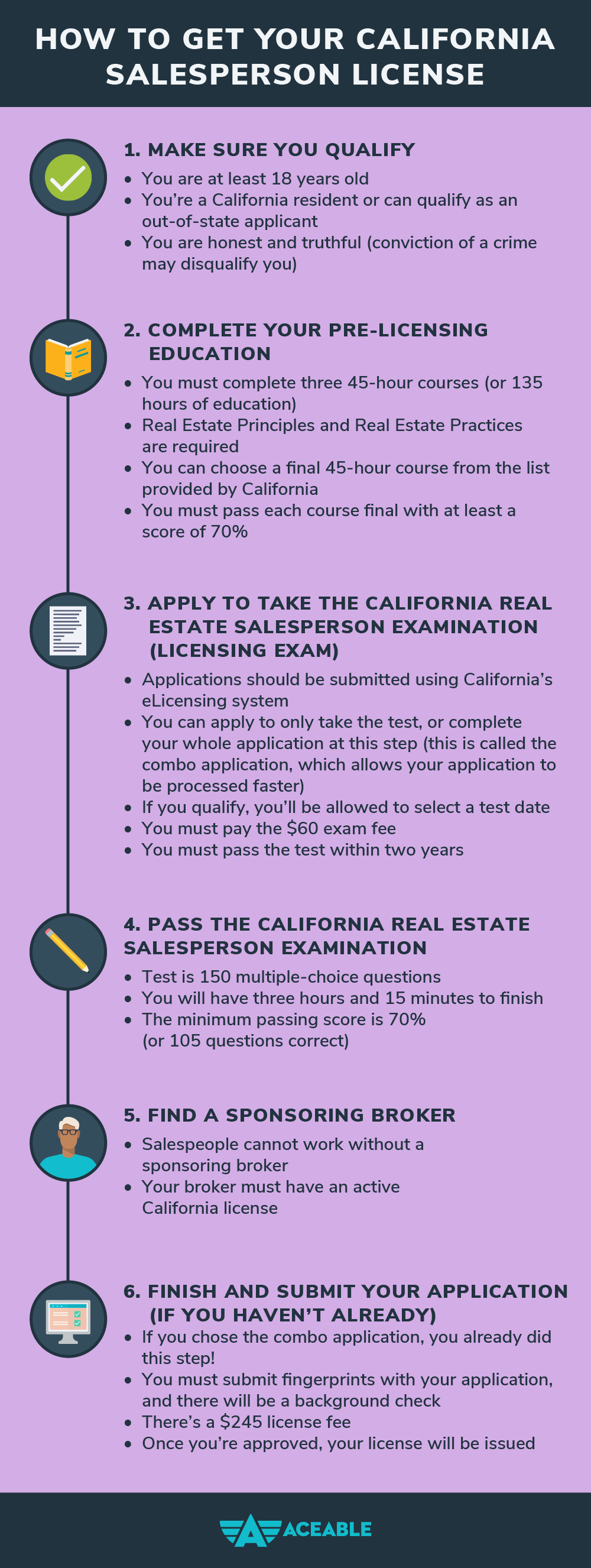
Before you can even consider taking the state exam, you must meet fundamental eligibility requirements set by the California Department of Real Estate (DRE). First and foremost, you must be at least 18 years old. While California residency is not a strict requirement, you will need a valid social security number or an Individual Taxpayer Identification Number (ITIN). A crucial aspect is honesty: the DRE requires applicants to be truthful about any criminal convictions, even those dismissed or expunged, as they conduct thorough background checks. A past felony conviction or certain misdemeanors could potentially disqualify an applicant, depending on the nature of the crime and how long ago it occurred, although each case is evaluated individually.
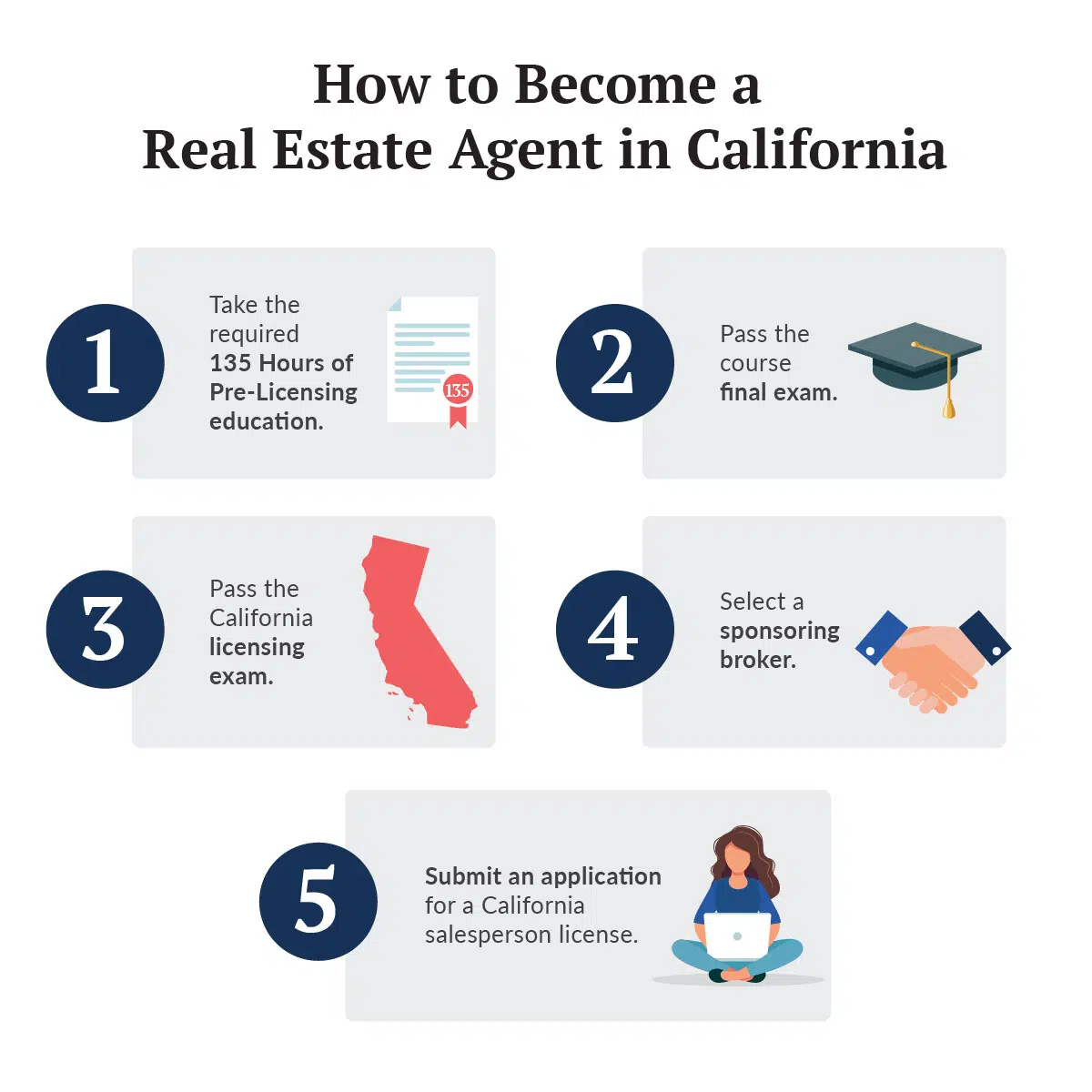
The cornerstone of the licensing process is the pre-license education. The DRE mandates a minimum of 135 hours of approved college-level courses. This typically involves three specific 45-hour courses:
- Real Estate Principles: This course covers fundamental concepts, terminology, and legal aspects of real estate, providing a broad overview of the industry.
- Real Estate Practice: Focusing on practical application, this course delves into the day-to-day activities of an agent, including listing, selling, and leasing properties, as well as client management.
- One Elective Course: You have a choice of several electives, such as Real Estate Finance, Real Estate Appraisal, Real Estate Economics, Property Management, or Legal Aspects of Real Estate. This allows you to tailor a portion of your education to an area of specific interest.
These courses can be completed through various approved providers, including community colleges, universities, and private real estate schools. Many providers offer online courses, which provide excellent flexibility for individuals balancing work, family, or travel plans. Whether you choose an intensive in-person program in Sacramento or a self-paced online curriculum that allows you to study from a beachfront apartment in Santa Monica, the goal is to fully grasp the material. Upon successful completion of each course, you’ll receive a certificate, which is essential for your license application.
The Application and Background Check Process
Once you’ve successfully completed your 135 hours of pre-license education, the next critical step is to submit your application to the California Department of Real Estate. This involves filling out the “Salesperson Examination Application” (RE 400A) or the “Combined Salesperson Exam & License Application” (RE 400B). Many choose the combined application as it streamlines the process by allowing you to apply for both the exam and the license at the same time, contingent on passing the exam.
The application requires detailed personal information, including your full name, address, and any previous names. You must accurately report your education by providing official transcripts or course completion certificates from your approved real estate school. Along with the application, you’ll need to pay the required fees. As of recent updates, the salesperson exam fee is separate from the license application fee, and these amounts can be found on the DRE’s official website. It’s crucial to use the most current forms and fee schedules available directly from the DRE to avoid delays.
A mandatory component of the application process is the background check. This involves submitting your fingerprints via Live Scan. You’ll need to complete a “Request for Live Scan Service” (RE 237) form and take it to an authorized Live Scan service provider. The fingerprints are then sent to the California Department of Justice and the Federal Bureau of Investigation (FBI) for a criminal history check. The DRE reviews the results of these checks to ensure applicants meet their honesty and integrity standards. Any criminal history, regardless of how minor it might seem, must be disclosed on your application. Failing to disclose information, even if it might not ultimately disqualify you, can be considered a separate offense and lead to denial of your license. The DRE’s rigorous screening process is designed to protect the public and ensure that only qualified and trustworthy individuals are granted a real estate license, upholding the professional standards of the industry across diverse communities from Long Beach to Oakland.
Conquering the California Real Estate Exam
Passing the California Real Estate Salesperson Exam is the final academic hurdle before you can officially apply for your license. It’s a challenging test designed to assess your knowledge across a broad spectrum of real estate principles, practices, and laws. Strategic preparation is key to success.
Effective Study Strategies
Success on the California Real Estate Exam hinges on diligent and strategic study. The exam is known for its comprehensiveness, covering topics from real estate law and ethics to contracts, agency, and valuation. Start by thoroughly reviewing the material from your 135 hours of pre-license education. Don’t just skim; truly understand the concepts. Create detailed outlines, flashcards, and summaries for each chapter or topic. Focus particularly on areas you find challenging, perhaps by seeking supplementary materials or engaging in study groups. Many aspiring agents find it beneficial to join online forums or local meet-ups in cities like San Jose or Riverside to discuss complex topics and share insights.
Practice exams are an invaluable tool. Many real estate schools and online platforms offer practice tests that simulate the actual exam environment, including question types and time limits. Take as many practice exams as possible, and don’t just focus on getting the right answer. Analyze why incorrect answers were wrong and why the correct answer is indeed correct. This process helps solidify your understanding of the underlying principles. Pay close attention to vocabulary, as real estate has its own specialized language. Memorize key terms, legal definitions, and mathematical formulas relevant to commissions, property taxes, and loan calculations. Consider allocating dedicated study time each day, maintaining a consistent schedule, and creating a quiet, distraction-free study environment, whether that’s your home office or a quiet corner of a local library in Fresno. Breaking down the vast amount of material into manageable chunks will prevent overwhelm and build your confidence for exam day.
What to Expect on Exam Day
The California Real Estate Salesperson Exam is a rigorous test consisting of 150 multiple-choice questions. You will have 3 hours and 15 minutes to complete it. A passing score is 70% or higher. The exam is administered at various DRE testing centers located across the state, including major cities like Los Angeles, Sacramento, San Diego, and Fresno. It’s crucial to arrive at your scheduled examination time with all required identification, typically a valid government-issued photo ID such as a driver’s license or passport. Ensure the name on your ID matches the name on your application exactly.
Upon arrival, you will check in and be provided with instructions. No outside materials, electronic devices, or personal belongings are allowed into the examination room, so plan to store them securely. The exam is computer-based, and you’ll typically receive your results immediately upon completion. If you pass, congratulations! The DRE will notify you of your successful completion, and if you submitted a combined application, your license will typically be issued shortly after. If you do not pass, don’t be discouraged. Many people require multiple attempts. The DRE will provide a breakdown of your performance by topic area, which is invaluable for guiding your future study efforts. You can retake the exam as many times as needed, but you must submit a new application and pay the exam fee each time. Remember, the goal is not just to pass, but to truly understand the material, as this knowledge will form the foundation of your successful career in real estate, whether you’re helping clients find their dream homes in Beverly Hills or investment properties near Universal Studios Hollywood.
Launching Your Real Estate Career
Passing the exam and receiving your license is a monumental achievement, but it’s just the beginning. The next phase involves actively launching your career, which includes finding the right brokerage, establishing your professional presence, and committing to continuous learning and growth.
Finding the Right Brokerage
Once your California real estate salesperson license is active, you cannot legally practice real estate independently. You must operate under the supervision of a licensed real estate broker. Choosing the right brokerage is one of the most critical decisions you’ll make in the early stages of your career, as it will significantly impact your training, support, and potential for success.
There are various types of brokerages, each offering different advantages:
- Large National Franchises: Companies like Keller Williams, RE/MAX, or Coldwell Banker offer extensive training programs, established brand recognition, and a vast network. They often have robust marketing resources and lead generation tools.
- Boutique Brokerages: Smaller, independent firms often provide a more personalized experience, with direct mentorship from the broker and a closer-knit office culture. They might specialize in certain niches, such as luxury properties in Newport Beach or commercial real estate in Downtown Los Angeles.
- Discount Brokerages/Online Models: These firms often offer lower commission splits for agents but may provide less in the way of training and support. They are generally better suited for experienced agents.
When evaluating brokerages, consider several factors:
- Training and Mentorship: As a new agent, comprehensive training and mentorship are invaluable. Look for a brokerage that offers structured training programs, access to experienced mentors, and ongoing professional development opportunities.
- Commission Splits: Understand the commission structure. Brokerages take a percentage of your commissions, and this split can vary widely. Some offer a higher split but fewer services, while others offer more support for a lower split.
- Culture and Support: Visit the offices, speak to other agents, and get a feel for the company culture. Do they foster a collaborative or competitive environment? What administrative and marketing support do they provide?
- Location and Market Focus: Choose a brokerage that aligns with your preferred geographic area (e.g., Ventura County, Marin County) and market niche (residential, commercial, investment properties).
Interview with several brokers before making a decision. Ask pointed questions about their expectations, their support for new agents, and their philosophy. The right brokerage will provide not just an office space, but a launching pad for your successful career.

Continuous Growth and Opportunities
The real estate industry is constantly evolving, driven by market trends, technological advancements, and shifts in consumer behavior. To thrive as a California real estate agent, continuous learning and professional development are not just beneficial—they are essential. The California Department of Real Estate requires agents to complete 45 hours of approved continuing education every four years to renew their license. This includes specific courses in ethics, agency, fair housing, trust fund handling, and risk management.
Beyond the mandatory requirements, proactive learning can significantly enhance your career. Consider specializing in a niche market, such as luxury homes, investment properties, commercial real estate, or green building practices. Obtaining designations like Certified Residential Specialist (CRS) or Graduate, REALTOR® Institute (GRI) can set you apart and demonstrate advanced expertise. Attend industry conferences, workshops, and seminars, whether they’re hosted by local associations in Pasadena or national events that allow you to network with professionals from across North America.
Networking is another cornerstone of long-term success. Join local real estate associations, participate in community events, and connect with other professionals, including lenders, inspectors, and contractors. Building a strong referral network is vital for generating leads and expanding your business. Embrace technology by learning how to use CRM systems, social media for marketing, and virtual tour software to showcase properties effectively.
The opportunities in California real estate are as vast as the state itself. From helping families find their perfect home in the suburbs of San Francisco Bay Area to assisting investors with acquiring vacation rentals near Death Valley National Park, your license opens doors to a dynamic and rewarding career. With dedication, continuous learning, and a passion for helping people achieve their property dreams, you can build a highly successful and fulfilling life out of the box in the California real estate market.
LifeOutOfTheBox is a participant in the Amazon Services LLC Associates Program, an affiliate advertising program designed to provide a means for sites to earn advertising fees by advertising and linking to Amazon.com. Amazon, the Amazon logo, AmazonSupply, and the AmazonSupply logo are trademarks of Amazon.com, Inc. or its affiliates. As an Amazon Associate we earn affiliate commissions from qualifying purchases.