
The bustling metropolis of Chicago, a jewel on the shores of Lake Michigan in the United States, is renowned for its iconic skyline, deep-dish pizza, and vibrant cultural scene. Yet, beneath the gleaming glass towers and energetic streets lies a rich, compelling history that dates back centuries. While its official incorporation as a city in 1837 pegs its modern age at just over 180 years, the story of human settlement and crucial development in the area stretches back far further, painting a picture of transformation from a modest trading post to one of the world’s most influential urban centers. Understanding how old Chicago truly is isn’t just a matter of dates; it’s an exploration of resilience, innovation, and an enduring spirit that continues to shape its identity. For any traveler planning to visit, delving into its past offers an unparalleled perspective, transforming a mere sightseeing trip into an immersive journey through time, revealing the layers of culture, architecture, and lifestyle that define this magnificent destination.
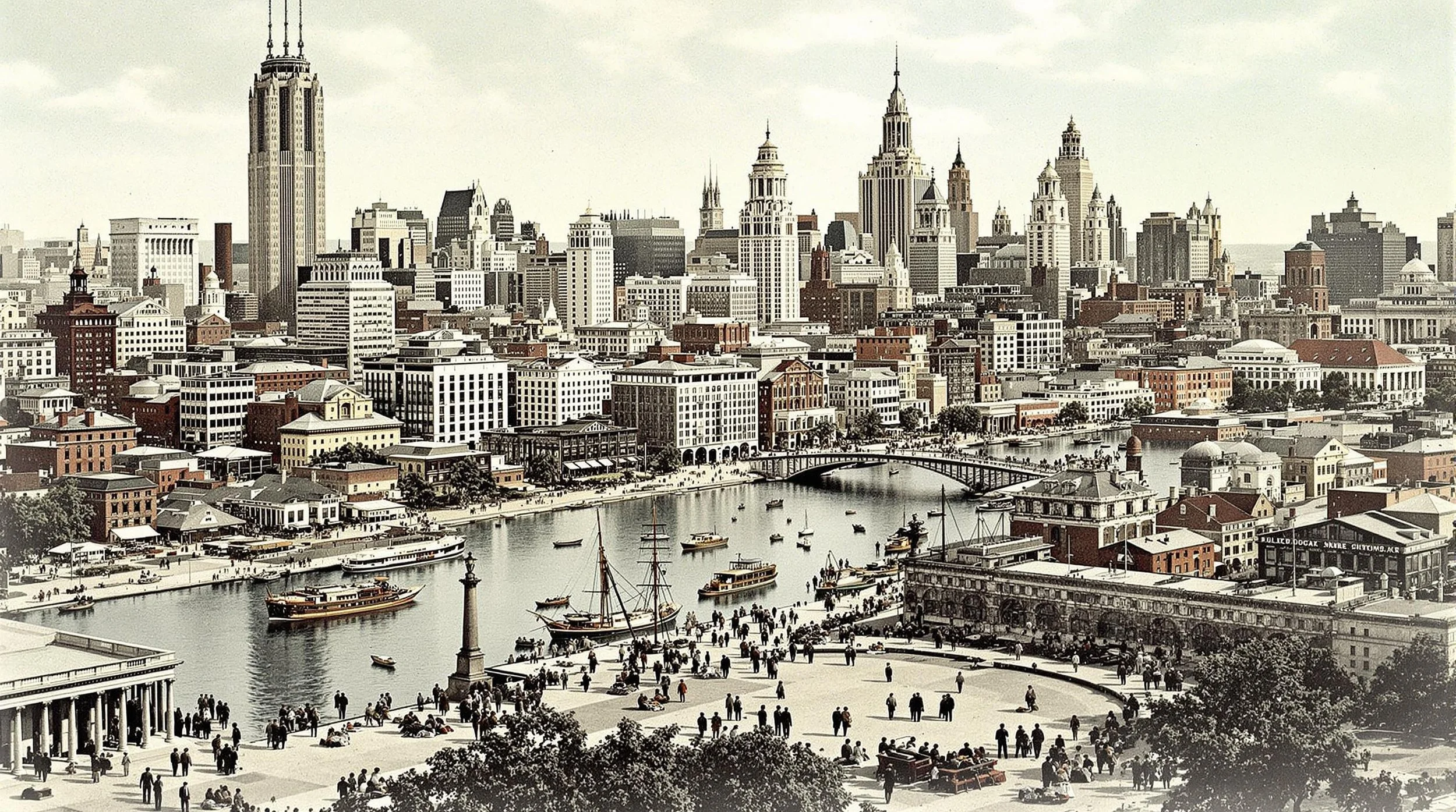
Chicago’s age is a testament to relentless progress, marked by pivotal moments that have defined not just the city itself, but often the trajectory of American history. From its strategic geographic location that attracted early explorers and settlers to its devastating fire and subsequent architectural renaissance, every chapter has contributed to its unique character. This history is not confined to dusty archives; it lives in the very fabric of the city – in its historic landmarks, its diverse neighborhoods, its world-class museums, and even its culinary traditions. For those seeking authentic travel experiences, understanding Chicago’s journey from a humble portage to a global powerhouse is essential to fully appreciate its present-day attractions and the vibrant life that pulses within its boundaries. Whether you’re interested in booking a stay in a grand historic hotel, exploring famous places, or simply soaking in the local culture, the story of Chicago’s past is your ultimate guide.
The Dawn of a Metropolis: Chicago’s Formative Years
The land upon which modern Chicago stands was originally a low-lying, marshy area at the southwestern tip of Lake Michigan, strategically positioned at a portage between the Great Lakes and the Mississippi River system. This natural advantage made it a vital corridor for Native American tribes long before European arrival. The story of Chicago’s beginnings is one of adaptation and recognition of this unique geographical gift.
Early Encounters and First Settlements (Late 17th Century – Early 19th Century)
The first recorded European contact with the Chicago area occurred in the late 17th century. French explorers Louis Jolliet and Father Jacques Marquette were among the earliest non-native individuals to traverse the portage in 1673, recognizing its immense potential as a connection between eastern and western waterways. However, it wasn’t until the late 18th century that a permanent non-native settlement began to take root. Jean Baptiste Point du Sable, a man of Haitian and French descent, is widely regarded as the first permanent non-native resident of Chicago. Around the 1780s, he established a thriving trading post near the mouth of the Chicago River, dealing in furs and other goods with local Potawatomi, Miami, and Illinois tribes. His entrepreneurial spirit laid the very first foundational stone of the city, marking the true beginning of permanent multi-ethnic habitation.
The early 19th century saw increasing American interest in the region, leading to the construction of Fort Dearborn in 1803, a military outpost designed to protect American interests and the fur trade. This fort, however, became a site of conflict during the War of 1812, culminating in the Fort Dearborn Massacre in 1812, after which the fort was destroyed and most settlers evacuated. The area remained sparsely populated for several years but was eventually re-established, signaling the growing strategic importance of the location. These early tumultuous years underscore the nascent, rugged character of what would become a bustling city, a testament to the perseverance of its first residents and the recognition of its strategic value for trade and defense. Today, visitors can see markers of this early history, with some attractions offering glimpses into this formative era, reminding us that even the most modern cities have humble, often dramatic, beginnings.
From Town to City: Incorporation and Rapid Growth (1830s – 1860s)
The true acceleration of Chicago’s growth began in the 1830s. In 1833, with a population of only about 350 residents, the area was formally organized as the Town of Chicago. This act signaled a collective ambition and a recognition of the need for structured governance to manage the rapidly increasing influx of settlers. Just four years later, on March 4, 1837, Chicago was officially incorporated as a city, a landmark moment that formally marked its transition from a frontier outpost to a burgeoning urban center. Its strategic location at the nexus of water and future rail transportation networks proved to be its greatest asset. The construction of the Illinois and Michigan Canal, completed in 1848, was a game-changer. This monumental engineering feat connected the Great Lakes to the Mississippi River system, solidifying Chicago’s position as a crucial transportation and commercial hub for the expanding United States.
The canal’s completion, coupled with the rapid expansion of the railway system, transformed Chicago into the nation’s primary agricultural distribution center. Wheat, corn, and livestock from the fertile Western plains flowed into the city, where they were processed and shipped eastward. The population exploded, growing from a few thousand in the 1840s to over 100,000 by 1860, and nearly 300,000 by 1870. This period saw the rise of massive industries, particularly meatpacking with the infamous Union Stock Yards, which would dominate the global market for decades. The city became a magnet for immigrants seeking economic opportunity, contributing to its diverse cultural tapestry. This astonishing rate of growth, driven by its unparalleled connectivity, laid the groundwork for Chicago to become not just an American city, but a global economic power, setting the stage for the dramatic events and architectural innovations that would follow. For travelers today, the remnants of this era can be seen in the city’s grid layout and the foundational industries that propelled its early expansion.
Rebirth from Ashes: The Great Chicago Fire and its Legacy
Just when Chicago was reaching the peak of its early prosperity, a catastrophic event threatened to erase all its hard-won progress. Yet, in a testament to the city’s indomitable spirit, this disaster instead paved the way for an unprecedented era of rebuilding and architectural innovation that would define its global identity.
The Inferno of 1871
On October 8, 1871, a small fire reportedly started in a barn belonging to Patrick and Catherine O’Leary on DeKoven Street. Fueled by a long, dry summer, strong winds from the southwest, and the city’s predominantly wooden construction (including buildings, sidewalks, and streets), the small blaze quickly spiraled into a raging inferno known as the Great Chicago Fire. For two devastating days, the fire swept through the heart of the city, consuming everything in its path. An area approximately four miles long and one mile wide, encompassing the central business district and much of the residential north side, was utterly annihilated.
The statistics of the devastation are staggering: over 17,500 buildings were destroyed, roughly one-third of Chicago’s population (around 100,000 people) was left homeless, and an estimated 300 people lost their lives. Iconic structures, bustling markets, and countless homes were reduced to ashes. The economic loss was immense, estimated at $200 million (equivalent to several billion dollars today). The fire left behind a charred wasteland, a stark reminder of nature’s fury and the vulnerabilities of a rapidly growing urban center. It was a profound tragedy, yet it was precisely this tabula rasa that would allow Chicago to reinvent itself in a way few cities ever have the chance to do, sparking a new chapter in its age-old story. The site of the fire’s origin is now part of the Chicago Fire Academy, a subtle nod to its transformative past.
A Phoenix City: Architectural Innovation and Urban Planning
Remarkably, within days of the fire being extinguished, the resilient citizens of Chicago began the arduous task of rebuilding. The scale of the destruction presented an unprecedented opportunity: to construct a modern city from the ground up, free from the constraints of existing infrastructure. This necessity became the mother of invention, giving birth to what is now famously known as the “Chicago School of Architecture.” Pioneering architects, engineers, and urban planners flocked to the city, drawn by the chance to experiment with new materials and building techniques.

This era saw the rise of truly visionary figures like Louis Sullivan, Daniel Burnham, and a young Frank Lloyd Wright who started his career here. They championed functionalism, steel-frame construction, and the innovative use of elevators, leading to the development of the world’s first skyscrapers. The Home Insurance Building, completed in 1885 and considered by many to be the first skyscraper, epitomized this new architectural direction. Chicago became a living laboratory for modern architecture, influencing urban design worldwide. The spirit of this rebirth culminated in the magnificent World’s Columbian Exposition of 1893, a grand fair that showcased the rebuilt city’s resilience and its futuristic vision. Designed largely by Daniel Burnham, the “White City” offered a blueprint for idealized urban planning and design, further cementing Chicago’s reputation as a city of innovation and forward-thinking. Today, visitors can embark on architectural boat tours along the Chicago River to witness the stunning legacy of this period, a must-do experience for anyone appreciating famous places and unique architecture.
Chicago’s Enduring Spirit: A Century of Progress and Cultural Richness
As the 20th century dawned, Chicago continued its trajectory of growth and transformation, solidifying its status as a global city. Its age now represented a journey through industrial might, cultural explosion, and eventually, a reinvention into a modern cultural and economic hub.
From Industrial Hub to Cultural Powerhouse (Early 20th Century – Mid-20th Century)
In the early 20th century, Chicago’s industrial might was undeniable. The Union Stock Yards continued to be the largest meatpacking center in the world, and other industries such as steel, manufacturing, and transportation thrived. This industrial growth attracted millions, notably African Americans participating in the Great Migration from the rural South, who brought with them rich cultural traditions that profoundly shaped the city. Chicago became a crucible for African American culture, particularly in music. The city’s South Side gave birth to the unique sound of Chicago Blues, evolving from the Mississippi Delta blues into an electrified, urban genre that would influence rock and roll worldwide. Legendary venues sprang up, fostering a vibrant nightlife and a distinct local culture.
The Prohibition era (1920-1933) cast a different kind of shadow over the city, giving rise to infamous organized crime figures like Al Capone. Speakeasies and illicit activities flourished, adding a notorious, yet undeniably colorful, chapter to Chicago’s history. This period, while dark, also highlighted the city’s grit and its capacity for dramatic narratives. Post-Prohibition, Chicago continued to evolve, navigating the challenges of the Great Depression and two World Wars. Its industrial base remained strong, but there was also a growing recognition of its intellectual and cultural capital, with universities, museums, and artistic movements gaining national and international prominence. This complex interplay of industry, migration, music, and crime painted a dynamic picture of a city constantly in motion, refining its identity. Travelers today can explore the rich musical heritage in numerous clubs and learn about the Prohibition era through historical tours, connecting deeply with the city’s past.
Modern Marvels and Contemporary Charms (Late 20th Century – Present)
The latter half of the 20th century saw Chicago adapt to a changing global economy, shifting away from heavy industry towards a service-based economy focused on finance, technology, and tourism. This transformation brought a new wave of urban development and a renewed emphasis on public spaces and cultural institutions, showcasing Chicago’s enduring commitment to progress and quality of life. The city’s skyline continued its ascent, with the completion of the Sears Tower (now the Willis Tower) in 1973, which for many years held the title of the world’s tallest building. This structure, along with countless other innovative high-rises, further solidified Chicago’s reputation as an architectural marvel.
The 21st century ushered in a new era of civic pride and public investment, perhaps best exemplified by the creation of Millennium Park. Opened in 2004, this award-winning urban park transformed an unsightly rail yard into a vibrant public space featuring stunning art installations like Cloud Gate (affectionately known as “The Bean”), cutting-edge architecture, and performance venues. It perfectly encapsulates modern Chicago’s blend of historical appreciation and contemporary innovation. Today, Chicago is a beacon for arts and culture, boasting world-renowned institutions such as the Art Institute of Chicago, the Field Museum, and a vibrant theater scene. Its culinary landscape is a global destination, offering everything from Michelin-starred restaurants to iconic deep-dish pizza joints. The city continues to draw millions of visitors annually, attracted by its blend of historical depth, architectural grandeur, diverse cultural offerings, and a truly unforgettable lifestyle experience. From budget-friendly exploration to luxury travel, Chicago caters to all, proving that its age has only added to its charm and complexity.
Experiencing Chicago’s Age: Historical Landmarks and Modern Attractions
For the discerning traveler, Chicago’s age is not merely a historical footnote but a tangible, explorable dimension of the city. Its rich past is interwoven with its present, offering a diverse array of destinations and experiences that cater to every interest, from history buffs and architecture enthusiasts to foodies and art lovers.
Architectural Wonders and Historic Districts
One cannot fully appreciate Chicago without recognizing its unparalleled architectural heritage. The city’s rebirth after the Great Chicago Fire created an urban canvas for some of the world’s most innovative designs, making it a living museum of architectural evolution. The best way to experience this is through an architectural boat tour along the Chicago River, where expert guides detail the history and significance of the towering structures that line its banks. You’ll see masterpieces from the “Chicago School,” Art Deco gems, and sleek modern skyscrapers, each telling a part of the city’s story.
Beyond the river, stroll through the Loop to admire buildings like the Rookery Building, a magnificent example of early skyscraper design with its iconic light court redesigned by Frank Lloyd Wright. The Magnificent Mile on North Michigan Avenue is not just a shopping paradise; it’s also home to historic buildings like the Chicago Water Tower and Pumping Station, which famously survived the Great Chicago Fire. For a deeper dive into social history and urban planning, a visit to the Pullman National Monument is essential. This planned industrial town, built by industrialist George M. Pullman in the 1880s, offers a fascinating glimpse into a unique experiment in labor and community life, reflecting the socio-economic dynamics of Chicago’s golden age of industry. And for a more relaxed experience, the historic Navy Pier, originally built in 1916, has transformed from a cargo facility into a bustling entertainment complex, offering panoramic views of the skyline and Lake Michigan.

Immersive Cultural Experiences
Chicago’s age is also celebrated through its vibrant cultural scene, which offers immersive experiences reflecting its diverse heritage. To truly connect with the city’s soul, explore its musical roots. Visit a legendary blues or jazz club, such as the historic Green Mill Cocktail Lounge in Uptown, where the echoes of jazz legends and even Al Capone’s cronies still seem to linger. These venues are not just places to hear music; they are living pieces of Chicago history, offering a genuine taste of its storied nightlife and cultural evolution.
Food, too, is a powerful portal to the past. Embark on a culinary tour to savor Chicago’s iconic dishes like deep-dish pizza and the Chicago-style hot dog, each with its own rich history and fiercely defended traditions. Many of these establishments have been serving locals for generations. For accommodations, consider staying in one of Chicago’s grand historic hotels, such as the Palmer House Hilton or the Drake Hotel. These majestic buildings, dating back to the late 19th and early 20th centuries, offer not just luxurious suites and amenities but also a chance to step back in time, surrounded by opulent architecture and storied pasts. Their lobbies and ballrooms have hosted presidents, celebrities, and countless historical events. Visiting Chicago’s world-class museums, such as the Art Institute of Chicago and the Field Museum, also provides context for its development. The Chicago History Museum, in particular, offers comprehensive exhibits that chronicle the city’s journey from its early Native American settlements through its dramatic rebirth and into its modern era. By engaging with these diverse experiences, visitors can truly feel the age of Chicago, understanding how its past continues to inform and enrich its present, making every visit a deeply rewarding adventure.
Ultimately, the city of Chicago is more than just a collection of buildings and streets; it is a vibrant narrative stretching back well over two centuries. From its designation as a town in 1833 and its incorporation as a city in 1837, the official milestones mark a period of intense growth and transformation. Yet, the layers of history extend further back to the crucial role of Jean Baptiste Point du Sable’s trading post and the ancient pathways trod by Native American tribes. This remarkable journey from a marshy portage to a global icon of commerce, culture, and architectural innovation is a testament to the enduring spirit of its people.
For any traveler, understanding “How Old Is The City Of Chicago?” unlocks a deeper appreciation for its character. It reveals why its architecture is so groundbreaking, why its music has such soul, and why its culinary scene is so rich. Each historic landmark, every vibrant neighborhood, and even the modern attractions like Millennium Park are infused with this compelling past. Whether you’re planning a family trip, a luxury getaway, or a budget-conscious adventure, exploring Chicago’s age adds an invaluable dimension to your travel experience, connecting you directly to the heartbeat of one of America’s greatest cities. Chicago truly is a destination where history is not just remembered, but actively lived and celebrated, inviting every visitor to become a part of its ongoing story.
LifeOutOfTheBox is a participant in the Amazon Services LLC Associates Program, an affiliate advertising program designed to provide a means for sites to earn advertising fees by advertising and linking to Amazon.com. Amazon, the Amazon logo, AmazonSupply, and the AmazonSupply logo are trademarks of Amazon.com, Inc. or its affiliates. As an Amazon Associate we earn affiliate commissions from qualifying purchases.