
In the vast and vibrant world of travel, where every journey tells a story and every destination holds a secret, the art of storytelling often intertwines with the rigor of research. Whether you’re penning a compelling travelogue about the bustling streets of New York City, a historical dive into the ancient wonders of Machu Picchu, or an insightful review of a luxurious Grand Hyatt Hotel experience, the credibility of your narrative can hinge on the accuracy and proper attribution of your information. This is where Chicago Style footnotes come into play, offering a robust framework for citing sources that is particularly valuable for in-depth travel writing, academic tourism research, and even meticulous lifestyle content.

While many might associate Chicago Style with academic papers and scholarly journals, its principles of clear, consistent, and comprehensive citation are remarkably applicable to the world of travel blogging, guidebooks, and historical explorations of landmarks. Imagine detailing the architectural nuances of the Eiffel Tower or recounting the rich history of a specific region in Italy – without proper attribution, your captivating narrative risks being perceived as mere anecdote rather than well-researched fact. This guide will demystify Chicago Style footnotes, showing how travelers, writers, and enthusiasts alike can master this essential skill to elevate their content, enhance credibility, and provide a deeper, more trustworthy experience for their readers.
Navigating the Scholarly Seas: Why Chicago Style Matters in Travel Writing
The allure of travel lies in discovery—uncovering hidden histories, experiencing unique cultures, and exploring breathtaking landscapes. For those who chronicle these adventures, whether through digital blogs, comprehensive guidebooks, or academic analyses of tourism trends, presenting accurate and well-supported information is paramount. Chicago Style offers a sophisticated and flexible system for achieving this, making your travel narratives not just engaging, but also authoritative.
The Credibility Compass: Ensuring Accuracy in Your Travel Narratives
In an era of abundant online information, distinguishing reliable content from conjecture is more critical than ever. For travel writers, this means going beyond personal anecdotes to provide readers with verifiable facts, historical context, and cultural insights. When discussing the origins of a traditional dish in Rome, the historical significance of London’s iconic Big Ben, or the architectural marvels of the Taj Mahal, citing your sources with Chicago Style footnotes lends an invaluable layer of trustworthiness.
Consider a piece detailing the history of a renowned hotel in Paris. If you cite the source of your information—perhaps an archival document or a reputable history book—your readers can trust the facts presented. This level of detail elevates your writing from a simple travel diary to a respected resource. For readers seeking not just inspiration but also factual grounding for their own trips or research, a well-cited article becomes an indispensable tool. It transforms your travel guides and blog posts into mini-scholarly works, making them valuable assets for anyone planning an itinerary, researching a specific landmark, or simply learning more about a particular culture.
Beyond the Postcard: Researching Destinations with Academic Rigor
In-depth travel writing often requires extensive research. This can involve delving into historical archives, consulting expert interviews, referencing academic studies on local culture, or analyzing statistics from tourism boards. Chicago Style is uniquely suited for managing this diverse array of sources. For instance, if you’re writing about the sustainability efforts of resorts in Costa Rica, you might consult environmental studies, interviews with hotel managers, and reports from local NGOs. Each piece of information, particularly direct quotes or specific data points, should be attributed.
This rigor extends to reviews of luxury accommodation or analyses of different lifestyle travel approaches. For example, if you’re discussing the culinary traditions of Japan and referencing a specific cooking method, a footnote can direct readers to the ethnographic text or culinary history book where you found the information. This not only validates your claims but also enriches the reader’s experience by providing pathways for further exploration. By embracing Chicago Style, you equip your readers with the tools to verify your information and explore the subjects that pique their interest, fostering a more engaged and informed community.
The Footnote Fundamentals: A Traveler’s Guide to Chicago Style Mechanics
Understanding the basic mechanics of Chicago Style footnotes is like mastering the essential packing list for a trip—it ensures you have everything you need for a smooth journey. This style primarily uses a note-bibliography system, meaning you’ll use footnotes (or endnotes) for in-text citations and a comprehensive bibliography at the end of your work.
The Anatomy of a Footnote: First Citations vs. Subsequent Mentions
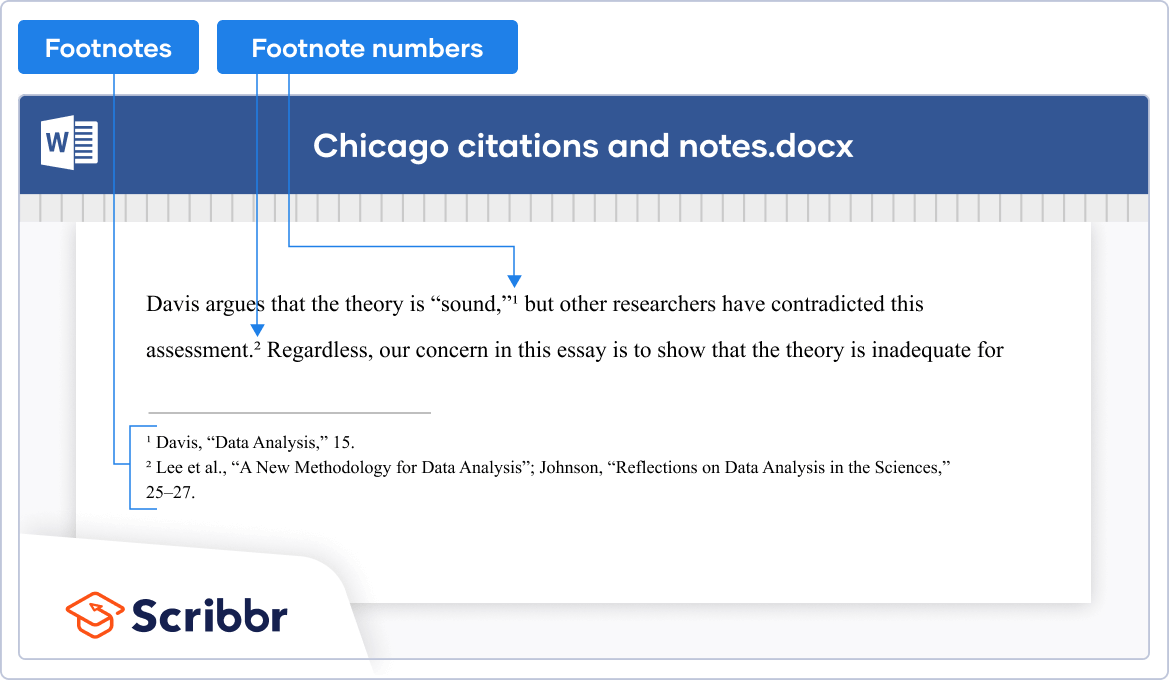
Each time you introduce information that requires a citation in your text, you’ll insert a superscript number at the end of the sentence or clause. This number corresponds to a numbered footnote at the bottom of the page. The first time you cite a source, the footnote will be comprehensive, providing full publication details.
First Footnote Example (Book):
Let’s say you’re discussing the historical significance of the Great Wall of China:
- Arthur Waldron, The Great Wall of China: From History to Myth (Cambridge: Cambridge University Press, 1990), 45.
First Footnote Example (Website):
Or perhaps you’re sharing data on tourism statistics for Dubai from a government website:
- Dubai Department of Tourism and Commerce Marketing, “Dubai Visitor Statistics 2023,” last modified January 25, 2024, https://lifeoutofthebox.com/dubai-visitor-statistics-2023.
Notice the elements: Author’s Name, Title of Work, (Place of Publication: Publisher, Year), Page Number. For websites, it’s Author (if available), “Title of Page,” Website Name, last modified date (if available), URL.
For subsequent mentions of the same source, Chicago Style offers a concise, shortened form. This prevents repetition and keeps your footnotes clean and readable, much like using a shorthand when jotting down quick travel notes.
Subsequent Footnote Example (Book):
Later, if you refer to Waldron’s book again:
- Waldron, Great Wall of China, 78.
Subsequent Footnote Example (Website):
And for the Dubai tourism data:
- Dubai Department of Tourism, “Visitor Statistics 2023.”
The shortened form typically includes the author’s last name, a shortened version of the title (if it’s long), and the page number. If you cite the exact same source immediately after its previous citation, you can use “Ibid.” (meaning “in the same place”), often followed by a different page number if applicable.
Mastering the Bibliography: Your Travel Research Itinerary
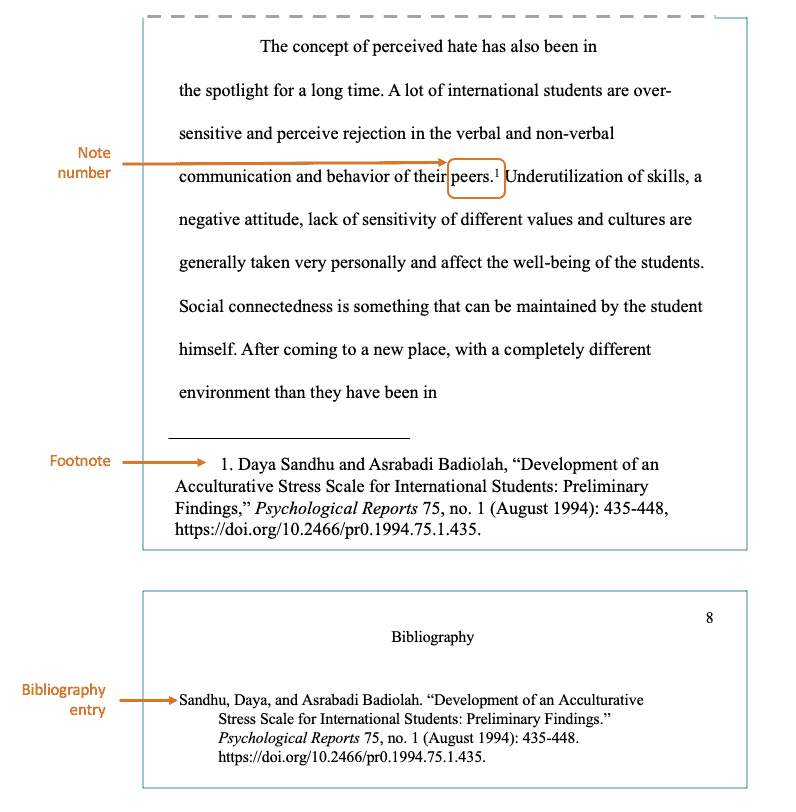
While footnotes provide immediate citation details, the bibliography at the end of your article or guide serves as a comprehensive “research itinerary”—a complete list of all sources consulted, organized alphabetically by author’s last name. The format in the bibliography differs slightly from footnotes.
Bibliography Example (Book):
Waldron, Arthur. The Great Wall of China: From History to Myth. Cambridge: Cambridge University Press, 1990.
Bibliography Example (Website):
Dubai Department of Tourism and Commerce Marketing. “Dubai Visitor Statistics 2023.” Last modified January 25, 2024. https://lifeoutofthebox.com/dubai-visitor-statistics-2023.
Key differences from footnotes:
- The author’s last name comes first for alphabetical sorting.
- No page numbers are included for books (unless citing a chapter in an edited collection).
- Periods separate elements, rather than commas for most parts.
- URLs are typically not hyperlinked in a printed bibliography, but for online publications on a travel site, they would naturally be clickable.
The bibliography is crucial for readers who wish to explore your sources in greater detail. It demonstrates the breadth and depth of your research, much like a detailed itinerary shows the extent of your journey. For travel writers investigating accommodation options, historical events in Rome, or the unique lifestyle of a particular region, a well-curated bibliography is an undeniable asset.
Citing Common Travel Resources: From Guidebooks to Digital Discoveries
The modern travel writer draws from an incredibly diverse palette of information. From classic print guidebooks to dynamic online blogs, and from academic journals on tourism studies to direct interviews with local experts, Chicago Style offers clear guidelines for citing almost any type of source you might encounter on your research journey.
Print Publications: Guidebooks, Books, and Academic Journals
Traditional print resources remain cornerstones of reliable travel information. Comprehensive travel guides like Lonely Planet or Fodor’s, in-depth historical books about European cities, and scholarly articles on hotel management or cultural heritage are invaluable.
Book (General):
- Footnote: 5. Peter Frankopan, The Silk Roads: A New History of the World (New York: Alfred A. Knopf, 2015), 187.
- Bibliography: Frankopan, Peter. The Silk Roads: A New History of the World. New York: Alfred A. Knopf, 2015.
Chapter in an Edited Book (e.g., a collection on various Asian temples):
- Footnote: 6. Kenan E. Malik, “The Future of Heritage Tourism in Southeast Asia,” in Global Perspectives on Cultural Heritage, ed. Sarah J. White (London: Routledge, 2018), 215.
- Bibliography: Malik, Kenan E. “The Future of Heritage Tourism in Southeast Asia.” In Global Perspectives on Cultural Heritage, edited by Sarah J. White, 200-220. London: Routledge, 2018.
Journal Article (e.g., about sustainable tourism):
- Footnote: 7. Maria L. Sanchez and David Chen, “Ecotourism and Community Development in the Caribbean,” Journal of Responsible Tourism 12, no. 3 (2020): 345.
- Bibliography: Sanchez, Maria L., and David Chen. “Ecotourism and Community Development in the Caribbean.” Journal of Responsible Tourism 12, no. 3 (2020): 330-350.
Remember to distinguish between books and journal articles in your citations, paying attention to volume and issue numbers for journals.
Digital Dominance: Websites, Blogs, and Online Accommodation Resources
The internet is an inexhaustible spring of travel information. From official hotel websites like Marriott or Hilton, to independent travel blogs, online magazines, and tourism board portals such as Visit California, properly citing these digital sources is crucial for maintaining integrity.
Website Article (General):
- Footnote: 8. Anna Peterson, “Exploring the Algarve’s Hidden Beaches,” Life Out of the Box (blog), June 10, 2023, https://lifeoutofthebox.com/algarves-hidden-beaches.
- Bibliography: Peterson, Anna. “Exploring the Algarve’s Hidden Beaches.” Life Out of the Box (blog). June 10, 2023. https://lifeoutofthebox.com/algarves-hidden-beaches.
Online Magazine Article with Author:
- Footnote: 9. Jonathan Smith, “A Culinary Journey Through Singapore,” Travel & Leisure, February 15, 2024, https://lifeoutofthebox.com/singapore-culinary-journey.
- Bibliography: Smith, Jonathan. “A Culinary Journey Through Singapore.” Travel & Leisure, February 15, 2024. https://lifeoutofthebox.com/singapore-culinary-journey.
Website Page (No Specific Author, e.g., a hotel amenity list):
- Footnote: 10. The Ritz-Carlton, “Bali Resort Amenities,” accessed March 1, 2024, https://lifeoutofthebox.com/ritz-carlton-bali-amenities.
- Bibliography: The Ritz-Carlton. “Bali Resort Amenities.” Accessed March 1, 2024. https://lifeoutofthebox.com/ritz-carlton-bali-amenities.
For websites, include the access date if the content is likely to change or if no publication/modification date is provided. Always prioritize accuracy and completeness, ensuring that the URL leads directly to the referenced content.
Beyond the Basics: Advanced Chicago Style for the Savvy Traveler-Writer
As you delve deeper into creating rich, informative travel content, you’ll encounter situations that require a more nuanced understanding of Chicago Style. This includes citing unconventional sources like interviews, maps, or even images, and maintaining absolute consistency throughout your work.
Special Cases: Interviews, Maps, and Images
Travel writing often incorporates unique elements that go beyond standard books or websites. You might conduct interviews with local artisans in Mexico, analyze historical maps to describe ancient trade routes, or include captivating images that tell part of your story.
Personal Interview:
When you interview a tour guide about their experiences leading expeditions to Mount Everest, it’s a unique, unpublished source.
- Footnote: 11. John Doe (tour guide), interview by author, March 10, 2024, Kathmandu.
- Bibliography: Interviews are typically not included in the bibliography unless they are published or extensively archived. If crucial, you might create an “Interviews” section in the bibliography or simply rely on the footnote.
Maps:
Citing a map, whether from a printed atlas or an online source like Google Maps, is important for geographical context.
- Footnote (Printed Map): 12. World Atlas of Exploration (Washington, D.C.: National Geographic Society, 2009), 34.
- Bibliography (Printed Map): World Atlas of Exploration. Washington, D.C.: National Geographic Society, 2009.
- Footnote (Online Map): 13. Google Maps, “Route from Sydney Opera House to Bondi Beach,” accessed February 28, 2024, https://lifeoutofthebox.com/sydney-opera-house-bondi-beach.
- Bibliography (Online Map): Google Maps. “Route from Sydney Opera House to Bondi Beach.” Accessed February 28, 2024. https://lifeoutofthebox.com/sydney-opera-house-bondi-beach.
Images/Photographs:
If you’re using an image that isn’t your own or is from a specific collection (e.g., from the Louvre Museum), it requires attribution.
- Footnote: 14. Leonardo da Vinci, Mona Lisa, ca. 1503–1506, oil on poplar panel, The Louvre, Paris.
- Bibliography: Leonardo da Vinci. Mona Lisa. Ca. 1503–1506. Oil on poplar panel. The Louvre, Paris.
For images found online, similar rules to citing websites apply, ensuring you provide the artist/creator, title, source website, and URL.
Maintaining Consistency: A Pillar of Professional Travel Content
The golden rule of any citation style, and particularly Chicago Style, is consistency. Once you choose to use the note-bibliography system, apply it uniformly throughout your entire piece. This means consistent formatting for first citations, subsequent citations, and bibliography entries. Inconsistent citation can undermine the authority of your writing, much like a poorly planned itinerary can disrupt a trip.
For long-form travel guides or detailed historical accounts of destinations like Santorini, maintaining this consistency manually can be challenging. Many writers find it helpful to use citation management tools (like Zotero, Mendeley, or EndNote) which can automate much of the formatting, allowing you to focus on the narrative and research. Even for less formal blogs, having a cheat sheet of common citation types can prevent errors and save time. Regular proofreading, specifically for citations, is also essential.
By embracing Chicago Style, you’re not just adhering to academic standards; you’re actively enhancing the value and integrity of your travel content. You’re building a foundation of trust with your readers, inviting them not just to passively consume your stories, but to explore the depths of your research and discover new knowledge. This commitment to scholarly rigor, even within the captivating realm of travel, sets a benchmark for quality and transforms your words into a truly invaluable resource for fellow explorers and knowledge seekers.
LifeOutOfTheBox is a participant in the Amazon Services LLC Associates Program, an affiliate advertising program designed to provide a means for sites to earn advertising fees by advertising and linking to Amazon.com. Amazon, the Amazon logo, AmazonSupply, and the AmazonSupply logo are trademarks of Amazon.com, Inc. or its affiliates. As an Amazon Associate we earn affiliate commissions from qualifying purchases.