
For countless travelers planning a journey to the sun-drenched beaches, vibrant cities, and world-renowned theme parks of Florida, navigating the state’s extensive toll road system can be a point of confusion. Many visitors from other regions of the United States, particularly those familiar with electronic tolling systems like IPass from the Illinois Tollway or the broader E-ZPass network, often wonder if their existing transponders will seamlessly work in the Sunshine State. The straightforward answer is crucial for a smooth trip: no, IPass transponders do not directly work on Florida’s toll roads.
This revelation might prompt a moment of concern, especially for those accustomed to the convenience of cashless tolling. However, a deeper understanding of Florida’s specific electronic toll collection systems, coupled with strategic planning, ensures that your travel experience remains as hassle-free as possible. From exploring the magical realms of Walt Disney World and Universal Studios Florida in Orlando, to soaking up the art deco charm of South Beach in Miami, or delving into the rich history of St. Augustine, effective toll management is an often-overlooked yet vital component of any Florida adventure. This comprehensive guide will equip you with all the necessary information to navigate Florida’s toll roads with confidence, ensuring that your focus remains on creating unforgettable travel memories.

Navigating Florida’s Toll Roads: An Essential Guide for Travelers
Florida’s infrastructure relies heavily on a network of toll roads, expressways, and bridges designed to facilitate quick and efficient travel across the state. While these routes offer significant time savings and often provide direct access to major destinations and attractions, they also require travelers to be prepared for electronic toll collection. Understanding this system is paramount for any visitor, whether you’re embarking on a luxurious travel escapade, a budget-friendly family trip, or a crucial business stay.
Understanding Florida’s Extensive Toll Network
The geography and population density of Florida, particularly in its metropolitan corridors, have necessitated an expansive system of tolled roadways. Major arteries like Florida’s Turnpike, the Central Florida Expressway Authority (CFX) roads around Orlando, and numerous bridges and expressways in areas such as Miami, Tampa, and Jacksonville, all operate with tolls. These tolls play a crucial role in funding the construction and maintenance of these vital transportation links, ensuring smooth traffic flow to key destinations like Walt Disney World, Universal Studios Florida, and the pristine beaches of the Gulf Coast.
For travelers, these toll roads can dramatically cut down travel times, allowing more moments to explore Everglades National Park, relax in Key West, or visit the historic Castillo de San Marcos in St. Augustine. However, failing to properly manage tolls can lead to unexpected fees or administrative headaches, detracting from an otherwise perfect travel experience. The primary challenge arises from the specific, localized nature of Florida’s tolling systems, which operate independently from many other state networks, including the one supporting IPass.
The Interoperability Question: Does IPass Make the Cut?
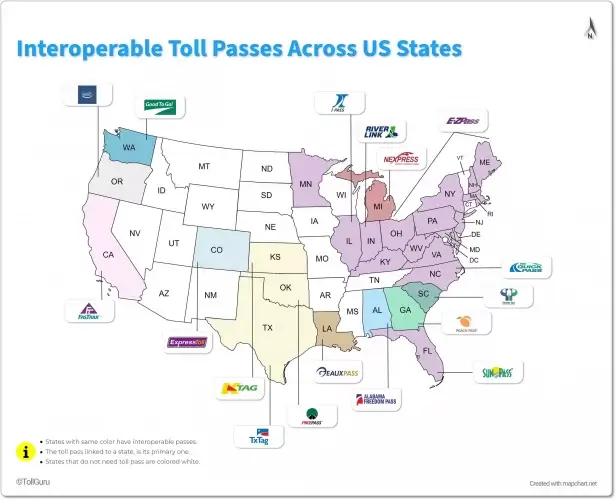
The concept of interoperability in electronic toll collection refers to the ability for one transponder or system to be recognized and accepted across different tolling authorities, even in different states. While the E-ZPass network has achieved significant interoperability across much of the Eastern United States, and IPass transponders are generally compatible within the E-ZPass system, Florida operates its own distinct electronic toll collection architecture.
Specifically, Florida’s major tolling systems are SunPass (statewide) and E-PASS (primarily for the Orlando area’s CFX roads). These systems are designed to work with their proprietary transponders or via license plate recognition. Unfortunately, an IPass transponder is not recognized by Florida’s toll gantries, meaning it will not register a valid payment.
Travelers attempting to use an IPass in Florida will effectively be treated as if they have no electronic transponder. This typically results in a “Toll-By-Plate” charge, where cameras capture the vehicle’s license plate, and a bill is mailed to the registered owner. While this method does ensure tolls are eventually paid, it often comes with additional administrative fees, making it a more expensive and less convenient option than using a compatible Florida transponder. This lack of interoperability highlights the importance of proactive planning for anyone driving through Florida’s toll roads.
Your Best Bets for Toll Payment in the Sunshine State
Given that IPass isn’t an option, understanding Florida’s native toll payment solutions becomes your priority. Fortunately, the state offers several convenient and cost-effective methods that cater to various travel styles, from short tourist visits to extended stays. Aligning your toll strategy with your specific travel plans can save you time, money, and unnecessary stress, allowing you to focus on the local culture, food, and activities that make Florida so special.
E-PASS and SunPass: Florida’s Homegrown Solutions
For anyone planning extensive driving in Florida, investing in a local transponder is overwhelmingly the most recommended approach.
- SunPass: This is Florida’s statewide electronic toll collection system, managed by Florida’s Turnpike Enterprise. A SunPass transponder works on virtually all toll roads and most bridges throughout the state. There are two main types:
- SunPass Mini: A sticker transponder that adheres to your windshield. It’s inexpensive (around $5) and non-transferable between vehicles. Ideal for rental cars if you don’t mind leaving it behind or for short visits.
- SunPass PRO: A portable transponder (around $15) that can be moved between vehicles. Critically, the SunPass PRO offers interoperability with the E-ZPass network in many other states, making it an excellent choice for frequent travelers who visit multiple regions.
You can purchase SunPass transponders online, at major retail stores like Publix, CVS, and Walgreens, or at service plazas along Florida’s Turnpike. Once acquired, you’ll need to activate it and load funds onto your account, typically online or via the SunPass app.
- E-PASS: Operated by the Central Florida Expressway Authority (CFX), E-PASS is another excellent option, especially if your travels are centered around the Orlando area. E-PASS transponders work on all CFX roads and are also compatible with the statewide SunPass network and the E-ZPass system. E-PASS offers its own versions of sticker and portable transponders, often with competitive pricing and potential additional discounts on CFX roads. Like SunPass, E-PASS transponders can be purchased online or at various retail locations in Central Florida.

Both SunPass and E-PASS offer significant discounts compared to the “Toll-By-Plate” method, making them well worth the small initial investment for almost any visitor.
Rental Cars and Tolls: What You Need to Know
For many tourists, a rental car is an essential part of their Florida itinerary, providing the flexibility to explore beyond the immediate vicinity of their hotels or resorts. However, rental cars introduce a layer of complexity to toll payments. Most major rental companies like Hertz, Enterprise, and Avis offer their own toll programs, often branded as PlatePass, TollPass, or similar.
These programs typically involve the rental company tracking your toll usage via the car’s license plate or a built-in transponder, and then billing you for the tolls plus a daily administrative fee. While convenient, these fees can quickly add up, sometimes exceeding the cost of the tolls themselves, particularly for longer trips. It’s crucial to understand the terms and costs of your rental car’s toll program before you drive off the lot. In some cases, opting out of their program might be possible, but you’ll then be responsible for managing tolls yourself.
A common strategy for savvy travelers is to decline the rental car’s toll program and instead use your own purchased SunPass Mini or E-PASS sticker transponder. If you go this route, ensure the transponder is properly mounted and activated to your rental vehicle’s license plate number (which you can often update via the SunPass or E-PASS app or website). This method ensures you pay the lowest possible toll rates without incurring hefty rental company surcharges.
Alternative Payment Methods for Occasional Travelers
While electronic transponders are the preferred and most economical method, Florida does offer alternatives for those who might only encounter a few tolls or prefer not to purchase a transponder.
- Toll-By-Plate (Pay-By-Mail): If you drive through an electronic toll lane without a compatible transponder, cameras will capture your license plate. A bill for the tolls, often with a higher administrative fee, will then be mailed to the registered owner of the vehicle (which, in the case of a rental, will go to the rental company, which will then charge you, usually with additional fees). This method is the most expensive and least convenient due to the added processing costs and potential for delayed billing. It’s generally advised to avoid relying on Toll-By-Plate.
- Cash Lanes (Limited): Historically, many toll plazas offered cash lanes. However, Florida is rapidly transitioning to an all-electronic tolling system. Many major toll roads and exits no longer accept cash. Relying on cash payment is not a reliable strategy and can lead to missed tolls and subsequent penalties if you accidentally enter an electronic-only lane without a transponder. Always assume tolls are cashless unless explicitly stated otherwise.
For a stress-free experience, especially when exploring multiple destinations like Naples, Miami, and the Florida Keys, purchasing a SunPass or E-PASS transponder remains the most effective and economical solution.
Enhancing Your Florida Travel Experience with Seamless Toll Management
Mastering Florida’s toll system is more than just avoiding fines; it’s about optimizing your travel time, reducing stress, and ensuring a smoother, more enjoyable journey through the Sunshine State. A well-planned approach to tolls is an integral part of holistic travel planning, impacting everything from your budget travel considerations to your luxury travel experiences.
Planning Your Route: Avoiding or Embracing Tolls
Modern navigation apps like Google Maps and Waze are invaluable tools for Florida travelers. These apps typically allow you to view routes with and without tolls, providing estimated travel times and costs for each option. This feature is particularly useful for deciding whether the time savings offered by a toll road justify the expense for your specific itinerary.
For instance, driving from Orlando to Miami via Florida’s Turnpike is significantly faster than taking toll-free alternatives. The convenience of these direct routes can be invaluable, especially if you’re traveling with family to Legoland Florida Resort or need to arrive punctually for a business meeting in Jacksonville. Conversely, if you’re on a budget or have ample time, selecting a non-tolled route might offer a scenic detour and a chance to discover lesser-known local gems. The key is to make an informed decision based on your priorities for time, cost, and sightseeing. Checking your route in advance also helps prevent accidentally entering an electronic-only toll lane unprepared.
Beyond Tolls: Maximizing Your Florida Adventure
While effective toll management is critical for a smooth road trip, it’s just one facet of maximizing your Florida adventure. The website’s main topics—Travel, Hotels, Tourism, Accommodation, Landmarks, and Lifestyle—all converge to create a truly memorable experience.
Consider how seamless travel, including hassle-free toll payments, allows you to fully immerse yourself in Florida’s diverse offerings:
- Travel and Destinations: With tolls sorted, you can effortlessly drive between iconic cities like Orlando (for theme parks) and Miami (for vibrant culture and nightlife), or venture off the beaten path to explore the tranquil beauty of the Florida Keys or the historical charm of St. Augustine.
- Hotels and Accommodation: Whether you’re staying at one of the luxurious Walt Disney World Resorts, a chic boutique hotel in South Beach, or a serene villa in Naples, easy access via well-managed toll roads means more time relaxing by the pool and less time worrying about logistics. Efficient toll payment enhances the overall convenience, a key amenity for any traveler.
- Tourism and Local Culture: A stress-free drive allows you to focus on the authentic experiences—sampling fresh seafood, exploring local markets, or engaging with unique festivals. You’re more likely to embrace spontaneous detours to discover a hidden gem restaurant or a quaint seaside town.
- Landmarks and Attractions: From the technological marvels at Kennedy Space Center to the natural wonders of the Everglades National Park, Florida is rich with landmarks. Seamless toll payments ensure your journey to these iconic sites is uninterrupted, enhancing the overall experience.
- Lifestyle: Whether your trip embodies luxury travel with stays at five-star resorts and private excursions, or you’re meticulously planning a budget travel adventure, efficient toll management ensures resources (both time and money) are allocated effectively to what truly matters—the experiences. It supports all forms of family trips, business stays, or solo explorations, providing a foundation for enjoyment.
In conclusion, while your IPass won’t work in Florida, the solutions available are numerous and easy to implement. By understanding Florida’s specific tolling systems (SunPass and E-PASS), being mindful of rental car toll policies, and using technology for route planning, you can ensure your journey through the Sunshine State is as smooth and enjoyable as the ocean breezes. This preparedness frees you up to fully embrace the vibrant culture, breathtaking landscapes, and thrilling attractions that make Florida a top-tier global destination.
LifeOutOfTheBox is a participant in the Amazon Services LLC Associates Program, an affiliate advertising program designed to provide a means for sites to earn advertising fees by advertising and linking to Amazon.com. Amazon, the Amazon logo, AmazonSupply, and the AmazonSupply logo are trademarks of Amazon.com, Inc. or its affiliates. As an Amazon Associate we earn affiliate commissions from qualifying purchases.