
Navigating the complexities of divorce is a profound life transition, often accompanied by a whirlwind of emotions and practical concerns. For those facing this journey in the Sunshine State, one of the most pressing questions is inevitably: “How long will this take?” While there’s no single, straightforward answer, understanding the underlying factors and the procedural landscape in Florida can provide clarity and help manage expectations. This guide aims to shed light on the timelines involved, from the initial filing to the final judgment, and how various elements can expedite or extend the process, allowing individuals to plan for their future with greater foresight, whether that involves new beginnings, career shifts, or perhaps even rediscovering the joy of travel within or beyond Florida’s vibrant destinations.
Unpacking the Fundamentals of Divorce in Florida
Divorce, legally referred to as “dissolution of marriage” in Florida, follows a specific legal framework designed to ensure fair and equitable resolutions for all parties involved. The duration of this process is highly variable, influenced by a multitude of personal and legal circumstances. Before delving into the specific stages, it’s crucial to grasp the foundational elements that dictate the overall timeline.
The Minimum Requirement: Florida’s 20-Day Cooling-Off Period
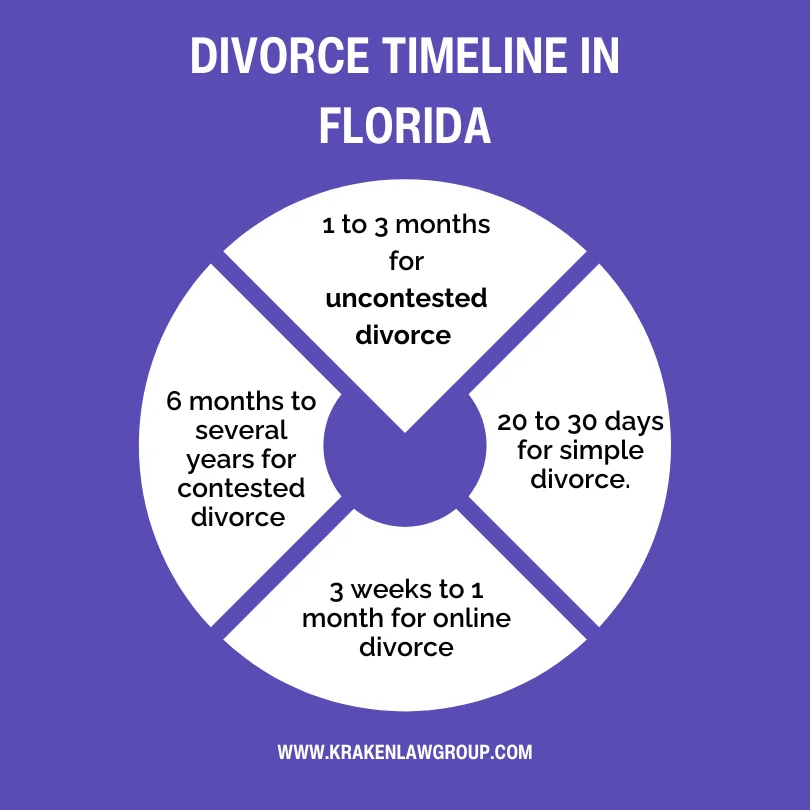
Regardless of how amicable or contentious a divorce may be, Florida law mandates a statutory waiting period. Once the Petition for Dissolution of Marriage has been filed with the circuit court and served upon the other party, there is a minimum of 20 days before a judge can officially sign the Final Judgment. This period, often referred to as a “cooling-off” period, is designed to give couples a final opportunity to reconsider their decision or to ensure all legal requirements are met.
In practice, however, it’s exceedingly rare for a divorce to be finalized in just 20 days. This minimum serves as a legal benchmark, not a realistic expectation for the average case. Even the most uncontested divorces typically take longer to process due to administrative requirements, court schedules, and the need to prepare and review all necessary documentation. For instance, couples residing in bustling legal districts like Miami or Orlando might experience slight variations in administrative processing times compared to smaller counties.
The Core Distinction: Uncontested vs. Contested Cases
The most significant determinant of a divorce’s duration is whether it is “uncontested” or “contested.” This distinction essentially boils down to the level of agreement between the divorcing spouses.
-
Uncontested Divorce: This occurs when both spouses agree on all key terms of the divorce, including the division of marital assets and liabilities, alimony, and, if applicable, a parenting plan for minor children. In an uncontested divorce, the parties work together (often with legal counsel) to draft a Marital Settlement Agreement and a Parenting Plan (if children are involved) that fully addresses all issues. Once these documents are signed by both parties, they are submitted to the court along with the Petition. Because there are no disputes for the judge to resolve, the court primarily reviews the agreement for fairness and legal compliance. Uncontested divorces are typically the fastest route, often concluding within 1 to 3 months after the initial filing, provided all paperwork is correctly submitted and court dockets are not overly burdened. Cities like Tampa and Jacksonville, with their diverse populations, see a fair share of these cooperative dissolutions.
-
Contested Divorce: This is the more common scenario, where spouses disagree on one or more crucial aspects of the divorce. These disagreements can range from minor disputes over specific assets to significant conflicts regarding child custody, support, or alimony. Each point of contention requires negotiation, discovery, and potentially court intervention. Contested divorces are inherently longer and more complex, often spanning 6 months to over a year, and in highly complex cases, even several years. The process involves multiple stages of information gathering, negotiation, and potentially litigation, demanding considerable time and resources from both parties and the legal system. The intricate legal procedures involved mean that individuals navigating such divorces may find themselves immersed in a lengthy process that can feel like an arduous journey, far removed from the carefree experiences associated with visiting Florida’s theme parks or pristine beaches.
The Stages of a Florida Divorce: A Detailed Timeline
Understanding the various procedural steps involved in a Florida divorce provides a clearer picture of why the process takes the time it does. Each stage has its own requirements and potential for delays.
Initiation: Filing the Petition and Service of Process
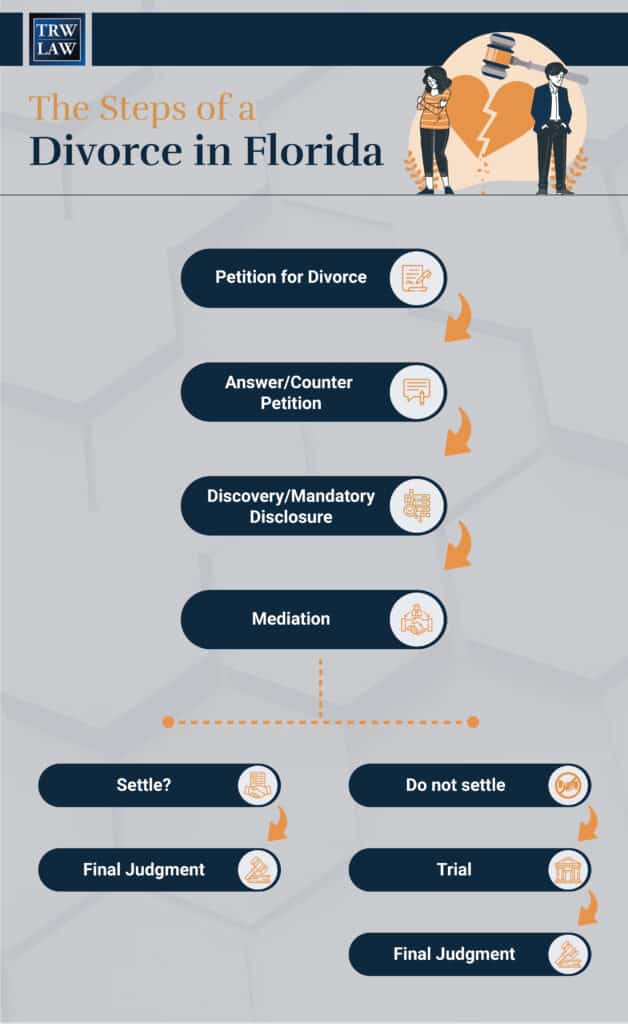
The divorce process officially begins when one spouse (the Petitioner) files a “Petition for Dissolution of Marriage” with the appropriate circuit court in Florida. This document formally requests the court to end the marriage and outlines the relief sought (e.g., child custody, asset division).
Once filed, the Petition must be “served” on the other spouse (the Respondent). Service of process legally notifies the Respondent of the divorce action. This can be done by a sheriff or a private process server. The Respondent then has 20 days from the date of service to file an “Answer” with the court, responding to the allegations in the Petition. If the Respondent agrees to the terms, they may sign a “Waiver of Service” and/or a Marital Settlement Agreement, simplifying this initial phase. Delays can occur if the Respondent is difficult to locate or avoids service.
The Discovery Phase: Gathering Crucial Information
For contested divorces, the discovery phase is typically the longest and most resource-intensive part of the process. This stage is dedicated to gathering all relevant financial and personal information necessary to make informed decisions about property division, support, and parenting.
Common discovery methods include:
- Mandatory Disclosure: Both parties are required to exchange specific financial documents, such as tax returns, bank statements, pay stubs, and investment account statements, within 45 days of the service of the Petition.
- Interrogatories: Written questions sent by one party to the other, requiring written, sworn answers.
- Requests for Production: Formal requests for specific documents or tangible items.
- Depositions: Sworn oral testimonies taken outside of court, usually before a court reporter.
- Subpoenas: Legal orders compelling third parties (e.g., banks, employers) to provide documents or testimony.
The length of the discovery phase varies significantly based on the complexity of the marital estate. If there are extensive assets (businesses, multiple properties, complex investments), hidden assets, or significant debts, discovery can take several months, often 3 to 9 months, as attorneys analyze data, consult experts (e.g., forensic accountants, appraisers), and pursue information vigorously.
Mediation: Seeking Common Ground Outside Court
Florida law strongly encourages, and often mandates, mediation for contested divorces before a final trial. Mediation involves a neutral third-party mediator who helps the spouses negotiate and reach mutually agreeable solutions. The goal is to resolve disputes without the need for a judge’s ruling, which is often faster, less expensive, and less emotionally draining.

Mediation sessions can range from a single day to several sessions over weeks or months, depending on the number and complexity of unresolved issues. If a full or partial agreement is reached in mediation, the attorneys draft a Marital Settlement Agreement, which is then submitted to the court. Successful mediation can significantly shorten the overall divorce timeline, potentially saving months of litigation. However, if mediation fails, the case proceeds towards trial.
From Agreement to Final Judgment: The Path to Resolution
Once all issues are resolved, either through a comprehensive Marital Settlement Agreement (uncontested or successfully mediated contested case) or through court orders resulting from contested hearings or trials, the final steps involve formalizing the divorce.
-
Uncontested/Settled Cases: The attorneys prepare a proposed Final Judgment, often incorporating the Marital Settlement Agreement and Parenting Plan. In many uncontested cases, particularly those without minor children, the judge may sign the Final Judgment without a court appearance, known as a “Divorce by Affidavit.” In other cases, a brief “final hearing” may be scheduled, which is typically a formality to ensure all documents are in order and the parties understand the agreement. The time from submitting the final documents to receiving the signed Final Judgment can be anywhere from a few days to a few weeks, depending on the judge’s schedule.
-
Contested Cases (Trial): If mediation fails, the case will be set for a final trial. Trial dates are often scheduled months in advance, depending on the court’s calendar and the availability of the judge and attorneys. A trial can last anywhere from a few hours to several days or even weeks for extremely complex cases. After the trial, the judge takes the case “under advisement” and issues a written Final Judgment, which can take additional weeks or months. This is often the longest and most unpredictable path to resolution, potentially adding many months to a year or more to the timeline.
Factors That Significantly Impact Divorce Duration
Beyond the uncontested/contested distinction, several specific elements within a divorce proceeding can dramatically influence how long it takes. Understanding these can help individuals prepare for the journey ahead.
Children and Parenting Plans: A Paramount Consideration
When minor children are involved, the divorce process becomes inherently more complex and often takes longer. The court’s primary concern is always the best interests of the child. This requires:
- Developing a Parenting Plan: This document outlines parental responsibilities, time-sharing schedules (custody), and decision-making authority. Reaching an agreement on these sensitive issues can be challenging and emotionally charged.
- Child Support Calculations: Florida has specific guidelines for calculating child support, but disputes can arise over income imputation, healthcare costs, and other factors.
- Parenting Plan Disputes: If parents cannot agree on a parenting plan, the court may order a social investigation, psychological evaluations, or a Guardian Ad Litem to represent the child’s interests, all of which extend the timeline. These processes, common in populous areas like Orlando where family courts are busy, ensure thorough consideration but add to the duration.
Division of Marital Assets and Liabilities
Florida is an equitable distribution state, meaning marital assets and liabilities acquired during the marriage are typically divided fairly, though not necessarily equally. The complexity of this division is a major driver of divorce duration:
- High-Net-Worth Cases: Divorces involving substantial assets, complex business interests, real estate portfolios (perhaps including properties in destinations like Key West or Sarasota), or international investments require extensive valuation and often expert testimony (appraisers, forensic accountants).
- Disputes Over Valuation: Spouses often disagree on the value of assets (e.g., a family business, a pension) or the characterization of property as marital versus non-marital.
- Hidden Assets/Debts: Allegations of one spouse hiding assets or liabilities can trigger intensive discovery and potentially court sanctions, significantly prolonging the case.
Alimony and Spousal Support Determinations
Alimony (spousal support) is not automatic in Florida. The court considers various factors, including the length of the marriage, the standard of living during the marriage, the financial resources of each party, and their earning capacities. Disputes over the type, amount, and duration of alimony are common and can lead to lengthy negotiations and litigation. The court may award temporary, bridge-the-gap, rehabilitative, durational, or permanent alimony, each with specific criteria and implications for the divorce timeline.
The Role of Legal Representation and Court Congestion
The efficiency and experience of the divorce attorneys on both sides can play a significant role. Skilled attorneys can streamline the process through effective negotiation and meticulous preparation. Conversely, attorneys who are uncooperative or inefficient can draw out the proceedings.
Furthermore, the workload of the specific circuit court and individual judges in Florida can impact timelines. Courts in larger, more populated counties such as Broward County or Palm Beach County may have heavier dockets, leading to longer waits for hearings, mediation dates, and trial slots. The responsiveness of paralegals and support staff at law firms also influences the pace of document filing and communication.
Navigating Life Beyond Divorce: Planning for a New Chapter in Florida
While the divorce process itself can be a demanding period, it ultimately leads to the opportunity for a new beginning. Many individuals emerge from this transition with a renewed sense of purpose, eager to redefine their lives and embrace future possibilities. For those in Florida, this might mean exploring new career paths, focusing on personal well-being, or simply taking the time to enjoy the state’s unparalleled natural beauty and diverse cultural offerings.
Post-divorce, individuals often find themselves with newfound freedom, perhaps opting for different living arrangements. This could involve settling into a charming new neighborhood in St. Petersburg, downsizing to a cozy apartment near the vibrant arts scene in Fort Lauderdale, or even considering a long-term stay in a resort town like Naples to decompress. The journey of divorce, though challenging, can ultimately pave the way for a more intentional and fulfilling lifestyle, where travel, personal growth, and new experiences become central to one’s narrative. Planning for these future endeavors, be it a relaxing trip to the Florida Keys or a fresh start in a new community, becomes an empowering step forward after the final judgment is rendered.
In conclusion, while a Florida divorce can legally be finalized in as little as 20 days, the practical reality is that most cases take considerably longer, ranging from a few months for uncontested matters to over a year or more for highly contentious and complex situations. Understanding these timelines and the factors that influence them can help individuals approach this significant life event with a clearer perspective, enabling them to navigate the legal process more effectively and plan for the exciting new chapter that awaits them.
LifeOutOfTheBox is a participant in the Amazon Services LLC Associates Program, an affiliate advertising program designed to provide a means for sites to earn advertising fees by advertising and linking to Amazon.com. Amazon, the Amazon logo, AmazonSupply, and the AmazonSupply logo are trademarks of Amazon.com, Inc. or its affiliates. As an Amazon Associate we earn affiliate commissions from qualifying purchases.