
Florida, the Sunshine State, beckons with its vibrant economy, stunning natural beauty, and a lifestyle envied by many. For ambitious individuals looking to carve out a rewarding career in construction, becoming a licensed contractor in Florida presents a unique blend of professional opportunity and personal fulfillment. With its booming tourism industry, constant influx of new residents, and the perpetual need for development and infrastructure, the demand for skilled contractors across various specializations remains consistently high. This guide will walk you through the essential steps, considerations, and unique advantages of pursuing a contracting career in this dynamic state, seamlessly integrating the allure of Florida’s travel, tourism, and lifestyle landscape into your professional journey.
The Sunshine State’s Appeal for Aspiring Contractors
Florida’s unique geographical position, year-round warm weather, and diverse cultural tapestry create an unparalleled environment for both living and working. For contractors, this translates into a robust market fueled by continuous growth and a specific set of construction demands. The state is not just a place to build; it’s a destination where your work directly contributes to world-class travel experiences, luxurious accommodations, and iconic landmarks.
A Landscape of Opportunity: Florida’s Growth and Tourism Boom
At the heart of Florida’s booming construction industry is its relentless growth in population and, perhaps more significantly, its status as a global tourism powerhouse. Millions flock to the state annually, seeking everything from the magical wonders of Walt Disney World Resort in Orlando to the sun-drenched beaches of Miami and the serene beauty of the Florida Keys. This constant influx drives an incredible demand for new infrastructure, from sprawling resorts and boutique hotels to luxury condominiums and vacation rental properties.
Consider the needs of a destination like Orlando, home to not only Walt Disney World Resort but also Universal Orlando Resort and numerous other attractions. The development here is constant, encompassing new theme park expansions, cutting-edge entertainment complexes, and a continuous stream of hotel projects. Contractors specializing in commercial construction, hospitality renovations, and even specialized trades like themed environment construction find a fertile ground. Similarly, coastal cities like Miami, Fort Lauderdale, and Naples are continuously seeing the rise of high-end residential towers, luxury resorts, and waterfront properties, catering to both domestic and international visitors and residents seeking an opulent lifestyle.
The sustained appeal of Florida as a destination for both short-term vacations and long-term stays also fuels the demand for contractors specializing in accommodation-related projects. This includes everything from the construction of new Grand Hyatt Hotel properties in Tampa to the renovation of historic inns in St. Augustine or the development of eco-friendly resort communities near the Everglades. As a contractor, you could be involved in projects that shape the very experiences tourists have, from crafting inviting hotel lobbies to building innovative aquatic centers that serve as key attractions. The state’s economic resilience, largely powered by its tourism and real estate sectors, provides a stable and expanding market for skilled trades. Beyond the major hubs, even smaller towns and coastal communities are experiencing growth, requiring contractors for everything from residential builds to local commercial developments that support the visitor economy. This widespread demand ensures diverse opportunities for various contracting specializations.
Navigating Florida’s Unique Construction Environment
While the opportunities are vast, Florida’s construction environment comes with its own set of unique challenges and considerations. The most prominent of these is the state’s susceptibility to hurricanes and tropical storms. As a result, Florida boasts some of the most stringent building codes in the nation, particularly concerning wind resistance, flood mitigation, and general structural integrity. Contractors must possess an in-depth understanding of the Florida Building Code and be proficient in implementing hurricane-resistant construction techniques, from reinforced concrete to impact-resistant windows. This expertise is not merely a regulatory requirement; it’s a critical component of ensuring safety and longevity in a climate prone to severe weather.
Furthermore, construction along Florida’s extensive coastline and near sensitive ecosystems like the Everglades or natural springs requires adherence to strict environmental regulations. Projects might involve specialized permits for working in wetlands, managing stormwater runoff, or protecting endangered species habitats. Contractors engaged in coastal development, marine construction (docks, seawalls, marinas), or projects in environmentally sensitive areas must navigate these complexities carefully, often requiring collaboration with environmental consultants and state agencies.
The types of projects also vary significantly. While residential construction, including single-family homes and multi-family units, remains a cornerstone, the commercial sector, driven by tourism and retail, is equally robust. Specialized projects are also common, from the intricate design and construction of golf course clubhouses in Ponte Vedra Beach to the installation of advanced pool and spa systems for resorts in South Beach. Understanding these nuances and being prepared to adapt your skills and knowledge to Florida’s specific demands is crucial for success. This unique blend of high demand and specialized requirements makes becoming a contractor in Florida both challenging and immensely rewarding, offering opportunities to work on projects that are not only structurally sound but also aesthetically integrated into the state’s iconic landscapes.
Charting Your Path: Steps to Becoming a Licensed Contractor in Florida
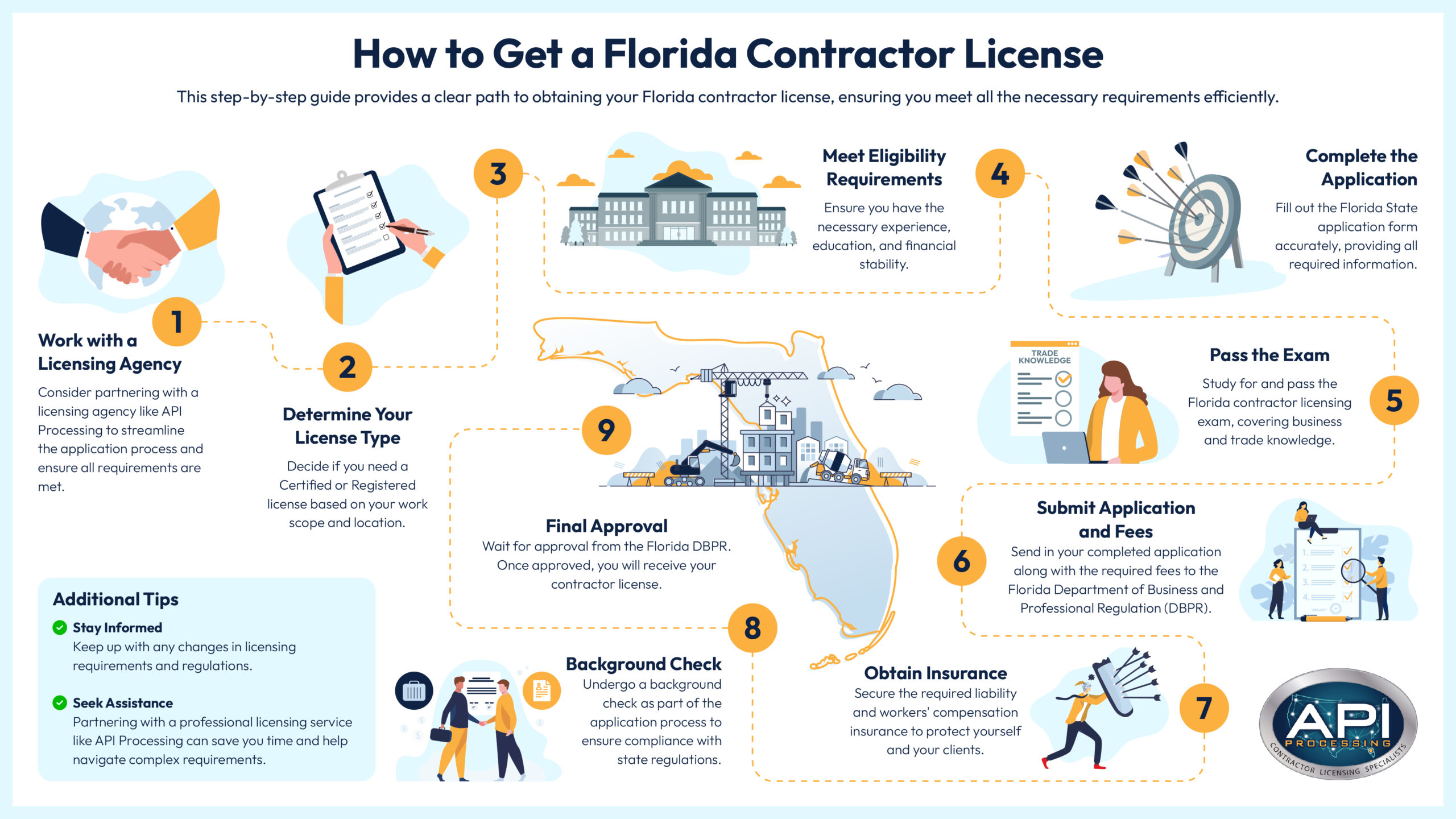
Becoming a licensed contractor in Florida is a structured process designed to ensure that all professionals meet rigorous standards of competency, financial stability, and ethical conduct. This framework is essential for protecting consumers, maintaining high construction quality, and upholding the integrity of the industry, especially given the state’s unique environmental and regulatory landscape.
Understanding Licensing and Certification
Florida distinguishes between two main types of contractor licenses: “Certified” and “Registered.” Understanding the difference is the first critical step:
- Certified Contractors: These licenses are issued by the Florida Department of Business and Professional Regulation (DBPR) and allow you to work anywhere in the state, regardless of county or municipal boundaries. This is the most common and versatile type of license for those seeking broad opportunities across Florida’s diverse markets, from Jacksonville to Key West.
- Registered Contractors: These licenses are issued at the local (county or city) level. They allow you to work only within the specific jurisdiction where you are registered. To become a registered contractor, you typically need to hold a local competency card and register it with the DBPR for statewide recognition, but your scope remains limited to the locality where the original competency was issued. For those planning to focus on a specific regional market, like exclusively building custom homes in Sarasota, a registered license might suffice initially, though most aspiring contractors opt for certified licenses for greater flexibility.

Beyond this distinction, Florida offers numerous categories of licenses, each requiring specialized knowledge and experience. The most common include:
- General Contractor: The broadest license, allowing you to undertake any type of residential, commercial, or industrial building construction. This includes structural work, framing, roofing, and everything up to the complete construction of a multi-story hotel or a large resort complex.
- Building Contractor: Limited to commercial buildings not exceeding three stories in height and residential buildings of any height. This is suitable for many residential developments and smaller commercial properties, including many boutique hotels or vacation rental communities.
- Residential Contractor: Limited to residential buildings not exceeding two stories in height. Ideal for those focusing solely on single-family homes or small apartment complexes that cater to local residents or long-term vacationers.
- Specialty Contractors: This category includes a vast array of specific trades, such as roofing, plumbing, electrical, mechanical, pool/spa, HVAC, marine, solar, and many others. For those looking to support Florida’s tourism industry, specialty licenses in areas like swimming pool construction (essential for resorts and vacation homes), marine construction (for waterfront properties and marinas), or even commercial kitchen installation (for restaurants within hotels) can be highly lucrative. For instance, a certified Pool/Spa contractor can work on designing and building elaborate water features for a luxury resort or installing energy-efficient systems for a community pool serving vacation rentals.
Regardless of the category, the core requirements for obtaining a certified license typically include a combination of experience, education, and passing comprehensive examinations. Generally, you need at least four years of experience in the specific trade for which you are applying, or a combination of college-level education (such as a degree in construction management) and relevant experience. This blend ensures that contractors entering the field possess both practical know-how and theoretical understanding, critical for navigating the complexities of modern construction in Florida’s diverse market.
The Application Process: From Paperwork to Practice
Once you’ve determined the appropriate license category and confirmed you meet the experience/education requirements, the next phase involves navigating the application and examination process. This typically falls under the purview of the Florida Construction Industry Licensing Board (CILB), which operates under the DBPR.
- Application Submission: You’ll need to submit a detailed application to the CILB, providing documentation of your experience, education, financial stability, and any criminal background checks. This phase requires meticulous attention to detail, as incomplete applications are frequently delayed or rejected. The financial stability component is crucial; applicants must demonstrate that their net worth meets specific thresholds, which vary by license type, to ensure they have the resources to operate a contracting business responsibly.
- Examination: This is arguably the most challenging part of the process. Certified contractor exams in Florida are notoriously difficult and consist of two main parts:
- Business and Finance: This section tests your knowledge of critical business management principles, including accounting, project management, contracts, liens, worker’s compensation, safety regulations, and relevant Florida laws. Success in this section is vital for running any construction business, whether you’re building a single home or managing the development of a large commercial resort.
- Trade Knowledge: This section focuses on the specific technical aspects of your chosen license category. For a general contractor, this would cover everything from structural engineering and foundation work to roofing and electrical systems. For a pool contractor, it would delve into pool design, hydraulics, sanitation, and safety features. These are open-book exams, but they require a deep understanding of the reference materials and the ability to quickly locate information. Many aspiring contractors invest in specialized exam preparation courses to increase their chances of success.
- Financial Stability & Background Check: Before a license is issued, the CILB will conduct a thorough review of your financial standing and a criminal background check. You must demonstrate financial responsibility to ensure you can operate a business and fulfill contractual obligations. Any criminal history will be evaluated on a case-by-case basis.
- Insurance and Bonding: Once your license is approved, you must obtain appropriate liability insurance and, in many cases, bonding. Liability insurance protects against unforeseen accidents and damages on job sites, while bonding provides financial guarantees to clients that work will be completed according to contract. These are not merely regulatory hurdles; they are fundamental to building trust with clients, especially those undertaking significant investments in tourism-related properties or luxury accommodations.
The entire process, from application submission to receiving your license, can take several months. Persistence, thorough preparation for the exams, and meticulous attention to all requirements are key to successfully becoming a licensed contractor in Florida and tapping into its vibrant construction market.
Building a Successful Contracting Business in Florida
Obtaining your license is a significant achievement, but it’s just the beginning. To truly thrive as a contractor in Florida’s competitive yet opportunity-rich environment, you need a strategic approach to market engagement, client relations, and sustainable business growth, all while embracing the unique lifestyle the state offers.
Strategic Networking and Market Focus
Success in Florida’s contracting landscape hinges heavily on understanding and targeting the right markets, coupled with effective networking. Given the state’s economic drivers, focusing on sectors that align with its tourism and hospitality strengths can be particularly lucrative.
- Hospitality Sector: Consider specializing in hotel renovations, resort expansions, or the construction of new short-term rental properties. Developers of boutique hotels in St. Petersburg or luxury vacation villas in Destin are constantly seeking reliable contractors with expertise in high-end finishes, complex amenity installations (like resort-style pools or spa facilities), and efficient project management to minimize disruption to guest experiences. Attending hospitality industry trade shows and connecting with hotel owners, real estate investment trusts, and property management groups can open doors to significant projects.
- Luxury Residential and Waterfront Properties: Florida is synonymous with luxury living, particularly along its Atlantic Coast and Gulf Coast. Building or renovating custom homes, especially those with unique architectural designs or waterfront considerations, can be highly profitable. This market demands exceptional craftsmanship, attention to detail, and often specialized knowledge of coastal construction requirements. Networking with high-end real estate agents, architects specializing in luxury homes, and interior designers is paramount in this niche.
- Commercial and Infrastructure: Beyond direct hospitality, the ancillary infrastructure supporting tourism is also a huge market. This includes retail spaces in tourist districts, restaurant build-outs, entertainment venues, and even improvements to public spaces and transportation hubs that facilitate visitor flow. Cities like Tallahassee, while not primarily a tourist destination, have consistent commercial development needs as the state capital, offering steady opportunities.
Building strong local connections is vital. Join local chambers of commerce, industry associations like the Florida Home Builders Association (FHBA), and attend regional networking events. Partnerships with established developers, architects, and even other contractors (for subcontracting opportunities) can provide a steady pipeline of projects and help you establish a reputation for quality and reliability. Word-of-mouth and referrals are powerful in Florida’s tight-knit professional communities.
Sustaining Growth and Embracing the Florida Lifestyle
To ensure long-term success, a Florida contractor must prioritize continuous learning, adaptability, and an understanding of emerging trends. The construction industry is constantly evolving, with new materials, technologies (like smart home integration, drone mapping, and building information modeling), and sustainable practices becoming increasingly important. Staying updated through continuing education courses, industry workshops, and certifications in areas like green building can give you a competitive edge, especially when bidding on projects for environmentally conscious clients or eco-resorts.
Furthermore, adapting to market shifts is crucial. For example, the increasing popularity of remote work has led to a demand for home office renovations and smart living spaces. The emphasis on health and wellness has spurred interest in projects incorporating advanced air filtration systems, natural light optimization, and outdoor living areas that seamlessly blend with Florida’s beautiful climate. For those in the tourism sector, understanding evolving traveler preferences – such as demand for experiential travel or unique accommodation types – can guide your service offerings.
Finally, one of the greatest advantages of being a contractor in Florida is the unparalleled lifestyle. While the work is demanding, the state offers abundant opportunities for leisure and travel right outside your job site. Imagine spending your weekends exploring the pristine beaches of Siesta Key, fishing in the Gulf Coast waters, or enjoying world-class dining and cultural events in Miami’s vibrant neighborhoods. A successful contracting business in Florida allows you to balance professional achievement with a fulfilling personal life, whether it’s a family trip to Busch Gardens Tampa Bay or a quiet weekend getaway to a charming bed and breakfast in Mount Dora. Embrace the opportunity to build a career that not only contributes to the state’s dynamic growth but also allows you to fully experience the rich tapestry of its travel, tourism, and lifestyle offerings.
Becoming a contractor in Florida is an ambitious undertaking, demanding dedication, expertise, and a keen understanding of the state’s unique regulatory and market landscape. However, for those willing to navigate its complexities, the rewards are substantial. With a thriving economy fueled by tourism, a growing population, and a constant demand for high-quality construction across residential, commercial, and specialized sectors, Florida offers unparalleled opportunities for professional growth. By focusing on critical licensing requirements, mastering the intricacies of Florida’s building codes, strategically targeting its vibrant markets (especially those linked to its world-renowned travel and hospitality industries), and committing to continuous learning, you can build a highly successful contracting business. More than just a career, it’s an invitation to integrate your professional ambitions with a desirable lifestyle, allowing you to contribute to the Sunshine State’s iconic infrastructure while enjoying its endless attractions and natural beauty. Your journey to becoming a Florida contractor is not just about building structures; it’s about building a future within one of the world’s most dynamic and desirable locations.
LifeOutOfTheBox is a participant in the Amazon Services LLC Associates Program, an affiliate advertising program designed to provide a means for sites to earn advertising fees by advertising and linking to Amazon.com. Amazon, the Amazon logo, AmazonSupply, and the AmazonSupply logo are trademarks of Amazon.com, Inc. or its affiliates. As an Amazon Associate we earn affiliate commissions from qualifying purchases.