
Dreaming of a life where your passion for travel and adventure converges with robust financial independence? Imagine establishing a thriving business amidst the sun-drenched beaches and vibrant culture of Florida. Whether your vision is to launch an exclusive boutique hotel, curate unique travel experiences, manage a portfolio of luxury vacation rentals, or simply secure your assets in this desirable state, forming a Limited Liability Company (LLC) in Florida can be your foundational step. This guide will walk you through the essential process of creating an LLC in the Sunshine State, framed within the exciting possibilities it opens for entrepreneurs in the travel, tourism, accommodation, and lifestyle sectors.
Florida isn’t just a top-tier destination for tourists; it’s a prime location for entrepreneurs seeking to capitalize on its dynamic economy, favorable business climate, and a constant influx of visitors. From the energetic nightlife of Miami to the magical allure of Orlando‘s theme parks, and the serene beauty of the Florida Keys, the state offers a diverse landscape for business ventures. An LLC provides a flexible and protective legal structure, ideal for safeguarding personal assets while pursuing your entrepreneurial ambitions, particularly in industries often characterized by fluctuating market demands and diverse clientele.
Unlocking Your Florida Dream: Why an LLC is Your Passport to Entrepreneurial Success
Establishing a business in Florida offers a unique blend of lifestyle and economic advantages. For those captivated by travel and luxury living, an LLC can be the cornerstone of a sustainable business model, whether you’re a seasoned investor or a burgeoning entrepreneur.
The Allure of Florida for Lifestyle Entrepreneurs and Investors
Florida’s appeal is undeniable. It consistently ranks as one of the most visited states in the U.S., drawing millions annually to its world-class attractions, pristine coastlines, and diverse cultural offerings. This consistent tourism flow creates a fertile ground for businesses centered around travel, accommodation, and unique experiences.
Consider the opportunities:
- Accommodation Ventures: Owning and operating vacation rentals, from cozy Apartments in South Beach to sprawling Villas near Walt Disney World, or even developing small Boutique Hotels or Resorts in burgeoning areas like St. Augustine or Naples. An LLC provides the necessary legal framework to manage these properties efficiently and professionally.
- Tourism-Related Businesses: Starting a guided tour company exploring the Everglades, an adventure sports outfitter in Key West, or a concierge service catering to luxury travelers in Fort Lauderdale. These ventures thrive on Florida’s natural beauty and tourist demand.
- Lifestyle Businesses: Entrepreneurs focused on luxury travel planning, event management at scenic Florida venues, or even digital nomad services for those relocating to the state can all benefit from the credibility and structure an LLC provides.
Beyond the direct market opportunities, Florida boasts a favorable tax environment, with no state income tax, which can significantly enhance your business’s profitability and your personal financial outlook. Its robust legal framework and pro-business policies make it an attractive hub for both domestic and international investors.
Key Advantages of an LLC for Your Florida Venture
Choosing an LLC structure for your Florida business offers several compelling benefits that resonate particularly well with the flexibility and security desired by modern lifestyle entrepreneurs.
- Limited Liability Protection: This is perhaps the most significant advantage. An LLC legally separates your personal assets from your business liabilities. If your vacation rental business faces a lawsuit or accrues debt, your personal savings, home, and other assets are generally protected. This peace of mind is invaluable, especially in industries that interact directly with the public or involve significant capital investment, like accommodation and tourism.
- Tax Flexibility: LLCs offer pass-through taxation by default, meaning profits and losses are passed through to the owners’ personal income without being taxed at the business level, avoiding “double taxation” common with C-corporations. Furthermore, you can elect for your LLC to be taxed as an S-corporation or C-corporation if it offers tax advantages for your specific situation, providing unparalleled adaptability.
- Credibility and Professionalism: Operating as an LLC lends credibility to your business. It signals to potential investors, partners, and customers that you are a serious and legitimate enterprise. This is crucial when seeking funding for a new Resort project, attracting high-end clientele for a luxury travel service, or negotiating with booking platforms for your Hotels or Villas.
- Operational Simplicity and Flexibility: Compared to corporations, LLCs typically have fewer ongoing compliance requirements and less formal operational structures. This simplicity allows entrepreneurs to focus more on their core business activities – whether it’s curating unforgettable travel experiences or optimizing guest satisfaction – rather than burdensome administrative tasks. It also allows for greater flexibility in management structure, accommodating everything from a single-owner operation to a multi-member venture with complex profit-sharing arrangements.
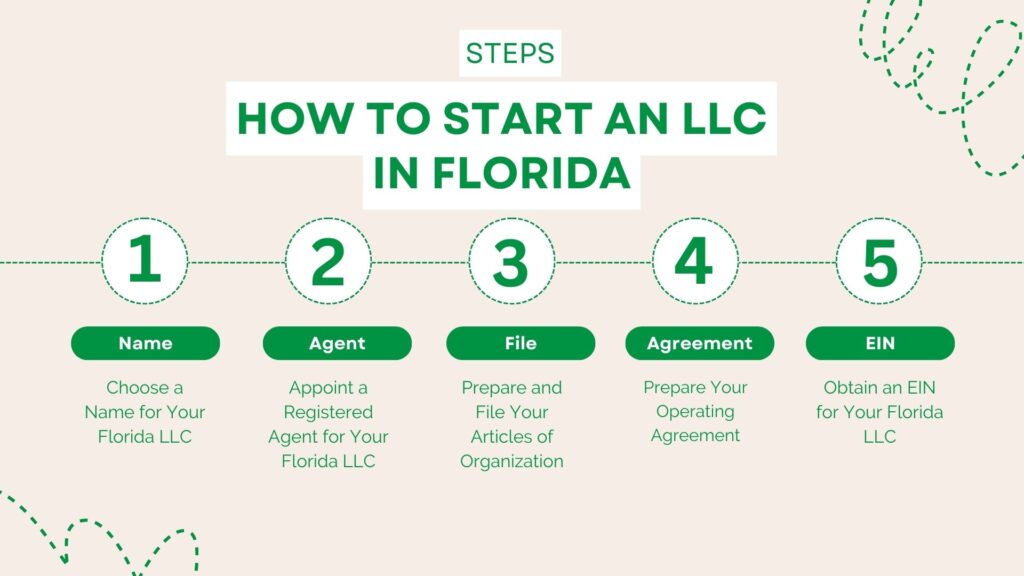
Your Step-by-Step Guide to Forming a Florida LLC
The process of forming an LLC in Florida is straightforward, making it accessible for aspiring entrepreneurs. Following these steps will ensure your business is legally established and ready to operate within the state.
Laying the Foundation: Name, Registered Agent, and Filing
The initial phase involves crucial decisions and filings that set the stage for your LLC.
-
Choose a Unique Business Name:
Your LLC’s name is its identity. It should be memorable, reflect your brand, and be available for use in Florida.- Availability: The name must be distinguishable from other registered entities in Florida. You can check for availability on the Florida Department of State (SunBiz) website.
- Required Designator: The name must include “Limited Liability Company,” “LLC,” or “L.L.C.” This clearly signals the business’s legal structure to the public and potential partners.
- Brand Alignment: If you’re starting a luxury travel agency, “Sunshine Coast Adventures LLC” might be more fitting than a generic name. For a Miami-based vacation rental service, “South Beach Stays LLC” could be ideal.
-
Appoint a Registered Agent:
Every Florida LLC is legally required to have a registered agent. This individual or entity is responsible for receiving official legal and tax documents on behalf of your LLC.- Requirements: The registered agent must be a Florida resident or a corporation authorized to do business in Florida. They must also have a physical street address (not a P.O. Box) in Florida where they are available during regular business hours.
- Importance: For digital nomads or those who frequently travel, having a professional registered agent service is invaluable. It ensures you never miss critical legal notices, even if you’re managing your Florida vacation rentals from abroad. Many services offer additional support, such as mail forwarding.
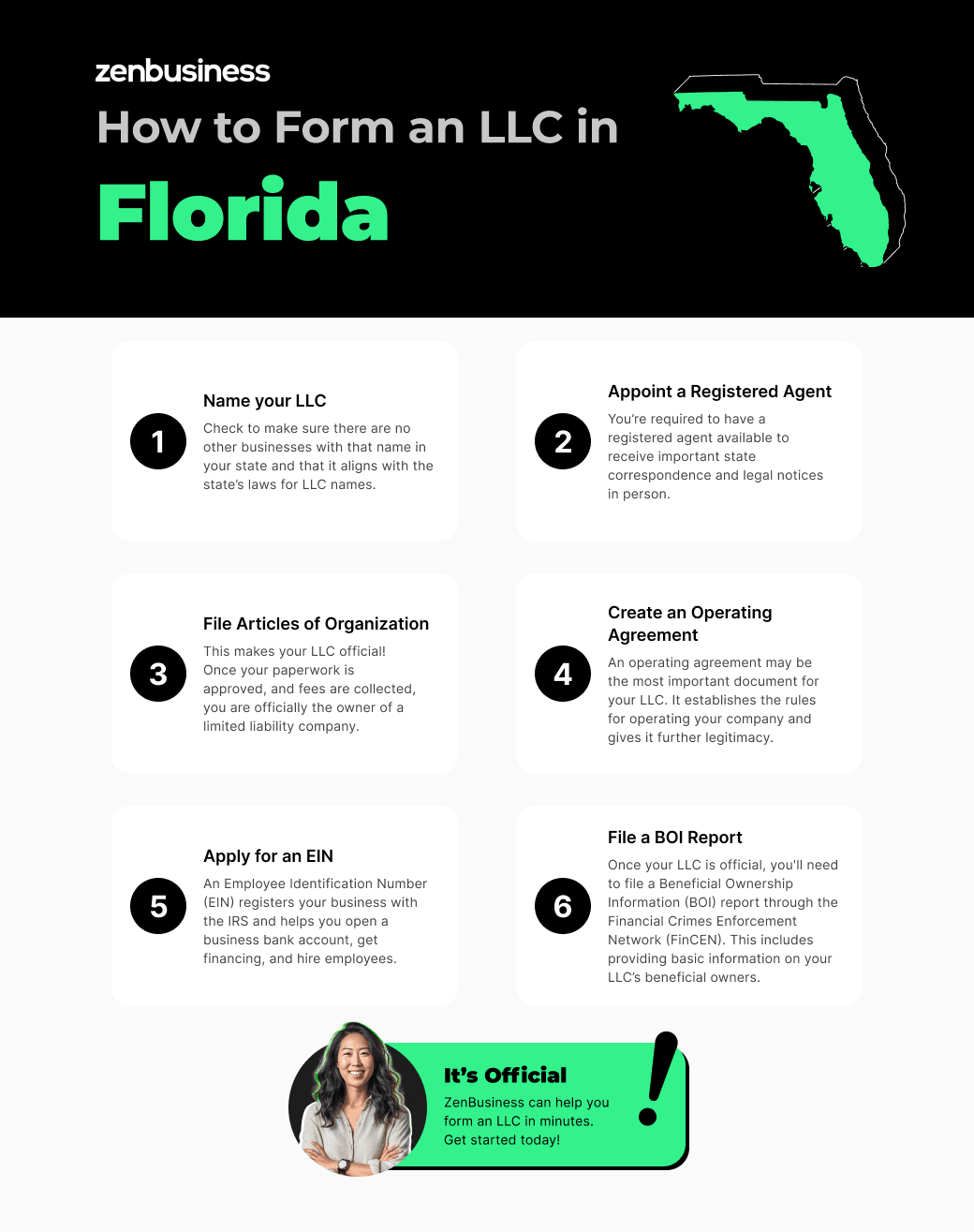
- File the Articles of Organization:
This is the official document that formally creates your LLC with the state of Florida.- Where to File: You file the Articles of Organization with the Florida Department of State, specifically through its Division of Corporations (SunBiz). The filing can usually be done online, which is the quickest method.
- Information Required: The Articles typically include your LLC’s name, its principal address, the name and address of your registered agent, and details about the LLC’s management (member-managed or manager-managed).
- Filing Fee: There is a state filing fee, which is subject to change, so always check the current amount on the SunBiz website.
Once your Articles of Organization are processed and approved by the state, your LLC officially exists! You will receive a certificate of status or approval, which is an important document to keep for your records.
Crafting Your Operational Blueprint: The Operating Agreement
While not legally required by the state of Florida to be filed, an Operating Agreement is perhaps the most critical document for any LLC, especially for those with multiple members or complex operational needs.
- What it is: An Operating Agreement is an internal document that outlines the ownership structure, roles, responsibilities, and operating procedures of your LLC. It’s essentially a contract among the LLC members (owners).
- Why it’s essential:
- Defines Ownership and Management: Clearly specifies each member’s percentage of ownership, capital contributions, and their roles in daily operations or strategic decisions. For a joint venture operating multiple Villas in Key West, this prevents future disputes over profit sharing or management duties.
- Outlines Decision-Making Processes: Establishes how major business decisions will be made, what happens if a member wants to sell their interest, or how new members can be admitted. This is crucial for maintaining smooth operations, especially if partners are frequently traveling.
- Provides Legal Protection: By having a written agreement, you solidify the limited liability status of your LLC. It demonstrates that your business is a separate legal entity, further protecting your personal assets. In the absence of an Operating Agreement, your LLC would be governed by Florida’s default LLC statutes, which might not align with your specific business goals.
- Succession Planning: Addresses what happens in the event of a member’s death, disability, or desire to leave the company, ensuring business continuity without legal quagmires.
Even for single-member LLCs, an Operating Agreement is highly recommended. It serves as a statement of intent, reinforcing the separation between the owner and the business, which can be beneficial in legal or financial situations.
Navigating Federal Requirements: Employer Identification Number (EIN)
After your LLC is officially formed with the state, your next step is often to obtain an Employer Identification Number (EIN) from the Internal Revenue Service (IRS).
- What is an EIN? An EIN is a nine-digit tax identification number issued by the IRS to identify businesses. It’s essentially a Social Security number for your business.
- Who needs one?
- Any LLC with more than one member (multi-member LLC).
- Any LLC that plans to hire employees (e.g., staff for your Hotels or tour guides for your Everglades expeditions).
- Any LLC that elects to be taxed as a corporation instead of a pass-through entity.
- How to get one: You can apply for an EIN for free directly through the Internal Revenue Service (IRS) website. The online application is typically quick, and you’ll receive your EIN immediately upon completion.
- Importance: You’ll need your EIN to open a business bank account, file federal and state taxes, and apply for business licenses and permits. Having a dedicated business bank account is essential for maintaining the separation between your personal and business finances, further reinforcing your limited liability protection.
Beyond Formation: Essential Considerations for Your Florida Business
Forming the LLC is the initial hurdle; sustaining it requires ongoing attention to compliance and operational necessities. For a business rooted in Florida’s diverse economy, these next steps are crucial.
Securing Licenses and Permits for Florida’s Diverse Industries
Depending on the specific nature of your business, your Florida LLC will likely need various federal, state, and local licenses and permits to operate legally. This is especially true for businesses in the highly regulated travel, tourism, and accommodation sectors.
- Federal Licenses: Certain industries may require federal permits. For example, if your business involves interstate transportation (like a charter travel service) or specific environmental impact (like tours within national parks), federal licensing might be necessary.
- State Licenses: Florida requires numerous state-level licenses.
- Sales Tax Permit: If you sell goods or services (e.g., tour packages, hotel stays, merchandise), you’ll need a Florida sales tax permit, obtainable from the Florida Department of Revenue.
- Accommodation Licenses: Operating Hotels, motels, vacation rentals, or Resorts typically requires lodging licenses from the Florida Department of Business and Professional Regulation (DBPR). This includes regular inspections to ensure compliance with health and safety standards.
- Professional Licenses: If your business involves specific regulated professions (e.g., real estate brokerage for property management, massage therapy at a Resort spa), individuals within the LLC will need appropriate professional licenses.
- Local Licenses (City and County): Don’t overlook local requirements. Most cities and counties in Florida require a local business tax receipt (often called a “occupational license”). Zoning ordinances are also critical, particularly for physical locations like Hotels or short-term rentals, which might have restrictions in residential areas. A vacation rental in Tampa could have different rules than one in Orlando.
It’s highly advisable to research the specific licensing and permitting requirements for your business type and location using resources from the Florida Department of State, local county clerk’s offices, and municipal websites. Failing to secure the necessary permits can lead to significant fines and operational disruptions.

Maintaining Compliance and Sustaining Your Venture
Once your LLC is established and operational, ongoing compliance is key to maintaining its good standing and protecting your limited liability.
- Annual Report Filing: Florida LLCs must file an Annual Report with the Florida Department of State between January 1st and May 1st each year. This report updates the state with your LLC’s current information (e.g., registered agent, principal address, manager/member details). Failure to file by the May 1st deadline results in late fees and, eventually, administrative dissolution of your LLC, meaning you lose your limited liability protection.
- Record Keeping: Maintain meticulous records of your LLC’s financial transactions, contracts, employee records, and meeting minutes (especially for multi-member LLCs). Good record-keeping is vital for tax purposes, financial analysis, and demonstrating the separation between your business and personal finances.
- Tax Obligations: Understand and fulfill your federal, state, and local tax obligations. This includes filing federal income tax returns (often Form 1065 for multi-member LLCs or Schedule C for single-member LLCs), state sales tax returns (if applicable), and potentially local property or tourist development taxes (common for vacation rentals and Hotels).
- Business Insurance: While an LLC provides liability protection, it doesn’t cover all risks. Comprehensive business insurance – including general liability, property insurance, and potentially professional liability or specific policies for Hotels or tour operations – is crucial to protect your business assets and operations from unforeseen events.
Creating a Limited Liability Company in Florida is a strategic move for any entrepreneur looking to build a stable and successful venture within this vibrant state. By understanding the advantages of an LLC and meticulously following the formation and compliance steps, you can confidently embark on your journey, transforming your dreams of travel, luxury, and independent living into a tangible, protected reality. Whether you’re opening a charming Boutique Hotel, curating bespoke Travel experiences, or managing exquisite Accommodation options, your Florida LLC will serve as the robust foundation for your success in the Sunshine State.
LifeOutOfTheBox is a participant in the Amazon Services LLC Associates Program, an affiliate advertising program designed to provide a means for sites to earn advertising fees by advertising and linking to Amazon.com. Amazon, the Amazon logo, AmazonSupply, and the AmazonSupply logo are trademarks of Amazon.com, Inc. or its affiliates. As an Amazon Associate we earn affiliate commissions from qualifying purchases.