
Florida, often celebrated as the Sunshine State, is a premier destination for travelers seeking diverse experiences, from the vibrant nightlife of Miami to the enchanting theme parks of Orlando, and the serene beaches of the Gulf Coast. Millions visit annually, drawn by its world-class attractions, luxurious resorts, and a distinct lifestyle that blends relaxation with adventure. For residents and long-term visitors who embrace personal responsibility and prioritize safety, understanding the process of obtaining a Concealed Weapon License (CWL) in Florida is a crucial aspect of responsible citizenship and a prepared lifestyle. This guide delves into the specifics, offering a comprehensive overview of how to acquire your CWL, ensuring you can navigate the state’s beautiful destinations with confidence and compliance.

Understanding Florida’s Concealed Weapon License (CWL)
A Concealed Weapon License in Florida allows individuals to carry certain weapons, primarily handguns, in a concealed manner for self-defense. It’s a privilege granted by the state, contingent upon meeting strict eligibility requirements and demonstrating a commitment to responsible gun ownership. This license is administered by the Florida Department of Agriculture and Consumer Services (FDACS), under the leadership of Commissioner Wilton Simpson. For many who call Florida home or frequent it for extended periods, such as those enjoying long-term stays or frequent business trips, a CWL is seen as an essential component of their personal safety strategy, whether they’re exploring urban landmarks or enjoying the natural beauty of state parks.
Who is Eligible for a CWL in Florida?
Eligibility for a Florida CWL is clearly defined to ensure that licenses are issued only to responsible individuals. Applicants must meet several criteria, designed to uphold public safety while respecting the rights of law-abiding citizens. Understanding these prerequisites is the first critical step in your application journey.
- Age Requirement: Applicants must be 21 years of age or older. There’s a limited exception for active-duty military personnel and veterans, who may apply at 18 years old. This acknowledges their unique training and commitment.
- Residency: While you don’t need to be a permanent resident of Florida to apply, non-residents must generally hold a valid CWL from another state that honors Florida’s license, or meet specific criteria. However, for most applicants, establishing Florida residency is straightforward and often a prerequisite for a smooth application process.
- Background Check: All applicants must undergo a comprehensive background check. This involves a review of criminal history records, mental health adjudications, and other disqualifying factors. A history of felony convictions, certain misdemeanor offenses (especially those involving violence or domestic abuse), or involuntary commitments to mental institutions will generally disqualify an applicant. The state is rigorous in this area, emphasizing safety above all else.
- Demonstrated Competency with a Firearm: This is a crucial requirement. Applicants must prove that they have received proper training in the safe handling and firing of a handgun. This isn’t just a formality; it’s a testament to the commitment to responsible gun ownership.
- Legal Standing: Applicants must be legally eligible to possess a firearm under both Florida and federal law. This means not being subject to any restraining orders, outstanding warrants, or other legal prohibitions.
- Mental Health: Applicants must not have been adjudicated as mentally incompetent or involuntarily committed to a mental institution. Florida takes mental health very seriously in the context of firearm ownership, recognizing its importance for public and personal safety.
Meeting these criteria is fundamental. They form the bedrock of Florida’s licensing system, designed to ensure that those carrying concealed weapons are responsible, trained, and law-abiding individuals who contribute positively to the state’s vibrant tourism and residential environment.
The Importance of Training and Education
The requirement for demonstrated competency with a firearm is not merely a bureaucratic hurdle; it’s a vital aspect of responsible firearm ownership. Florida mandates that applicants complete a firearms training course conducted by a certified instructor. This course must include actual firing of a weapon and cover critical topics such as firearm safety rules, safe handling practices, proper storage, and the legal aspects of self-defense.
Many training providers across Florida, from dedicated shooting ranges to community colleges, offer courses specifically tailored to meet the CWL requirements. These courses are invaluable, equipping individuals with the knowledge and skills necessary to safely and effectively use a firearm. Beyond the legal requirement, such training instills confidence and reinforces the immense responsibility that comes with carrying a concealed weapon. It also fosters a deeper understanding of Florida’s self-defense laws, helping permit holders make informed decisions in high-stress situations. For anyone considering obtaining a CWL, investing in quality training is perhaps the most important step, ensuring not just compliance, but true preparedness.
The Application Process: A Step-by-Step Guide
Once you’ve confirmed your eligibility and completed the necessary training, the next phase is navigating the actual application process. While it might seem daunting, breaking it down into manageable steps makes it straightforward. The Florida Department of Agriculture and Consumer Services provides clear guidelines, and their commitment to efficiency ensures a relatively smooth experience for qualified applicants.
Gathering Your Documentation
Preparation is key. Before you even touch the application form, ensure you have all the required documents in order. This proactive approach will prevent delays and streamline your submission.
- Proof of Competency: Your certificate of completion from a state-approved firearms training course is paramount. Ensure it clearly states that you completed the course and demonstrated proficiency with a handgun.
- Valid Photo Identification: A current Florida driver’s license or state-issued ID card is typically required. For non-residents, a valid government-issued photo ID is necessary. This confirms your identity and age.
- Proof of Residency (if applicable): While not always explicitly required for the application, having documents like a utility bill, voter registration, or lease agreement can be helpful if there are any questions regarding your residency status in Florida.
- Application Fee: There is a non-refundable application fee. This fee covers the cost of processing your application, conducting background checks, and issuing the license. Check the FDACS website for the most current fee structure, as it can change periodically. Payment typically can be made via check, money order, or credit card.
- Passport-Style Photograph: A recent, clear passport-style photograph is needed for your license card. Some application centers offer photo services, but it’s often more convenient to have one ready beforehand.
Having these documents organized and ready will significantly speed up your application submission, allowing you to focus on the next critical steps.
Submitting Your Application
Florida offers two primary methods for submitting your CWL application: in person or by mail. Each method has its advantages, and the best choice often depends on your location and preference.
Option 1: Applying In-Person (Regional Offices)
The most recommended method for most applicants is to apply in person at one of the FDACS regional offices located throughout the state. These offices are designed to facilitate the application process efficiently.
- Location: Find the nearest regional office in cities like Jacksonville, Tampa, Fort Lauderdale, West Palm Beach, or Tallahassee. A quick search on the FDACS website will provide current addresses and operating hours.
- Benefits: Applying in person allows for immediate fingerprinting via live scan technology, which is generally faster and more reliable than ink fingerprints. Staff are also available to review your application for completeness and accuracy on the spot, potentially catching errors that could lead to delays. You can submit all your documents, pay the fee, and get your photograph taken (if offered) in one visit.
- What to Bring: Ensure you bring all the documents listed above, especially your original training certificate and photo ID.
Option 2: Applying by Mail
If an in-person visit to a regional office is not feasible, you can apply by mail.
- Process: Download the application packet from the FDACS website. Complete the form thoroughly, attach copies of all required documents (do not send originals of your ID or training certificate, only copies unless specified), and include your payment.
- Fingerprinting: For mail-in applications, you will need to obtain ink fingerprints. This typically involves visiting a local law enforcement agency or a private service provider that offers fingerprinting. Ensure the fingerprint card meets FDACS specifications.
- Mailing Address: Send your complete application packet to the specific mailing address provided by FDACS for CWL applications. Double-check the address on their official website.
- Considerations: Mail-in applications can take longer to process due to the time required for mail delivery and manual processing of ink fingerprints. It’s crucial to ensure every item is correctly filled out and included to avoid processing delays.
Regardless of the method chosen, once your application is submitted, the FDACS will conduct a thorough background check. The state aims to process applications within 90 days, though this can vary depending on volume and the completeness of your submission. You can often track the status of your application online via the FDACS portal, offering peace of mind as you await your license.
Navigating Florida with Your CWL
Receiving your Concealed Weapon License is a significant milestone, but it also comes with important responsibilities. Understanding where and how you can legally carry your concealed weapon in Florida, as well as considerations for interstate travel, is paramount for responsible ownership.
Where You Can (and Cannot) Carry
While a Florida CWL grants the privilege to carry concealed, there are specific locations where carrying a firearm, even with a license, is prohibited by law. These restrictions are in place to ensure public safety in sensitive areas and are strictly enforced. License holders must be acutely aware of these limitations to avoid legal complications.
Prohibited Locations Generally Include:
- Any place of nuisance as defined in s. 823.05, Florida Statutes: This broadly covers locations deemed detrimental to public health or morals.
- Any police station, sheriff’s office, or highway patrol station.
- Any courthouse or courtroom.
- Any polling place during an election.
- Any meeting of a governing body of a county, public school district, municipality, or special district.
- Any meeting of the Legislature or a committee thereof.
- Any school, college, or professional athletic event not related to firearms.
- Any elementary or secondary school facility or administration building.
- Any career center.
- Any portion of an establishment licensed to dispense alcoholic beverages for consumption on the premises, which portion of the establishment is primarily devoted to such purpose. This is a critical distinction: you can often carry in the restaurant portion of a business that serves alcohol, but not in the bar area primarily dedicated to drinking.
- Any airport passenger terminal, beyond the security checkpoint.
- Any federal property (e.g., post offices, federal courthouses, some national parks like parts of Everglades National Park or Biscayne National Park where federal regulations might differ).
- Any detention facility, prison, or jail.
- Specific private property where the owner has explicitly prohibited firearms (e.g., many theme parks like Walt Disney World and Universal Orlando Resort strictly prohibit firearms, even with a CWL). Always respect private property rights and posted signs.
It is the responsibility of the CWL holder to know and adhere to these restrictions. When exploring Florida’s diverse destinations – from historical landmarks to popular tourist attractions – a moment of negligence could lead to severe legal consequences. Always err on the side of caution, and if in doubt, secure your weapon in a safe and lawful manner.
Reciprocity and Interstate Travel Considerations
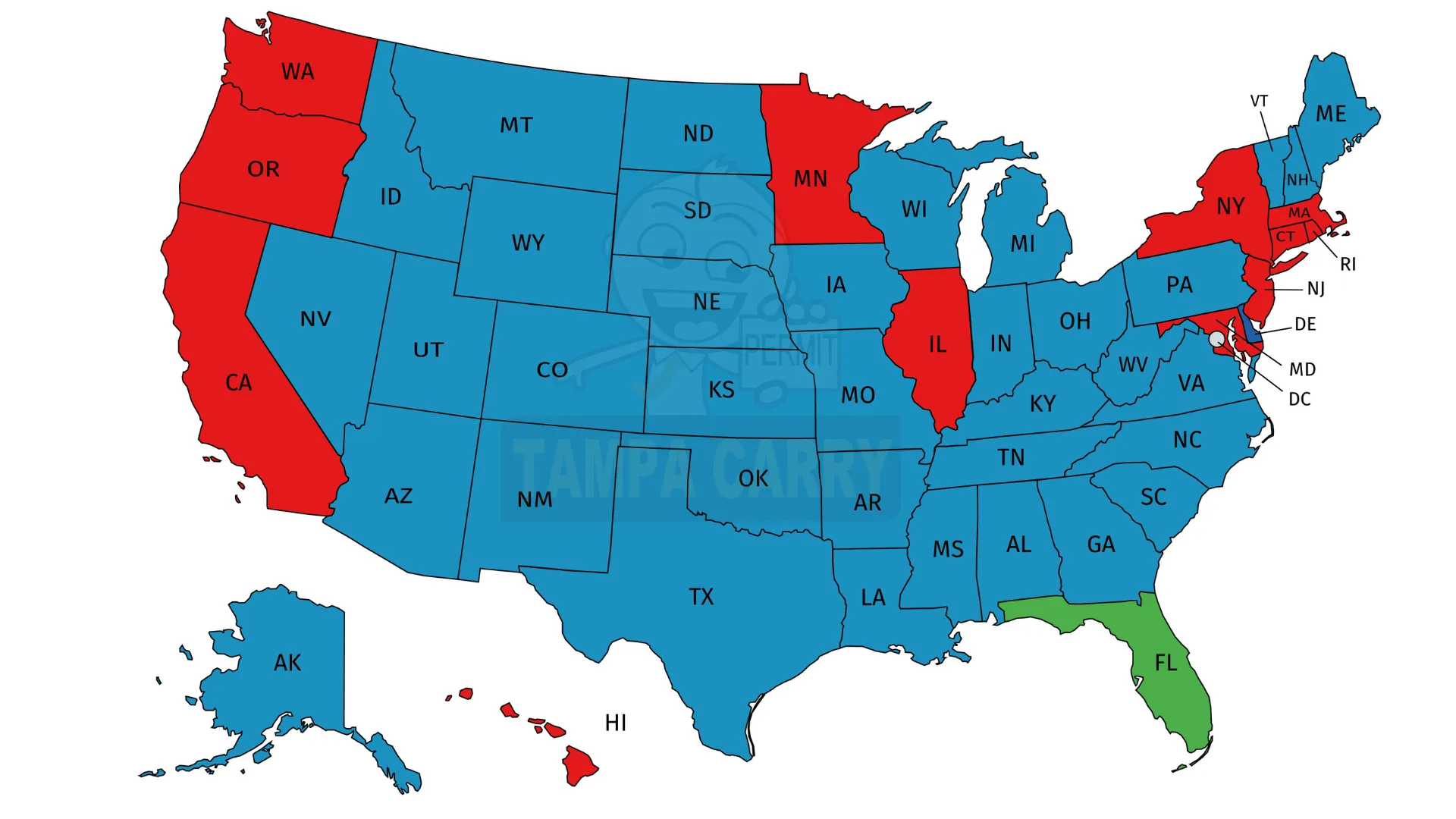
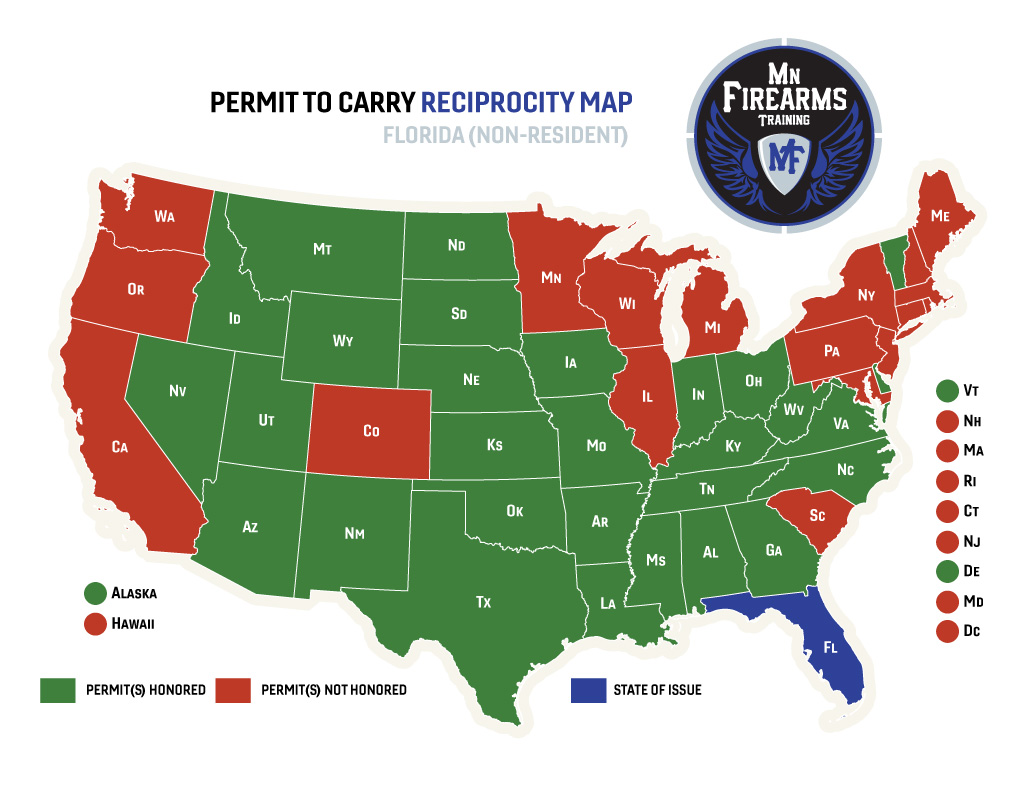
One of the significant advantages of a Florida CWL is its widespread reciprocity with many other states. This means that your Florida license may be recognized as valid in other states that have reciprocity agreements with Florida, allowing you to carry concealed when traveling outside the Sunshine State. This is particularly beneficial for those who undertake frequent travel, whether for family trips, business stays, or exploring neighboring regions.
However, reciprocity is not universal, and the laws governing concealed carry vary significantly from state to state. It is absolutely critical to research and understand the specific laws of each state you plan to travel through or visit.
Key Considerations for Interstate Travel:
- Check Reciprocity Agreements: The FDACS website maintains an updated list of states that recognize a Florida CWL. Always consult this official source before you travel.
- Understand the Laws of Your Destination State: Even if a state recognizes your Florida license, their laws regarding prohibited locations, duty to inform, and types of weapons allowed may differ from Florida’s. For instance, a state might have stricter rules about carrying in restaurants that serve alcohol, or require you to inform a law enforcement officer immediately upon contact that you are carrying a firearm.
- Federal Laws: Remember that federal laws also apply, particularly when crossing state lines or entering federal properties. The Gun-Free School Zones Act, for example, prohibits firearms within 1,000 feet of a school zone, with some exceptions for CWL holders within their state of issuance, but this can become complex across state lines.
- Transportation: When transporting a firearm through a state where your Florida CWL is not recognized, or on an airplane, federal laws regarding the lawful transportation of firearms become critical. Generally, firearms must be unloaded, cased, and inaccessible, typically in the trunk of a vehicle or checked as baggage on an airline.
Failing to adhere to the concealed carry laws of another state, even inadvertently, can lead to serious legal repercussions, including arrest and felony charges. Responsible CWL holders view interstate travel with a concealed weapon as a task requiring diligent research and adherence to the strictest applicable laws. For those who frequently visit various hotels or stay in different accommodations across the country, this diligent preparation becomes an integral part of their travel planning.
Renewing Your Florida CWL
A Florida CWL is valid for seven years. As the expiration date approaches, it’s essential to understand the renewal process to maintain your license without interruption. The FDACS typically sends a renewal notice to your address of record several months before your license expires, so keeping your contact information updated with them is important.
The renewal process is generally simpler than the initial application, as your background information is already on file. You will typically need to:
- Submit a Renewal Application: This can often be done online through the FDACS website or by mail.
- Pay the Renewal Fee: A reduced fee is usually applied for renewals compared to the initial application.
- Update Information: Provide any updated personal information, such as address changes.
- No New Training Required (Generally): Unlike the initial application, you usually do not need to retake a firearms training course for renewal, assuming your previous training certificate is still valid and on file.
- New Background Check: A fresh background check will be conducted to ensure you still meet all eligibility requirements.
It’s highly advisable to initiate the renewal process well in advance of your license’s expiration date, ideally a few months prior. This allows ample time for processing and avoids any lapse in your license, ensuring continuous legal concealed carry as you continue to enjoy the myriad experiences Florida has to offer, from exploring vibrant city centers to serene natural landmarks.
Embracing Responsible Ownership in the Sunshine State
Obtaining a Concealed Weapon License in Florida is more than just acquiring a card; it’s an affirmation of personal responsibility and a commitment to safety, both for oneself and the community. As you travel through Florida’s picturesque landscapes, vibrant cities like Tampa, or serene coastal towns, your CWL should always be accompanied by a profound understanding of the laws, a dedication to safe handling practices, and a readiness to de-escalate rather than confront.
For those who integrate personal safety into their active lifestyle – whether it’s enjoying the dynamic tourism scene, staying in various hotels, or exploring unique accommodations – a Florida CWL offers an added layer of peace of mind. It empowers individuals to protect themselves and their loved ones, responsibly and legally. By meticulously following the application steps, adhering to all legal requirements, and continuously educating yourself, you can embrace the privilege of concealed carry while fully enjoying the unparalleled beauty and diverse offerings of the Sunshine State. Your journey to obtaining a CWL in Florida is a testament to your commitment to a prepared and responsible lifestyle, ensuring that safety is always a priority, no matter where your Florida adventures take you.
LifeOutOfTheBox is a participant in the Amazon Services LLC Associates Program, an affiliate advertising program designed to provide a means for sites to earn advertising fees by advertising and linking to Amazon.com. Amazon, the Amazon logo, AmazonSupply, and the AmazonSupply logo are trademarks of Amazon.com, Inc. or its affiliates. As an Amazon Associate we earn affiliate commissions from qualifying purchases.