
For many, Florida represents the epitome of a dream lifestyle. It’s a place where the sun perpetually shines, where world-class beaches meet vibrant cities, and where diverse cultures blend seamlessly. It’s a premier destination not just for fleeting vacations, but for those seeking a permanent slice of paradise, a long-term accommodation solution, or a lucrative investment opportunity. This constant influx of residents, snowbirds, and investors fuels a dynamic real estate market, making a Florida real estate license a powerful key to unlocking a fulfilling career and an enviable lifestyle.
Imagine a career that allows you to explore the sprawling beauty of the Everglades National Park, the historic charm of St. Augustine, the glamorous skyline of Miami, and the family-friendly attractions of Orlando, all while helping people find their perfect home or investment property. Getting your real estate license in Florida isn’t just about passing an exam; it’s about gaining access to a profession that offers flexibility, significant earning potential, and the chance to live and work in one of the world’s most desired regions. Whether you envision assisting international buyers in securing luxury villas, guiding families to their dream homes near Walt Disney World Resort, or even investing in resorts and hotels for the thriving tourism market, a Florida real estate license is your starting point. This comprehensive guide will walk you through the essential steps to secure your license and embark on an exciting journey in the Sunshine State.
Why Florida? A Lifestyle and Investment Paradise
Florida’s allure extends far beyond its picturesque landscapes and warm climate. It’s a state that offers a unique blend of vibrant tourism, economic opportunity, and an unparalleled lifestyle for its residents. From the bustling metropolitan areas like Miami and Tampa to the tranquil, laid-back vibes of the Florida Keys, there’s a corner of the state to suit every taste and ambition. This diversity is precisely what makes the real estate market here so robust and appealing to professionals.
Consider the dynamic interplay between tourism and real estate. Florida welcomes millions of visitors annually, many of whom fall in love with the state and decide to explore options for a permanent or seasonal residency. This translates into a constant demand for both residential and investment properties, including vacation rentals, second homes, and long-term accommodation. Areas like Orlando, home to world-renowned theme parks like Universal Studios Florida, see a perpetual need for properties that cater to both families relocating for work in the hospitality industry and investors looking to capitalize on the vacation rental market. Meanwhile, coastal havens such as South Beach in Miami or the charming town of Key West attract a different demographic, seeking luxury apartments, waterfront villas, or exclusive resorts.
Beyond the sunny beaches and iconic landmarks, Florida boasts a favorable tax environment, making it an attractive location for businesses and individuals alike. The state’s pro-business policies and thriving economy create ample opportunities for real estate professionals to engage in various sectors, from residential sales and commercial leasing to property management of vacation rentals and development projects. A Florida real estate license empowers you to be at the forefront of this growth, offering a career path that is not only financially rewarding but also deeply integrated with the dynamic and evolving fabric of the Sunshine State’s unique travel and lifestyle offerings. It’s a career that often involves exploring different destinations within the state, gaining intimate knowledge of local culture, architecture, and history, and providing invaluable tips to clients looking to make Florida their home or next great investment.
The Path to Becoming a Florida Real Estate Professional
Obtaining a Florida real estate license is a structured process designed to ensure that all licensees are knowledgeable, ethical, and prepared to serve the public. While it requires dedication, the steps are clear and achievable, setting you on a course for a fulfilling career.
Step 1: Meet the Eligibility Requirements
Before you even consider applying, you must meet several fundamental criteria established by the Florida Real Estate Commission (FREC), which is responsible for regulating the real estate profession in the state under the umbrella of the Department of Business and Professional Regulation (DBPR).
- Age: You must be at least 18 years old.
- Education: You need a high school diploma or its equivalent (GED). While a college degree isn’t mandatory, further education can certainly enhance your credibility and understanding of complex real estate transactions.
- Social Security Number: A U.S. Social Security Number is required for application, primarily for background check purposes.
- Honesty and Integrity: You must be honest, truthful, trustworthy, and of good character. The application process includes a background check, and any criminal history must be disclosed. Certain convictions or issues could disqualify an applicant, though the FREC evaluates each case individually. It’s crucial to be completely transparent during this stage.
Meeting these prerequisites is the foundational element before proceeding to the educational and application phases. It ensures that only qualified individuals enter a profession that deals with significant financial investments and personal decisions for clients.
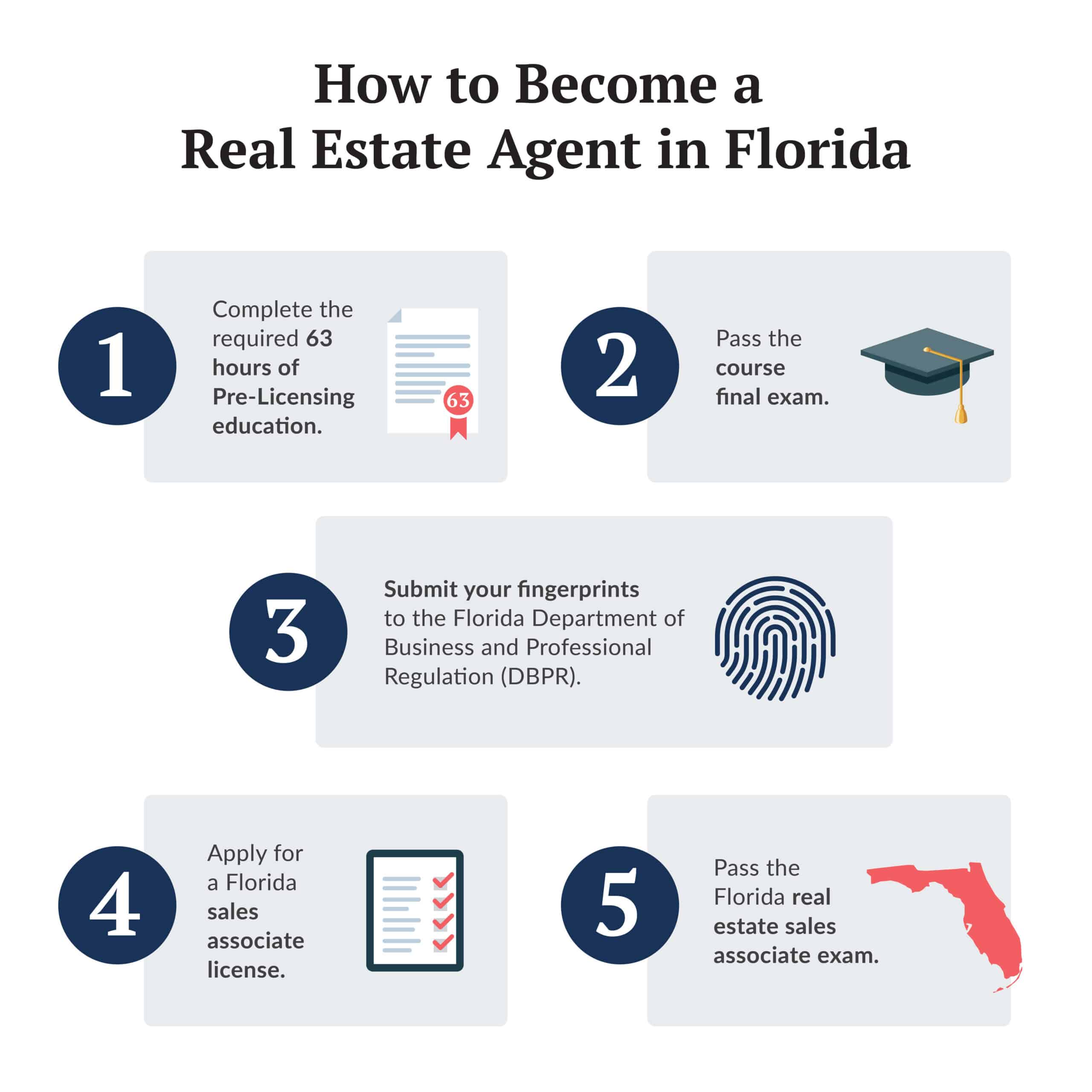
Step 2: Complete Your Pre-Licensing Education
This is where the learning journey truly begins. Florida mandates that all prospective real estate sales associates complete a 63-hour pre-licensing course. This comprehensive course covers a wide range of topics essential for understanding the real estate market and legal framework, including:
- Real Estate Law: This delves into the principles of real estate law, property rights, contracts, and agency relationships. Understanding these legalities is paramount to protecting both your clients and yourself.
- Ethics and Professional Practices: Emphasizing ethical conduct and best practices, this section prepares you to navigate complex situations with integrity.
- Real Estate Principles: From property valuation and financing to types of ownership and market analysis, these principles form the backbone of your professional knowledge.
- State and Federal Laws: This includes an overview of relevant federal regulations and specifics of Florida Statute 475, which governs real estate brokers, sales associates, and schools.
The 63-hour course culminates in a comprehensive end-of-course examination. You must pass this exam with a score of 70% or higher to receive your certificate of completion, which is necessary for your license application. Many accredited real estate schools offer this course, both in traditional classroom settings and via flexible online platforms. For those balancing existing careers or a travel-oriented lifestyle, online courses can be particularly convenient, allowing you to study from anywhere in the world, be it a cozy suite in a foreign country or a quiet corner of a Florida resort.

Step 3: Submit Your Application
Once you’ve successfully completed your pre-licensing education and passed its final exam, the next step is to officially apply for your sales associate license with the Department of Business and Professional Regulation (DBPR).
- Online Application: The DBPR offers an efficient online application portal. You’ll need to submit your personal information, details of your educational completion, and answer questions regarding your background.
- Fingerprints and Background Check: As part of the application, you must undergo a background check. This involves electronic fingerprinting through a DBPR-approved vendor. The results are sent directly to the DBPR for review. This step reinforces the state’s commitment to ensuring only trustworthy individuals are licensed to handle real estate transactions.
- Application Fee: There is a non-refundable application fee that must be paid at the time of submission.
The DBPR will review your application, which can take several weeks. During this time, they verify your educational completion and thoroughly check your background. It’s important to respond promptly to any requests for additional information to avoid delays.
Step 4: Pass the State Exam
With your application approved and background check cleared, you’ll receive an authorization to schedule your state licensing exam. This is the final hurdle before becoming a licensed sales associate.
- Exam Content: The state exam is a challenging test that assesses your knowledge of Florida real estate law, practices, and ethics. It typically consists of 100 multiple-choice questions, covering a broad spectrum of the topics you studied in your pre-licensing course.
- Test Environment: The exam is administered by a state-contracted testing provider in a proctored environment. You’ll need to present valid identification and adhere to strict testing rules.
- Passing Score: A minimum score of 75% is required to pass the state exam. If you don’t pass on your first attempt, you can reschedule and retake the exam. However, it’s wise to review your weak areas and study diligently before attempting it again. Many candidates find it beneficial to utilize additional study guides or practice tests to enhance their preparation.
Successfully passing this exam is a moment of significant accomplishment, marking your readiness to enter the professional world of Florida real estate.
Step 5: Activate Your License
Passing the state exam doesn’t automatically mean you can start selling property. To legally operate as a real estate sales associate, your license must be “active.”
- Affiliate with a Broker: In Florida, a sales associate must work under the supervision of a licensed real estate broker. Your license will be issued in “inactive” status until you affiliate with a brokerage. This affiliation provides you with mentorship, access to resources, and legal oversight. Choosing the right brokerage is a crucial decision, as it will impact your training, market focus, and overall career trajectory.
- Continuing Education: The learning doesn’t stop once you’re licensed. Florida requires new licensees to complete a 45-hour post-licensing course before their first license renewal. After that, 14 hours of continuing education are required every two years to maintain an active license. This ensures that professionals stay current with changes in real estate law, market trends, and best practices.
Beyond the License: Crafting Your Florida Real Estate Career and Lifestyle
With your Florida real estate license in hand, a world of possibilities opens up. This isn’t just about a job; it’s about a career that can profoundly shape your lifestyle and offer unique experiences. The diverse nature of Florida’s real estate market means you can tailor your career to align with your passions, whether they involve luxury travel, a budget travel approach to living, or specializing in properties ideal for family trips and extended stays.
One significant advantage is the ability to integrate your love for travel and destinations directly into your work. As a real estate agent, you’ll constantly be exploring different Florida destinations, from the serene Gulf Coast to the bustling Atlantic shores. You’ll gain intimate knowledge of local attractions, the best restaurants offering local food, and the unique culture of each community. This firsthand experience not only enriches your personal life but also makes you an invaluable guide to clients looking to relocate or invest. You might find yourself showcasing waterfront villas in Key West, charming apartments in historic St. Augustine, or modern suites overlooking South Beach in Miami.
The Florida real estate market also offers diverse specializations. You could focus on:
- Residential Sales: Helping individuals and families find their dream homes, from first-time buyers to those seeking luxury estates.
- Commercial Real Estate: Assisting businesses with office space, retail locations, or industrial properties. This could include working with developers interested in building new hotels or resorts.
- Property Management: Specializing in managing residential properties or, particularly relevant to Florida, vacation rentals. This niche directly ties into the state’s robust tourism industry, requiring expertise in booking, marketing, and ensuring guest satisfaction, much like managing a boutique hotel or villa. You’d be adept at understanding long-term stay options versus short-term accommodation for visitors.
- Investment Properties: Guiding clients through the purchase of properties specifically for rental income, flipping, or long-term appreciation, often focusing on areas with high tourist traffic or rapidly growing populations.
Moreover, a real estate career in Florida can provide the financial freedom to pursue your own personal travel ambitions. Whether it’s taking regular family trips to explore international landmarks or indulging in luxury travel to exotic destinations, the earning potential in real estate can support such a lifestyle. The flexible nature of the work also means you can often set your own schedule, making room for personal interests, business stays, or simply enjoying Florida’s many amenities and attractions.
In conclusion, securing a Florida real estate license is more than a professional credential; it’s an invitation to a dynamic career interwoven with the very fabric of one of the world’s most desired destinations. It offers a tangible path to a flexible, rewarding lifestyle where you can directly impact people’s lives by helping them find their place in the sun, all while enjoying the myriad experiences and opportunities that only Florida can offer. Begin your journey today, and open the door to a life out of the box.
LifeOutOfTheBox is a participant in the Amazon Services LLC Associates Program, an affiliate advertising program designed to provide a means for sites to earn advertising fees by advertising and linking to Amazon.com. Amazon, the Amazon logo, AmazonSupply, and the AmazonSupply logo are trademarks of Amazon.com, Inc. or its affiliates. As an Amazon Associate we earn affiliate commissions from qualifying purchases.