
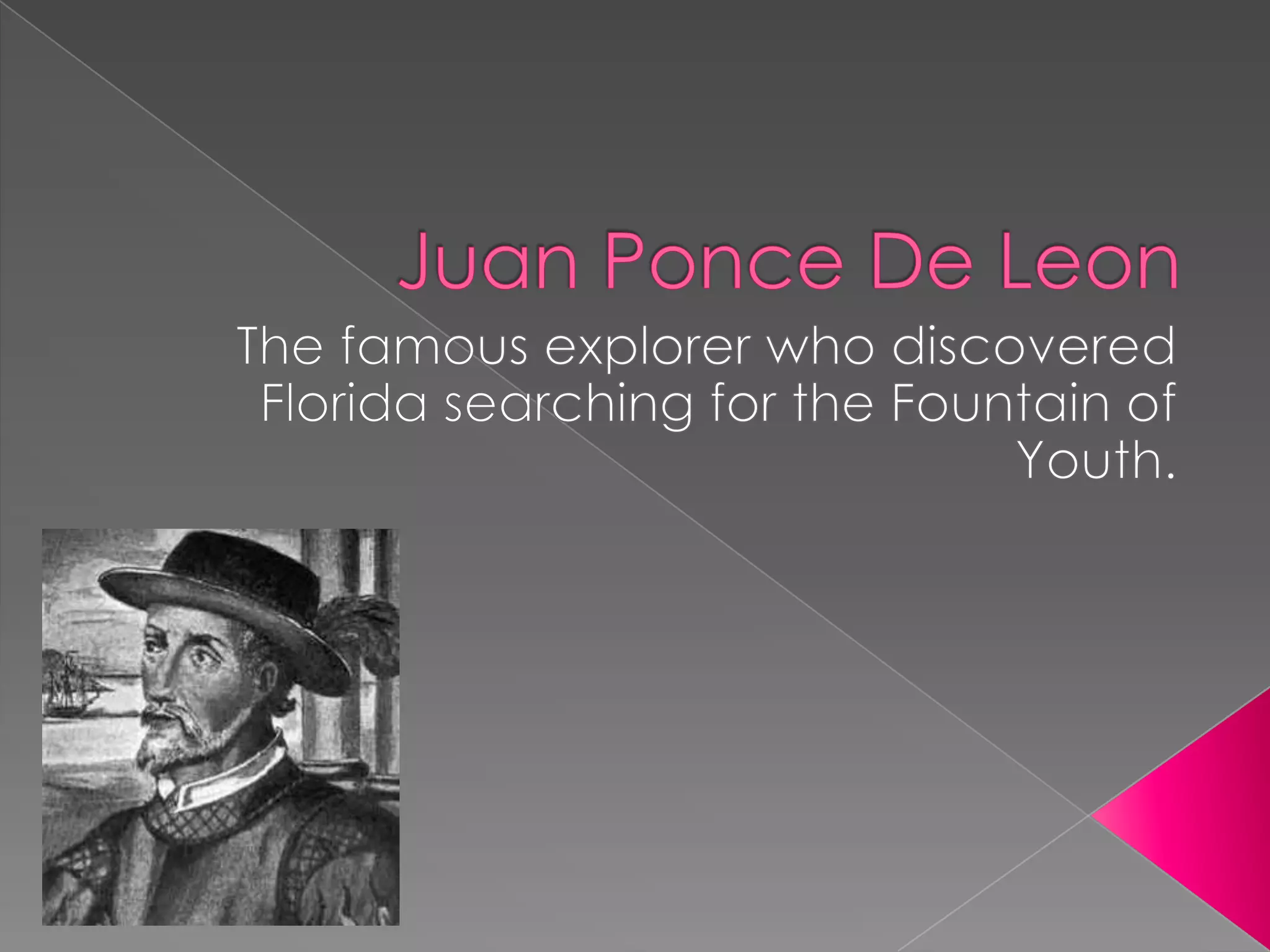
The question “Who found Florida?” often conjures images of intrepid explorers, ancient mysteries, and the dawn of a new era. At its heart, the answer points to one man: Juan Ponce de León. In 1513, this Spanish explorer, driven by ambition and perhaps the mythical lure of a Fountain of Youth, became the first documented European to set foot on what is now the southeastern United States. His arrival marked a pivotal moment, not just for the vast lands he encountered but for the trajectory of European expansion into North America.

However, “finding” a land often implies it was previously unknown, a notion that overlooks the vibrant indigenous cultures that thrived in Florida for thousands of years before Ponce de León’s arrival. The Timucua, Calusa, Tequesta, and Apalachee peoples had intricate societies, rich traditions, and established communities long before the first Spanish sails appeared on the horizon. Ponce de León’s “discovery” was, therefore, a re-discovery from a European perspective, igniting a complex history of colonization, conflict, and cultural exchange that shaped the Sunshine State into the diverse and captivating destination it is today.
This article delves into the fascinating origins of Florida, tracing its path from a newly charted territory on Spanish maps to a global powerhouse in travel and tourism. We will explore the historical significance of its discovery, the evolution of its identity, and how its unique blend of history, natural beauty, and modern attractions makes it an unparalleled choice for travelers seeking unforgettable experiences, luxurious accommodations, and a vibrant lifestyle.
The Genesis of a State: Ponce de León and the Naming of Florida
The story of Florida truly begins in 1513 with Juan Ponce de León. A veteran of Columbus’s second voyage and the first governor of Puerto Rico, Ponce de León was an experienced and ambitious explorer. He set sail from Puerto Rico with three ships, seeking new lands, riches, and the legendary Fountain of Youth, a mythical spring believed to restore youth to anyone who drank from its waters.
The Voyage of 1513 and the Land of Flowers
After navigating through the Bahamas, Ponce de León’s fleet spotted land on April 2, 1513. This date coincided with Pascua Florida (Flower Feast) in Spain, the Spanish Easter season. Captivated by the lush, verdant landscape and perhaps the vibrant spring blossoms, Ponce de León claimed the land for Spain and christened it “La Florida,” meaning “Land of Flowers.” He landed near what is likely present-day St. Augustine or further south, beginning the long and complex history of European presence in the region.
His exploration continued, charting portions of Florida’s coastline, navigating around the Florida Keys, and even discovering the powerful Gulf Stream current, which would later become a vital route for Spanish galleons returning to Europe. Although he failed to find the elusive Fountain of Youth or significant gold, his voyage laid the groundwork for future Spanish colonization. He returned to Florida in 1521 with a larger expedition to establish a colony but was mortally wounded by a Calusa arrow and died shortly after in Havana, Cuba. His legacy, however, remains etched in the name and history of the state.
Early Encounters and Colonial Struggles
Ponce de León’s encounters with indigenous peoples were often marked by conflict, a precursor to the tumultuous centuries that followed. Subsequent Spanish expeditions, including those of Pánfilo de Narváez and Hernando de Soto, met with fierce resistance and devastating losses. It wasn’t until 1565 that a permanent European settlement was established in Florida by Pedro Menéndez de Avilés, founding St. Augustine. This city, the oldest continuously inhabited European settlement in the United States, became a strategic outpost for Spain, protecting its trade routes from the Caribbean and serving as a base for missionary efforts. The impressive Castillo de San Marcos, a massive stone fortress in St. Augustine, stands as a testament to this era, inviting travelers to step back in time and explore its robust architecture and fascinating history.
Over the centuries, Florida exchanged hands multiple times, from Spanish to British rule and back again, before finally becoming a territory of the United States in 1821 and achieving statehood in 1845. This rich, multicultural tapestry of history—Spanish, Native American, British, and American—has deeply influenced Florida’s unique character, reflected in its architecture, cuisine, and diverse cultural heritage, making it a captivating destination for those interested in history and local culture.
Florida Today: A Premier Global Travel Destination
From its foundational discovery to its vibrant present, Florida has transformed into one of the world’s most sought-after travel destinations. No longer merely a “Land of Flowers,” it’s a dynamic hub of entertainment, natural beauty, luxury, and adventure, catering to every type of traveler. The state’s powerful tourism industry is a testament to its multifaceted appeal, drawing millions annually to its sun-drenched shores, thrilling theme parks, and unique natural ecosystems.
Sunshine, Beaches, and Coastal Wonders
Florida is synonymous with sunshine and stunning beaches. With hundreds of miles of coastline along both the Atlantic Ocean and the Gulf of Mexico, the state offers an unparalleled variety of beach experiences. From the vibrant energy of South Beach in Miami, known for its iconic Art Deco Historic District and bustling nightlife, to the family-friendly shores of Clearwater Beach and St. Pete Beach on the Gulf Coast, there’s a perfect spot for every preference. The sugar-white sands of Siesta Key Beach near Sarasota are consistently ranked among the best in the world, while the serene, uncrowded beaches of Amelia Island offer a tranquil escape.
Beyond swimming and sunbathing, Florida’s coastal regions are prime locations for water sports, including snorkeling, scuba diving, paddleboarding, and deep-sea fishing. The intricate ecosystems of the Florida Keys, stretching from Key Largo to Key West, offer world-class diving opportunities among vibrant coral reefs and shipwrecks, culminating in the remote beauty of Dry Tortugas National Park. These coastal havens provide the backdrop for countless memorable experiences, making Florida a top choice for beach lovers and water adventurers.
Theme Park Thrills and Family Fun
Florida’s global reputation as a family vacation destination is largely due to its unparalleled collection of theme parks, primarily concentrated in Central Florida around Orlando. The Walt Disney World Resort, home to Magic Kingdom, Epcot, Hollywood Studios, and Animal Kingdom, stands as an iconic symbol of childhood dreams and imaginative storytelling. Millions flock here annually to experience magical rides, spectacular parades, and encounters with beloved characters.

Nearby, the Universal Orlando Resort captivates visitors with its thrilling rides, immersive worlds like The Wizarding World of Harry Potter across Universal Studios Florida and Universal’s Islands of Adventure, and cutting-edge attractions. Other notable parks include SeaWorld Orlando and its sister park, Discovery Cove, offering unique marine life encounters, and Busch Gardens Tampa Bay, which combines thrilling roller coasters with extensive animal habitats. These attractions cement Florida’s status as the ultimate playground for families and thrill-seekers, creating unforgettable experiences for all ages.
Natural Wonders and Wildlife Encounters
Beyond the man-made marvels, Florida boasts an incredible array of natural landscapes and unique wildlife. The vast Everglades National Park, a UNESCO World Heritage Site, is a vital wetland ecosystem home to alligators, crocodiles, manatees, and countless bird species. Airboat tours offer an exhilarating way to explore this “River of Grass.”
The state’s numerous springs, like those at Crystal River and Weeki Wachee Springs State Park, provide crystal-clear waters perfect for swimming, snorkeling, and interacting with gentle manatees, especially during cooler months. Florida’s state parks system, including over 175 Florida State Parks, protects these diverse habitats, offering opportunities for hiking, kayaking, and camping, appealing to eco-tourists and nature enthusiasts. From the expansive freshwater Lake Okeechobee to the winding St. Johns River, Florida’s natural beauty is as captivating as its coastal allure.
Planning Your Florida Adventure: Accommodation and Experiences
Preparing for a trip to Florida involves choosing from an extensive array of options that cater to every travel style, budget, and desired experience. Whether you’re seeking luxurious indulgence, a budget-friendly family trip, a romantic getaway, or a productive business stay, Florida has an accommodation and activity to match.
Choosing Your Stay: Hotels, Resorts, and Unique Accommodations
Florida’s accommodation landscape is as diverse as its attractions. For those seeking luxury, Miami Beach offers opulent resorts such as the Faena Hotel Miami Beach and The Betsy South Beach, while Palm Beach boasts the historic elegance of The Breakers Palm Beach. In Orlando, you’ll find world-class resorts like the Four Seasons Resort Orlando at Walt Disney World Resort or themed hotels such as the Loews Portofino Bay Hotel at Universal Orlando Resort, and large convention-friendly hotels like Gaylord Palms Resort & Convention Center.
Mid-range and budget-friendly hotels are plentiful across all major cities, including options from global brands like Hilton, Marriott, and Hyatt. For a unique experience, consider renting a vacation villa or apartment in destinations like Kissimmee (for theme park access) or a charming boutique hotel in Key West, such as The Marquesa Hotel. Long-term stay options are also readily available, particularly for snowbirds and remote workers drawn to Florida’s warm climate. Websites for booking, reviews, and comparison are invaluable tools for finding the perfect accommodation to suit your needs, whether it’s a Hyatt Regency Grand Cypress or a cozy Airbnb near Daytona Beach.
Navigating Florida’s Diverse Regions
Florida can be broadly divided into several distinct travel regions, each with its own character and appeal:
- South Florida: Encompassing Miami, Fort Lauderdale, Palm Beach, and the Florida Keys. This region is known for its vibrant nightlife, Latin influence, luxury shopping (e.g., Miami Design District), art (e.g., Wynwood Walls), and tropical island vibes. Landmarks like the Phillip and Patricia Frost Museum of Science and Vizcaya Museum & Gardens add cultural depth.
- Central Florida: Home to Orlando’s theme parks, including Gatorland and the Kennedy Space Center Visitor Complex on the Space Coast. It’s the epicenter of family tourism, offering endless entertainment and diverse dining options.
- Southwest Florida: Features cities like Naples, Fort Myers, and Sarasota, known for their pristine beaches, upscale living, and natural beauty. This region is popular for luxury travel, golf, and eco-tourism, including the historic Edison and Ford Winter Estates.
- North Florida and the Panhandle: Includes Jacksonville, St. Augustine, Tallahassee, Pensacola, Destin, and South Walton. This area offers a blend of history, Southern charm, and spectacular Gulf Coast beaches. The white sands of Destin and Fort Walton Beach are famous, while St. Augustine offers a journey through colonial history.
Travel between these regions is facilitated by a robust network of roads and several major airports, including Orlando International Airport, Miami International Airport, Tampa International Airport, and Fort Lauderdale-Hollywood International Airport.
Maximizing Your Florida Experience: Tips and Lifestyle Choices
To fully embrace the Florida lifestyle, consider the kind of experience you desire. For luxury travel, destinations like Miami, Palm Beach, Naples, or Key West offer high-end resorts, gourmet dining, and exclusive shopping. The Ritz-Carlton, Key Biscayne or the Amelia Island Plantation provide lavish amenities and impeccable service.
Budget travel is also readily achievable, especially by opting for vacation rentals, off-peak travel, and taking advantage of Florida’s many free attractions like public beaches and Florida State Parks. For family trips, Orlando is the undisputed king, but coastal towns like St. Petersburg and Punta Gorda also offer family-friendly activities without the theme park crowds. For those on business stays, major cities like Miami, Orlando, Tampa, and Jacksonville provide extensive conference facilities, business-oriented hotels (like the Grand Hyatt Orlando), and convenient access to airports.
Embrace local culture by trying diverse cuisines, from fresh seafood in Tampa Bay to Cuban delights in Miami’s Little Havana, or exploring historical sites like Ernest Hemingway Home and Museum in Key West. Florida is a state that continually reinvents itself while proudly preserving its rich history and stunning natural heritage.
Conclusion
The question “Who found Florida?” leads us on a journey back to Juan Ponce de León’s fateful voyage in 1513, a moment that fundamentally altered the course of history for this remarkable land. From its initial designation as “La Florida” to its evolution through various colonial powers and eventual statehood, the Sunshine State has always been a place of discovery and transformation.
Today, Florida stands as a testament to its vibrant past and dynamic present. It is a world-class travel destination that seamlessly blends historical landmarks, breathtaking natural beauty, exhilarating theme parks, and a diverse range of accommodations and lifestyle experiences. Whether you’re drawn by the allure of pristine beaches, the magic of theme parks, the tranquility of its natural springs, or the rich tapestry of its cultural heritage, Florida offers an adventure for every traveler. Its enduring appeal lies not just in its sunny climate but in its capacity to continually surprise, inspire, and create lasting memories for all who visit.
LifeOutOfTheBox is a participant in the Amazon Services LLC Associates Program, an affiliate advertising program designed to provide a means for sites to earn advertising fees by advertising and linking to Amazon.com. Amazon, the Amazon logo, AmazonSupply, and the AmazonSupply logo are trademarks of Amazon.com, Inc. or its affiliates. As an Amazon Associate we earn affiliate commissions from qualifying purchases.