
Nestled in the heart of the Pacific, the captivating archipelago of Hawaii is renowned globally for its pristine beaches, vibrant marine life, and the unmistakable spirit of Aloha. While many travelers flock to the islands seeking sun-kissed shores and thrilling water sports, the deeper essence of Hawaii lies in its profound geological history, unique ecosystems, and rich cultural heritage. A significant portion of these treasures is safeguarded by the National Park Service, raising a common question among prospective visitors: “How many National Parks are there in Hawaii?”
The answer, while straightforward, often surprises those unfamiliar with the distinctions within the National Park System. Hawaii is home to two designated National Parks, both globally recognized for their spectacular natural phenomena. However, the story doesn’t end there. The islands also host an impressive array of seven other significant sites managed by the National Park Service, including National Historical Parks, National Memorials, National Historic Sites, and a National Historic Trail. These diverse locations offer a breathtaking journey through Hawaii’s natural wonders, ancient traditions, and pivotal moments in modern US history. Exploring these landmarks provides an unparalleled insight into the soul of the islands, going far beyond typical travel experiences.
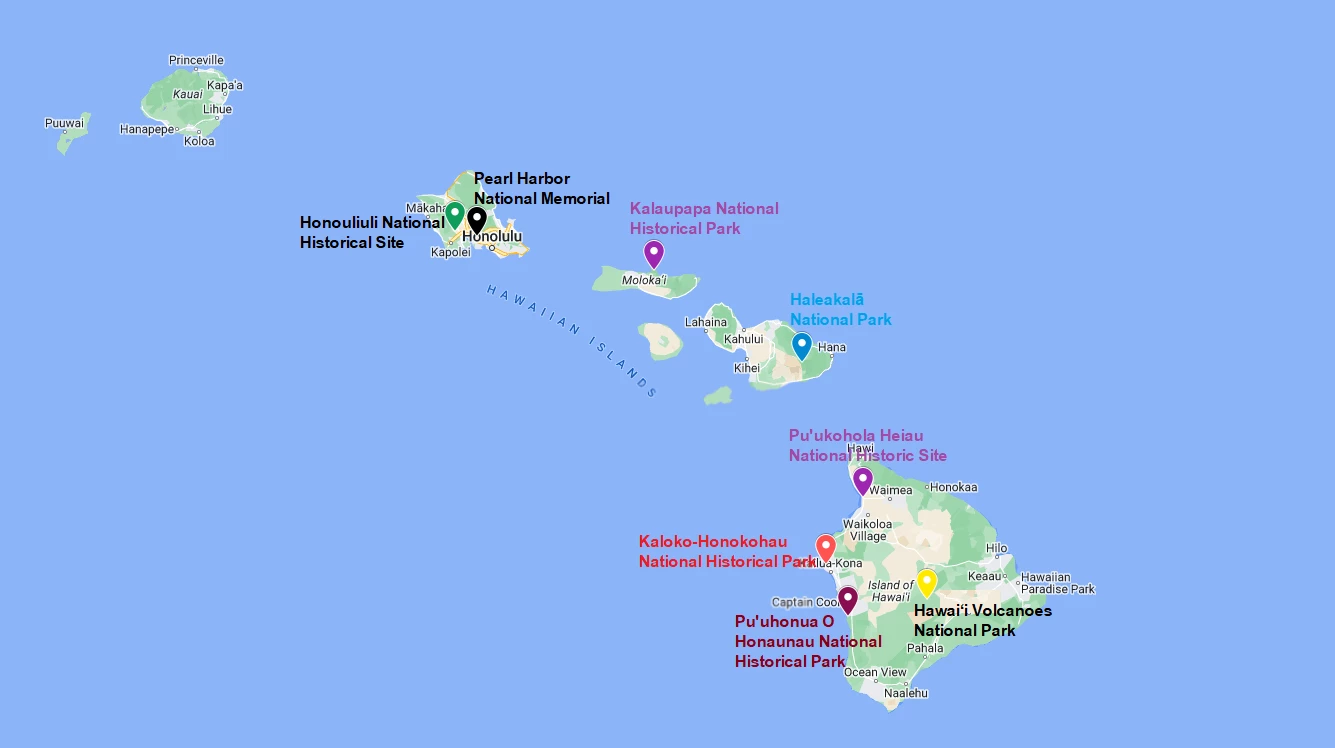
Hawaii’s Crown Jewels: The Designated National Parks
The two flagship National Parks in Hawaii represent the apex of its natural wonders, showcasing the raw power of volcanic creation and the stunning biodiversity forged in isolation. These parks are not just attractions; they are living classrooms and breathtaking landscapes that invite profound connection with the Earth.
Haleakalā National Park: A Volcanic Wonderland on Maui
Perched atop the island of Maui, Haleakalā National Park is a testament to the colossal forces that shaped Hawaii. This park preserves the dormant Haleakalā volcano, whose name, meaning “house of the sun,” evokes the legendary demigod Maui lassoing the sun from its summit. The park encompasses a stark, alien-like volcanic crater, high-elevation ecosystems, and unique sub-tropical rainforests stretching to the coast.
What to Experience:
Visiting Haleakalā is an extraordinary experience. The most iconic activity is witnessing the sunrise from its summit, a spectacle of color and light that paints the vast crater landscape in unforgettable hues. Due to its popularity, reservations are required to access the summit before sunrise, ensuring a more intimate and managed experience. Beyond the dawn, visitors can embark on challenging hikes into the crater, exploring cinder cones and otherworldly terrain that feels like walking on the moon. Trails like the Sliding Sands Trail offer unparalleled solitude and breathtaking vistas. The park is also a haven for stargazing, with some of the clearest night skies on Earth. For those seeking botanical wonders, the park is home to rare and endemic species, including the striking ʻāhinahina (Haleakalā silversword) and the nēnē, the Hawaiian goose.
Planning Your Lifestyle Trip:
Haleakalā National Park caters to adventurers, photographers, and nature enthusiasts. For accommodation, travelers typically stay in Maui’s coastal towns. Popular options include the vibrant resorts and vacation rentals in Kihei and the luxurious hotels and suites of Wailea on the south shore, or the historic charm of Lahaina on the west side. Many tours offer convenient transportation to the summit, alleviating the stress of early morning driving.
Hawaii Volcanoes National Park: Where Land is Made on the Big Island
Located on the southeastern side of the Island of Hawaii, affectionately known as the Big Island, Hawaii Volcanoes National Park is a dynamic landscape where new Earth is constantly being formed. This park is a geological hotspot, home to two of the world’s most active volcanoes: Kīlauea and Mauna Loa. It offers a rare opportunity to witness firsthand the raw, creative power of nature.
What to Experience:
The park is an ever-changing canvas of volcanic activity. Visitors can explore steam vents, walk through ancient lava tubes (like the famous Thurston Lava Tube), and hike across solidified lava fields. The iconic Crater Rim Drive offers panoramic views of Kīlauea Caldera and the impressive Halemaʻumaʻu crater, which often glows spectacularly at night when the volcano is actively erupting. The Chain of Craters Road descends from the caldera to the sea, passing numerous pit craters and ancient lava flows, culminating in an ocean arch carved by relentless waves. Always check the park’s official website for the latest conditions and safety alerts, especially regarding lava viewing, as volcanic activity can vary dramatically.
Planning Your Lifestyle Trip:
Hawaii Volcanoes National Park is a draw for geology enthusiasts, adventure seekers, and anyone fascinated by Earth’s fundamental processes. For accommodation, the charming Volcano Village just outside the park entrance offers cozy B&Bs and vacation rentals, perfect for immersive stays. Alternatively, the city of Hilo, about an hour’s drive away, provides a wider range of hotels and resorts, along with access to other East Hawaii attractions. While the Kona side of the Big Island also offers abundant luxury travel and budget travel options, it’s a longer drive to the park, making Hilo or Volcano Village more convenient for multiple park visits.
Beyond the Parks: Exploring Hawaii’s National Historic Sites and Trails
While Haleakalā and Hawaii Volcanoes represent natural grandeur, the remaining seven National Park Service sites in Hawaii dive deep into the islands’ profound history and culture. These sites offer invaluable insights into ancient Hawaiian traditions, significant events that shaped the United States, and poignant stories of human resilience.
Pearl Harbor National Memorial: A Sobering Tribute on Oahu
The Pearl Harbor National Memorial, located on Oahu near Honolulu, is a solemn and essential visit for anyone seeking to understand a pivotal moment in American history. It commemorates the devastating attack on Pearl Harbor by the Imperial Japanese Navy on December 7, 1941, which thrust the United States into World War II.
What to Experience:
The memorial complex includes the USS Arizona Memorial, built over the sunken hull of the battleship where 1,177 crewmen lost their lives. Visitors experience a moving film, exhibits, and a boat ride to the memorial itself. Other sites within the park, or operated by partners nearby, include the USS Oklahoma Memorial, the USS Utah Memorial, and the exhibits at the Pearl Harbor Visitor Center. Adjacent, but separate, attractions include the Battleship Missouri Memorial (where the surrender documents ending WWII were signed), the Pacific Aviation Museum Pearl Harbor, and the USS Bowfin Submarine Museum & Park.
Planning Your Lifestyle Trip:
A visit to Pearl Harbor is a poignant experience for history buffs, veterans, and anyone wishing to pay respects and reflect on the sacrifices made. Advance reservations for the USS Arizona Memorial are highly recommended due to limited capacity. Accommodation options are plentiful in nearby Honolulu and the iconic Waikiki area, ranging from luxury resorts to budget-friendly hotels. Many tour operators offer guided tours that simplify logistics and provide deeper insights into the historical context.
Kalaupapa National Historical Park: A Legacy of Resilience on Molokai
Located on the remote and isolated Kalaupapa Peninsula on the island of Molokai, Kalaupapa National Historical Park preserves the powerful and poignant story of a community formed by necessity. For over a century, this was the forced settlement for thousands of people afflicted with Hansen’s disease (leprosy) who were exiled from their families and communities across the Hawaiian Islands.
What to Experience:
The park is a testament to human resilience, the enduring spirit of the residents, and the selfless work of individuals like Father Damien (Saint Damien of Molokai) and Saint Marianne Cope, who dedicated their lives to caring for the patients. Access to Kalaupapa is highly restricted and requires prior arrangements, usually through an authorized tour operator. Visitors can experience the remote beauty of the peninsula, visit historic churches and gravesites, and hear the powerful stories of its former residents. The dramatic journey down a steep, winding trail, often by mule or on foot, adds to the profound sense of isolation and history.
Planning Your Lifestyle Trip:
A visit to Kalaupapa is not a typical tourism outing; it’s a deeply moving historical pilgrimage. It appeals to those seeking profound historical and cultural immersion, willing to navigate strict access protocols for a truly unique and reflective experience. Due to its isolated nature and the need to respect the privacy of the remaining residents, planning ahead is crucial. Molokai offers more rustic accommodation options compared to other islands, focusing on local charm and tranquility.
Puʻuhonua o Hōnaunau National Historical Park: Ancient Sanctuary on the Big Island
On the serene Kona coast of the Big Island lies Puʻuhonua o Hōnaunau National Historical Park, an ancient place of refuge that offers a compelling glimpse into pre-contact Hawaiian culture and judicial systems. In ancient Hawaii, breaking a kapu (sacred law) often meant a death sentence. However, if a lawbreaker could reach a puʻuhonua (place of refuge) before being captured, they could be absolved by a kahuna (priest) and allowed to return to society.
What to Experience:
The park preserves royal grounds, sacred burial caves, and temple platforms (heiau), enclosed by a massive, reconstructed wall. Visitors can take self-guided walking tours through the meticulously maintained grounds, encountering traditional Hawaiian structures, fishponds, and intricately carved wooden kiʻi (statues) representing akua (gods). Cultural demonstrations, such as net weaving or carving, are sometimes offered, providing deeper insights into ancient Hawaiian life. The tranquil ocean setting adds to the spiritual ambiance of this sacred site.

Planning Your Lifestyle Trip:
Puʻuhonua o Hōnaunau is an excellent destination for family trips, history enthusiasts, and anyone interested in indigenous cultures. It’s easily accessible from the Kona area, where a wide range of resorts and vacation villas can be found. The park provides an educational and peaceful experience, allowing visitors to walk through history and contemplate the ancient concept of sanctuary.
Ala Kahakai National Historic Trail: Tracing Ancient Paths on the Big Island
Stretching for approximately 175 miles along the Kona and Kohala coasts of the Big Island, the Ala Kahakai National Historic Trail is not a single, continuous path, but a network of traditional coastal trails that once connected ancient Hawaiian settlements, fishing villages, and sacred sites. It is a living landmark preserving a corridor of cultural and historical significance.
What to Experience:
Exploring the Ala Kahakai Trail offers a unique way to connect with Hawaii’s landscape and history. Visitors can hike segments of the trail, discovering petroglyph fields, ancient fishponds, temple sites (heiau), and remnants of early Hawaiian life. The trail provides access to secluded beaches and offers stunning ocean views, making it ideal for both cultural exploration and scenic walks. Different sections vary in difficulty, catering to a range of hikers.
Planning Your Lifestyle Trip:
This trail is perfect for avid hikers, history enthusiasts, and those seeking a deeper, immersive cultural experience beyond typical resort activities. Planning involves researching specific trail segments, as access points and conditions vary. Accommodation along the Kona and Kohala coasts provides convenient bases, from luxury resorts in Waikoloa and Mauna Lani to more independent vacation rentals.
Puʻukoholā Heiau National Historic Site: A Sacred Place of Unification on the Big Island
Also situated on the Kohala coast of the Big Island, the Puʻukoholā Heiau National Historic Site preserves one of the largest and most historically significant temple complexes in Hawaii. This massive stone heiau (temple) was built by King Kamehameha I in the late 18th century, fulfilling a prophecy that by doing so, he would unify the Hawaiian Islands under his rule.
What to Experience:
While visitors cannot enter the sacred heiau itself, a visitor center provides comprehensive historical context, and a walking path allows for viewing the impressive structure from a respectful distance. The site also includes the submerged remains of a shark heiau (temple) and an ancient royal canoe landing. The sheer scale and historical importance of Puʻukoholā Heiau make it a powerful landmark representing the ambition and spiritual power of ancient Hawaiian royalty.
Planning Your Lifestyle Trip:
This site is a must-visit for those interested in Hawaiian royalty, ancient beliefs, and the political landscape that led to the formation of the Kingdom of Hawaii. It offers a concise yet impactful tourism experience, easily combined with other Kohala Coast attractions. Many hotels and resorts in nearby Waikoloa and Mauna Lani offer convenient access to this site.
Honouliuli National Historic Site: A Story of Injustice on Oahu
The newest addition to Hawaii’s National Park Service sites is Honouliuli National Historic Site, located on Oahu. This site preserves the memory of the largest and longest-operating internment camp for Japanese Americans and others during World War II in Hawaii.
What to Experience:
Currently, Honouliuli is undeveloped and has very limited public access, primarily serving as an educational resource. The National Park Service is in the process of developing the site, with plans for a future interpretive center and public access. It stands as a stark reminder of civil liberties violations during wartime and the importance of remembering and learning from challenging chapters of American history.
Planning Your Lifestyle Trip:
While not yet a traditional visitor attraction, Honouliuli holds profound significance for those interested in social justice, US history, and the experiences of Japanese Americans. Future developments will offer a more comprehensive visitor experience. For now, educational resources are available online, and the site serves as a landmark for reflection. Accommodation in Honolulu provides easy access once the site becomes more publicly available.
World War II Valor in the Pacific National Monument: Echoes of Conflict
Though often associated primarily with Pearl Harbor National Memorial, it’s important to recognize the broader World War II Valor in the Pacific National Monument. This monument actually encompasses the various components at Pearl Harbor, along with other sites throughout the Pacific, including those in Alaska and California, which tell the story of the Pacific Theater of World War II. Within Hawaii, the focus is overwhelmingly on the events surrounding the Pearl Harbor attack, making the two names often used interchangeably for the Oahu site.
Planning Your National Park Adventure in Hawaii
Exploring Hawaii’s National Park Service sites requires thoughtful planning to maximize your enjoyment and ensure a respectful visit. From selecting the right time to visit to choosing appropriate accommodation and understanding local customs, these travel tips will enhance your experience.
Best Time to Visit
Hawaii generally enjoys pleasant weather year-round, but there are nuances. The dry season (April to October) offers sunnier days, ideal for hiking and outdoor activities. The wet season (November to March) brings more rain, but also lush landscapes and potentially dramatic cloud formations over the volcanoes. Consider visiting during the shoulder seasons (spring and fall) for fewer crowds and potentially better hotel rates. Specific considerations include:
- Haleakalā sunrise: Always cold at the summit, regardless of the season. Dress in layers.
- Hawaii Volcanoes: Volcanic activity is unpredictable. Check park alerts for real-time updates on lava viewing opportunities.
- Pearl Harbor: Popular year-round; booking well in advance is crucial, especially during peak holiday seasons.
Accommodation and Logistics
Choosing the right accommodation is key to a comfortable and convenient travel experience.
- Hotels and Resorts: All major islands (Oahu, Maui, Big Island) offer a wide spectrum, from luxury resorts with extensive amenities to boutique hotels and budget-friendly accommodations. Consider staying in towns closest to the parks you plan to visit for reduced travel time.
- Apartments and Villas: For family trips or longer stays, vacation rentals often provide more space and the flexibility of a kitchen, allowing for budget travel by preparing some meals.
- Transportation: A rental car is almost essential for exploring the parks on Maui and the Big Island. For Oahu, public transport and ride-shares are available, but a car offers greater flexibility. Inter-island flights are necessary to hop between the islands.
- Booking and Reviews: Always book accommodation and popular tours (like Haleakalā sunrise or Pearl Harbor) well in advance, especially during peak seasons. Consult reviews and comparison sites to find the best options for your needs and budget.
Respecting the Land and Culture
Hawaiian culture places great importance on Mālama Aina – caring for the land. As visitors, it’s vital to embody this spirit:
- Stay on marked trails: This protects fragile ecosystems and ensures your safety, especially in volcanic areas.
- Do not disturb nature: Leave rocks, plants, and wildlife undisturbed. Collecting souvenirs like lava rocks or sand is prohibited and considered bad luck by locals.
- Cultural Sensitivity: When visiting sacred sites like heiau or places of refuge, observe signage and behave respectfully. These are not just landmarks but places of deep spiritual significance.
- Safety First: Be prepared for varying weather conditions, especially at high elevations. Heed all warnings regarding volcanic hazards and ocean conditions.

Conclusion
Beyond its world-famous beaches and resort amenities, Hawaii offers a profoundly rich tapestry of natural splendor and historical depth, preserved and protected by its two designated National Parks and seven additional National Park Service sites. From the fiery creation of Kīlauea to the solemn remembrance of Pearl Harbor, and from ancient places of refuge to the enduring spirit of Kalaupapa, these landmarks invite travelers to connect with the islands on a deeper level.
Whether you’re an avid hiker, a history buff, or a family seeking educational experiences, Hawaii’s National Park Service sites offer an unparalleled journey through the heart and soul of the Aloha State. Embrace the opportunity to explore these incredible destinations, plan your accommodation thoughtfully, and allow yourself to be immersed in the vibrant culture and breathtaking landscapes that make Hawaii truly unique. Your adventure in the Hawaiian Islands will be all the richer for discovering these precious national treasures.
LifeOutOfTheBox is a participant in the Amazon Services LLC Associates Program, an affiliate advertising program designed to provide a means for sites to earn advertising fees by advertising and linking to Amazon.com. Amazon, the Amazon logo, AmazonSupply, and the AmazonSupply logo are trademarks of Amazon.com, Inc. or its affiliates. As an Amazon Associate we earn affiliate commissions from qualifying purchases.