
The question “What race is Hawaii?” might seem straightforward at first glance, but the answer is anything but simple. Hawaii is not a single race; it is a vibrant, intricate tapestry woven from countless threads of culture, heritage, and history. Far from being a monolithic entity, this enchanting archipelago in the heart of the Pacific Ocean embodies a unique demographic mosaic, shaped by centuries of migration, cultural exchange, and profound resilience. For anyone planning a visit or simply curious about its identity, understanding this rich human landscape is key to truly appreciating the islands’ profound beauty and spirit of Aloha.
As a premier travel destination, Hawaii offers far more than pristine beaches and volcanic landscapes. It presents a living classroom of global cultural interaction, a place where indigenous traditions meet waves of immigrant cultures from Asia, Europe, and North America. This complex identity is reflected in every aspect of the islands, from its diverse cuisine and musical rhythms to its languages and the very faces of its people. To fully immerse oneself in a Hawaiian experience – whether exploring ancient landmarks, savoring local delicacies, or finding the perfect accommodation – one must first understand the diverse heritage that defines it.
The Indigenous Roots: A Polynesian Tapestry
At the core of Hawaii’s identity lies its indigenous heritage, a legacy stretching back over a thousand years. The first people to call these islands home were daring navigators from Polynesia, undertaking incredible journeys across vast stretches of the Pacific Ocean in double-hulled canoes.
The Arrival of the First Navigators
The story of Hawaii begins with the arrival of the first Polynesian settlers, primarily from the Marquesas Islands, around 300-600 AD, followed by a second wave from Tahiti around the 11th century. These master navigators used sophisticated knowledge of stars, currents, and swells to guide them to this isolated island chain. They brought with them not only essential plants and animals but also a rich cultural system encompassing language, religion, social structures, and an intricate understanding of the natural world.
These early settlers established a highly organized society, developing complex irrigation systems for agriculture, constructing impressive temples (heiau), and creating unique art forms like hula and chant. Their descendants, known as the Kanaka Maoli or Native Hawaiians, flourished in harmony with the land, developing an intimate connection to the ‘āina (land) and kai (sea) that profoundly shaped their worldview. Their ingenuity and deep respect for nature laid the groundwork for the unique Hawaiian culture that would persist for centuries.
The Enduring Spirit of the Kanaka Maoli
For over a millennium, the Kanaka Maoli built a thriving civilization, culminating in the unification of the islands under King Kamehameha I in the early 19th century. This period marked the establishment of the independent Kingdom of Hawaii, a sovereign nation recognized by global powers. However, this era of independence was tragically cut short by foreign influence, culminating in the illegal overthrow of the Hawaiian monarchy in 1893 and eventual annexation by the United States in 1898.
Despite these historical injustices, the spirit and culture of the Kanaka Maoli have endured and are experiencing a powerful resurgence today. Efforts to revitalize the Hawaiian language, hula, traditional arts, and ancient practices are gaining momentum. When you visit landmarks like Iolani Palace in Honolulu, the only official residence of royalty in the United States, you are directly engaging with this profound history. Similarly, sites like Puuhonua o Honaunau National Historical Park on the Big Island offer a glimpse into ancient Hawaiian sacred spaces and the laws of refuge. Understanding and respecting these indigenous roots is crucial for any visitor seeking an authentic and meaningful travel experience in Hawaii.
A Confluence of Cultures: Waves of Immigration
While the Kanaka Maoli form the bedrock of Hawaii’s cultural identity, the islands’ demographic tapestry became increasingly complex with the arrival of outsiders and subsequent waves of immigration. This period of intense cultural exchange created the incredibly diverse society we see today.
From East to West: Labor, Opportunity, and New Beginnings
The modern era of Hawaii began in 1778 with the arrival of Captain James Cook, marking the islands’ introduction to the Western world. Soon after, American missionaries arrived, followed by whalers and merchants, forever altering the social and economic landscape. The 19th century witnessed the dramatic expansion of the sugar plantation industry, which created an insatiable demand for labor. As the native Hawaiian population declined due to introduced diseases and sought other forms of employment, plantation owners looked abroad to fill the labor gap.
This led to successive waves of immigrants from across the globe, each leaving an indelible mark on Hawaiian culture:
- Chinese (starting 1852): Among the first to arrive, many came seeking a better life, working on plantations before moving into urban areas to establish businesses. Their culinary traditions, festivals, and family values significantly influenced local life.
- Japanese (starting 1868): Becoming the largest immigrant group, the Japanese brought with them a strong work ethic, a rich cultural heritage including martial arts, tea ceremonies, and intricate festivals, which are now deeply woven into the fabric of Hawaii.
- Portuguese (starting 1878): Primarily from the Azores and Madeira Islands, the Portuguese contributed to the plantation workforce and introduced the ukulele (a derivation of their cavaquinho) and distinctive culinary elements like malasadas.
- Puerto Rican (starting 1900): After the Spanish-American War, a significant number of Puerto Rican laborers moved to Hawaii, adding their vibrant music, dance, and flavors to the islands’ growing cultural mix.
- Korean (starting 1903): Korean immigrants also arrived, bringing their unique cuisine, strong community bonds, and a determination that helped shape the islands’ economic and social development.
- Filipino (starting 1906): The last major group of plantation laborers, Filipino immigrants became one of the largest ethnic groups in Hawaii, contributing their diverse regional cultures, languages, and foods.
Each group faced challenges, including discrimination and harsh working conditions, but they persevered, laying down roots and contributing their unique traditions to create something entirely new: the distinctive “local” culture of Hawaii.
Shaping a Modern Identity: The Melting Pot Dynamic

Over generations, these diverse communities intermingled, married, and shared their lives, creating a dynamic unlike anywhere else in the United States. This “melting pot” effect resulted in a society where racial lines blurred, and a new, inclusive identity emerged. The term “hapa,” meaning “half” in Hawaiian, is commonly used to describe individuals of mixed ethnic heritage, highlighting the widespread intermarriage and the beautiful blending of races.
This cultural fusion is evident everywhere. Take for instance, the evolution of local cuisine: the iconic “plate lunch” is a testament to this blend, typically featuring rice (from Asia), macaroni salad (from Europe/North America), and a variety of main dishes ranging from kalua pig (Hawaiian), chicken katsu (Japanese), to adobo (Filipino).
Language also evolved, with the emergence of Hawaiian Pidgin, a unique creole language that blends Hawaiian, English, Japanese, Portuguese, and Filipino words and grammatical structures. Exploring areas like Chinatown, Honolulu, offers a vivid experience of this historical blend, with its bustling markets, temples, and eateries that reflect the enduring legacy of early immigrants. This intricate cultural layering makes Hawaii a fascinating destination for those interested in local culture, food, and the living history of human migration.
Hawaii’s Demographic Landscape Today: A Vibrant Mosaic
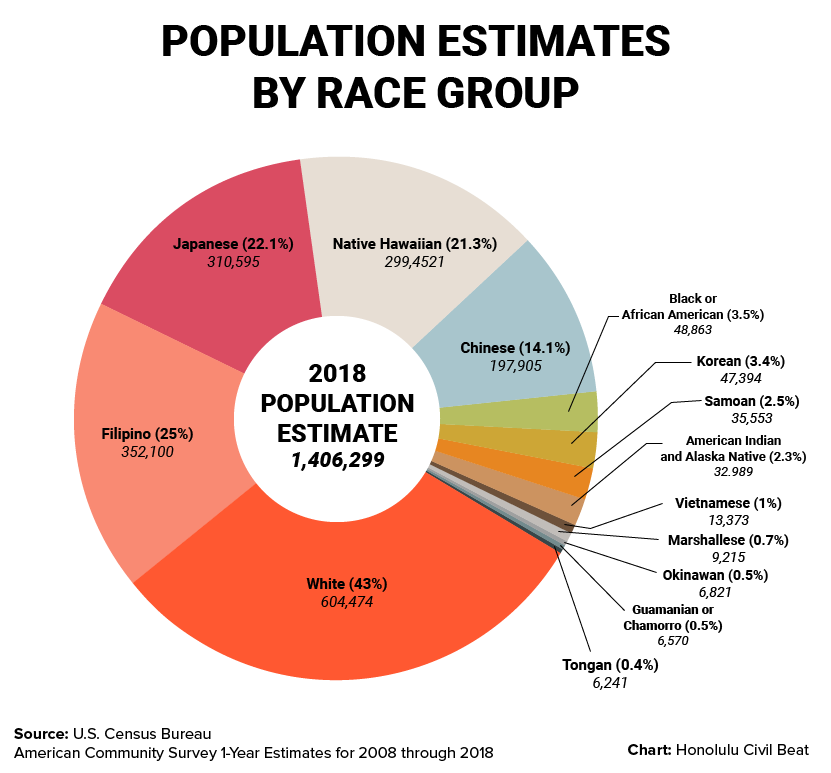
Today, the demographic makeup of Hawaii is truly a vibrant mosaic, arguably one of the most racially and ethnically diverse places on Earth. The question “What race is Hawaii?” is best answered by saying it is a beautiful blend of all races, with no single majority.
Beyond Race: Celebrating a Shared Identity
Unlike many other states in the United States, Hawaii has no single majority ethnic group. According to census data, the largest groups identify as Asian (predominantly Japanese, Filipino, and Chinese), followed by White, Native Hawaiian or Other Pacific Islander, and a significant percentage identifying as “Two or More Races.” In fact, Hawaii consistently ranks highest among U.S. states for its mixed-race population, with many people proudly identifying as “hapa” or “local.”
This unique demographic reality fosters a strong sense of “local identity” that transcends individual racial backgrounds. To be “local” in Hawaii is not about your ancestral origin but about your connection to the islands, your embrace of the culture, and your embodiment of the Aloha spirit – a philosophy of kindness, harmony, humility, and compassion. This shared identity is a powerful unifying force, making Hawaii a place where cultural understanding and mutual respect are often at the forefront.
Experiencing the Cultural Richness as a Visitor
For travelers, this rich cultural tapestry translates into an incredibly diverse and engaging experience. Beyond the natural attractions like the beaches of Waikiki or the majesty of Diamond Head, the true essence of Hawaii lies in its people and their traditions.
Visitors can immerse themselves in this diversity in countless ways:
- Cultural Centers: The Polynesian Cultural Center on Oahu offers an educational and entertaining journey through the cultures of Hawaii, Samoa, Fiji, Tonga, Tahiti, and Aotearoa (New Zealand).
- Food Tours: Explore the vibrant culinary scene that reflects the islands’ diverse heritage. From traditional Hawaiian luau to bustling farmers’ markets and fusion restaurants, every meal tells a story. Look for establishments offering regional specialties on Maui, Kauai, or the Big Island to taste local flavors.
- Festivals and Events: Throughout the year, various cultural festivals celebrate the contributions of different ethnic groups, such as the Honolulu Festival, cherry blossom festivals, or traditional hula competitions.
- Accommodation Choices: Many resorts and hotels, from luxury stays like the Four Seasons Resort Maui at Wailea to more boutique accommodation options, incorporate elements of local design, cuisine, and cultural activities into their offerings, enhancing the guest experience. Even larger resorts like the Hilton Hawaiian Village Waikiki Beach Resort strive to integrate Hawaiian culture into their programs.
- Historical Sites: Visit places like Pearl Harbor on Oahu, which, while commemorating a pivotal moment in U.S. history, is also a site where people of all backgrounds come together to reflect and learn.
Engaging with the local population, whether through conversation with a shop owner, learning to surf with a local instructor like legendary Duke Kahanamoku in his time, or simply observing daily life, provides the deepest insights into Hawaii’s inclusive identity.
Embracing Aloha: Responsible Tourism and Cultural Appreciation
Given Hawaii’s unique cultural makeup, responsible tourism is not just a buzzword; it’s a fundamental aspect of truly experiencing and respecting the islands. Embracing the Aloha spirit means recognizing that Hawaii is not just a destination but a living, breathing culture with a profound history and a vibrant present.
Supporting Local: Businesses and Traditions
One of the most impactful ways travelers can honor Hawaii’s diverse heritage is by consciously supporting local businesses and preserving its traditions.
- Shop Local: Seek out local artists, craftspeople, and farmers at markets. This supports the community and provides unique, authentic souvenirs that tell a story.
- Eat Local: Patronize family-owned restaurants that serve authentic Hawaiian and local fusion cuisine. Not only is it delicious, but it directly contributes to the local economy and helps preserve culinary traditions.
- Engage with Cultural Practitioners: Look for opportunities to learn hula, attend a traditional luau where the food is cooked in an imu (underground oven), or visit cultural workshops. These experiences offer a deeper understanding and appreciation of Hawaiian and Polynesian arts.
- Respect Sacred Sites: Be mindful and respectful when visiting historical sites, ancient temples, and natural wonders like Hawaii Volcanoes National Park on the Big Island (home to Kilauea and Mauna Loa) or the dramatic Na Pali Coast on Kauai. These places hold deep spiritual and historical significance for the local people.
Choosing accommodations that are committed to sustainable practices and cultural sensitivity also makes a difference, ensuring that your travel contributes positively to the community and environment of Oahu, Maui, Kauai, Big Island, Lanai, or Molokai.

Navigating Cultural Nuances: Tips for Travelers
Understanding a few cultural nuances can greatly enhance your travel experience and ensure you are a respectful visitor.
- Learn Basic Hawaiian Phrases: A simple “Aloha” (hello/goodbye/love) and “Mahalo” (thank you) go a long way in showing respect.
- Take Off Your Shoes: If invited into someone’s home or a local establishment, always remove your shoes before entering.
- Malama Aina (Care for the Land): Treat the natural environment with reverence. Do not litter, stay on marked trails, and never remove lava rocks or sand, as they are considered sacred and removing them is thought to bring bad luck.
- Drive with Aloha: Be patient and courteous on the roads. “Local style” driving is often slower, so embrace the relaxed pace.
- Be Mindful of Local Life: Remember that Hawaii is home to real communities, not just a tourist playground. Be respectful of residential areas and local customs.
- Listen and Learn: Engage with locals, listen to their stories, and be open to learning about their perspectives. This is where the deepest connections and understandings are formed.
In conclusion, “What race is Hawaii?” is a question that invites a journey into one of the world’s most fascinating cultural landscapes. It is a place defined not by a single race but by the beautiful, enduring spirit of its indigenous people, enriched by the contributions of countless immigrants, and unified by the profound philosophy of Aloha. When you visit, you are not just seeing a destination; you are stepping into a living story of human connection, resilience, and unparalleled diversity. Embrace it, respect it, and you will find an experience that transcends the ordinary and touches the soul.
LifeOutOfTheBox is a participant in the Amazon Services LLC Associates Program, an affiliate advertising program designed to provide a means for sites to earn advertising fees by advertising and linking to Amazon.com. Amazon, the Amazon logo, AmazonSupply, and the AmazonSupply logo are trademarks of Amazon.com, Inc. or its affiliates. As an Amazon Associate we earn affiliate commissions from qualifying purchases.