
The question of “What is the biggest hotel in the world?” might seem straightforward, but its answer is anything but simple. Like asking for the “biggest building,” the definition of “biggest” can vary significantly. Does it refer to the number of rooms, the total floor area, the number of employees, or perhaps the sheer capacity to host guests? Each metric tells a different story and highlights a unique marvel of modern hospitality. These colossal establishments are more than just places to sleep; they are integrated cities offering an astounding array of amenities, drawing millions of tourists annually, and serving as significant landmarks in their respective regions.
Exploring these titans of accommodation reveals not only their impressive scale but also their profound impact on travel, tourism, and local economies. From the bustling entertainment hubs of Las Vegas to the spiritual heart of Mecca, and the vibrant gaming centers of Macau, these mega-hotels redefine what it means to offer accommodation on a grand scale. They stand as testaments to architectural ambition, engineering prowess, and the ever-growing demands of global tourism.
Defining “Biggest”: More Than Just Room Count
When we talk about the “biggest” hotel, the immediate thought often jumps to the number of rooms. While this is a common and easily quantifiable metric, it doesn’t always paint the full picture of a hotel’s magnitude. A property might have fewer rooms but boast an expansive footprint, housing vast convention centers, multiple shopping malls, or an elaborate network of entertainment venues. Conversely, a hotel with a colossal room count might comprise several towers clustered together, appearing smaller in terms of overall area.
The world of mega-hotels presents a fascinating challenge in categorization, forcing us to consider various parameters beyond a simple tally of guestrooms. This complexity is part of what makes the pursuit of the “biggest” so intriguing, as it showcases the diverse ways in which developers have pushed the boundaries of hospitality.
The Metric Matters: Rooms, Area, or Capacity?
For many, the most straightforward measure of a hotel’s size is its number of rooms. This metric directly indicates how many guests can be accommodated simultaneously, making it a popular choice for rankings. However, this count might not account for suites, serviced apartments, or properties that are part of a larger complex but managed as separate entities. A hotel with 7,000 standard rooms might offer a very different experience and require a different operational scale than one with 3,000 sprawling luxury suites.
Another crucial metric is total floor area or building footprint. This takes into account the entirety of the structure, including lobbies, restaurants, casinos, ballrooms, retail spaces, and back-of-house operations. A hotel might have fewer rooms but occupy an enormous amount of land or vertical space, making it “bigger” in terms of its physical presence and the sheer volume of amenities it offers. This measure often highlights properties that are integral parts of mixed-use developments, combining hospitality with commerce, entertainment, and even residential components.
Finally, guest capacity offers a different perspective, focusing on the maximum number of people the hotel can host, including both overnight guests and visitors to its public facilities. This often comes into play with resorts that integrate theme parks, casinos, or convention centers, where the daily influx of non-staying patrons significantly impacts the scale of operations. The choice of metric fundamentally changes which hotel claims the top spot, revealing the multifaceted nature of “bigness” in the hospitality industry.
The Challenges of Categorization
Categorizing these colossal structures also presents practical challenges. Some properties are standalone giants, while others are parts of sprawling resorts or multi-hotel complexes. For instance, is a resort with five distinct hotel towers counted as one hotel or five? The industry often treats them as separate entities for booking and management, yet from a tourist’s perspective, they function as one expansive destination. Furthermore, the definition of a “room” itself can vary, ranging from standard hotel rooms to extended-stay suites, apartments, and even villas.
Ownership and management structures also complicate matters. Some large hotels are single-owner properties, while others are condominium hotels where individual units are privately owned but managed by the hotel operator. These nuances mean that any list of “biggest” hotels needs to clearly define its parameters to avoid confusion. Understanding these distinctions allows for a more accurate appreciation of the architectural and operational feats these hotels represent.
The Contenders for the Title
Having established the complexities of defining “biggest,” let’s dive into the most prominent contenders for the title, each claiming supremacy based on a particular metric. These hotels are not just large; they are destinations in themselves, offering unparalleled scales of luxury, entertainment, and service.
Abraj Al Bait: The World’s Largest by Floor Area
If “biggest” is measured by total floor area, the undisputed champion is the Abraj Al Bait complex in Mecca, Saudi Arabia. This colossal government-owned complex, also known as the Makkah Royal Clock Tower Hotel, features the world’s largest clock face and stands as one of the tallest buildings globally. It houses multiple five-star hotels, shopping malls, a prayer area capable of holding tens of thousands of people, and various residential units.
With a staggering floor area exceeding 1.5 million square meters (over 16 million square feet), the Abraj Al Bait dwarfs virtually every other hotel on the planet. While it comprises several hotels operating under different brands (including Fairmont, Raffles, and Swissôtel), its unified structure and purpose—to accommodate pilgrims visiting the nearby Kaaba at the Grand Mosque—make it a single, immense hospitality entity. Its primary purpose as accommodation for millions of pilgrims underscores its unique scale and spiritual significance, blending a monumental hotel with a vital civic function.
First World Hotel: The King of Room Count
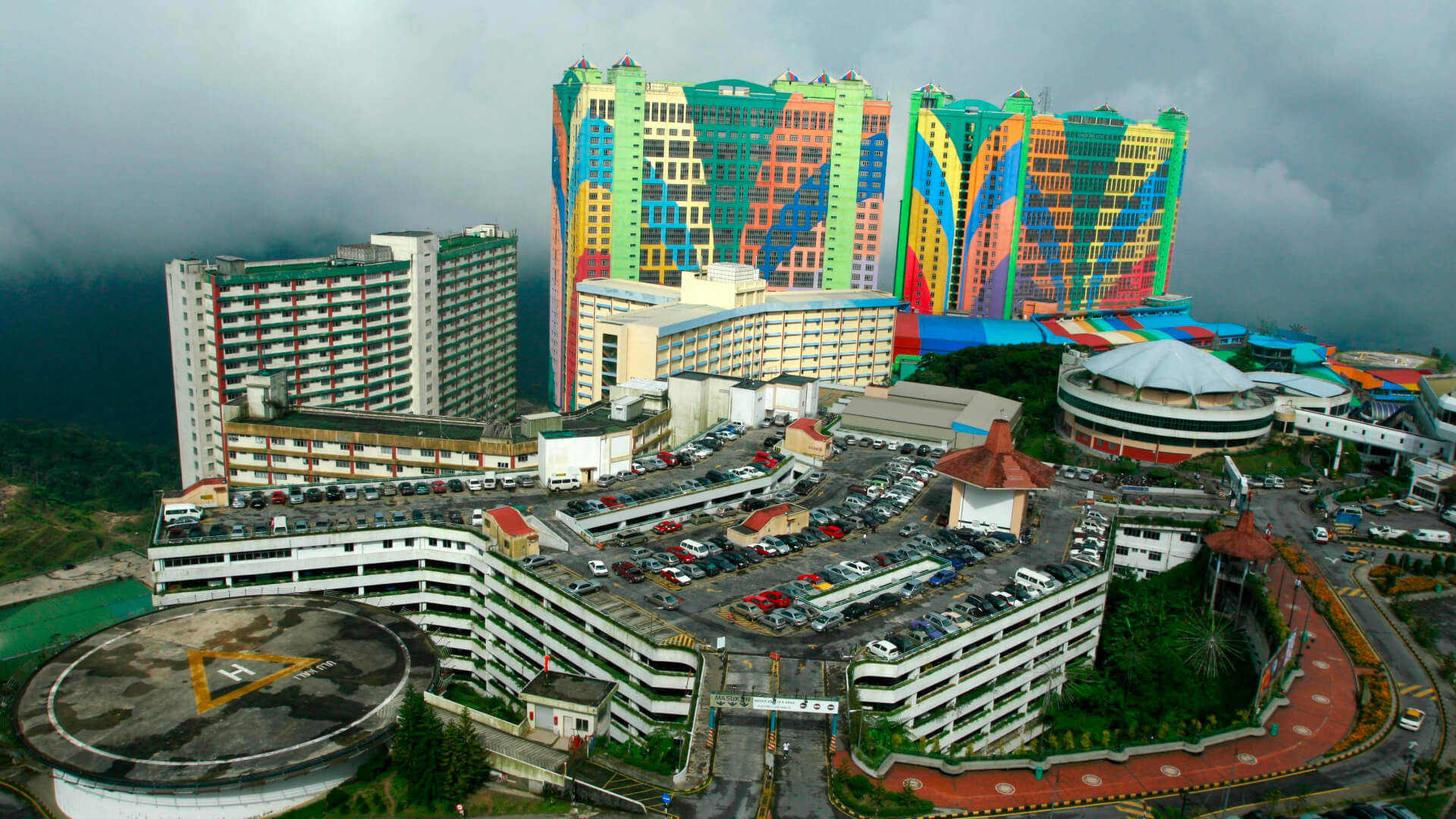
When the metric is purely the number of rooms, the title of the biggest hotel in the world goes to the First World Hotel, located in Genting Highlands, Malaysia. This vibrant, colorful hotel boasts an astonishing 7,351 rooms spread across two towers. Certified by Guinness World Records for its immense capacity, it has held this title for many years, cementing its status as a hospitality goliath.
Part of the vast Resorts World Genting complex, the First World Hotel is not merely a place to sleep; it’s an integral component of a sprawling mountain resort that includes theme parks, a casino, shopping malls, and entertainment venues. Its sheer volume of rooms caters to a broad spectrum of travelers, from families seeking adventure to gamblers looking for excitement, all drawn to the cool climate and diverse attractions of Genting Highlands. The hotel’s brightly painted facade and lively atmosphere perfectly complement the festive environment of the resort.
Other Notable Giants
While Abraj Al Bait and First World Hotel often lead in their respective categories, several other mega-hotels deserve recognition for their immense scale and their significant contributions to the global hospitality landscape.
MGM Grand Las Vegas

In the entertainment capital of Las Vegas, Nevada, USA, the MGM Grand Las Vegas is an icon of hospitality. With 6,852 rooms, it consistently ranks among the world’s largest hotels by room count. Beyond its impressive number of accommodations, the MGM Grand is a destination in itself, featuring a massive casino, an arena for major sporting events and concerts, multiple theaters, nightclubs, a vast convention center, and a wide array of fine dining and casual restaurants. Its sheer scale of operations and the diversity of its offerings make it a microcosm of the entire Las Vegas experience.
Sands Venetian Macao
Often referred to as the “Las Vegas of Asia,” Macau, China is home to some of the world’s largest integrated resorts. The Sands Venetian Macao is a prime example, boasting 3,000 suites and an incredible 1.2 million square feet of convention space, making it one of the largest single structure hotel buildings in Asia. Modeled after its sister property in Las Vegas, it features a Venetian theme complete with canals, gondolas, and street performers. Its immense casino, luxury shopping mall, and vast entertainment offerings cement its status as a powerhouse in global tourism and accommodation. The property is so large that guests often require maps to navigate its sprawling facilities.
CityCenter
Also in Las Vegas, CityCenter is a remarkable example of a mega-complex comprising multiple distinct hotels and residences. While not a single hotel, its combined room count and facilities are astounding. Key components include the Aria Resort and Casino (over 4,000 rooms), the non-gaming Vdara Hotel & Spa (over 1,400 suites), and the luxurious Mandarin Oriental at CityCenter (around 400 rooms), now the Waldorf Astoria Las Vegas. Together, these properties, along with residential towers and a sprawling retail district, form a truly massive urban resort environment, showcasing cutting-edge architecture and luxury lifestyle offerings. Other notable mentions include the Luxor Hotel and Casino (4,407 rooms) and the Excalibur Hotel and Casino (3,981 rooms), both also in Las Vegas, further solidifying the city’s reputation for mega-hotels.
Beyond Size: The Impact of Mega-Hotels
These massive hotels are more than just statistics; they are complex ecosystems that exert a profound influence on travel, tourism, and the broader lifestyle landscape. Their existence shapes destinations, drives economies, and offers unparalleled experiences to millions of visitors each year.
Tourism and Economic Engines
Mega-hotels are often anchors for entire tourist destinations. They attract visitors from around the globe, providing not just accommodation but also a comprehensive array of activities that keep guests on-site and engaged. This influx of tourists, whether for leisure, business, or spiritual journeys, fuels local economies, creating thousands of jobs in hospitality, retail, entertainment, and transportation. The revenue generated contributes significantly to regional GDPs, often spurring further development in infrastructure and related industries. For cities like Las Vegas and Macau, these hotel complexes are the very foundation of their tourism-dependent economies. Even for religious tourism, as seen with Abraj Al Bait, the hotel complex is critical for managing the massive influx of pilgrims, facilitating their stay and enhancing their experience.
A World of Amenities and Experiences
What truly sets these mega-hotels apart is the sheer breadth and depth of amenities they offer. Guests are not merely booking a room; they are gaining access to an entire world of experiences under one roof. This often includes:
- Diverse Dining: From Michelin-starred restaurants to casual eateries, food courts, and themed buffets, catering to every palate and budget.
- World-Class Entertainment: Casinos, live shows, concerts, nightclubs, bars, and lounges. Many host resident performers or major international acts.
- Extensive Retail: Luxury boutiques, brand-name stores, and souvenir shops, often integrated into elaborate shopping malls.
- Wellness and Recreation: Spas, fitness centers, multiple swimming pools, golf courses, and even theme parks or water parks (as seen with Resorts World Genting).
- Business and Events: Massive convention centers, ballrooms, and meeting rooms, making them prime locations for international conferences, trade shows, and corporate events.
This all-encompassing approach transforms a hotel stay into a complete vacation or business trip, minimizing the need for guests to leave the property. This strategy is particularly effective for attracting family trips, business stays, and luxury travelers seeking convenience and variety.
Architectural Marvels and Modern Landmarks
Beyond their functionality, many of the world’s largest hotels are also architectural masterpieces and modern landmarks. Their designs often push the boundaries of engineering and aesthetics, becoming recognizable symbols of their cities or countries. The towering elegance of Abraj Al Bait’s clock tower, the opulent Venetian theme of Sands Venetian Macao, and the contemporary grandeur of CityCenter’s skyscrapers are prime examples. These structures are designed not just to house guests but to impress and inspire, drawing visitors who come specifically to marvel at their scale and design. They become synonymous with their locations, much like traditional landmarks, contributing to the destination’s identity and global appeal.
The Future of Hotel Giga-Projects
The trend towards larger, more integrated hotel complexes shows no signs of slowing down, with new giga-projects continuously being planned and constructed around the world. As global travel continues to expand, driven by increasing affluence and accessibility, the demand for varied and extensive accommodation options grows. Future mega-hotels are likely to incorporate even more advanced technologies, sustainable practices, and innovative guest experiences.
Sustainability and Innovation
As the environmental impact of large-scale developments comes under scrutiny, future mega-hotels are increasingly likely to prioritize sustainability. This means incorporating green building techniques, energy-efficient systems, water conservation strategies, and responsible waste management. Smart hotel technologies, leveraging AI and IoT, will enhance guest experiences, personalize services, and optimize operational efficiency. From seamless digital check-ins to AI-powered concierge services, innovation will redefine the guest journey within these massive structures. The focus will be on creating not just big hotels, but smart, sustainable, and highly personalized hospitality experiences.
Changing Traveler Expectations
Traveler expectations are constantly evolving. While some seek budget travel options, others desire unparalleled luxury travel or unique cultural experiences. Mega-hotels are adapting by offering a wider range of accommodation types within a single complex, from economical rooms to lavish suites and serviced apartments. They also increasingly integrate local culture, food, and activities into their offerings, moving beyond generic amenities to provide more authentic and enriching experiences. The rise of bleisure travel (combining business and leisure), family trips, and long-term stays means that these hotels must be flexible and adaptable, offering facilities that cater to diverse needs and preferences, truly becoming destinations in themselves.

Conclusion
So, what is the biggest hotel in the world? The answer remains nuanced, depending on whether you prioritize room count, total floor area, or overall capacity. The First World Hotel in Malaysia reigns supreme by room count with its impressive 7,351 accommodations, while the Abraj Al Bait complex in Saudi Arabia dominates by sheer floor area. Yet, other giants like the MGM Grand Las Vegas and the Sands Venetian Macao leave an indelible mark with their comprehensive entertainment and convention facilities.
These architectural marvels are far more than just hotels; they are dynamic, self-contained cities that act as powerful engines of tourism, economic growth, and cultural exchange. They represent the pinnacle of modern hospitality, continually pushing the boundaries of what is possible in design, service, and guest experience. As the world of travel continues to evolve, these colossal hotels will undoubtedly adapt, innovate, and continue to stand as monumental testaments to human ambition and the enduring allure of grand-scale accommodation.
LifeOutOfTheBox is a participant in the Amazon Services LLC Associates Program, an affiliate advertising program designed to provide a means for sites to earn advertising fees by advertising and linking to Amazon.com. Amazon, the Amazon logo, AmazonSupply, and the AmazonSupply logo are trademarks of Amazon.com, Inc. or its affiliates. As an Amazon Associate we earn affiliate commissions from qualifying purchases.