
The question of “who owns” a large, global corporation like Wyndham Hotel is more complex than it might seem at first glance. Unlike a single, privately-held business, Wyndham Hotels & Resorts is a publicly traded company. This means its ownership is distributed among a vast number of shareholders, ranging from individual investors to large institutional funds, all of whom hold a stake in the company through their shares. Understanding this fundamental aspect is key to appreciating the structure and operational dynamics of one of the world’s largest and most geographically diverse hotel franchising companies.
[Wyndham Hotels & Resorts] stands as a titan in the hospitality industry, boasting an expansive portfolio of brands that cater to virtually every segment of the travel market, from budget-conscious travelers to those seeking upscale experiences. With thousands of hotels under its various flags spread across numerous countries, the company plays a pivotal role in global tourism and accommodation. Its business model, primarily focused on franchising, further influences how its individual properties are managed and operated, distinguishing it from companies that predominantly own and operate their hotels directly.
This article delves into the intricate ownership structure of [Wyndham Hotels & Resorts], explores its journey from a diversified hospitality giant to a pure-play hotel company, illuminates its vast brand portfolio, and unpacks the franchising model that underpins its success. By the end, readers will have a comprehensive understanding of not just who “owns” [Wyndham Hotel], but also how this ownership translates into its global operational strategy and impact on the travel landscape.
The Corporate Identity of Wyndham Hotels & Resorts
To truly understand the ownership of [Wyndham Hotels & Resorts], one must first grasp its corporate identity and how it evolved into the powerhouse it is today. The company’s journey is marked by strategic decisions, including a significant spin-off that reshaped its focus and market position.
A Legacy of Hospitality and Growth
The roots of the modern [Wyndham Hotels & Resorts] can be traced back through a series of mergers, acquisitions, and strategic realignments within the broader hospitality and travel sectors. For many years, it operated as part of Wyndham Worldwide, a much larger entity that encompassed not only hotels but also vacation ownership (timeshare) and rental businesses. This diversified portfolio made [Wyndham Worldwide] a formidable player across multiple facets of the leisure and accommodation industries.
However, in 2018, [Wyndham Worldwide] underwent a major transformation, splitting into two distinct, publicly traded companies: [Wyndham Hotels & Resorts] and [Wyndham Destinations]. This strategic move was designed to unlock greater value for shareholders by allowing each new company to focus squarely on its core business. [Wyndham Hotels & Resorts] emerged as the pure-play hotel franchisor, concentrating solely on the lodging segment. This separation was a defining moment, allowing the hotel division to streamline its operations, enhance its brand portfolio, and pursue growth strategies specifically tailored to the dynamic hotel market.
Since the spin-off, [Wyndham Hotels & Resorts] has solidified its position as one of the world’s largest hotel franchisors. Its leadership team, including its CEO and Board of Directors, is responsible for guiding the company’s strategic direction, overseeing its vast network of properties, and ensuring its continued growth and profitability for its diverse shareholder base. This executive team, while steering the company, ultimately answers to the collective ownership interests of these shareholders.
Understanding the Ownership Structure
As a publicly traded company on the New York Stock Exchange, [Wyndham Hotels & Resorts]’ ownership is distributed among its shareholders. There isn’t a single individual or private entity that “owns” the entire company. Instead, ownership is fragmented and dynamic, changing as shares are bought and sold on the open market.
The shareholder base typically consists of several key groups:
- Institutional Investors: These are large organizations such as mutual funds, pension funds, hedge funds, and investment banks. They often hold significant blocks of shares, making them major stakeholders. Their investment decisions are driven by financial analysis and the company’s performance, influencing its stock price and overall market valuation. Examples of such investors might include major asset management firms that allocate capital across various industries, including hospitality.
- Individual Investors: Everyday people who buy shares through brokerage accounts also contribute to the ownership structure. While individual holdings are usually smaller compared to institutional investors, collectively, they represent a substantial portion of the company’s ownership. These individuals might invest for long-term growth, dividends, or as part of a diversified investment portfolio.
- Company Insiders: This group includes the company’s executives (like the CEO and other senior management) and members of its Board of Directors. They often hold shares as part of their compensation packages or through personal investments, aligning their financial interests with the company’s performance and shareholder value.
- Index Funds and ETFs: Many passive investment vehicles, such as index funds and exchange-traded funds (ETFs) that track broad market indices, will also hold shares in [Wyndham Hotels & Resorts] if the company is included in the index they replicate. This provides an additional layer of distributed ownership.
The cumulative effect of these diverse owners is that the company operates under the ultimate direction of its shareholder base, whose interests are represented by the Board of Directors. The Board, in turn, hires and oversees the executive management team responsible for the day-to-day operations and strategic execution.
The Extensive Portfolio: Brands Under the Wyndham Umbrella
A significant part of [Wyndham Hotels & Resorts]’ strength and global presence comes from its extensive and diverse brand portfolio. This collection of hotel flags is carefully curated to appeal to a wide array of travelers and property owners, cementing its status as a leader in global accommodation.
Diverse Offerings for Every Traveler
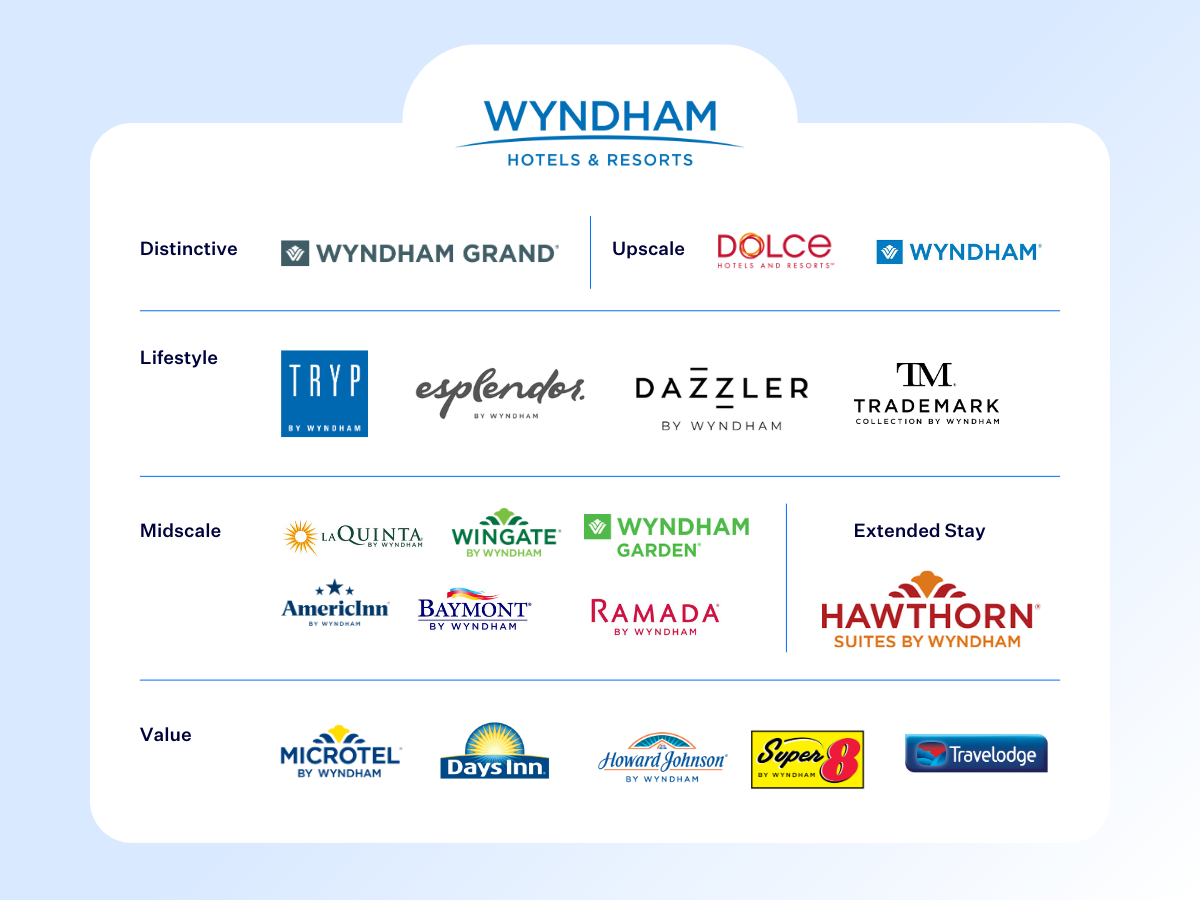
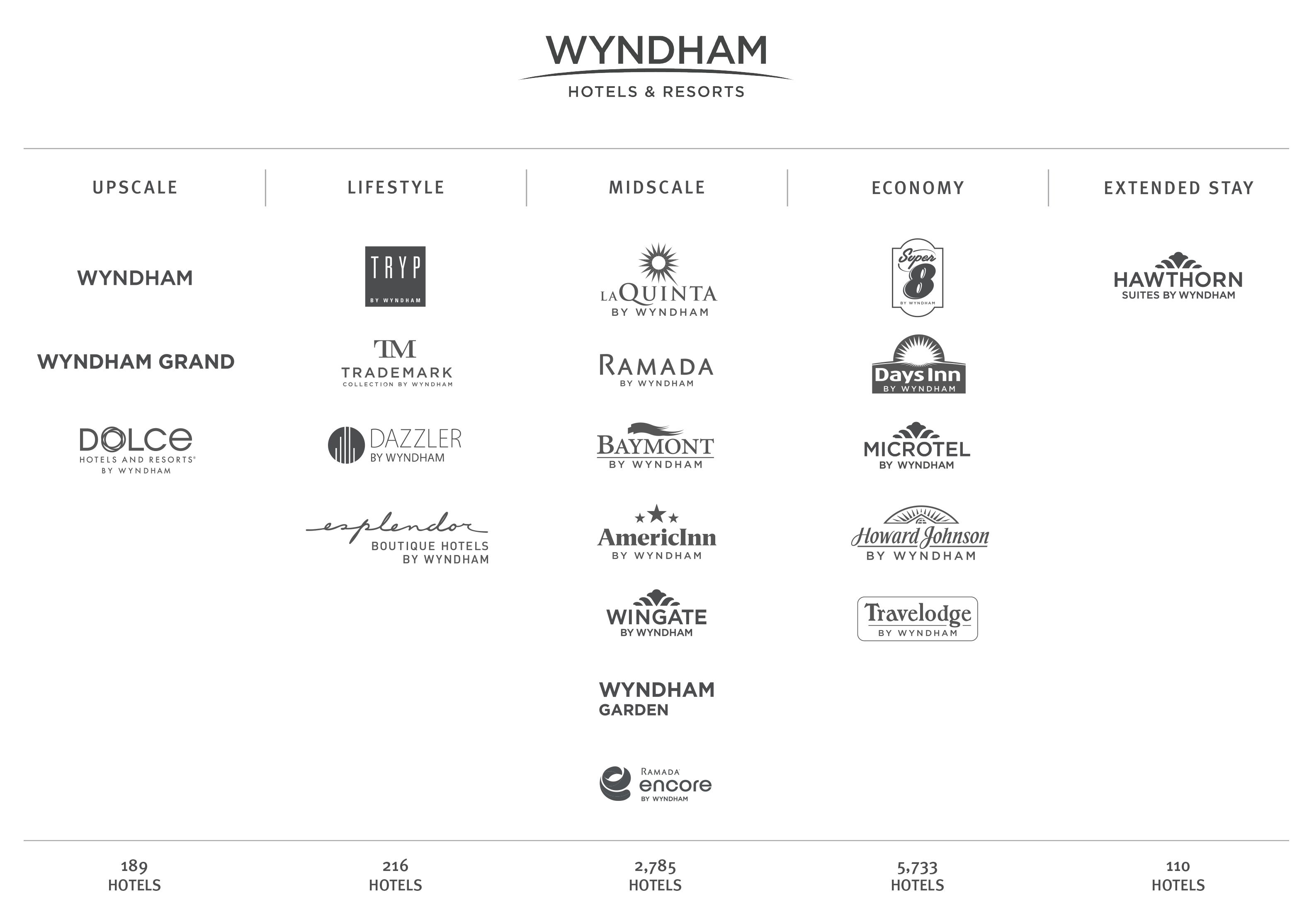
[Wyndham Hotels & Resorts] is renowned for having one of the largest and most varied brand families in the industry. This strategic diversity allows the company to penetrate various market segments, from economy and mid-scale to upscale and even luxury, ensuring there’s a [Wyndham] brand suitable for almost any travel need or budget.The portfolio includes iconic names that have become synonymous with comfortable and reliable lodging:
- Economy Brands: Catering to budget-conscious travelers seeking value without compromising on essential amenities, brands like Days Inn, Super 8, and Travelodge are ubiquitous on roadways and in smaller towns. They provide a practical and accessible option for overnight stays, appealing to road-trippers and those on a tight budget.
- Mid-Scale Brands: These brands offer a step up in amenities and services, providing a comfortable and consistent experience for business and leisure travelers. Ramada, La Quinta, Wingate by Wyndham, AmericInn, and Baymont are prominent in this segment, often featuring complimentary breakfast, fitness centers, and business services. They strike a balance between affordability and enhanced guest experiences, making them popular choices for family trips and longer stays.
- Upscale and Upper-Midscale Brands: For travelers seeking more refined experiences, Wyndham (the flagship brand), Wyndham Grand, and Trademark Collection by [Wyndham] offer elevated designs, enhanced amenities, and more distinctive atmospheres. These properties are often found in prime urban locations, near attractions, or in popular travel destinations, providing a sophisticated option for guests. Brands like Dazzler and Esplendor by [Wyndham] add a unique flair, often found in vibrant city centers, reflecting local culture and art.
- Extended-Stay and Specialty Brands: Recognizing the growing demand for longer stays, Hawthorn Suites by [Wyndham] provides spacious accommodations with kitchenettes, ideal for business travelers or families. The Registry Collection Hotels represent a collection of independent luxury hotels and resorts, offering unique, high-end experiences under the [Wyndham] umbrella.
This multi-tiered approach allows [Wyndham Hotels & Resorts] to capture a broad market share and maintain relevance across various travel segments. Each brand operates with its own identity, marketing strategies, and target audience, while benefiting from the overarching support and loyalty program of the [Wyndham] ecosystem.
Global Reach and Market Presence
[Wyndham Hotels & Resorts] boasts an unparalleled global footprint, making it one of the largest hotel companies by the number of properties. Its presence spans continents, with hotels located in over 95 countries. This vast international reach is a testament to its successful franchising model and its ability to adapt its brands to diverse markets.From bustling city centers in North America and Europe to emerging markets in Asia Pacific, Latin America, and the Middle East & Africa, [Wyndham] hotels are a common sight. This expansive network not only provides numerous accommodation options for travelers worldwide but also offers significant advantages to property developers and owners looking to partner with a globally recognized brand.
The company’s focus on mid-scale and economy segments has been particularly effective in expanding its global presence, as these segments often represent accessible and high-demand options in a wider range of locations. This strategic positioning has allowed [Wyndham Hotels & Resorts] to achieve remarkable scale and influence within the global hospitality industry, competing effectively with other giants like Marriott International, Hilton Worldwide, IHG Hotels & Resorts, and Accor.
Wyndham’s Business Model: Franchising for Success
The operational backbone of [Wyndham Hotels & Resorts] is its franchising model, a strategy that has proven incredibly successful in achieving rapid growth and widespread market penetration. Unlike companies that primarily own and operate their hotels, [Wyndham] focuses on licensing its brand names, operational systems, and marketing prowess to independent hotel owners.
The Power of the Franchise System
At its core, franchising means that individual hotel properties are owned and operated by independent third parties, known as franchisees. These franchisees enter into agreements with [Wyndham Hotels & Resorts] (the franchisor) to operate their hotels under one of [Wyndham]’s established brand names. In exchange for a fee and adherence to brand standards, franchisees gain access to a powerful suite of benefits:
- Brand Recognition and Marketing: Franchisees benefit from the instant credibility and widespread recognition associated with [Wyndham]’s well-known brands. This includes national and international marketing campaigns, advertising, and public relations efforts that would be prohibitively expensive for an independent hotel to undertake.
- Reservation Systems and Distribution Channels: [Wyndham] provides franchisees with access to its sophisticated central reservation system (CRS), which connects hotels to a global network of travel agents, online travel agencies (OTAs), and direct booking channels. This significantly enhances visibility and booking potential.
- Operational Support and Training: Franchisees receive comprehensive operational manuals, training programs, and ongoing support from [Wyndham]. This covers everything from property management systems and customer service standards to revenue management strategies and quality assurance.
- Loyalty Programs: Perhaps one of the most compelling benefits is access to Wyndham Rewards, one of the industry’s largest and most acclaimed hotel loyalty programs. This program drives repeat business and attracts a loyal customer base, funneling guests directly to [Wyndham]-branded properties.
- Procurement and Supply Chain: Franchisees can leverage [Wyndham]’s collective buying power for supplies, services, and amenities, often leading to cost savings and improved efficiency.
This model allows [Wyndham Hotels & Resorts] to expand its brand presence globally without incurring the significant capital expenditure and operational risks associated with owning and managing thousands of properties directly. It’s a capital-light growth strategy that has enabled the company to scale rapidly and maintain strong profitability.
Benefits for Owners and Guests
The franchising model creates a symbiotic relationship that benefits both property owners and guests:
- For Hotel Owners (Franchisees): The primary benefit is the ability to tap into a proven business model and a powerful global brand. This reduces the risk associated with independent hotel ownership, provides access to a steady stream of guests through centralized marketing and reservation systems, and offers comprehensive support that can lead to greater operational efficiency and profitability. It allows local entrepreneurs to compete on a global stage.
- For Guests (Travelers): Guests benefit from consistent quality, recognizable standards, and predictable experiences across different locations and brands within the [Wyndham] portfolio. They can rely on certain amenities and service levels, regardless of where they are traveling. The [Wyndham Rewards] program is a major draw, offering points, perks, and free nights that enhance the overall value proposition of staying at a [Wyndham] hotel. This consistency and the rewards program contribute significantly to the appeal of [Wyndham]’s accommodations for various travel styles, from luxury travel to budget travel, and for purposes ranging from family trips to business stays.
Navigating the Competitive Hospitality Landscape
The hospitality industry is intensely competitive, with numerous global players vying for market share. [Wyndham Hotels & Resorts] must constantly innovate and adapt to maintain its leadership position and ensure continued success for its diverse base of shareholders and franchisees.
Innovation and Adaptation
In a rapidly evolving travel landscape, innovation is crucial. [Wyndham Hotels & Resorts] invests in technology to enhance the guest experience, streamline operations for franchisees, and improve its distribution capabilities. This includes advancements in mobile booking apps, digital check-in processes, and personalized guest services. The company also focuses on refreshing its brands, adapting designs, and introducing new concepts to meet changing consumer preferences and market demands. For example, the emphasis on modernizing economy brands or expanding into unique, experience-driven properties under the [Trademark Collection] or [Registry Collection] reflects this commitment to adaptation.
Sustainability initiatives and responsible tourism practices are also becoming increasingly important. [Wyndham] works with its franchisees to implement environmentally friendly practices and support local communities, aligning with the values of a growing segment of travelers and contributing positively to the tourism ecosystem.
Key Competitors and Market Positioning
[Wyndham Hotels & Resorts] operates within a highly competitive environment, facing off against other global hospitality giants. Its primary competitors include:- [Marriott International]: Known for its vast portfolio of luxury and upscale brands.
- [Hilton Worldwide]: A major player across all segments, with strong brand recognition.
- [IHG Hotels & Resorts]: Boasting a diverse collection of brands from economy to luxury.
- [Accor]: A dominant force, particularly in [Europe], with a broad range of lifestyle and luxury offerings.
While these competitors also utilize franchising, [Wyndham]’s unique strength lies in its extensive presence in the economy and mid-scale segments, particularly in [North America] and increasingly in emerging international markets. This strategic focus differentiates it from competitors that often lean heavily towards upscale and luxury properties. [Wyndham]’s ability to offer a massive number of accessible accommodation options, combined with its robust loyalty program, allows it to carve out a distinct and defensible market position. It remains a go-to choice for travelers seeking reliable, value-driven lodging and for developers looking to franchise proven brands with strong market appeal.
In conclusion, while the question “who owns [Wyndham Hotel]?” doesn’t point to a single individual or entity, it reveals a complex tapestry of shared ownership through its status as a publicly traded company. Its strategic spin-off, diverse brand portfolio, and powerful franchising model underscore its unique position in the global hospitality industry. As it continues to innovate and expand, [Wyndham Hotels & Resorts] remains a significant force, shaping the choices and experiences of countless travelers and defining a major segment of the world’s accommodation landscape.
LifeOutOfTheBox is a participant in the Amazon Services LLC Associates Program, an affiliate advertising program designed to provide a means for sites to earn advertising fees by advertising and linking to Amazon.com. Amazon, the Amazon logo, AmazonSupply, and the AmazonSupply logo are trademarks of Amazon.com, Inc. or its affiliates. As an Amazon Associate we earn affiliate commissions from qualifying purchases.