
For travelers seeking to truly understand the fabric of the United States, particularly its heartland and the complex journey to nationhood, delving into pivotal historical moments is essential. More than just dates and names, these events shaped the very landscapes, cultures, and societies we encounter today. Among the most transformative and contentious legislative acts in American history is the Kansas-Nebraska Act of 1854. Far from being a dry historical footnote, this act ignited a firestorm that irrevocably altered the course of the nation, directly leading to violent civil unrest and setting the stage for the Civil War. Understanding its origins, provisions, and catastrophic impact offers a profound lens through which to appreciate the resilience of the American spirit and the enduring legacy of freedom and conflict that continues to shape modern travel and historical exploration.
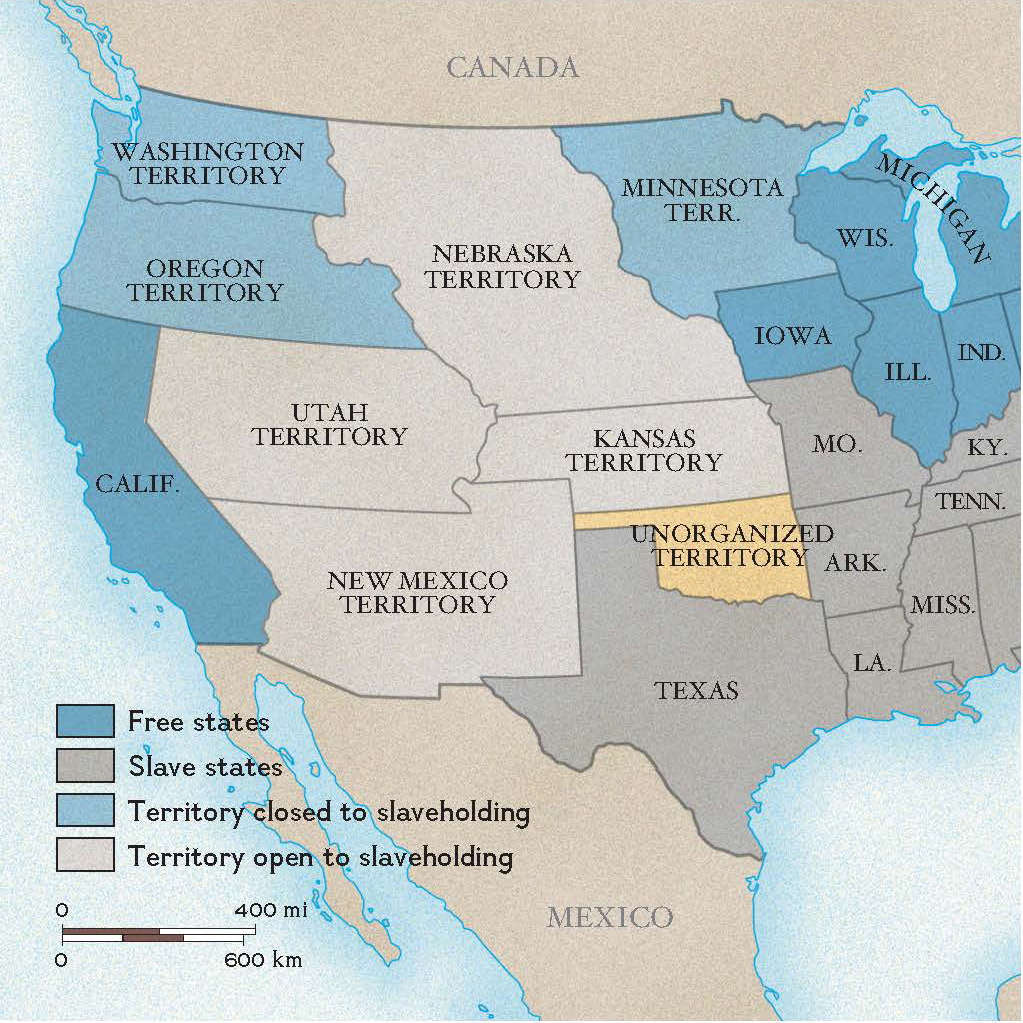
Imagine embarking on a journey through the vast plains of Kansas and Nebraska, states rich in agricultural bounty and frontier history. Without an understanding of the 1850s, a crucial layer of appreciation for their heritage—from the pioneering spirit to the solemn sites of early conflicts—would be missed. This act is not merely an abstract concept; it is etched into the very soil, architecture, and cultural memory of these regions, making it a vital piece of context for anyone engaging in historical tourism or exploring the landmarks of the American West.
The Seeds of Conflict: Understanding the Antecedents
To grasp the full weight of the Kansas-Nebraska Act, one must first journey back to earlier legislative attempts to manage the thorny issue of slavery’s expansion. The young American republic, even in its formative years, was grappling with a fundamental contradiction: the promise of liberty juxtaposed with the institution of human bondage. As the nation expanded westward, each new territory threatened to upset the delicate balance of power between slave states and free states, creating a recurring political crisis.
The Missouri Compromise and Sectional Tensions
The first major legislative attempt to defuse this tension was the Missouri Compromise of 1820. For travelers exploring the historical sites of the American South or the burgeoning industrial North, the impact of this compromise is palpable. It was a monumental agreement that allowed Missouri to enter the Union as a slave state, while simultaneously admitting Maine as a free state, thereby maintaining the precarious balance in the Senate. Crucially, the compromise also established a geographical boundary: slavery was prohibited in any new territories north of the 36°30′ parallel, with the exception of Missouri itself.
This line, though seemingly arbitrary, served as a temporary truce, a significant landmark in the political geography of the era. It created an expectation that territories above this line would remain free, and those below could potentially be slave-holding. For over three decades, this compromise held the Union together, albeit tenuously. Its existence meant that as Americans ventured west, whether for new homesteads, resource exploitation, or simply the adventure of frontier life, they did so with an implicit understanding of where slavery could and could not legally expand. A visit to historical markers in states like Missouri or Arkansas can still evoke the deep divisions that this line represented, a division that future legislation would dangerously ignore.
The Compromise of 1850 and Popular Sovereignty
As the nation expanded further, particularly after the Mexican-American War, the issue of slavery in newly acquired territories re-erupted with renewed ferocity. The land ceded by Mexico included vast areas like California, New Mexico, and Utah, all lying outside the parameters of the Missouri Compromise line. This led to the Compromise of 1850, another series of legislative measures aimed at preserving national unity.
This compromise addressed several issues: California was admitted as a free state, the slave trade was abolished in Washington D.C., and a more stringent Fugitive Slave Act was enacted. Most importantly for our understanding of the Kansas-Nebraska Act, it introduced and applied the principle of “popular sovereignty” to the territories of New Mexico and Utah. Popular sovereignty was the idea that the residents of a territory, not Congress, should decide whether to allow slavery within their borders.
Initially championed as a democratic solution, popular sovereignty proved to be a volatile concept, fraught with potential for conflict. While it offered a temporary reprieve in 1850, it also laid the groundwork for future clashes by decentralizing a national decision to local, often fiercely divided, populations. For contemporary travelers visiting the historic towns of Santa Fe or Salt Lake City, it’s fascinating to reflect on how these regions were once the testing grounds for ideas that would later tear the nation apart.
The Kansas-Nebraska Act: A Legislative Earthquake
Against this backdrop of escalating sectional tensions and the precarious balance maintained by previous compromises, the Kansas-Nebraska Act emerged, shattering the fragile peace and ushering in an era of unprecedented conflict. This act was not born out of a direct demand for slavery expansion but rather from a confluence of ambitious political maneuvering and national development goals.
Stephen A. Douglas and the Transcontinental Railroad
The primary architect of the Kansas-Nebraska Act was Senator Stephen A. Douglas of Illinois, a powerful Democrat with presidential aspirations and a vision for national expansion. Douglas was a fervent proponent of westward expansion and, critically, of a transcontinental railroad that would connect the eastern United States with the Pacific coast. He believed this railroad, ideally originating in his home state of Illinois (specifically Chicago), was vital for the nation’s economic prosperity and unity.
However, to build a railroad through the unorganized territories west of Missouri and Iowa, these lands first needed formal territorial governments. Douglas proposed organizing the vast area into two new territories: Kansas to the south and Nebraska to the north. His legislative efforts, driven by this infrastructure ambition, inadvertently opened a Pandora’s Box of sectional conflict. For history enthusiasts, tracing the proposed routes of the early transcontinental railroad offers a unique perspective on how economic development and political compromise were inextricably linked in the 19th century. Understanding Douglas’s motivations helps contextualize the profound consequences of his legislative decisions.
Repealing the Missouri Compromise
The most controversial and ultimately destructive provision of the Kansas-Nebraska Act was its explicit repeal of the Missouri Compromise. Recall that the Missouri Compromise had forbidden slavery north of the 36°30′ parallel. Both the proposed Kansas and Nebraska territories lay north of this line. For Douglas to win Southern support for his territorial organization and railroad plans, he felt compelled to offer a concession. That concession was the application of popular sovereignty to these new territories, thereby nullifying the 36°30′ restriction.
This move was a political earthquake. It shattered three decades of precedent and enraged anti-slavery advocates in the North, who saw it as a capitulation to the South and a dangerous expansion of slavery’s potential reach. The act effectively declared that all territories, regardless of their geographical location, could decide the issue of slavery for themselves. This fundamental shift ripped apart the fragile political truce and fueled a sense of betrayal among Northerners, convincing many that there was an aggressive “slave power” conspiracy seeking to dominate the nation. Visiting historical museums or archives, particularly those focusing on antebellum politics in the northern states, would highlight the profound shock and anger this repeal generated.
The Principle of Popular Sovereignty Unleashed
With the Missouri Compromise repealed, the principle of popular sovereignty was now explicitly applied to the Kansas and Nebraska territories. This meant that the settlers themselves would vote on whether their territory would allow slavery. While seemingly democratic, this provision was inherently problematic. It created an immediate and intense competition between pro-slavery and anti-slavery factions to populate the territories, particularly Kansas, where the decision was seen as more immediately consequential.
The act transformed these nascent territories into a battleground, not just in Congress, but on the ground where ordinary citizens would confront each other. This legislative gamble, intended to sidestep a national decision, instead decentralized the conflict and transformed it into a brutal, localized struggle. The vast, undeveloped lands of Kansas and Nebraska, once symbols of boundless opportunity, quickly became contested spaces, foreshadowing the larger national conflict to come.

Bleeding Kansas: The Immediate Aftermath
The passage of the Kansas-Nebraska Act did not bring peace; instead, it ushered in a period of intense violence and political chaos in the Kansas Territory, a period infamously known as “Bleeding Kansas”. This era represents one of the most vivid and tragic examples of how legislative decisions can have immediate, deadly consequences for ordinary people. For those interested in dark tourism or the raw, unfiltered history of the American frontier, the story of Bleeding Kansas is particularly poignant.
The Race for Settlement and Political Control
Immediately following the Act’s passage, both pro-slavery and anti-slavery groups launched concerted efforts to settle Kansas with their respective adherents, aiming to sway the popular sovereignty vote. From Missouri, bordering Kansas to the east, came “Border Ruffians”—pro-slavery settlers and militiamen determined to make Kansas a slave state, often resorting to intimidation and fraud. From the North, particularly New England, came “Free-Staters” or “Jayhawkers,” abolitionist settlers funded by emigration aid societies, equally determined to establish Kansas as a free state.
These two distinct streams of migration transformed the innocent act of homesteading into a political weapon. Every new cabin, every new voter, became a pawn in a larger national struggle. The competition was not just for land, but for the very soul of the territory, reflecting a desperate urgency on both sides to claim the numerical advantage that would determine Kansas’s future status.
Violence and Civil Strife
The influx of ideologically opposed settlers quickly led to violence. The territory became a crucible of mini-civil wars, characterized by guerrilla warfare, raids, and assassinations. One of the earliest and most infamous acts of violence was the “Sack of Lawrence” in May 1856. A pro-slavery posse, angered by the anti-slavery sentiment in Lawrence, a Free-State stronghold, rode into the town, destroying newspaper offices, homes, and the Free State Hotel, a significant landmark of the anti-slavery movement.
Days later, in retaliation for the Sack of Lawrence and a brutal caning of Senator Charles Sumner in Congress, radical abolitionist John Brown led a small group, including his sons, in the “Pottawatomie Massacre”. They dragged five pro-slavery settlers from their homes along Pottawatomie Creek and hacked them to death with broadswords. This brutal act escalated the conflict significantly, pushing Kansas further into anarchy and earning John Brown a controversial place in history as both a terrorist and a martyr for freedom.
These incidents, along with countless smaller skirmishes, raids, and killings, made Kansas a bloody proving ground for the larger national conflict. The landscapes around Lawrence, Osawatomie, and other historic towns in Kansas bear witness to these struggles, with various historical markers and memorials commemorating the intense human cost of the popular sovereignty experiment.
Competing Governments and Constitutions
The political chaos in Kansas mirrored the physical violence. The territory soon found itself with two rival governments, each claiming legitimacy. The official territorial government, initially based in Lecompton, was largely dominated by pro-slavery elements, often through fraudulent elections. In defiance, Free-Staters established their own government in Topeka, drafting an anti-slavery constitution.
The struggle over which constitution would be adopted—the pro-slavery Lecompton Constitution or the anti-slavery Topeka Constitution—became a national crisis, debated fiercely in Congress and influencing presidential elections. It demonstrated the utter failure of popular sovereignty to resolve the slavery question peacefully. The legacy of these competing political bodies can be explored today in places like the Kansas State Capitol in Topeka, which stands as a testament to the turbulent birth of the state.
Legacy and Long-Term Impact on America’s Landscape
The ripples of the Kansas-Nebraska Act extended far beyond the prairie territories, reshaping American politics, accelerating the march toward civil war, and fundamentally altering the nation’s historical trajectory. For modern travelers, particularly those interested in historical landmarks, American history, and the evolution of civil rights, understanding this act provides indispensable context for many sites across the United States.
Fueling the Road to the Civil War
Without exaggeration, the Kansas-Nebraska Act was a direct and potent catalyst for the Civil War. By repealing the Missouri Compromise, it destroyed the last vestige of legislative compromise on slavery’s expansion, convincing many Northerners that coexistence with slave states was no longer possible. The violence of Bleeding Kansas served as a grim preview of the larger national conflict to come, hardening attitudes on both sides and making compromise increasingly unattainable. The act transformed a political debate into a moral crusade for many, further solidifying the North’s anti-slavery stance and the South’s resolve to protect its “peculiar institution.” When exploring Civil War battlefields or museums today, the seeds of that conflict can often be traced back to this legislative decision and its immediate violent repercussions.
Shaping the American Political Landscape
The political fallout from the Kansas-Nebraska Act was equally profound. The Whig Party, one of the two major political parties of the era, disintegrated over the issue of slavery’s expansion, unable to reconcile its internal divisions. From its ashes emerged the Republican Party in 1854, formed explicitly on an anti-slavery platform, opposing the expansion of slavery into the territories. This new party quickly gained traction in the North, drawing in former Whigs, Free-Soilers, and disgruntled Democrats.
The rise of the Republican Party, driven directly by the indignation over the Kansas-Nebraska Act, dramatically altered the American political landscape, creating a starker sectional divide. Its first successful presidential candidate, Abraham Lincoln, campaigned on the very principles that condemned the Kansas-Nebraska Act and popular sovereignty, leading to his election in 1860, which in turn triggered Southern secession and the start of the Civil War.

A Historical Lens for Modern Travel and Understanding
Today, the legacy of the Kansas-Nebraska Act offers a rich and often somber layer of understanding for travelers exploring the American heartland. It provides crucial context for historical sites, museums, and even the cultural identity of Kansas and Nebraska.
For instance, a visit to the Kansas Museum of History in Topeka or the Nebraska State Historical Society in Lincoln offers immersive exhibits on frontier life and the territorial struggles. Travelers can follow “heritage trails” that highlight sites related to Bleeding Kansas, such as historic Lawrence, Osawatomie, or John Brown’s cabin. These locations are not merely old buildings; they are tangible links to a time when the very meaning of American freedom was violently contested. Understanding this history also enriches visits to landmarks across the country, from the halls of Congress in Washington D.C., where the act was debated, to sites related to the Underground Railroad, which gained renewed urgency after the act’s passage.
The act also serves as a potent reminder of the complexities of democratic processes and the potential for unintended consequences in legislative decisions. It encourages a deeper engagement with the stories of the settlers, both pro-slavery and anti-slavery, and the difficult choices they faced. Even places like the Brown v. Board of Education National Historic Site in Topeka, while decades removed, underscore the long, arduous struggle for civil rights in the United States – a struggle profoundly impacted by the divisions exacerbated by the Kansas-Nebraska Act.
In conclusion, the Kansas-Nebraska Act of 1854 stands as a monumental turning point in American history. What began as a legislative maneuver to facilitate a railroad and organize western territories devolved into a catastrophic experiment with popular sovereignty that ignited civil strife and propelled the nation towards its deadliest conflict. For anyone journeying through the heart of America, especially the states of Kansas and Nebraska, knowledge of this act transforms landscapes into living history, offering a deeper appreciation for the profound sacrifices and enduring struggles that forged the United States we know today. It’s a journey into the past that illuminates the present, reminding us that history is not just about dates, but about the very foundations of our travel destinations and the stories embedded within their landmarks.
LifeOutOfTheBox is a participant in the Amazon Services LLC Associates Program, an affiliate advertising program designed to provide a means for sites to earn advertising fees by advertising and linking to Amazon.com. Amazon, the Amazon logo, AmazonSupply, and the AmazonSupply logo are trademarks of Amazon.com, Inc. or its affiliates. As an Amazon Associate we earn affiliate commissions from qualifying purchases.